Is Lg 12000 Btu Portable Air Conditioner Self Evaporating
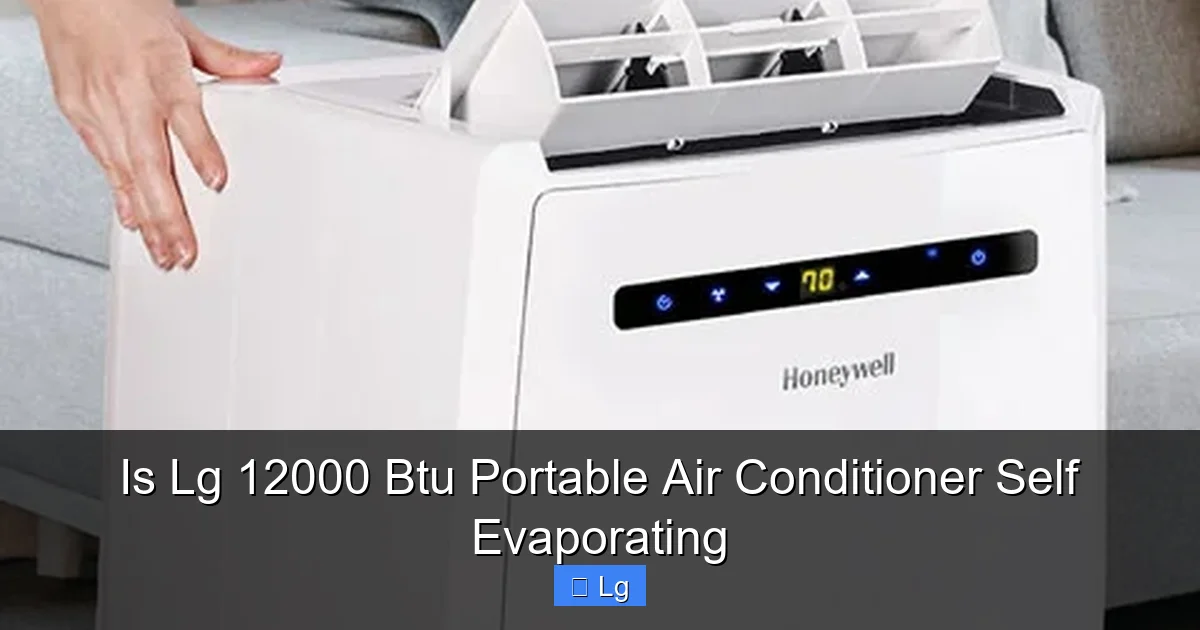
LG 12000 BTU portable air conditioner with window venting kit installed
Featured image for
Image source: airconergy.com
The LG 12000 BTU portable air conditioner features a self-evaporating technology that reduces the need for manual water drainage. This smart system recycles condensation to improve efficiency and minimize maintenance, making it ideal for most home environments.
📑 Table of Contents
- Is the LG 12000 BTU Portable Air Conditioner Self Evaporating?
- How Does the Self-Evaporating System Work?
- What Are the Benefits of a Self-Evaporating Portable AC?
- Do You Still Need to Maintain the Unit?
- Which LG 12000 BTU Models Offer Self-Evaporation?
- Installation & Venting Requirements
- Energy Efficiency & Noise Performance
- Troubleshooting Common Self-Evaporation Issues
- Conclusion
- Frequently Asked Questions
Is the LG 12000 BTU Portable Air Conditioner Self Evaporating?
Yes, the LG 12000 BTU portable air conditioner is self-evaporating. This advanced feature is designed to reduce or even eliminate the need for frequent manual water drainage, making it one of the more convenient portable AC units on the market. The self-evaporating system works by recycling the condensation produced during the cooling process and using it to cool the condenser coils. As a result, most of the moisture is expelled through the exhaust hose as warm air, significantly cutting down on the amount of water that collects in the internal tank.
This technology is especially useful in moderate humidity environments. In such conditions, the unit can run for long periods—sometimes days—without requiring you to empty a water bucket. However, it’s important to note that in very humid climates or during extended use, some water may still accumulate, and occasional draining might be necessary. Overall, the self-evaporating function enhances efficiency and convenience, helping you stay cool with less hassle.
How Does the Self-Evaporating System Work?
The self-evaporating system in the LG 12000 BTU portable air conditioner uses a clever heat exchange process. As the unit cools the air, moisture naturally condenses on the evaporator coils. Instead of collecting all this water in a tank, the system routes part of the hot exhaust air over the collected condensation. This heat causes the water to evaporate and exit through the exhaust hose along with the hot air.
This closed-loop process not only reduces water buildup but also improves energy efficiency. By using waste heat to evaporate moisture, the unit doesn’t need extra energy to power a separate drainage pump or heater. It’s a smart, eco-friendly design that keeps maintenance low and performance high. For example, if you’re using the AC in a living room during summer evenings in a dry climate, you might go several days without needing to check the water level.
Does It Work in High Humidity?
In high-humidity environments, the self-evaporating system may not be able to handle all the moisture produced. During periods of extreme humidity or 24/7 operation, water can still collect in the internal reservoir. In these cases, the unit will alert you via a full-tank indicator light, and you’ll need to manually drain the water using the included hose or by tilting the unit.
While the system isn’t 100% self-sufficient in all conditions, it still greatly reduces the frequency of manual draining. For most users in typical home settings, this means less maintenance and more consistent cooling. It’s a practical balance between automation and real-world performance.
What Are the Benefits of a Self-Evaporating Portable AC?
The primary benefit of a self-evaporating portable air conditioner like the LG 12000 BTU model is convenience. You won’t have to constantly monitor and empty a water tank, which is a common hassle with non-evaporative units. This makes it ideal for busy households, offices, or anyone who wants reliable cooling without frequent upkeep.
Additionally, self-evaporation improves energy efficiency. Since the system uses waste heat to manage moisture, it doesn’t require extra power for drainage mechanisms. This can lead to lower energy consumption and reduced operating costs over time. Plus, fewer interruptions for maintenance mean the unit can run longer and more consistently, maintaining a comfortable indoor temperature with minimal effort.
Do You Still Need to Maintain the Unit?
Yes, even with self-evaporating technology, regular maintenance is still required. You should clean or replace the air filter every two weeks during heavy use to ensure proper airflow and efficiency. A dirty filter can restrict airflow, reduce cooling performance, and increase energy use.
Also, check the exhaust hose and venting system periodically to ensure they’re not blocked or kinked. Proper venting is crucial for both cooling performance and the self-evaporating function. While the unit handles most of the water management automatically, a little routine care goes a long way in keeping it running smoothly.
Which LG 12000 BTU Models Offer Self-Evaporation?
LG sells several 12,000 BTU portable models — LP1217GSR, LP1219IVSM, and the newer LP1222IVSM — and all include the self-evaporating function. The dual-inverter compressor versions (IVSM suffix) modulate speed to match load, which further reduces condensate production compared to fixed-speed units. If you’re comparing spec sheets, look for the “Auto Evaporation System” line item; it’s standard across the current lineup. In practice, the inverter models also run quieter at low speed, a noticeable advantage in bedrooms.
Installation & Venting Requirements
Proper venting is the single biggest factor in self-evaporation performance. The included window kit fits standard double-hung and sliding windows 22–50 inches wide; for casement or crank-out windows you’ll need a separate acrylic panel kit. Keep the exhaust hose as short and straight as possible — every 90° bend adds back-pressure that can overwhelm the evaporation cycle. A common mistake is running the hose into a drop ceiling or another room; that recirculates heat and humidity, defeating the self-evaporating design. For step-by-step guidance on portable and permanent installs, see our portable AC venting walkthrough and the split-system outdoor unit reference.
Energy Efficiency & Noise Performance
Current LG 12K BTU portables carry a Combined Energy Efficiency Ratio (CEER) around 10.0–10.5, meeting the 2023 federal minimum. The dual-inverter models hit the higher end of that range and qualify for ENERGY STAR Most Efficient 2024 recognition. Sound output runs 44–52 dB(A) on low/cool mode — comparable to a quiet library — but jumps to 54–56 dB(A) at max fan. If noise sensitivity is a concern, the inverter versions let you lock the compressor at 30–40 % capacity for overnight runs. For deeper efficiency settings, review optimal temperature and fan strategies.
Troubleshooting Common Self-Evaporation Issues
| Symptom | Likely Cause | Quick Fix |
|---|---|---|
| Full-tank light on daily | High ambient humidity (>70 % RH) | Run a standalone dehumidifier nearby; slope drain hose downward |
| Water leaking from base | Clogged internal drain pan or kinked hose | Flush pan with 50/50 vinegar water; straighten hose |
| Reduced cooling + evaporation | Dirty condenser coils or blocked exhaust | Vacuum condenser fins; verify exhaust flap opens fully |
| Unit shuts off unexpectedly | Float switch stuck in “full” position | Gently tap float assembly; ensure unit sits level |
If the compressor cycles rapidly or blows warm air, the issue may be refrigerant-side rather than drainage — see our diagnostic guide for warm-air complaints.
Conclusion
The LG 12000 BTU portable air conditioner is indeed self-evaporating, offering a smart solution to one of the biggest drawbacks of portable AC units—frequent water drainage. By recycling condensation to cool internal components, it minimizes maintenance and boosts efficiency. While it may still require occasional manual draining in high-humidity areas, the system significantly reduces the need for constant attention.
For homeowners seeking a reliable, low-maintenance cooling option, this feature makes the LG 12000 BTU model a standout choice. Combined with strong cooling power and user-friendly controls, it delivers comfort and convenience in one efficient package. Ready to compare this unit with other top-rated portable systems? Browse our latest portable AC picks for side-by-side specs and real-world notes.
Frequently Asked Questions
Does the LG 12000 BTU portable AC need a drain hose at all?
Most of the time no — the self-evaporating system exhausts moisture as vapor. In sustained high humidity (above 70 % RH) or continuous 24/7 operation, the internal tank can fill and the included drain hose or a ½-inch garden hose attachment will be needed.
Can I vent the LG portable AC through a dryer vent or wall sleeve?
Yes, provided the vent path stays under the maximum hose length (typically 5–7 ft) and terminates outdoors with a back-draft damper. Avoid venting into attics, garages, or crawl spaces — that violates building code and ruins evaporation efficiency.
How often should I clean the filter on an LG 12K portable?
Every two weeks during heavy use; monthly in lighter duty. A clogged filter cuts airflow, forces the compressor harder, and reduces the waste heat available for self-evaporation.
Is the dual-inverter LG 12K worth the extra cost over the fixed-speed model?
If you run the unit nightly or live in a humid climate, yes. The inverter’s variable compressor lowers condensate load, runs quieter at part-load, and typically pays back the price premium in 2–3 cooling seasons via lower electricity use.
Will the self-evaporation work in a bathroom or laundry room?
It works, but those spaces generate extra moisture. Expect to drain the tank more often; a dedicated dehumidifier paired with the AC is more effective for chronic damp areas.
Does LG’s ThinQ app control the self-evaporation feature?
The app monitors tank status and alerts you when drainage is needed, but the evaporation cycle itself is automatic — no user toggle exists. Firmware updates occasionally refine the algorithm, so keep the unit on Wi-Fi.