The “Dry” mode on an LG portable air conditioner is designed to reduce indoor humidity without significantly lowering the temperature. It works by running the compressor intermittently to remove excess moisture, making it ideal for humid but not overly hot days. This mode helps prevent mold, improves air quality, and enhances comfort—especially in basements, bathrooms, or during rainy seasons.
Key Takeaways
- Reduces Humidity: The “Dry” mode removes excess moisture from the air, helping to control indoor humidity levels.
- Energy Efficient: It uses less energy than cooling mode since the compressor cycles on and off rather than running continuously.
- Improves Comfort: Lower humidity makes the air feel cooler and more comfortable, even without lowering the temperature.
- Prevents Mold and Mildew: By reducing moisture, it helps inhibit the growth of mold, mildew, and dust mites.
- Ideal for Damp Spaces: Perfect for basements, laundry rooms, or areas prone to high humidity.
- Quiet Operation: The fan runs at a lower speed in Dry mode, resulting in quieter performance.
- Not a Substitute for Dehumidifiers: While effective, it’s not as powerful as a dedicated dehumidifier for extreme moisture issues.
Quick Answers to Common Questions
What does “dry” mean on an LG portable air conditioner?
The “Dry” mode removes excess moisture from the air to reduce humidity, making the room feel more comfortable without significantly lowering the temperature.
Is Dry mode the same as Cool mode?
No. Cool mode lowers the air temperature, while Dry mode focuses on dehumidification. Dry mode uses less energy and doesn’t overcool the space.
Can I use Dry mode every day?
Yes, especially in humid climates or damp areas. Just monitor the water tank and clean the filter regularly for best performance.
Does Dry mode help with mold?
Yes. By reducing indoor humidity, it inhibits mold and mildew growth, particularly in basements, bathrooms, and laundry rooms.
Is Dry mode noisy?
No. The fan runs at a lower speed, making Dry mode quieter than Cool mode—ideal for bedrooms and nighttime use.
📑 Table of Contents
- Understanding the “Dry” Mode on LG Portable Air Conditioners
- How Does the “Dry” Mode Work?
- Benefits of Using the “Dry” Mode
- When Should You Use the “Dry” Mode?
- Tips for Maximizing the Effectiveness of Dry Mode
- Common Misconceptions About the “Dry” Mode
- Conclusion: Make the Most of Your LG Portable AC’s Dry Mode
Understanding the “Dry” Mode on LG Portable Air Conditioners
If you’ve ever looked at your LG portable air conditioner and wondered, “What does dry mean?”—you’re not alone. Many users are familiar with the standard Cool, Fan, and Heat modes, but the “Dry” mode often leaves people scratching their heads. It’s one of those features that sounds simple but actually plays a crucial role in maintaining indoor comfort, especially during humid weather.
The “Dry” mode on an LG portable air conditioner is essentially a dehumidifying function. Unlike the Cool mode, which actively lowers the air temperature, the Dry mode focuses on removing excess moisture from the air. This makes it particularly useful during muggy summer days, rainy seasons, or in naturally damp areas like basements and bathrooms. Instead of blasting cold air, the unit gently pulls moisture from the environment, helping you feel more comfortable without overcooling your space.
Think of it this way: when the air feels sticky or clammy, it’s not necessarily because it’s hot—it’s because there’s too much humidity. High humidity can make you feel hotter than the actual temperature, promote mold growth, and even damage furniture or electronics. The Dry mode tackles these issues head-on by reducing the moisture content in the air, creating a fresher, more breathable atmosphere.
How Does the “Dry” Mode Work?
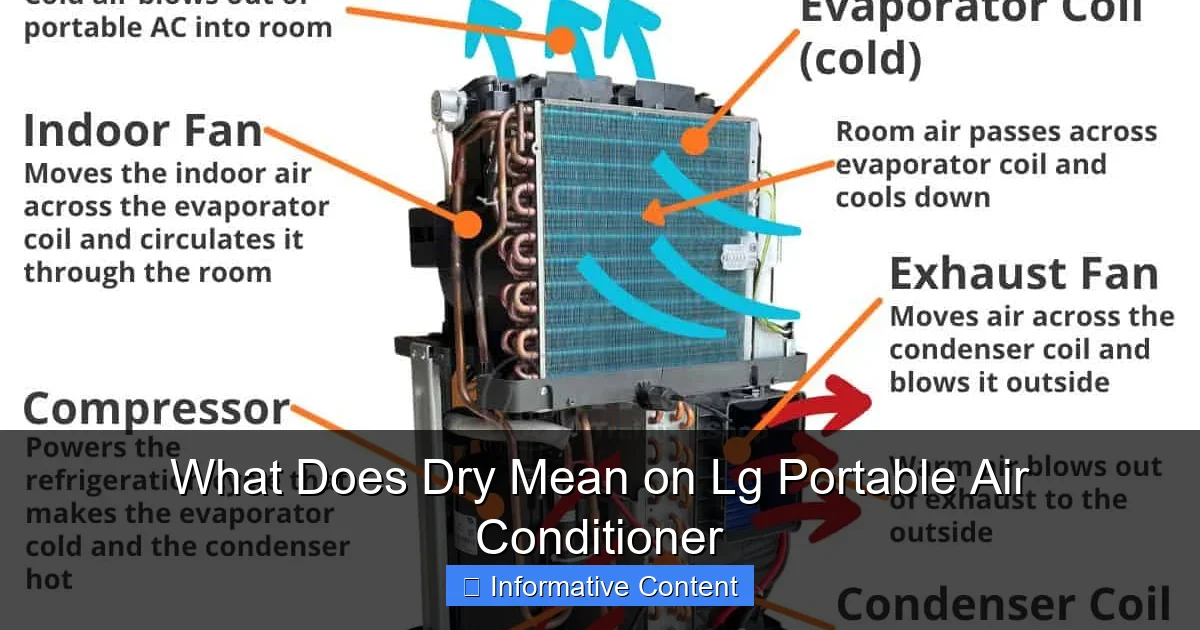
Visual guide about What Does Dry Mean on Lg Portable Air Conditioner
Image source: hvactrainingshop.com
To truly understand what “dry” means on an LG portable air conditioner, it helps to know how the system operates behind the scenes. While all air conditioners remove some moisture as a byproduct of cooling, the Dry mode is specifically engineered to maximize dehumidification.
When you select Dry mode, the LG portable AC runs the compressor in short, intermittent cycles. This allows the evaporator coils to cool down just enough to condense moisture from the incoming air. The water droplets collect in an internal drain pan and are either drained out through a hose or collected in a tank, depending on your model. Meanwhile, the fan continues to run at a low speed to circulate air over the coils, ensuring consistent moisture removal.
One key difference between Dry and Cool modes is the compressor behavior. In Cool mode, the compressor runs continuously to maintain a set temperature. In Dry mode, it turns on and off based on humidity levels—similar to how a thermostat controls temperature. This cycling reduces energy consumption and prevents the room from getting too cold. The result is a balanced environment where humidity is controlled without overcooling.
For example, imagine it’s a humid 80°F (27°C) day, but you don’t want your room to feel like a freezer. By switching to Dry mode, your LG portable AC will remove the sticky feeling from the air while keeping the temperature relatively stable. You’ll feel more comfortable, and your space will feel fresher—without the chill.
Benefits of Using the “Dry” Mode
Using the Dry mode on your LG portable air conditioner offers several practical benefits, especially if you live in a humid climate or have moisture-prone areas in your home. Let’s break down why this feature is more than just a gimmick—it’s a smart way to improve your indoor environment.
1. Enhanced Comfort in Humid Conditions
High humidity makes the air feel heavier and more oppressive, even if the temperature isn’t extremely high. This is because your body relies on sweat evaporation to cool down, and when the air is already saturated with moisture, sweat doesn’t evaporate efficiently. The result? You feel sticky, uncomfortable, and overheated.
The Dry mode addresses this by lowering the relative humidity, which allows your body to cool naturally. You’ll feel more comfortable without needing to crank the AC to freezing temperatures. This is especially helpful during spring and early summer when temperatures are moderate but humidity is already rising.
2. Energy Efficiency and Cost Savings
Because the compressor doesn’t run continuously in Dry mode, it uses significantly less energy than Cool mode. This makes it a more efficient choice for days when you don’t need intense cooling but still want to manage humidity. Over time, this can lead to noticeable savings on your electricity bill.
For instance, if you run your LG portable AC in Dry mode for 8 hours a day instead of Cool mode, you could reduce energy consumption by 30–40%, depending on the model and usage. That’s a win for both your wallet and the environment.
3. Prevention of Mold and Mildew
Excess moisture is a breeding ground for mold, mildew, and dust mites—all of which can trigger allergies, asthma, and other respiratory issues. Basements, bathrooms, and laundry rooms are especially vulnerable. By using the Dry mode regularly in these areas, you can keep humidity levels in check and reduce the risk of mold growth.
A practical tip: If you notice condensation on windows or a musty smell in a room, it’s a sign that humidity is too high. Running the Dry mode for a few hours can help eliminate these issues before they become serious problems.
4. Protection for Furniture and Electronics
High humidity doesn’t just affect your health—it can also damage your belongings. Wood furniture can warp, electronics can corrode, and fabrics can develop mildew. The Dry mode helps preserve your investments by maintaining a stable, dry environment.
For example, if you store books, musical instruments, or vintage items in a basement, using the Dry mode periodically can prevent moisture-related damage. Similarly, home offices with computers and printers benefit from lower humidity, which reduces the risk of internal corrosion.
5. Quieter Operation
Another advantage of the Dry mode is its quieter performance. Since the fan runs at a lower speed and the compressor cycles on and off, the unit produces less noise compared to Cool mode. This makes it ideal for use in bedrooms, offices, or during nighttime hours when you want peace and quiet.
Imagine trying to sleep on a humid night—your AC is blasting cold air, but it’s also loud and disruptive. Switching to Dry mode can give you the comfort you need without the noise, helping you rest better.
When Should You Use the “Dry” Mode?
Knowing when to use the Dry mode is just as important as understanding what it does. While it’s a versatile feature, it’s not meant for every situation. Here’s a guide to help you decide when to activate it.
During Humid but Mild Weather
The Dry mode shines on days when the temperature is comfortable—say, between 70°F and 80°F (21°C–27°C)—but the air feels sticky or damp. Instead of turning on Cool mode and overcooling your space, Dry mode removes the humidity without dropping the temperature too much. This is perfect for spring and early summer days when the heat hasn’t fully kicked in.
In Damp or Poorly Ventilated Areas
Rooms like basements, bathrooms, laundry rooms, and garages often suffer from poor airflow and high moisture levels. These spaces are prone to mold, odors, and condensation. Running the Dry mode in these areas for a few hours a day can make a big difference.
For example, after doing laundry, you might notice the room feels damp. Placing your LG portable AC in Dry mode for an hour can pull the excess moisture from the air, preventing that “wet clothes” smell and reducing the risk of mold on walls or ceilings.
After Rainy or Stormy Weather
Rain increases outdoor humidity, which can seep into your home through windows, doors, and walls. After a heavy downpour, you might notice your indoor air feeling heavier than usual. This is a great time to use the Dry mode to restore balance.
A tip: Open windows briefly after rain to let fresh air in, then close them and run the Dry mode to remove any lingering moisture. This helps prevent that “stuffy” feeling and keeps your home feeling fresh.
For Allergy and Asthma Sufferers
If you or someone in your household has allergies or asthma, controlling humidity is crucial. Dust mites and mold thrive in humid environments, and both are common triggers for respiratory issues. Using the Dry mode regularly can help reduce these allergens and improve indoor air quality.
Studies show that maintaining indoor humidity between 30% and 50% significantly reduces dust mite populations. The Dry mode helps you stay within this range, making your home a healthier place to live.
As a Pre-Cooling Step
Here’s a clever trick: use the Dry mode before switching to Cool mode on a hot, humid day. By removing excess moisture first, the Cool mode becomes more effective. Dry air feels cooler, so you may not need to set the temperature as low—saving energy and improving comfort.
For instance, on a 90°F (32°C) day with 70% humidity, start with Dry mode for 30–60 minutes. Once the air feels less sticky, switch to Cool mode. You’ll likely find that a setting of 76°F (24°C) feels just as comfortable as 72°F (22°C) would have otherwise.
Tips for Maximizing the Effectiveness of Dry Mode
To get the most out of your LG portable air conditioner’s Dry mode, follow these practical tips. A little know-how can go a long way in improving performance and efficiency.
1. Close Doors and Windows
For the Dry mode to work effectively, the room should be as sealed as possible. Open windows and doors allow humid outdoor air to enter, counteracting the dehumidifying effect. Close all openings before turning on the unit, and avoid frequent entry and exit during operation.
2. Use in the Right Room Size
Make sure your LG portable AC is appropriately sized for the room. If the unit is too small, it won’t be able to remove moisture efficiently. Check the manufacturer’s guidelines for room size recommendations—typically listed in square feet or cubic meters.
For example, a 10,000 BTU unit is usually suitable for rooms up to 300–400 square feet. Using it in a larger space will strain the system and reduce dehumidification performance.
3. Empty the Water Tank Regularly
Most LG portable air conditioners collect condensed water in an internal tank. In Dry mode, this tank can fill up quickly, especially in very humid conditions. If the tank is full, the unit may shut off automatically to prevent overflow.
Check the tank regularly and empty it when needed. Some models have a drain hose option for continuous drainage, which is ideal for long-term use in damp areas.
4. Clean the Air Filter
A dirty air filter restricts airflow, reducing the unit’s ability to dehumidify. LG recommends cleaning the filter every two weeks during heavy use. Simply remove the filter, rinse it with warm water, let it dry completely, and reinstall it.
A clean filter ensures optimal performance and helps maintain good indoor air quality.
5. Combine with Other Ventilation Strategies
While the Dry mode is effective, it works best when combined with other moisture-control methods. Use exhaust fans in bathrooms and kitchens, fix leaks promptly, and consider using moisture absorbers in closets or cabinets.
For example, after a shower, turn on the bathroom exhaust fan and run the portable AC in Dry mode for 20–30 minutes. This dual approach quickly removes excess moisture and prevents steam from spreading to other rooms.
6. Monitor Humidity Levels
Invest in a hygrometer—a small, inexpensive device that measures indoor humidity. Aim to keep levels between 30% and 50%. If humidity consistently exceeds 60%, you may need to use the Dry mode more frequently or consider a dedicated dehumidifier for severe cases.
Many smart thermostats and air quality monitors now include humidity sensors, making it easy to track and adjust settings automatically.
Common Misconceptions About the “Dry” Mode
Despite its benefits, the Dry mode is often misunderstood. Let’s clear up some common myths so you can use this feature with confidence.
Myth 1: Dry Mode Cools the Room Like Cool Mode
No—Dry mode does not actively cool the air. It removes moisture, which can make the room feel more comfortable, but it won’t lower the temperature significantly. If you’re looking to cool a hot room, use Cool mode instead.
Myth 2: Dry Mode Is Only for Winter
Actually, Dry mode is most useful in warm, humid months. Winter air is typically dry, so dehumidification is rarely needed. However, in poorly insulated homes or during rainy winters, it can still be helpful in damp areas.
Myth 3: Dry Mode Replaces a Dehumidifier
While effective, the Dry mode on a portable AC is not as powerful as a dedicated dehumidifier. If you have severe moisture problems—like standing water, persistent mold, or humidity above 60%—consider using a standalone dehumidifier in addition to your AC.
Myth 4: Dry Mode Uses More Energy
On the contrary, Dry mode is more energy-efficient than Cool mode because the compressor cycles on and off. It uses less electricity while still improving comfort.
Myth 5: You Can’t Use Dry Mode Overnight
You absolutely can! In fact, the quieter operation makes it ideal for nighttime use. Just make sure the water tank won’t overflow while you’re asleep—either empty it beforehand or use a continuous drain hose.
Conclusion: Make the Most of Your LG Portable AC’s Dry Mode
The “Dry” mode on your LG portable air conditioner is a powerful yet often underutilized feature. It’s not just a secondary setting—it’s a smart, energy-efficient way to improve indoor comfort, protect your home, and promote better health. By understanding what it does and when to use it, you can get more value from your appliance and enjoy a fresher, more balanced living environment.
Whether you’re dealing with a humid basement, a post-rain dampness, or just that sticky summer feeling, the Dry mode offers a practical solution. It reduces moisture, prevents mold, saves energy, and operates quietly—making it a versatile tool for any season.
So the next time you’re tempted to blast the Cool mode on a muggy day, consider switching to Dry instead. You might be surprised how much more comfortable your space feels—without the chill or the high energy bill. With a little practice and the right habits, you’ll wonder how you ever lived without it.
Frequently Asked Questions
How long should I run the Dry mode?
Run it for 1–2 hours at a time, or until the air feels less humid. For ongoing moisture issues, use it daily during peak humidity periods.
Can I use Dry mode in winter?
Generally not needed, as winter air is dry. However, it can help in damp basements or after indoor activities that produce moisture, like showering.
Will Dry mode lower my energy bill?
Yes. Since the compressor cycles on and off, it uses less energy than Cool mode, leading to potential savings over time.
What if my room is still humid after using Dry mode?
Ensure doors and windows are closed, the filter is clean, and the unit is sized correctly. For severe humidity, consider a dedicated dehumidifier.
Does Dry mode work in large rooms?
It works best in appropriately sized spaces. Check your LG model’s BTU rating and room size recommendation for optimal performance.
Can I leave Dry mode on overnight?
Yes, especially since it’s quiet. Just make sure the water tank won’t overflow—use a drain hose if needed for continuous operation.