Turn your LG air conditioner into an effective dehumidifier without buying extra equipment. This guide shows you how to reduce indoor humidity, improve comfort, and protect your home using built-in AC features. Perfect for humid climates and energy-efficient living in 2026.
Key Takeaways
- Most LG air conditioners have a dedicated dehumidifier mode that removes moisture without overcooling your space.
- Using the dry mode saves energy compared to running the AC on cooling mode just to reduce humidity.
- Proper temperature and fan settings maximize dehumidification efficiency and comfort.
- Regular maintenance like cleaning filters ensures optimal performance and air quality.
- Smart LG models allow remote control via the ThinQ app, letting you manage humidity from anywhere.
- Combining AC dehumidification with ventilation prevents mold and improves indoor air quality.
- Understanding humidity levels helps you use your LG AC more effectively and avoid over-drying the air.
How to Use LG Air Conditioner as a Dehumidifier
If you live in a humid climate or have noticed dampness, musty smells, or condensation on windows, you’re not alone. High indoor humidity can lead to mold growth, dust mites, and discomfort—even when the temperature feels just right. While standalone dehumidifiers are an option, many people don’t realize that their LG air conditioner can do double duty as a dehumidifier. In fact, most modern LG AC units come with a built-in “Dry” or “Dehumidifier” mode designed specifically for this purpose.
In this comprehensive guide, you’ll learn exactly how to use your LG air conditioner as a dehumidifier in 2026. Whether you have a window unit, split system, or a smart LG inverter model, we’ll walk you through the steps, settings, and best practices to reduce humidity efficiently. You’ll also discover energy-saving tips, maintenance advice, and troubleshooting solutions to keep your home fresh and comfortable all year round.
By the end of this guide, you’ll be able to:
– Identify if your LG AC has a dehumidifier mode
– Set up and use the dry function correctly
– Optimize settings for maximum moisture removal
– Maintain your unit for long-term performance
– Use smart features to monitor and control humidity remotely
Let’s get started!
Why Use Your LG Air Conditioner as a Dehumidifier?
Before diving into the how-to, it’s important to understand why using your LG AC as a dehumidifier makes sense—especially in 2026, when energy efficiency and smart home integration are more important than ever.
Air conditioners naturally remove moisture from the air as part of the cooling process. When warm, humid air passes over the cold evaporator coils, water vapor condenses into liquid and drains away. However, traditional cooling mode lowers the temperature significantly, which can leave your room feeling chilly even when you just want to reduce humidity.
That’s where the dehumidifier (or “Dry”) mode comes in. This feature focuses on moisture removal while minimizing temperature drops. It cycles the compressor on and off more gently, running the fan at a lower speed to pull in humid air and extract water without overcooling your space.
Using your LG AC in dry mode offers several advantages:
– Energy savings: Dry mode uses less power than continuous cooling.
– Comfort: You reduce humidity without freezing your living room.
– Health benefits: Lower humidity discourages mold, mildew, and dust mites.
– Home protection: Prevents warping of wood, peeling paint, and rust on metal surfaces.
– Convenience: No need to buy, store, or maintain a separate dehumidifier.
In 2026, LG has continued to improve its inverter technology and smart controls, making dehumidification more precise and user-friendly than ever. Whether you’re dealing with summer humidity or damp winter air, your LG AC can be a powerful tool for maintaining ideal indoor conditions.
Check If Your LG AC Has a Dehumidifier Mode
Not all air conditioners are created equal, and while most modern LG units include a dehumidifier function, it’s important to confirm yours does before proceeding.
Here’s how to check:
Look for the “Dry” or “Dehumidifier” Button
On most LG remote controls, you’ll find a button labeled “Dry,” “Dehumidify,” or sometimes a droplet icon. This is your gateway to moisture control. If you see this button, your unit supports dehumidification.
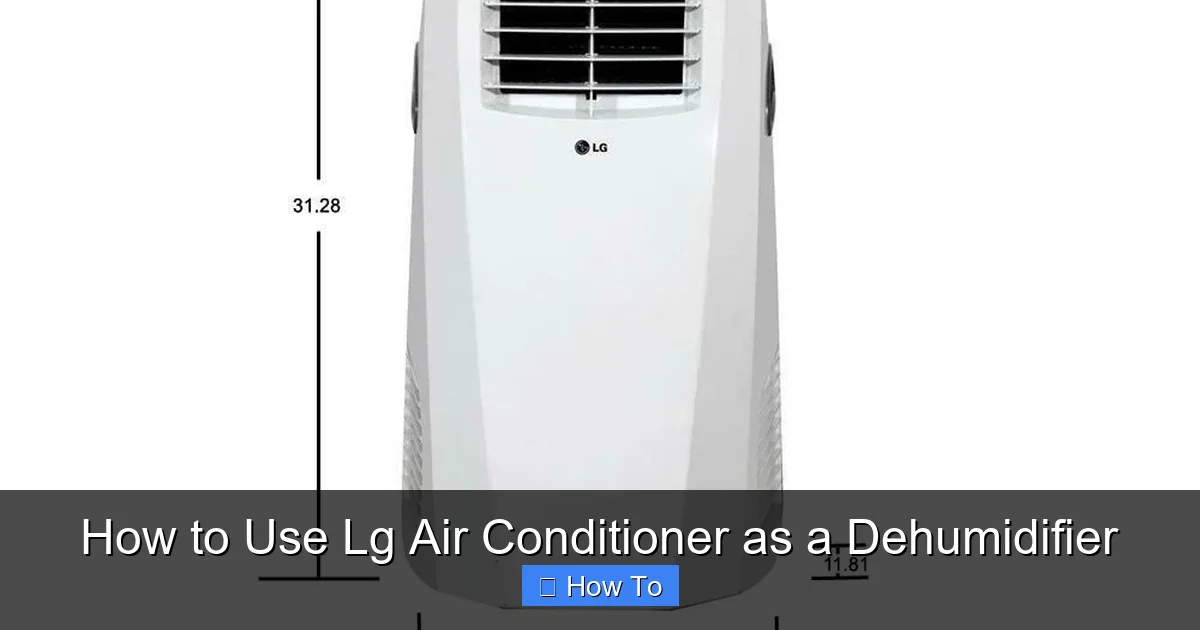
Visual guide about How to Use Lg Air Conditioner as a Dehumidifier
Image source: econosuperstore.com
Check the User Manual
If you can’t find the button or aren’t sure, consult your LG air conditioner’s user manual. Look for sections titled “Operation Modes,” “Special Functions,” or “Dehumidification.” Most manuals are available online at LG’s support website by entering your model number.
Use the LG ThinQ App (For Smart Models)
If your LG AC is Wi-Fi enabled and compatible with the LG ThinQ app (common in 2026 models), open the app and check the available modes. Smart units often display “Dry Mode” as an option in the main control screen. You can also receive notifications about humidity levels and filter status.
Identify Your Model Type
LG offers several types of air conditioners, including:
- Window units: Often have basic dry mode functionality.
- Split systems (inverter and non-inverter): Typically include advanced dehumidification with precise humidity control.
- Portable ACs: Some models support dry mode, but check the specs.
- Smart ACs with AI: Use sensors to auto-adjust based on room conditions.
If your model is from 2020 or later, chances are high it includes a dehumidifier mode. Even older models may have a “Cool” mode that removes some moisture, but it won’t be as efficient or comfortable as dedicated dry mode.
Step-by-Step: How to Activate Dehumidifier Mode on Your LG AC
Now that you’ve confirmed your LG AC has dehumidifier capabilities, let’s walk through the steps to use it effectively.
Step 1: Turn On Your LG Air Conditioner
Press the “Power” button on your remote or the unit itself. Wait for the display to light up and the fan to start running.
Step 2: Select “Dry” or “Dehumidifier” Mode
Press the “Mode” button repeatedly until you see “Dry” or a droplet symbol on the display. On some remotes, there’s a dedicated “Dry” button—just press it once.
Once selected, the AC will begin operating in dehumidification mode. The compressor will run intermittently, and the fan will operate at a low or medium speed to maximize moisture removal without rapid cooling.
Step 3: Set the Target Temperature
Even in dry mode, you’ll need to set a temperature. This doesn’t mean the room will cool to that exact degree—instead, it acts as a reference point for the system to determine when to cycle on and off.
For best results, set the temperature 2–4°F (1–2°C) lower than the current room temperature. For example, if it’s 78°F (26°C), set it to 75°F (24°C). This encourages the AC to run long enough to remove moisture without overcooling.
Step 4: Adjust the Fan Speed (Optional)
Most LG ACs allow you to control fan speed in dry mode. For maximum dehumidification, set the fan to “Low” or “Auto.” Slower airflow gives the evaporator coils more time to extract moisture from the air.
Avoid “High” fan speed unless the room is very humid—it can reduce efficiency by moving air too quickly over the coils.
Step 5: Let It Run
Leave the unit running for at least 1–2 hours to see noticeable results. In high-humidity conditions, you may need to run it longer. The AC will automatically cycle the compressor to maintain the set temperature while continuously removing moisture.
Step 6: Monitor and Adjust
After a few hours, check the room’s comfort level. If it feels too dry or too damp, adjust the temperature setting slightly. You can also use a hygrometer (a device that measures humidity) to track progress. Ideal indoor humidity is between 40% and 60%.
Using Smart Features for Better Dehumidification (2026 Models)
In 2026, many LG air conditioners come with advanced smart features that make dehumidification easier and more efficient. If your unit is Wi-Fi enabled and works with the LG ThinQ app, you can take full advantage of these tools.
Control Your AC Remotely
Download the LG ThinQ app (available on iOS and Android) and connect your AC. Once paired, you can:
- Turn on dry mode from anywhere
- Adjust temperature and fan speed
- Set schedules (e.g., run dehumidifier every evening)
- Receive alerts when the filter needs cleaning
This is especially useful if you’re away from home and want to reduce humidity before returning.
Use AI Auto Mode
Some 2026 LG models feature AI-powered climate control. In this mode, the AC uses built-in sensors to detect temperature and humidity levels, then automatically switches between cooling, heating, and dehumidifying as needed.
To activate, select “AI Mode” or “Smart Dry” in the app or on the remote. The system will optimize performance based on real-time conditions, saving energy and maintaining comfort.
Integrate with Smart Home Systems
LG ThinQ works with Google Assistant and Amazon Alexa. You can say, “Hey Google, turn on dehumidifier mode on the living room AC,” and it will respond instantly. This hands-free control is perfect for busy households.
Monitor Energy Usage
The ThinQ app also tracks energy consumption. You can see how much power your AC uses in dry mode versus cooling mode, helping you make informed decisions about efficiency.
Optimizing Settings for Maximum Efficiency
To get the best results from your LG AC’s dehumidifier function, it’s important to use the right settings and environment.
Set the Right Temperature
As mentioned earlier, set the temperature 2–4°F below the current room temperature. Going too low can cause overcooling; too high may not trigger the compressor enough to remove moisture.
Use the Right Fan Speed
Low or Auto fan speed is ideal for dehumidification. It allows more contact time between air and the cold coils, increasing condensation. High fan speed is better for quick cooling but less effective for moisture removal.
Close Windows and Doors
For best results, run the dehumidifier in a sealed room. Open windows or doors let in humid outdoor air, reducing efficiency. If you need ventilation, use an exhaust fan or open windows briefly, then close them before running the AC.
Use During Optimal Times
Humidity is usually highest in the early morning and late afternoon. Running your LG AC in dry mode during these times can be more effective. Avoid running it during peak heat unless necessary—this can strain the unit.
Combine with Other Methods
For extra moisture control, consider:
- Using exhaust fans in kitchens and bathrooms
- Fixing leaks or sealing cracks
- Placing moisture absorbers in closets or basements
- Using houseplants that absorb humidity (like peace lilies)
These small steps complement your AC’s dehumidification and improve overall air quality.
Maintaining Your LG AC for Best Performance
Even the best dehumidifier mode won’t work well if your AC isn’t properly maintained. Regular upkeep ensures efficiency, longevity, and clean air.
Clean the Air Filter Monthly
A dirty filter restricts airflow, reducing the AC’s ability to remove moisture. Most LG units have a washable filter behind the front panel. Remove it, rinse with water, let it dry completely, and reinstall.
Set a reminder on your phone or calendar to clean it every 30 days, or more often if you have pets or live in a dusty area.
Check the Drain Line
In dehumidification mode, water collects in the drain pan and exits through a hose. Make sure the drain line is clear and not clogged with algae or debris. A blocked drain can cause leaks or trigger error codes.
Use a wet/dry vacuum or pipe cleaner to clear the line if needed.
Inspect the Evaporator Coils
Over time, dust and grime can build up on the coils, reducing heat exchange efficiency. If you’re comfortable doing so, gently clean the coils with a soft brush or coil cleaner spray. Otherwise, schedule professional maintenance annually.
Keep the Outdoor Unit Clear
For split systems, ensure the outdoor condenser unit is free of leaves, dirt, and debris. At least 2 feet of clearance around the unit allows proper airflow.
Schedule Professional Service
Once a year, have a certified technician inspect your LG AC. They can check refrigerant levels, test electrical components, and ensure the dehumidification system is working correctly.
Troubleshooting Common Issues
Even with proper use, you might encounter problems. Here’s how to fix the most common issues with LG AC dehumidifier mode.
The AC Isn’t Removing Moisture
- Check the mode: Make sure you’re in “Dry” mode, not “Fan” or “Cool.”
- Clean the filter: A clogged filter reduces airflow and moisture removal.
- Lower the temperature setting: If the set temperature is too high, the compressor may not run enough.
- Close windows and doors: Outdoor humidity can overwhelm the system.
The Room Is Too Cold
- Raise the temperature setting: Increase it by 2–3°F to reduce cooling.
- Switch to Fan mode: If you only need airflow, turn off the compressor.
- Use a timer: Run the dehumidifier for shorter periods.
The AC Keeps Turning Off
- Check for ice buildup: If the evaporator coils freeze, the AC may shut down. Turn it off, let it thaw, and clean the filter.
- Ensure proper ventilation: Blocked airflow can cause overheating.
- Reset the unit: Turn off the AC, unplug it for 5 minutes, then restart.
Error Codes Appear
LG ACs display error codes like “CH 01” or “CH 09” when something’s wrong. Refer to your user manual or LG’s support site for specific meanings. Common causes include sensor issues, drainage problems, or electrical faults. If the problem persists, contact LG customer service.
Energy Efficiency Tips for 2026
Using your LG AC as a dehumidifier is already more efficient than running it in cooling mode, but you can save even more energy with these tips.
Use a Programmable Timer
Set your AC to run the dehumidifier only when needed—like during humid mornings or after showers. This prevents unnecessary operation.
Upgrade to an Inverter Model
If you’re using an older unit, consider upgrading to a 2026 LG inverter AC. These models adjust compressor speed based on demand, using up to 60% less energy than traditional units.
Seal Your Home
Improve insulation and seal gaps around windows and doors. A tighter home retains conditioned air better, reducing the workload on your AC.
Use Ceiling Fans
Ceiling fans improve air circulation, making the room feel cooler without lowering the temperature. This allows you to set the AC higher while still feeling comfortable.
Monitor Humidity Levels
Use a hygrometer to track indoor humidity. Aim for 40–60%. If levels are consistently high, investigate sources like leaks or poor ventilation.
Conclusion
Using your LG air conditioner as a dehumidifier is a smart, energy-efficient way to improve indoor comfort and protect your home from moisture damage. With the right settings, maintenance, and smart features, your AC can handle humidity just as well as—or better than—a standalone unit.
In 2026, LG continues to lead in innovation, offering intuitive controls, AI-powered climate management, and seamless smart home integration. By following this guide, you’ll get the most out of your LG AC’s dehumidifier mode, saving money on energy bills and creating a healthier living environment.
Remember to:
– Use “Dry” mode instead of “Cool” for moisture control
– Set the temperature 2–4°F below room temperature
– Keep the filter clean and the drain line clear
– Take advantage of smart features like the ThinQ app
– Monitor humidity and adjust as needed
With these steps, you’ll enjoy fresher, drier air all year long—without the need for extra appliances. Stay cool, stay dry, and make the most of your LG air conditioner in 2026 and beyond.