Draining water from your portable LG air conditioner is essential to prevent leaks, odors, and reduced cooling performance. This guide walks you through every step—from checking the water tank to troubleshooting common issues—so your unit runs smoothly all season long.
Key Takeaways
- Regular draining prevents water overflow: Most portable LG air conditioners collect condensation in an internal tank that must be emptied periodically to avoid leaks or shutdowns.
- Auto-drain vs. manual drain models vary: Some LG units feature continuous drainage via a hose, while others require manual tank removal—know your model type first.
- Turn off and unplug before draining: Always power down and disconnect the unit from electricity to ensure safety during the draining process.
- Use the correct tools and containers: Have a shallow tray, towel, and bucket ready to catch water and protect your floor from spills.
- Clean the tank and filter regularly: Residue buildup can cause odors and clogs; rinse the tank with mild soap and water every few weeks.
- Monitor humidity levels: High indoor humidity increases condensation, so consider using a dehumidifier or running the AC during drier times if frequent draining becomes inconvenient.
- Consult your user manual: LG provides model-specific instructions—always refer to your owner’s guide for exact steps and warnings.
Why Draining Your Portable LG Air Conditioner Matters
Portable air conditioners work by pulling warm, humid air from your room, cooling it over evaporator coils, and releasing dry, cool air back into the space. During this process, moisture condenses out of the air—just like water droplets form on a cold drink on a hot day. That collected water needs to go somewhere, and in most portable LG units, it ends up in an internal reservoir or tank.
If you ignore this tank, it will eventually fill up. When it does, your AC may automatically shut off (a safety feature), leak onto your floor, or start emitting unpleasant odors from stagnant water. Worse yet, prolonged exposure to standing water can damage internal components or encourage mold growth. That’s why learning how to drain water out of your portable LG air conditioner isn’t just helpful—it’s essential for safe, efficient operation.
In this guide, we’ll walk you through everything you need to know: identifying your model type, preparing for drainage, performing the actual drain, cleaning tips, and troubleshooting common problems. Whether you’re dealing with a manual tank or a continuous drain setup, you’ll finish this guide confident and ready to keep your LG portable AC running like new.
Understanding How Portable LG Air Conditioners Collect Water
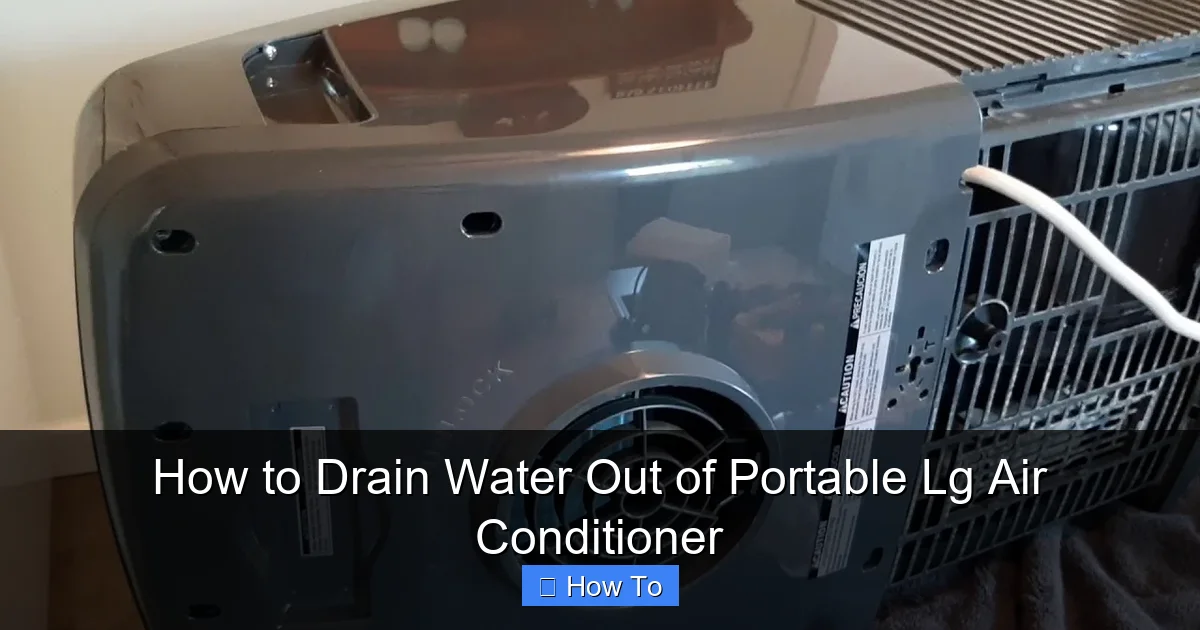
Visual guide about How to Drain Water Out of Portable Lg Air Conditioner
Image source: i.ytimg.com
Before diving into the draining process, it helps to understand why water builds up in the first place. Portable air conditioners use refrigerant to cool air, but they also act as dehumidifiers. As warm air passes over the cold evaporator coils inside the unit, moisture condenses and drips into a collection pan or tank.
LG designs its portable ACs with two main drainage methods:
- Manual Drain (Tank-Based): Most standard portable LG models—like the LP1219IVSM or LP1419IVSM—use an internal water tank that fills up over time. Once full, the unit either shuts off automatically or displays a “Full” or “Check Tank” indicator light.
- Continuous Drain (Hose-Enabled): Higher-end or commercial-grade LG portable units may include a built-in drain hose or support for an external hose attachment. This allows water to flow continuously out of the unit (e.g., into a floor drain or sink), eliminating the need for frequent manual emptying.
Some models even offer a hybrid approach: they can operate in “auto-evaporate” mode, where most condensation is reused to cool the condenser coils and evaporates naturally—but during high-humidity conditions, excess water still collects in the tank.
Knowing which system your unit uses is the first step to proper maintenance. Check your model number (usually on a label on the back or side) and consult the user manual. If you don’t have the manual, you can download it for free from LG’s official support website.
When Should You Drain Your Portable LG Air Conditioner?
You don’t need to drain your unit every day—but waiting too long can cause problems. Here’s how to know when it’s time:
- The indicator light is on: Many LG portable ACs have a “Tank Full” or “Drain” LED that lights up when the reservoir is nearly full.
- The unit shuts off unexpectedly: If your AC stops cooling mid-cycle without explanation, a full water tank may be triggering the safety cutoff.
- You hear sloshing sounds: Water moving inside the unit is a clear sign the tank is filling up.
- It’s been running in high humidity: On muggy days or in damp rooms (like basements), condensation builds faster. Drain more often during these times.
- Weekly routine check: Even if there’s no warning, make it a habit to check the tank once a week during heavy use seasons (summer or rainy periods).
Pro tip: If you live in a humid climate or use your portable AC daily, consider setting a phone reminder every 3–5 days to check the water level.
Step-by-Step Guide: How to Drain Water Out of Your Portable LG Air Conditioner
Now that you know why and when to drain, let’s get into the actual process. Follow these steps carefully to avoid spills, electrical hazards, or damage to your unit.
Step 1: Turn Off and Unplug the Unit
Safety first! Before touching any part of your air conditioner, switch it off using the remote or control panel. Then, unplug the power cord from the wall outlet. This prevents accidental startup and reduces the risk of electric shock—especially important since you’ll be handling water near electrical components.
Wait at least 10–15 minutes for the unit to cool down if it’s been running recently. Hot surfaces can cause burns, and internal parts may still be under pressure.
Step 2: Locate the Water Tank or Drain Port
The location of the water tank varies by model, but most portable LG units house it at the bottom rear of the appliance. Look for a removable panel, drawer, or access door labeled “Water Tank,” “Drain Tank,” or similar.
On some models (like the LG LP1217WSR), the tank slides out like a drawer. On others, you may need to gently tilt the unit backward to access it—but never tip it beyond 45 degrees, as this can spill water or damage internal tubing.
If your unit supports continuous drainage, you’ll see a small hose port (often near the exhaust vent) where you can attach a drain hose. In this case, you may not need to remove a tank at all—just ensure the hose is properly routed to a drain.
Step 3: Prepare Your Workspace
Place your portable AC on a flat, stable surface near a sink, floor drain, or outside door. Lay down an old towel or shallow tray beneath the unit to catch any drips or spills. Have a clean bucket or large container ready to hold the drained water—most tanks hold between 0.5 to 1.5 liters (about 17 to 50 ounces).
Wear old clothes or an apron, just in case. And keep children and pets away from the workspace.
Step 4: Remove the Water Tank
Gently pull out the water tank drawer or panel. It should slide out smoothly—if it feels stuck, double-check that you’ve turned off the unit and that no latches are engaged. Some models have a small handle or tab to grip.
Once removed, inspect the tank. You’ll likely see cloudy or slimy residue—this is normal but indicates it’s time for a cleaning (more on that later).
Carefully carry the tank to your prepared container or sink. Pour the water out slowly to avoid splashing.
Step 5: Empty and Rinse the Tank
After emptying, rinse the tank with warm water. For stubborn grime or mildew smell, use a mild solution of dish soap and water. Avoid harsh chemicals like bleach, which can leave toxic residues or damage plastic parts.
Use a soft sponge or cloth to wipe the interior. Pay special attention to corners and crevices where mold can hide. Let the tank air-dry completely before reinserting it—moisture left inside can promote bacterial growth.
Step 6: Reinstall the Tank and Restore Power
Once the tank is dry, slide it back into place until it clicks or sits flush. Make sure it’s fully seated—an improperly installed tank can trigger false “full tank” errors or cause leaks.
Plug the unit back in and turn it on. Run it for a few minutes to confirm normal operation. Check around the base for any signs of dripping.
Step 7: Optional – Set Up Continuous Drainage (If Supported)
If your LG model supports hose drainage (check your manual), you can bypass manual tank emptying altogether. Purchase a standard garden hose or the drain kit recommended by LG. Attach one end to the drain port on the back of the unit and route the other end to a nearby floor drain, sink, or outside.
Ensure the hose slopes downward to allow gravity-fed flow—no kinks or uphill sections. Secure the hose with clips if needed to prevent dislodging.
With continuous drainage active, your unit can run indefinitely without manual intervention, making it ideal for basements, server rooms, or 24/7 cooling needs.
Cleaning and Maintenance Tips for Long-Term Performance
Draining is just one part of portable AC care. To keep your LG unit efficient and odor-free, incorporate these maintenance habits:
- Clean the air filter monthly: A clogged filter restricts airflow, forcing the unit to work harder and produce more condensation. Remove the front grille, take out the filter, and wash it with mild soap and water. Let it dry completely before reinstalling.
- Wipe down the exterior: Use a damp cloth to clean the outer casing. Avoid spraying water directly onto vents or controls.
- Check the exhaust hose: Ensure it’s not kinked or blocked, as poor ventilation increases internal humidity and condensation.
- Store properly in off-seasons: If you won’t use the unit for months, drain the tank completely, clean all parts, and store it in a dry, covered area.
Bonus tip: Add a few drops of white vinegar to the water tank before reinstalling. This natural disinfectant helps prevent mold and mildew without harsh chemicals.
Troubleshooting Common Draining Issues
Even with proper care, you might encounter problems. Here’s how to solve the most frequent ones:
“My unit won’t turn on after draining.”
This usually means the water tank wasn’t reinserted correctly. The sensor detects an “empty” or missing tank and blocks operation. Power off, remove the tank, reseat it firmly, and try again.
“Water is leaking from the bottom even after draining.”
Possible causes: a cracked tank, loose drain plug, or clogged internal tubing. Inspect the tank for cracks. If intact, check if the drain plug (if your model has one) is tightened. For persistent leaks, contact LG support—internal seals may need replacement.
“The ‘Full Tank’ light stays on even after emptying.”
The float sensor inside the tank may be stuck. Gently shake the tank or tap it to dislodge the float. If that doesn’t work, the sensor may need cleaning or replacement.
“My unit smells musty.”
Stagnant water breeds bacteria. Deep-clean the tank with vinegar, replace the air filter, and run the unit in fan-only mode for an hour to dry internal components.
“Continuous drain hose isn’t working.”
Ensure the hose is unobstructed and positioned lower than the drain port. Also, verify that your model actually supports passive drainage—some require a pump for hose use.
Final Thoughts: Keep Cool and Dry All Season
Draining water from your portable LG air conditioner might seem like a chore, but it’s a small task with big rewards. By staying on top of tank maintenance, you’ll prevent leaks, extend your unit’s lifespan, maintain peak cooling efficiency, and enjoy fresher, healthier air in your home.
Remember: consistency beats perfection. A quick 5-minute drain every few days is far easier than dealing with a flooded floor or a broken compressor. And if you’re tired of manual emptying, upgrading to a model with continuous drainage or installing a permanent hose setup can save you time in the long run.
Your portable LG AC is designed to make life more comfortable—not more complicated. With the steps in this guide, you’re now equipped to handle its care like a pro. Stay cool, stay dry, and breathe easy!