Draining your LG portable air conditioner is essential to prevent water leaks, maintain cooling efficiency, and avoid mold or mildew buildup. This guide walks you through the entire process—from identifying when drainage is needed to choosing the right method and troubleshooting common issues—so your unit runs smoothly all season long.
Key Takeaways
- Regular drainage prevents water damage: Standing water in the tank can cause leaks, odors, and potential electrical hazards if not addressed promptly.
- Most LG portable ACs use auto-evaporation: These units are designed to recycle condensate, but high humidity may require manual draining.
- Check the water tank indicator: Many models have a “Full” light or alert that signals when the internal tank needs emptying.
- Use the correct drainage method: Depending on your model, you may use a continuous drain hose, manual bucket removal, or gravity drain setup.
- Clean the drain components regularly: Mineral buildup or debris can clog the drain system, reducing efficiency and causing malfunctions.
- Always unplug before draining: Safety first—never attempt to drain or handle internal parts while the unit is powered on.
- Proper maintenance extends unit life: Routine draining and cleaning help your LG portable AC perform better and last longer.
How to Drain Your LG Portable Air Conditioner: A Complete Step-by-Step Guide
If you own an LG portable air conditioner, you already know how convenient and effective these units can be—especially in spaces where window units aren’t an option. But like any appliance that removes moisture from the air, your portable AC produces condensation. Over time, this water collects in an internal tank. If left unchecked, it can overflow, cause leaks, reduce cooling performance, or even lead to mold and unpleasant odors.
The good news? Draining your LG portable air conditioner is simple, safe, and only takes a few minutes. Whether you’re dealing with a full water tank alert or just doing routine maintenance, this comprehensive guide will walk you through everything you need to know—from understanding how your unit manages moisture to choosing the best drainage method and troubleshooting common problems.
By the end of this guide, you’ll be able to confidently maintain your LG portable AC, keep it running efficiently, and avoid costly repairs down the line.
Why Draining Is Necessary for Your LG Portable Air Conditioner
Portable air conditioners work by pulling warm, humid air from your room, passing it over cold evaporator coils, and then blowing cooled air back into the space. During this process, moisture in the air condenses on the coils—just like dew forms on a cold drink on a hot day. This condensate drips into a collection tray or internal tank inside the unit.
Most modern LG portable air conditioners are equipped with an auto-evaporation system. This means the collected water is partially reused to cool the hot condenser coils, which helps improve efficiency and reduces the need for frequent manual draining. In low-humidity environments, this system often handles all the moisture without any user intervention.
However, in high-humidity conditions—such as during summer months, in basements, or in tropical climates—the rate of condensation can exceed the unit’s ability to evaporate it. When that happens, the internal water tank fills up. If you ignore it, the unit will eventually shut off automatically (as a safety feature) or start leaking water onto your floor.
That’s why regular monitoring and occasional draining are essential. Not only does it prevent water damage, but it also ensures your AC continues to cool effectively and doesn’t strain its components.
When Should You Drain Your LG Portable Air Conditioner?
Knowing when to drain your unit is half the battle. Here are the most common signs that it’s time to take action:
- The “Full” or “Check Tank” indicator light is on: Many LG models feature a visible LED light on the control panel that illuminates when the water tank is full.
- The unit stops cooling or shuts off unexpectedly: This is often a safety shutdown triggered by a full tank.
- You notice water pooling around the base: Even a small puddle can indicate an overflow or clogged drain.
- Unusual noises or gurgling sounds: These may signal that water is backing up in the system.
- It’s been running continuously in high humidity: If your AC has been working nonstop during a humid spell, it’s wise to check the tank—even if there’s no warning light.
As a general rule, check your unit every 1–2 days during peak usage. If you live in a humid climate or use your AC heavily, daily checks may be necessary.
Types of Drainage Systems in LG Portable Air Conditioners
LG designs its portable air conditioners with user convenience in mind. Depending on your specific model (such as the LG LP1419IVSM, LP0821WSR, or LP1217WSR), you may have one of several drainage options:
1. Auto-Evaporation (No Manual Draining Required Under Normal Conditions)
Many newer LG models rely primarily on auto-evaporation. The condensate is redirected to the hot exhaust side of the unit, where it evaporates naturally. This eliminates the need for frequent manual draining—ideal for moderate climates.
2. Manual Bucket/Tank Removal
Some units have a removable internal water tank (usually located at the bottom rear of the unit). When full, you simply pull it out, empty it, and reinsert it. This is common in smaller-capacity models.
3. Continuous Drain Hose (Gravity Drain)
For extended use or high-humidity environments, you can attach a drain hose to a designated port on the back or side of the unit. The hose directs water continuously to a floor drain, sink, or outside—eliminating the need to monitor the tank.
4. Pump-Assisted Drainage (on Select Models)
A few advanced LG portable ACs include a built-in condensate pump. This allows you to drain water vertically (e.g., up to a sink or window) using a small hose, giving you more placement flexibility.
Understanding which system your model uses will help you choose the right draining method. Check your user manual or look for labels near the rear panel to identify your drainage type.
Step-by-Step Guide: How to Drain Your LG Portable Air Conditioner
Now that you know why and when to drain, let’s get into the actual process. Follow these steps carefully to ensure safe and effective drainage.
Step 1: Turn Off and Unplug the Unit
Safety is paramount. Before doing anything, make sure your LG portable air conditioner is completely powered off. Press the power button to shut it down, then unplug it from the wall outlet. This prevents any risk of electric shock and protects the internal components while you work.
Step 2: Locate the Water Tank or Drain Port
Move your unit to a stable, level surface near a sink, drain, or outdoor area—especially if you plan to use a continuous drain hose. Then, examine the back or bottom of the unit:
- If your model has a removable tank, look for a small panel or handle at the base. It’s usually labeled “Water Tank” or “Drain.”
- If it uses a continuous drain hose, find the rubber cap or threaded port (often near the exhaust hose connection).
- For pump-assisted models, there may be a separate pump outlet with a hose connector.
Refer to your owner’s manual if you’re unsure. LG typically includes clear diagrams showing drain locations.
Step 3: Prepare Your Drainage Setup
Depending on your method, gather the necessary tools:
- For manual tank removal: Have a towel, shallow container, and bucket ready to catch any spilled water.
- For continuous draining: Use a standard garden hose or the drain hose that came with your unit (if included). Ensure it’s long enough to reach your drain point.
- For pump-assisted draining: Attach the provided pump hose securely to the outlet.
Place towels around the base of the unit to protect your floor in case of drips.
Step 4: Remove and Empty the Water Tank (Manual Method)
If your LG portable AC uses a removable tank:
- Gently pull the tank straight out from its slot. It should slide out smoothly—don’t force it.
- Carry it carefully to a sink or drain. Tilt it slowly to pour out the water.
- Rinse the tank with clean water to remove any residue or mold. Avoid using harsh chemicals—mild soap and water are sufficient.
- Shake out excess water and let it air-dry completely before reinserting.
- Slide the dry tank back into place until it clicks or sits flush.
Pro Tip: If the tank is stuck, check for a latch or release button. Some models require you to press a tab before removing.
Step 5: Set Up Continuous Drainage (Gravity or Pump Method)
For models with a drain port:
- Remove the rubber cap or plug from the drain port.
- Attach one end of the drain hose to the port. Make sure it’s snug to prevent leaks.
- Run the other end of the hose to a suitable drainage point:
- Into a nearby floor drain
- Down a sink (use a sink adapter if needed)
- Out a window to the outdoors
- Into a bucket (only recommended for short-term use)
- Ensure the hose slopes downward—gravity needs help! Avoid kinks or loops that could trap water.
- Secure the hose with tape or clips if necessary to keep it in place.
For pump-assisted models, follow the same steps, but the pump will actively move water through the hose—even uphill.
Important: Once continuous drainage is set up, you won’t need to manually empty the tank unless the hose becomes clogged or disconnected.
Step 6: Reassemble and Test the Unit
After draining:
- Double-check that all hoses are securely attached and the tank (if removed) is properly seated.
- Plug the unit back in and turn it on.
- Run the AC for 10–15 minutes to ensure it’s cooling normally and no water is leaking.
- Listen for unusual sounds and inspect the area around the unit for moisture.
If everything looks and sounds good, you’re all set!
Tips for Efficient and Safe Draining
To get the most out of your LG portable air conditioner and minimize drainage hassles, keep these practical tips in mind:
- Drain proactively: Don’t wait for the “Full” light. Check the tank every day during humid weather.
- Use distilled water for cleaning: If you notice mineral buildup in the tank, rinse it with distilled water to prevent scaling.
- Inspect hoses regularly: Over time, drain hoses can crack, kink, or develop mold. Replace them annually or as needed.
- Keep the area dry: Always place your unit on a waterproof mat or tray to catch accidental spills.
- Avoid overloading circuits: Never plug your AC into an overloaded outlet or extension cord—this can cause overheating and drainage issues.
- Store properly in off-seasons: If you’re not using your unit for months, drain it completely, clean the tank, and store it in a dry place with the hose detached.
Troubleshooting Common Drainage Issues
Even with proper care, you might run into problems. Here’s how to fix the most common drainage issues with LG portable air conditioners:
Problem: Water is leaking from the bottom of the unit
Possible Causes: Full tank not emptied, cracked tank, loose drain hose, or clogged drain line.
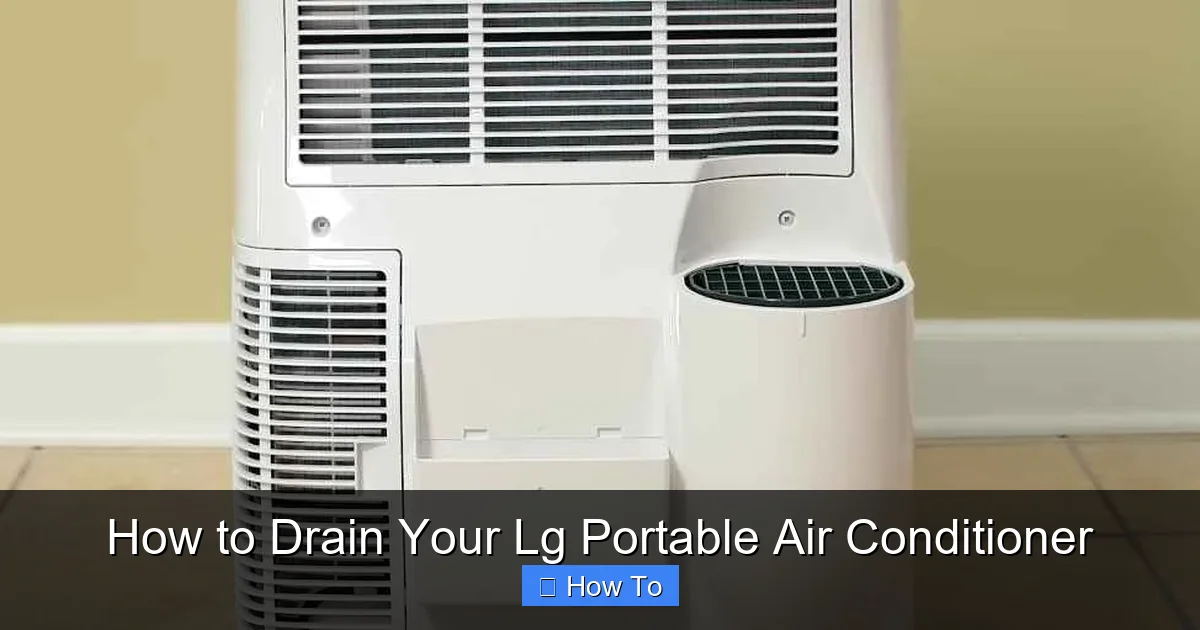
Visual guide about How to Drain Your Lg Portable Air Conditioner
Image source: smartacsolutions.com
Solution: Turn off and unplug the unit. Check the tank level and drain it. Inspect the tank for cracks and replace if damaged. Ensure the drain hose is securely attached and unobstructed.
Problem: The “Full” light is on, but the tank isn’t full
Possible Causes: Faulty water level sensor, debris blocking the sensor, or a stuck float switch.
Solution: Clean the tank and sensor area with a soft cloth. If the issue persists, consult LG support—the sensor may need replacement.
Problem: Drain hose is clogged
Possible Causes: Mold, algae, or mineral deposits blocking the hose.
Solution: Disconnect the hose and flush it with warm water and vinegar. Use a pipe cleaner or brush to remove stubborn buildup. Rinse thoroughly before reattaching.
Problem: Unit won’t drain even with a hose attached
Possible Causes: Hose is kinked, not sloped correctly, or the drain port is blocked.
Solution: Straighten the hose and ensure it slopes downward. Check the drain port for debris and clean it with compressed air or a cotton swab.
Problem: Mold or mildew smell
Possible Causes: Stagnant water in the tank or drain hose.
Solution: Empty and clean the tank thoroughly. Run a mixture of water and white vinegar through the drain hose. Let the unit run in fan-only mode for an hour to dry internal components.
Maintaining Your LG Portable Air Conditioner for Long-Term Performance
Draining is just one part of keeping your unit in top shape. For optimal performance and longevity, follow this simple maintenance routine:
- Clean or replace the air filter monthly: A dirty filter restricts airflow, reduces cooling, and increases moisture buildup.
- Wipe down the exterior: Use a damp cloth to clean the casing and control panel. Avoid abrasive cleaners.
- Check the exhaust hose: Ensure it’s not bent or blocked, as this can affect airflow and drainage.
- Inspect seals and gaskets: Make sure the window kit is sealed properly to prevent humid air from re-entering the room.
- Schedule professional service annually: If you notice reduced cooling, strange noises, or persistent drainage issues, have a technician inspect the unit.
By combining regular draining with routine maintenance, you’ll enjoy cooler air, lower energy bills, and fewer surprises.
Conclusion
Draining your LG portable air conditioner might seem like a small task, but it plays a big role in keeping your unit efficient, safe, and long-lasting. Whether you’re using the manual tank method or a continuous drain hose, the process is straightforward once you know what to look for.
Remember: prevention is easier than repair. A few minutes of drainage every few days can save you from water damage, mold growth, and costly service calls. Plus, a well-maintained AC cools better and uses less energy—keeping you comfortable and your utility bills in check.
So the next time you see that “Full” light blink on, don’t panic. Grab a towel, follow the steps in this guide, and get back to enjoying cool, dry air. Your LG portable air conditioner will thank you—and so will your floors.