Window Air Conditioners by Size
When it comes to choosing a window air conditioner, size matters. The cooling capacity of an air conditioner is measured in British Thermal Units (BTUs). Selecting the right size window air conditioner for your space is crucial for optimal performance and energy efficiency.
Factors to Consider
Before making a purchase, consider the following factors to ensure you select the correct size window air conditioner:
Room Size: Measure the square footage of the room where the air conditioner will be installed. This will help determine the appropriate cooling capacity needed.
Insulation: The level of insulation in the room affects the cooling requirements. Well-insulated rooms may require less cooling capacity compared to poorly insulated spaces.
Windows: The number and size of windows in the room can impact the cooling load. Rooms with large windows or direct sunlight may require higher cooling capacity.
Ceiling Height: Taller rooms may require higher cooling capacity to effectively distribute the cool air.
https://www.youtube.com/watch?v=PmO0x_Vi4eU
Additional Sizing Considerations
In practice, heat‑generating appliances (ovens, computers, large TVs) and the number of occupants can add 10–20 % to the required BTUs. A common mistake is ignoring these internal loads, which leads to an undersized unit that runs constantly and wears out faster. If the room regularly hosts more than two people or contains high‑heat equipment, bump the calculated BTU figure up one tier. For more on this, see our guide on the ultimate guide to midea air conditioner app.
Calculating the Right Size
Properly sizing a window air conditioner involves matching the cooling capacity (BTUs) to the specific requirements of the room. Here's a simple formula to determine the appropriate BTU rating:
Room Shape Calculation
Square or Rectangular Multiply the length of the room by the width to get the square footage. Then, use the following guidelines:
Triangular Multiply the length of the room by the width and divide by 2 to get the square footage.
Quick‑Reference BTU Calculator
For a faster estimate, many manufacturers provide an online calculator that factors in ceiling height, window orientation, and climate zone. Using one of those tools alongside the manual method above gives a more precise match, especially for irregularly shaped rooms.
Choosing the Right Size
Once you have calculated the square footage of the room, refer to the following guidelines for selecting the appropriate cooling capacity:
150 to 350 square feet: Look for a window air conditioner with 5,000 to 8,000 BTUs.
350 to 550 square feet: Consider a unit with 8,000 to 12,000 BTUs.
550 to 1,050 square feet: Opt for a window air conditioner with 12,000 to 18,000 BTUs.
1,050 to 1,600 square feet: Choose a unit with 18,000 to 25,000 BTUs.
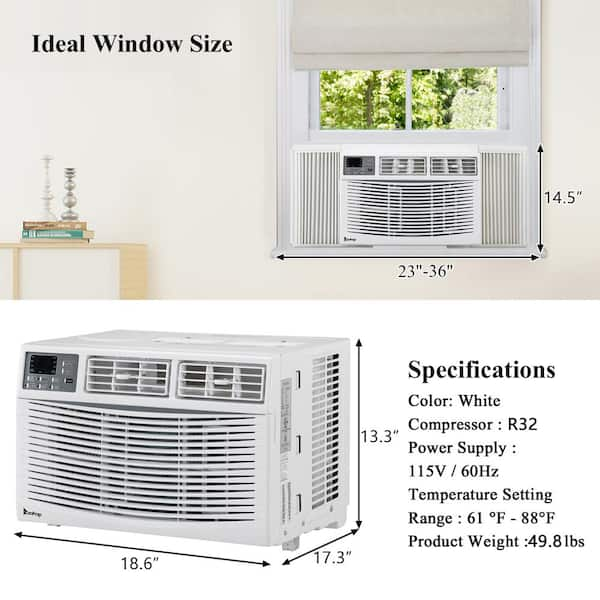
Typical 8,000‑BTU window AC on a retail shelf
Credit: www.homedepot.com
Common Window Air Conditioner Sizes
Window air conditioners are available in various sizes to accommodate different room dimensions. Here are some common window air conditioner sizes and their cooling capacities:
Size (Square Feet) Cooling Capacity (BTUs)
100-300 5,000-8,000
300-550 8,000-12,000
550-1,050 12,000-18,000
1,050-1,600 18,000-25,000
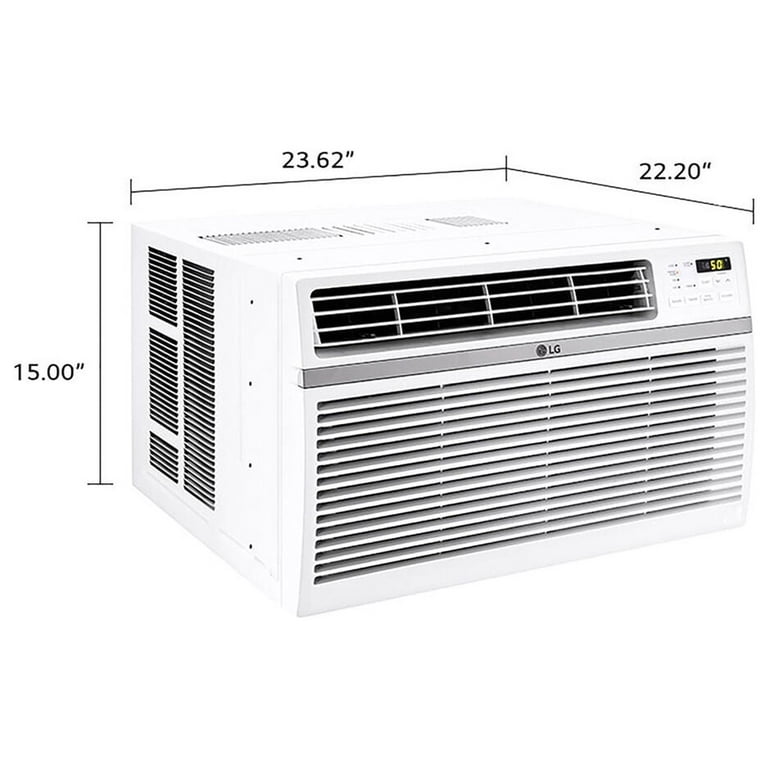
Packaging label highlighting the 12,000‑BTU rating
Credit: www.walmart.com
Energy Efficiency & Smart Features (2026 Update)
Modern window units now carry ENERGY STAR® certification and often include Wi‑Fi connectivity for app‑based scheduling. In 2026, the U.S. Department of Energy recommends a minimum CEER (Combined Energy Efficiency Ratio) of 12.0 for units under 14,000 BTU and 11.0 for larger models. Choosing a model that meets or exceeds these thresholds can cut seasonal electricity use by 15‑20 % compared with a non‑certified unit. For the latest efficiency standards, see the ENERGY STAR program. For more on this, see our guide on hitachi window ac installation guide.
Installation Tips & Safety
- Verify the window opening dimensions (width, height, sill depth) before purchase; most units require a minimum 23‑inch width.
- Use a UL‑listed support bracket for units over 10,000 BTU to meet many local codes — especially in high‑rise buildings. (NYC, for example, mandates brackets for units above 12,000 BTU.)
- Seal gaps with weather‑stripping foam to prevent air leakage and improve efficiency.
- Ensure the unit is tilted slightly outward (≈¼ in) for proper condensate drainage.
Maintenance Checklist
- Monthly – Clean or replace the air filter; a clogged filter reduces airflow and raises energy draw.
- Seasonally – Vacuum the evaporator and condenser coils; straighten bent fins with a fin comb.
- Annually – Inspect the power cord, plug, and mounting hardware for wear; lubricate the fan motor if the manual specifies it.
- Before storage – Run the unit on fan‑only mode for 30 min to dry internal components, then cover with a breathable cover.
For a deeper dive into seasonal upkeep, see our guide on seasonal air conditioning maintenance tips.
Where to Find Window Air Conditioners by Size
When shopping for a window air conditioner, you can find a variety of sizes and models at home improvement stores, appliance retailers, and online marketplaces. Consider the dimensions of the unit as well as its cooling capacity to ensure it fits your space. For more on this, see our guide on window air conditioner safety tips.
It's important to note that the price of window air conditioners can vary based on the size and brand. Be sure to compare different options and consider energy efficiency ratings to make an informed decision.
Ready to compare top‑rated models? Browse our curated list of energy‑efficient window ACs for 2026.
Frequently Asked Questions
What Are The Sizes Of Window Air Conditioners?
Window air conditioners come in various sizes, commonly ranging from 5,000 to 25,000 BTUs. The dimensions vary, but typical units are around 14-18 inches high and 23-26 inches wide. It's essential to consider the size of the space you want to cool when choosing a window air conditioner. For more on this, see our guide on window air conditioner install tips.
What Size Room Will A 8000 Btu Air Conditioner Cool?
An 8000 BTU air conditioner can cool a room up to 350 square feet in size.
What Size Room Is A 12000 Btu Air Conditioner For?
A 12000 BTU air conditioner is suitable for cooling a room up to 550 square feet.
What Size Room Will A 5000 Btu Window Air Conditioner Cool?
A 5000 BTU window air conditioner is suitable for cooling rooms up to 150 square feet in size. To find the appropriate air conditioner size, multiply the length of the room by the width. For square and rectangular rooms, use this formula.
For triangular rooms, multiply the length of the room by the width and divide by two.
Do I Need A Support Bracket For My Window AC?
Most municipalities require a UL‑listed bracket for units above 10,000 BTU, and many manufacturers recommend one for any unit over 8,000 BTU to prevent sagging and improve safety. Check local building codes or consult a licensed installer.
Can I Use A Window AC In A Sliding Window?
Yes — sliding‑window kits are available, but they typically reduce the effective sealing area, so choose a unit with a slightly higher BTU rating to compensate for the extra air leakage.
Conclusion
Choosing the right size window air conditioner is essential for maintaining a comfortable indoor environment while minimizing energy consumption. By considering the square footage, insulation, and other factors, you can select a unit with the appropriate cooling capacity to meet your specific needs.
Remember to refer to the manufacturer's specifications and consult with a professional if you have any doubts about selecting the right size window air conditioner for your space.