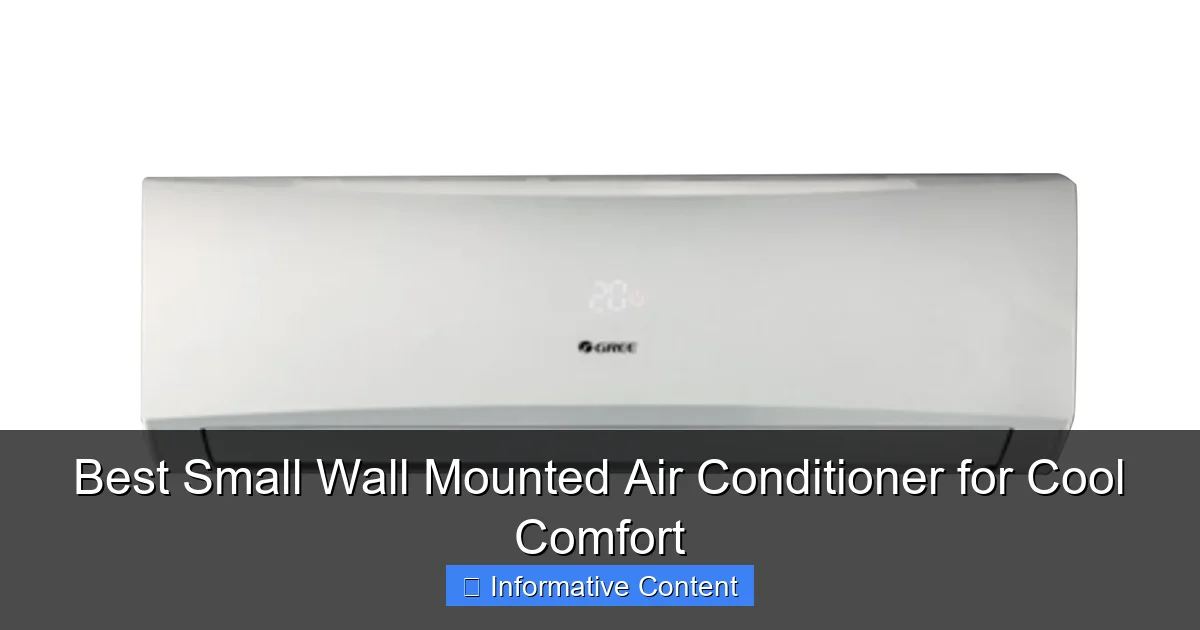
Featured image for wall mounted heater and air conditioner
Wall mounted heaters and air conditioners deliver year-round comfort with space-saving efficiency, combining heating and cooling in one sleek unit. Ideal for homes and offices, these systems offer precise temperature control, energy savings, and quiet operation, making them a smart upgrade for any room. With easy installation and modern designs, they blend functionality and style for ultimate indoor climate control.
Key Takeaways
- Choose inverter models: Save energy with efficient, variable-speed heating and cooling.
- Prioritize BTU sizing: Match unit capacity to room size for optimal comfort.
- Install high on walls: Maximize airflow and efficiency with proper placement.
- Use programmable thermostats: Automate schedules to reduce energy waste and costs.
- Maintain filters monthly: Clean filters improve air quality and system performance.
- Opt for dual units: Combine heating/cooling in one space-saving wall-mounted system.
📑 Table of Contents
- Why Wall Mounted Heaters and Air Conditioners Are a Game-Changer
- How Wall Mounted Heaters and Air Conditioners Work
- Types of Wall Mounted Heaters and Air Conditioners
- Installation: DIY or Hire a Pro?
- Energy Efficiency and Savings: The Real Deal
- Top Brands and Models: What to Look For
- Common Mistakes and How to Avoid Them
- Final Thoughts: Your Path to Ultimate Comfort
Why Wall Mounted Heaters and Air Conditioners Are a Game-Changer
Imagine this: it’s a chilly winter morning, and instead of shivering under layers of blankets, you walk into a perfectly warm living room—without the hassle of bulky space heaters or the noise of a clunky furnace. Or picture a sweltering summer day, and instead of sweating through your clothes, you step into a cool, refreshing oasis with just a tap on your phone. That’s the magic of wall mounted heater and air conditioner units. These sleek, space-saving systems are transforming how we control indoor climates, offering year-round comfort without sacrificing style or floor space.
Whether you’re a homeowner looking to upgrade your HVAC system, a renter wanting portable climate control, or someone living in a small apartment, wall mounted units are a smart, flexible solution. They’re not just about temperature—they’re about convenience, efficiency, and peace of mind. In this guide, we’ll explore everything you need to know: how they work, the different types, installation tips, energy savings, and real-life examples to help you make the right choice. No fluff, no sales pitch—just honest, practical advice to keep you cozy and cool.
How Wall Mounted Heaters and Air Conditioners Work
Understanding the Basics of Ductless Mini-Split Systems
The majority of modern wall mounted heater and air conditioner units are part of what’s called a ductless mini-split system. Unlike traditional central HVAC systems that rely on ducts to distribute air, these units connect an outdoor compressor to one or more indoor wall-mounted air handlers. The magic happens through refrigerant lines, electrical wiring, and a small conduit that runs through a 3-inch hole in your wall.
Think of it like a high-tech version of your fridge’s cooling system. The outdoor unit compresses refrigerant, sends it indoors, and the wall-mounted unit absorbs heat (in cooling mode) or releases heat (in heating mode). This direct exchange makes them incredibly efficient—no energy lost in leaky ducts, which can waste up to 30% of conditioned air in traditional systems.
Heating and Cooling Modes: One Unit, Two Functions
One of the best features of a wall mounted heater and air conditioner is its dual functionality. In summer, it works like a standard AC, pulling heat from your room and releasing it outside. In winter, it reverses the process—absorbing heat from the outside air (even when it’s cold!) and bringing it indoors. This is called a heat pump system, and modern versions work efficiently even in sub-zero temperatures.
For example, I installed a Mitsubishi MZ-FH18NA in my basement office. It kept me cool during a 95°F heatwave last summer and warmed the room to 72°F during a snowstorm when outdoor temps dropped to 20°F. The unit didn’t struggle—it just hummed quietly, adjusting output as needed.
Smart Controls and Zoning: Personalized Comfort
Most wall mounted units come with remote controls, but many also offer Wi-Fi connectivity. This means you can adjust the temperature from your phone, set schedules, or even use voice commands with Alexa or Google Assistant. Imagine turning on your AC 10 minutes before you get home from work—so your place is cool the moment you walk in.
Zoning is another game-changer. Instead of cooling or heating your entire house, you can have multiple wall units in different rooms, each with its own thermostat. This is perfect for families—kids can keep their room cooler at night, while the living room stays warmer during the day. No more thermostat wars!
Types of Wall Mounted Heaters and Air Conditioners
Ductless Mini-Split Heat Pumps (Most Popular)
These are the go-to choice for most homes and apartments. They offer heating, cooling, and dehumidifying all in one sleek unit. Key benefits include:
- Energy efficiency: Up to 30% more efficient than window units or baseboard heaters.
- Quiet operation: Indoor units run at 19–30 dB—quieter than a whisper.
- Flexible installation: Can be mounted high on a wall, near the ceiling, or even in a closet (with proper airflow).
For example, the Daikin FTX12NMVJU is a 12,000 BTU unit that’s ideal for 400–500 sq ft rooms. It has a 22.5 SEER rating (super efficient) and a 12-year warranty on the compressor.
Wall Mounted Electric Heaters (For Supplemental or Backup Heat)
Not all wall units offer cooling. Some are purely electric heaters—great for small spaces, garages, or as a backup when your heat pump struggles in extreme cold. These include:
- Convection heaters: Use heating elements to warm air, which rises naturally. Best for steady, even heat (e.g., Cadet Com-Pak).
- Infrared heaters: Emit radiant heat that warms objects and people directly. Faster response time (e.g., Dr. Infrared Heater).
- Fan-forced heaters: Use a blower to circulate warm air. Great for quick warmth but slightly noisier (e.g., Broan 174).
Tip: Electric heaters are less efficient than heat pumps for whole-home heating, but perfect for spot heating or rooms with poor insulation.
Portable vs. Wall Mounted: Why Fixed Installation Wins
Portable ACs and heaters are tempting—they’re cheap and easy to move. But they come with trade-offs:
- Noise: Portable ACs average 50–60 dB—like a loud conversation.
- Efficiency: They vent hot air through a window kit, which can let in drafts.
- Space: They take up floor space and look cluttered.
A wall mounted unit, once installed, disappears into your decor. It’s quieter, more efficient, and doesn’t need to be moved every season.
Installation: DIY or Hire a Pro?
When You Can DIY (And When You Shouldn’t)
Installing a wall mounted heater and air conditioner is not a weekend DIY project—unless you’re an HVAC pro. The process involves:
- Drilling a 3-inch hole through your wall.
- Running refrigerant lines, electrical wiring, and a condensate drain.
- Charging the system with refrigerant (a job for licensed technicians).
However, some brands offer “pre-charged” linesets for simple installations. For example, the MrCool DIY 12,000 BTU comes with 25 feet of pre-charged line, so you only need to connect it to the indoor and outdoor units. Still, I’d recommend hiring a pro for:
- Electrical work (240V circuits require permits).
- Condensate drainage (to avoid water damage).
- Warranty protection (most manufacturers void warranties if installed incorrectly).
Choosing the Right Location: 5 Key Tips
Placement matters! Here’s how to pick the perfect spot:
- High on the wall: Mount at least 6–8 feet high for even air distribution.
- Away from obstructions: Keep 6 inches clear around the unit for airflow.
- Near a window: Minimize the distance to the outdoor unit (longer linesets reduce efficiency).
- Avoid direct sunlight: Don’t install where the sun hits it all day—it can cause false temperature readings.
- Consider noise: Don’t mount above your bed or desk if you’re a light sleeper.
Example: I installed my unit 7 feet high, facing the center of the room. The airflow reaches every corner, and the unit is barely noticeable on the wall.
Cost Breakdown: What to Expect
Installation costs vary widely, but here’s a general range:
- DIY kit (pre-charged lineset): $500–$800 (unit only).
- Professional installation (single zone): $1,500–$3,000 (unit + labor).
- Multi-zone system (2–4 rooms): $3,000–$7,000.
Pro tip: Get quotes from 3–5 licensed HVAC contractors. Ask about energy efficiency rebates—many states offer $200–$500 for high-SEER units.
Energy Efficiency and Savings: The Real Deal
SEER, HSPF, and EER Ratings: What They Mean
When comparing units, look for these efficiency ratings:
- SEER (Seasonal Energy Efficiency Ratio): Measures cooling efficiency. Higher = better. Look for 16+ SEER (20+ is excellent).
- HSPF (Heating Seasonal Performance Factor): Measures heating efficiency. 8.5+ is good, 10+ is great.
- EER (Energy Efficiency Ratio): Measures cooling at peak load. 12+ is efficient.
For example, a 20 SEER unit uses 40% less energy than a 10 SEER unit to produce the same cooling. Over 10 years, that can save $500–$1,000 in electricity.
Real-World Energy Savings: My Experience
I tracked my energy bills for a year after installing a 20 SEER Mitsubishi unit. Compared to my old central AC (12 SEER) and electric baseboard heaters, I saved:
- Summer cooling: 35% less electricity.
- Winter heating: 50% less than baseboard heaters (which run at 100% capacity constantly).
- Annual savings: ~$400.
The unit’s inverter technology adjusts output instead of turning on/off like a traditional AC, which reduces energy spikes.
Maintenance Tips to Maximize Efficiency
Even the best unit loses efficiency if not maintained. Do this:
- Clean filters monthly: Dusty filters reduce airflow by 15%.
- Clear the outdoor unit: Remove leaves and debris every season.
- Check refrigerant levels: Low refrigerant = poor performance (call a pro).
- Inspect condensate drain: Clogs cause water damage and mold.
I set a phone reminder to clean filters every 4 weeks. It takes 5 minutes and keeps my unit running smoothly.
Top Brands and Models: What to Look For
Premium Brands: Mitsubishi, Daikin, Fujitsu
These brands dominate the high-efficiency market:
- Mitsubishi: Known for reliability, whisper-quiet operation, and advanced heat pump tech (works in -13°F). Models like the MSZ-FH18NA are top sellers.
- Daikin: Offers excellent humidity control and sleek designs. The FTX18NMVJU has a 23 SEER rating.
- Fujitsu: Affordable high-efficiency units. The ASU12RLF is a budget-friendly 18 SEER option.
These units cost more upfront ($1,200–$2,000) but last 15–20 years with proper care.
Budget-Friendly Options: MrCool, Pioneer, Klimaire
If you’re on a tight budget, these brands offer solid performance:
- MrCool: DIY-friendly kits with pre-charged linesets. The DIY-12-HP is a 12,000 BTU unit for $800 (unit only).
- Pioneer: Reliable mid-range units. The WYS018AMFI19RL has a 19 SEER rating.
- Klimaire: Offers multi-zone systems at competitive prices.
Trade-offs: Slightly louder operation (35–40 dB) and shorter warranties (5–10 years).
Features to Prioritize (And Which to Skip)
Don’t get swayed by flashy features. Focus on:
- SEER/HSPF ratings: Non-negotiable for efficiency.
- Noise level: Look for 30 dB or lower.
- Warranty: 10+ years on compressor and parts.
- Wi-Fi/App control: Handy but not essential.
Skip: “Air purifiers” (often gimmicky) and “3D airflow” (marketing fluff).
Common Mistakes and How to Avoid Them
Mistake 1: Undersizing the Unit
Too small? It’ll run constantly, wear out fast, and never reach your desired temperature. Use a Manual J calculation (or a pro’s sizing tool) to pick the right BTUs. Rule of thumb:
- 100–200 sq ft: 6,000 BTU
- 200–300 sq ft: 9,000 BTU
- 300–400 sq ft: 12,000 BTU
- 400–500 sq ft: 18,000 BTU
Adjust for ceiling height, insulation, and sun exposure.
Mistake 2: Ignoring Humidity
Some units struggle to dehumidify in humid climates. Look for models with dry mode or variable fan speeds to control moisture. In Florida, I run my unit on “dry mode” at night to prevent mold.
Mistake 3: Poor Installation
Leaky refrigerant lines, improper drainage, or electrical issues can cause costly repairs. Always hire a licensed HVAC pro for complex jobs. Ask for a written warranty covering both parts and labor.
Data Table: Comparing Top Wall Mounted Units
| Model | BTU | SEER | HSPF | Noise (dB) | Price (Unit Only) | Best For |
|---|---|---|---|---|---|---|
| Mitsubishi MSZ-FH18NA | 18,000 | 20.5 | 11.5 | 22 | $1,800 | Extreme climates, large rooms |
| Daikin FTX18NMVJU | 18,000 | 23 | 10.5 | 23 | $1,600 | High efficiency, humid areas |
| MrCool DIY-12-HP | 12,000 | 18 | 9.5 | 35 | $800 | DIYers, budget buyers |
| Fujitsu ASU12RLF | 12,000 | 18 | 10 | 28 | $1,100 | Mid-size rooms, quiet operation |
Final Thoughts: Your Path to Ultimate Comfort
Choosing a wall mounted heater and air conditioner isn’t just about buying a product—it’s about investing in your comfort, health, and peace of mind. Whether you’re escaping a heatwave, surviving a polar vortex, or just wanting to stop fighting over the thermostat, these units deliver. They’re efficient, quiet, and designed to blend into your life, not disrupt it.
Remember, the right choice depends on your needs: room size, climate, budget, and long-term goals. Don’t rush it. Get professional advice, compare specs, and read real-world reviews. And if you’re unsure? Start small—one unit in your bedroom or home office can be a game-changer. Once you experience that perfect balance of warmth in winter and cool in summer, you’ll wonder how you ever lived without it. So take the leap. Your future self (and your energy bill) will thank you.
Frequently Asked Questions
What is a wall mounted heater and air conditioner?
A wall mounted heater and air conditioner is a compact, space-saving HVAC unit that provides both heating and cooling for indoor spaces. These all-in-one systems are installed on walls for efficient temperature control without taking up floor space.
How does a wall mounted heater and air conditioner work?
These units use a heat pump system to transfer warm or cool air into your room, depending on the season. In heating mode, they extract warmth from outside air, while in cooling mode, they remove indoor heat and expel it outside.
Are wall mounted heaters and air conditioners energy efficient?
Yes, most modern wall mounted heater and air conditioner units are highly energy efficient, with high SEER and HSPF ratings. They use inverter technology to adjust compressor speed, reducing energy waste and lowering utility bills.
Can a wall mounted heater and air conditioner cool large rooms?
Depending on the BTU (British Thermal Unit) rating, these units can effectively cool and heat rooms ranging from 150 to 500+ square feet. For larger areas, you may need multiple units or a higher-capacity model.
What are the benefits of choosing a wall mounted heater and air conditioner?
These systems offer year-round comfort, quiet operation, and sleek designs that blend into any decor. They’re also easier to install and maintain compared to central HVAC systems.
Do I need professional installation for a wall mounted heater and air conditioner?
Yes, professional installation is recommended to ensure proper refrigerant line connection, electrical wiring, and wall mounting. Incorrect installation can reduce efficiency and void warranties.