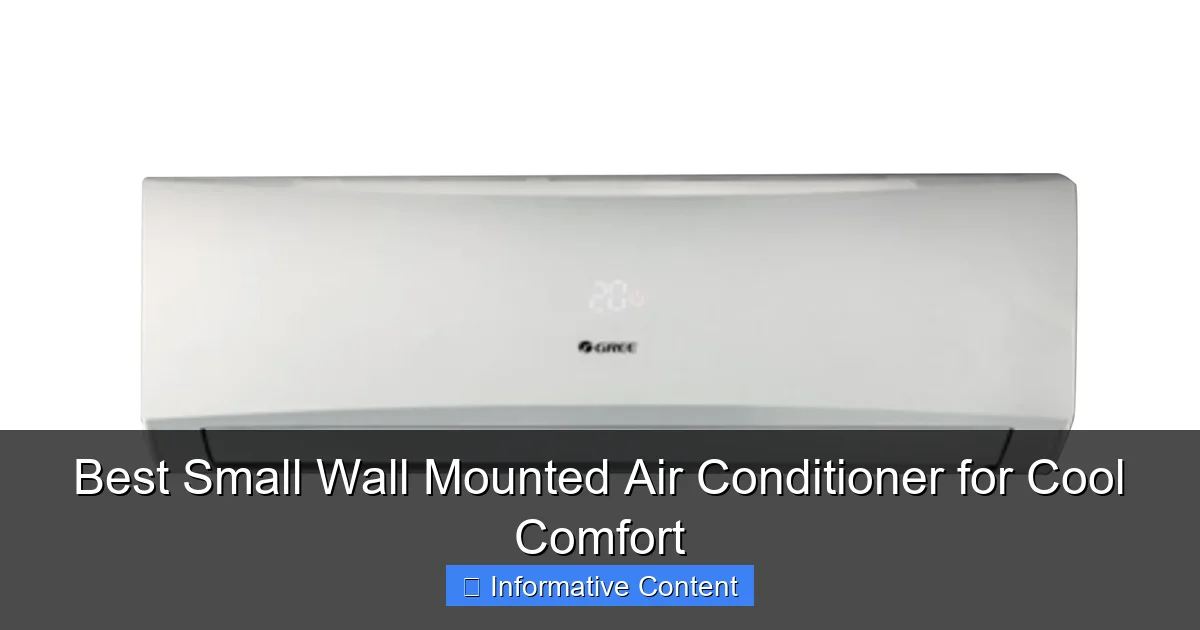
Featured image for wall heater air conditioner
Wall heater air conditioners deliver year-round climate control in one sleek, space-saving unit, combining powerful heating and efficient cooling for ultimate home comfort. Perfect for apartments, offices, and small spaces, these systems offer quick installation, energy efficiency, and precise temperature management with user-friendly controls.
Key Takeaways
- Choose wisely: Match unit size to room dimensions for optimal performance.
- Dual-function units: Save space with all-in-one heating and cooling solutions.
- Prioritize efficiency: Look for Energy Star ratings to cut utility costs.
- Smart controls: Use programmable thermostats for precise comfort management.
- Install properly: Ensure professional setup for safety and peak efficiency.
- Maintain regularly: Clean filters monthly to extend lifespan and performance.
📑 Table of Contents
- Why Your Home Deserves a Wall Heater Air Conditioner
- How Wall Heater Air Conditioners Work: The Tech Behind the Comfort
- Types of Wall Heater Air Conditioners: Which One Fits Your Needs?
- Top Benefits of a Wall Heater Air Conditioner (And a Few Caveats)
- How to Choose the Right Wall Heater Air Conditioner for Your Space
- Maintenance and Troubleshooting: Keep Your Unit Running Smoothly
- Final Thoughts: Is a Wall Heater Air Conditioner Right for You?
Why Your Home Deserves a Wall Heater Air Conditioner
Imagine this: It’s a freezing winter morning, and you’re huddled under a mountain of blankets, dreading the moment you have to get up. Or maybe it’s the middle of summer, and your living room feels like a sauna, making it impossible to relax. Sound familiar? If you’ve ever wished for a single solution to keep your home cozy in winter and cool in summer, you’re not alone. That’s where a wall heater air conditioner comes in—a versatile, space-saving hero that’s quietly transforming homes worldwide.
These units aren’t just about convenience; they’re about reclaiming comfort. Whether you live in a tiny apartment, a drafty old house, or a sun-drenched studio, a wall-mounted heater and air conditioner combo can adapt to your needs. No more juggling space heaters, fans, and bulky AC units. Instead, you get one sleek device that does it all. But before you rush out to buy one, let’s dive into the details. What makes these units special, how do they work, and—most importantly—how do you choose the right one for your space? Stick around, because this guide is your one-stop shop for everything you need to know.
How Wall Heater Air Conditioners Work: The Tech Behind the Comfort
If you’ve ever wondered how one device can both heat and cool your space, you’re not alone. Wall heater air conditioners, often called ductless mini-splits or through-the-wall units, use clever engineering to deliver year-round comfort. Here’s the breakdown:
Dual-Function Design
At their core, these units are heat pumps. In cooling mode, they work like a traditional AC: They absorb heat from inside your room and expel it outside. But here’s the magic: They can reverse this process. In heating mode, they extract heat from the outdoor air (yes, even in winter!) and pump it inside. This is why they’re called heat pumps—they move heat, not create it. For example, the Mitsubishi M-Series or LG Art Cool models use this technology to deliver efficient heating even in sub-zero temperatures.
Pro tip: Look for units with a “reverse cycle” or “heat pump” label. They’re the ones that handle both heating and cooling.
Key Components
- Indoor unit: Mounted on your wall, it blows conditioned air into the room. Modern designs are sleek, with features like whisper-quiet fans and air filters.
- Outdoor unit: Houses the compressor and condenser. It’s usually installed outside your home or on a balcony.
- Refrigerant lines: Connect the two units, carrying refrigerant to transfer heat. These lines are thin and flexible, making installation easier than ductwork.
- Thermostat/remote: Controls temperature, fan speed, and modes. Many newer models have Wi-Fi, so you can adjust settings from your phone.
For instance, the Daikin Emura has a minimalist indoor unit with a hidden display, while the Frigidaire FHPC102AC1 includes a remote with a built-in thermostat for precise control.
Efficiency Explained
Unlike electric space heaters (which turn electricity into heat at 100% efficiency), heat pumps can deliver 3–4 times more heat energy than the electricity they use. This is measured by the Heating Seasonal Performance Factor (HSPF) or Seasonal Energy Efficiency Ratio (SEER). A high SEER (18+) means better cooling efficiency, while a high HSPF (8.5+) means better heating efficiency. For example, the Panasonic XE Series has an HSPF of 12.5, making it a winter warrior.
Types of Wall Heater Air Conditioners: Which One Fits Your Needs?
Not all wall-mounted units are created equal. Your choice depends on your space, climate, and budget. Here’s how to navigate the options:
1. Ductless Mini-Split Systems
The gold standard for most homes. These have an indoor wall unit paired with an outdoor compressor. They’re ideal for:
- Single rooms (e.g., a bedroom or home office).
- Homes without ductwork (common in older houses or apartments).
- Zoned heating/cooling (you can install multiple indoor units for different rooms).
Example: The Mitsubishi Hyper-Heat can heat a 500 sq ft room down to -13°F (-25°C), making it perfect for cold climates. Downside: Installation costs more (typically $3,000–$7,000) due to refrigerant line setup.
2. Through-the-Wall Units
These are self-contained units installed directly into a wall (no outdoor compressor). They’re cheaper ($800–$2,500) and easier to install but less efficient. Best for:
- Rental properties or temporary spaces.
- Rooms with limited outdoor access (e.g., a basement).
Example: The Keystone KSTAT14-2C is a popular through-the-wall model with 14,000 BTU cooling and 10,500 BTU heating. Downside: They’re noisier and less efficient than mini-splits (SEER around 10–12).
3. Portable Wall-Mounted Units
Lightweight, easy to move, and often plug into standard outlets. They’re great for renters or small rooms (under 300 sq ft). Look for models with a “window kit” to vent hot air outside.
Example: The Honeywell HL14CESWK has 14,000 BTU cooling and 10,000 BTU heating, plus a dehumidifier. Downside: They’re less efficient and can’t heat/cool large spaces evenly.
4. Smart Wall Units
Wi-Fi-enabled models let you control temperature, set schedules, and monitor energy use via an app. Some even learn your preferences (e.g., turning on before you arrive home).
Example: The LG Dual Inverter Smart AC integrates with Google Assistant and Alexa. Downside: They cost 20–30% more than non-smart models.
Top Benefits of a Wall Heater Air Conditioner (And a Few Caveats)
Let’s talk real talk: Why invest in one of these units? The perks are hard to ignore, but there are trade-offs too.
The Good: Why You’ll Love It
- Year-round comfort: One device for all seasons. No more storing heaters in summer or ACs in winter.
- Energy savings: Heat pumps use 30–60% less energy than electric heaters or central AC. A SEER 18+ unit can cut cooling costs by 40% vs. older models.
- Space-saving: Wall-mounted units free up floor space. Great for small rooms or apartments.
- Zoned control: Heat/cool only the rooms you use. No more wasting energy on empty bedrooms.
- Improved air quality: Many models include HEPA filters, UV-C lights, or ionizers to reduce allergens and odors.
Real-life example: Sarah, a homeowner in Colorado, switched from a central AC and oil furnace to a Mitsubishi mini-split. Her winter heating bill dropped from $300/month to $120/month.
The Not-So-Good: What to Watch For
- Upfront cost: Mini-splits cost more than portable units. But the energy savings often pay for the difference in 3–5 years.
- Installation complexity: Ductless systems need professional installation (drilling holes, running refrigerant lines). DIY isn’t recommended.
- Noise: Some units hum or click. Look for models with <50 dB noise levels (quiet as a library).
- Climate limitations: Standard heat pumps struggle below 25°F (-4°C). If you live in a cold area, opt for a “hyper-heat” model (like the Fujitsu Halcyon).
Pro tip: Always check the manufacturer’s warranty. Top brands (Mitsubishi, Daikin, LG) offer 5–10 years of coverage on parts and compressors.
How to Choose the Right Wall Heater Air Conditioner for Your Space
Choosing the perfect unit feels overwhelming—but it doesn’t have to be. Follow this step-by-step guide:
Step 1: Measure Your Room
Size matters. A unit that’s too small won’t heat/cool effectively; one that’s too big will waste energy. Use this formula:
- Cooling: 20 BTU per sq ft (e.g., a 300 sq ft room needs 6,000 BTU).
- Heating: 25–30 BTU per sq ft (add 10% for drafty rooms or high ceilings).
Example: A 400 sq ft living room with big windows needs a 10,000–12,000 BTU unit. The Frigidaire FHPC122AC1 (12,000 BTU) is a solid fit.
Step 2: Check Efficiency Ratings
Look for:
- SEER: 14+ for cooling (18+ for maximum savings).
- HSPF: 8.2+ for heating (10+ for cold climates).
- Energy Star certification: Ensures the unit meets strict efficiency standards.
Tip: The Carrier Infinity 24VS has a SEER of 24 and HSPF of 13, making it one of the most efficient on the market.
Step 3: Prioritize Features
What matters most to you?
- Quiet operation: Look for “low noise” models (e.g., Panasonic XE Series).
- Smart controls: Wi-Fi, app control, voice assistants (e.g., LG SmartThinQ).
- Air quality: HEPA filters, dehumidifiers, or UV-C lights (e.g., Daikin Emura).
- Design: Slim profiles, hidden displays, or customizable panels.
Step 4: Consider Installation
Ask yourself:
- Do you have outdoor space for a compressor? (For mini-splits.)
- Is your wall thick enough for a through-the-wall unit? (Usually 6–8 inches.)
- Are you renting? Portable or window-mounted units may be better.
Pro tip: Get 2–3 quotes from HVAC pros. Installation costs vary by region and complexity.
Maintenance and Troubleshooting: Keep Your Unit Running Smoothly
Your wall heater air conditioner is an investment—treat it like one. A little maintenance goes a long way.
Routine Care
- Clean filters monthly: Dust and allergens clog filters, reducing airflow. Wash reusable filters with mild soap; replace disposable ones every 3–6 months.
- Wipe the indoor unit: Use a damp cloth to remove dust from vents and surfaces.
- Check refrigerant lines: Look for leaks, cracks, or ice buildup (signs of low refrigerant).
- Clear the outdoor unit: Remove leaves, debris, and snow. Keep 12 inches of clearance around it.
Example: Tom, a homeowner in Florida, cleaned his LG unit’s filters every month. His AC ran efficiently for 8 years without issues.
Common Problems (and Fixes)
| Issue | Likely Cause | Quick Fix |
|---|---|---|
| Unit won’t turn on | Power outage, tripped breaker, or faulty remote | Check circuit breaker; replace remote batteries |
| Weak airflow | Dirty filter, blocked vents, or low refrigerant | Clean filter; clear vents; call a pro for refrigerant |
| Ice on outdoor unit | Low refrigerant, dirty coils, or fan issues | Turn off unit; let ice melt; call a technician |
| Strange noises | Loose parts, debris in fan, or compressor issues | Tighten screws; clear debris; schedule service |
When to Call a Pro
Don’t DIY refrigerant, electrical, or compressor issues. Call an HVAC technician if you notice:
- Frequent cycling (unit turns on/off rapidly).
- Water leaks (could indicate a clogged drain line).
- Persistent foul odors (mold or electrical problems).
Tip: Schedule an annual inspection. A pro can clean coils, check refrigerant, and ensure everything runs safely.
Final Thoughts: Is a Wall Heater Air Conditioner Right for You?
Let’s circle back to where we started: comfort. A wall heater air conditioner isn’t just a gadget—it’s a lifestyle upgrade. It’s the peace of mind knowing your home will stay cozy in winter and refreshing in summer, without breaking the bank. Whether you’re a renter, homeowner, or somewhere in between, there’s a unit out there that fits your needs, budget, and space.
Yes, there are trade-offs. The upfront cost can be steep, and installation might feel daunting. But think of it this way: You’re not just buying a heater or an AC—you’re investing in energy savings, convenience, and year-round comfort. And with the right model, the payoff is real. From the Mitsubishi Hyper-Heat for cold climates to the LG Dual Inverter for smart homes, the options are better than ever.
So, what’s next? Start by measuring your space, researching top-rated models, and getting quotes from trusted installers. And remember: Comfort isn’t a luxury. It’s a necessity. Your home—and your well-being—deserve it.
Frequently Asked Questions
What is a wall heater air conditioner and how does it work?
A wall heater air conditioner is a dual-function HVAC unit mounted on the wall that provides both heating and cooling for indoor spaces. It works by transferring heat in or out of a room using a refrigeration cycle, offering year-round climate control with a single system.
Are wall heater air conditioners energy efficient?
Yes, many modern wall heater air conditioners are highly energy efficient, especially models with inverter technology and high SEER ratings. They can significantly reduce energy bills by heating and cooling only the rooms you use, minimizing wasted energy.
Can a wall heater air conditioner heat and cool large rooms?
It depends on the unit’s BTU capacity; higher BTU models can effectively heat and cool larger spaces, typically up to 1,500 square feet. For optimal performance, choose a unit matched to your room size and insulation levels.
Do wall heater air conditioners require professional installation?
Yes, professional installation is recommended for wall heater air conditioners to ensure proper mounting, electrical connections, and refrigerant handling. DIY installation can void warranties and pose safety risks if not done correctly.
What are the benefits of a wall-mounted heater and air conditioner?
Wall-mounted units save floor space, provide targeted heating and cooling, and often operate more quietly than window units. They also offer sleek, modern designs that blend well with home or office décor.
How do I maintain my wall heater air conditioner for long-term use?
Regular maintenance includes cleaning or replacing air filters every 1-3 months, checking for dust buildup, and scheduling annual professional inspections. Proper upkeep ensures efficiency, extends the unit’s lifespan, and improves indoor air quality.