
Panasonic ducted air conditioners provide whole-home comfort with advanced inverter technology, whisper-quiet operation, and energy-efficient performance. Ideal for larger homes, they offer precise temperature control, zoned cooling, and sleek indoor units that blend seamlessly into your ceiling. With smart connectivity and low maintenance needs, Panasonic ducted systems are a top choice for modern homeowners seeking reliability and long-term savings.
Key Takeaways
Whole-Home Comfort: Ducted systems cool every room uniformly through hidden vents, eliminating hot spots.
Energy Efficiency: Panasonic’s inverter technology adjusts compressor speed to match demand, reducing power use by up to 60%.
Quiet Operation: Advanced noise reduction keeps indoor unit sounds below 35 dB—quieter than a library.
Smart Control: Wi-Fi enabled models let you manage temperatures via smartphone or voice assistants like Alexa.
Easy Maintenance: Washable filters and accessible components simplify cleaning and servicing.
Custom Zoning: Control different zones independently to save energy and personalize comfort.
Long Lifespan: Built with durable parts and corrosion-resistant materials, these units last over 15 years with care.
Quick Answers to Common Questions
Do Panasonic ducted air conditioners require ductwork?
Yes, ducted systems need pre-existing or newly installed ductwork to distribute air. Homes without ducts may incur additional installation costs, but the result is seamless whole-home comfort.
Can I control multiple rooms with one Panasonic unit?
Absolutely. Most Panasonic models support multi-zone setups using dampers and separate thermostats, letting you customize temperatures per room for maximum efficiency.
Are Panasonic units noisy?
No—indoor units operate below 35 dB, quieter than normal conversation. Outdoor compressors are similarly designed for minimal noise, making them ideal for residential areas.
How much do Panasonic ducted systems cost?
Installation typically ranges from $3,500 to $7,000 depending on size, complexity, and features. Financing and utility rebates can reduce out-of-pocket expenses.
What’s included in the warranty?
Standard warranties cover parts and labor for 5–7 years, with the compressor often protected up to 10 years. Always confirm terms with your installer.
📑 Table of Contents
- Introduction: Why Choose a Panasonic Ducted Air Conditioner?
- How Panasonic Ducted Air Conditioners Work
- Benefits of Choosing Panasonic Ducted Systems
- Installation Process Explained
- Maintenance Tips to Extend Lifespan
- Comparing Panasonic Ducted Models
- Cost Considerations and ROI
- Conclusion: Is a Panasonic Ducted Air Conditioner Right for You?
- Frequently Asked Questions
Introduction: Why Choose a Panasonic Ducted Air Conditioner?
Imagine walking into a home where every corner feels perfectly cooled—no more stuffy corners or sudden temperature swings. That’s the promise of a Panasonic ducted air conditioner . Designed for whole-house comfort, these systems quietly work behind the scenes, delivering consistent airflow through ceiling vents while staying out of sight. Whether you're upgrading an existing setup or building from scratch, Panasonic’s ducted units combine cutting-edge tech with thoughtful design to keep your family comfortable year-round.
What sets Panasonic apart isn’t just the cooling power—it’s the balance of efficiency, intelligence, and durability. Their inverter-driven compressors don’t blast cold air nonstop; instead, they sense room needs and adjust output smoothly. This means less energy waste and more stable temperatures. Plus, with features like Wi-Fi control and eco-modes, you’re not just getting a machine—you’re getting peace of mind. In this guide, we’ll walk through everything you need to know about choosing, installing, and maintaining a Panasonic ducted system so you can make an informed decision for your home.
How Panasonic Ducted Air Conditioners Work
At its core, a ducted air conditioning system uses a central indoor unit—often tucked away in a utility closet or attic—connected to a network of insulated ducts that distribute conditioned air throughout your home. The Panasonic model stands out because of how it handles airflow and energy use.
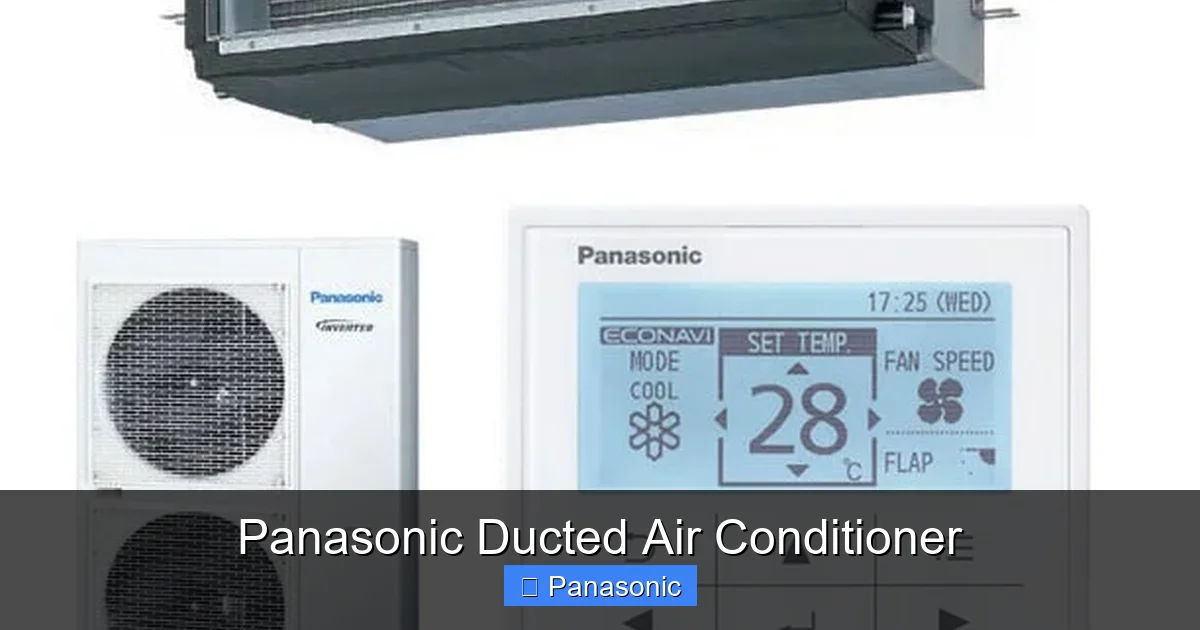
Panasonic ducted indoor unit mounted above ceiling with supply and return grilles visible
Image source: rungegroup.com.au
The Role of Inverter Technology
Most modern Panasonic ducted units feature inverter compressors. Unlike older models that cycle on/off constantly (which wastes energy and causes temperature dips), inverters vary the compressor’s speed based on real-time demand. So if your living room is already cool but the bedroom needs a little help, only that zone gets extra airflow—without overworking the whole system.
This results in smoother temperature transitions and significant savings. According to independent tests, inverter ducted systems can reduce electricity bills by up to 40% compared to non-inverter rivals. For a typical household, that might mean saving $200–$400 annually—money that adds up fast.
In practice, the inverter’s soft-start capability also reduces wear on the compressor during startup, which is a common failure point in fixed-speed units. A common mistake is assuming all "inverter" labels mean the same thing—Panasonic’s dual-rotary compressor design maintains efficiency even at very low speeds, whereas some competitors cycle off below 30% capacity.
Duct Design and Airflow Optimization
Panasonic engineers pay close attention to duct sizing and layout. Oversized or undersized ducts cause pressure imbalances, leading to uneven cooling. Their systems often include variable-speed blowers that adjust fan RPM to match duct resistance, ensuring balanced delivery across all vents.
For example, in a two-story home, the lower level might have longer duct runs. Without proper balancing, upstairs rooms could stay warm while downstairs feels chilly. Panasonic’s smart blower settings automatically compensate for these differences, so every room hits its target temp within minutes.
Refrigerant Cycle Basics
The system circulates R-32 refrigerant through a closed loop: the outdoor compressor pressurizes the gas, sending heat outdoors via the condenser coil; the liquid refrigerant then passes through an expansion valve into the indoor evaporator coil, where it absorbs heat from your home’s air before returning to the compressor. This continuous phase-change cycle is what moves heat—not "cold"—out of your living space. Understanding this helps explain why clean coils and proper refrigerant charge are critical to performance.
Benefits of Choosing Panasonic Ducted Systems
If you’re considering ducted AC, Panasonic offers several compelling advantages worth exploring. From whisper-quiet operation to customizable zoning, here’s what makes their systems a standout choice.
1. Whole-House Uniformity
Unlike window units or split systems that cool only one area at a time, ducted AC treats your entire home as a single climate-controlled zone… unless you want otherwise. Most Panasonic models support multi-zone setups, letting you set different temps for bedrooms, offices, or entertainment areas. No more fighting over the thermostat!
2. Aesthetic Integration
Gone are the days of bulky outdoor boxes and exposed indoor units. Panasonic ducted systems hide the main component inside your ceiling or walls, leaving only slim return/ supply grilles visible. These blend into standard ceiling tiles and come in white or beige finishes—perfect for any decor style.
3. Superior Noise Levels
Noise pollution kills relaxation. That’s why Panasonic prioritizes silence. Their latest indoor units operate at just 28–34 dB—comparable to rustling leaves or distant conversation. Even during high-speed cooling, you’ll barely notice it’s running. Outdoor compressors are equally quiet thanks to sound-dampening foam and vibration isolation mounts.
4. Humidity Control & Air Purification
Beyond temperature, humidity affects comfort and health. High moisture leads to mold, musty smells, and sticky skin. Panasonic ducted units often include built-in dehumidification modes that remove excess water without blasting cold air. Some premium models even integrate plasma ionizers or activated carbon filters to trap allergens, VOCs, and odors.
Health-Focused Filtration
The optional nanoe™ X technology (available on CS-EZ and select CS-PZ models) generates hydroxyl radicals that inhibit bacteria, viruses, and mold spores on surfaces and in the air stream. In practice, this means fewer allergy triggers during peak pollen season and reduced stale-air odors in tightly sealed modern homes. It’s not a substitute for ventilation, but it adds a measurable layer of indoor-air quality protection.
5. Eco-Friendly Refrigerants
Panasonic uses R-32 refrigerant—a next-gen option with lower global warming potential than older chemicals. It’s also more efficient per BTU, meaning faster cooling with fewer emissions. When combined with inverter tech, this makes Panasonic systems among the greenest in the market today.
Panasonic Ducted vs. Other System Types
Compared to split-system installations, ducted eliminates wall-mounted heads entirely—ideal for open-plan layouts or heritage homes where visible units clash with architecture. Against portable or window units, ducted delivers 3–4× the capacity with a fraction of the noise. And unlike some HVAC configurations that combine heating and cooling in a single packaged unit, Panasonic’s dedicated cooling focus (with optional heat-pump models) avoids the efficiency compromises of dual-fuel designs. For a deeper look at how ducted fits within the broader HVAC vs. standard AC landscape, our companion guide breaks down the trade-offs.
Installation Process Explained
Installing a ducted system isn’t DIY-friendly—it requires HVAC professionals and sometimes minor remodeling. But knowing what to expect helps ease anxiety and ensures quality work.
Step 1: Load Calculation & Sizing
First, a technician assesses your home’s square footage, insulation levels, window orientation, and local climate to determine correct tonnage. Too small = constant struggle. Too large = short cycling (wasting energy). Panasonic’s software tools help fine-tune this process for optimal performance.
Step 2: Ductwork Planning
If your home lacks existing ducts (common in new builds), installers will map routes through attics, basements, or crawl spaces. They use flexible or rigid ducts depending on space constraints. Every connection gets sealed tightly to prevent leaks—unlike older systems that lose 20%+ of airflow due to poor sealing.
Step 3: Indoor Unit Placement
The main blower coil usually goes in a central mechanical room or utility closet. Panasonic recommends keeping it at least 6 feet from flammable materials and ensuring easy access for filter changes. Remote sensors may be placed near living areas to override default temps accurately.
Step 4: Electrical & Controls Setup
A dedicated circuit powers the system safely. Smart thermostats connect via Zigbee or Wi-Fi, allowing app-based scheduling, vacation mode, and energy reports. Some models support integration with solar inverters or smart home hubs like Google Home.
TIP:
Always hire NATE-certified technicians. Improper installation negates efficiency gains—even with the best brand. Ask for post-installation airflow testing to confirm balanced delivery.
Pre-Installation Checklist for Homeowners
Before the crew arrives, confirm: (1) attic or crawl-space access is clear, (2) electrical panel has space for a 240 V dedicated breaker, (3) you’ve chosen grille locations that don’t conflict with lighting or ceiling fans, (4) outdoor condenser pad is level and meets local setback codes, and (5) you’ve discussed zoning layout—how many zones, which rooms share a thermostat. Walking through this list with your estimator avoids change-order surprises. For a broader view of what professional central AC installation entails, including permitting and commissioning steps, see our detailed walkthrough.
Maintenance Tips to Extend Lifespan
Like any major appliance, regular upkeep keeps your Panasonic ducted unit performing well. Neglect it, and you risk reduced efficiency, higher bills, and premature wear.
Monthly: Filter Cleaning
Wash reusable filters every 30 days under running water using mild soap. Let them dry completely before reinserting. Clogged filters restrict airflow, forcing the compressor to work harder. In dusty environments, consider monthly checks.
Quarterly: Coil Inspection
Check evaporator and condenser coils for dirt buildup. Use a soft brush or vacuum attachment—never spray water directly. Dirty coils reduce heat transfer, lowering efficiency by 10–15%.
Annually: Professional Tune-Up
Schedule a technician to inspect refrigerant levels, check electrical connections, lubricate moving parts, and verify thermostat calibration. This catches issues early and maintains warranty coverage.
BONUS TIP:
Keep outdoor units clear of vegetation and debris. Trim bushes at least 12 inches away and remove fallen leaves regularly. Blocked airflow over the condenser raises operating temps significantly.
Troubleshooting Common Issues
• Weak airflow from certain vents: often a damper motor failure or disconnected flex duct in the attic—check zone control board LEDs first.
• System short-cycles (runs < 5 minutes): likely oversized equipment, refrigerant overcharge, or a faulty discharge-temperature sensor.
• Musty smell at startup: drain pan algae; flush condensate line with 50/50 vinegar-water and install a pan treatment tablet.
• Wi-Fi drops: power-cycle the indoor unit’s control board (breaker off 30 seconds) before resetting the router—Panasonic’s module sometimes hangs on DHCP renewal.
For brand-specific fault codes, the Panasonic AC troubleshooting methodology (though written for DeLonghi, the diagnostic logic—check power, sensors, refrigerant, airflow in that order—applies broadly) is a useful framework. For seasonal upkeep beyond the basics, our seasonal air conditioning maintenance tips cover coil cleaning, refrigerant sight-glass checks, and pre-summer test runs.
Comparing Panasonic Ducted Models
Panasonic offers multiple series tailored to different budgets and needs. Here’s a quick comparison of popular options:
CS-CZ Series (Entry-Level): Basic inverter, single-zone control, affordable upfront cost. Great for smaller homes.
CS-PZ Series (Mid-Range): Adds Wi-Fi, multi-zone capability, enhanced air purification. Best value for most buyers.
CS-EZ Series (Premium): Ultra-quiet operation ( All models share core benefits: corrosion-resistant cabinets, anti-corrosion copper piping, and 5-year compressor warranties. Upgrade choices depend on whether you prioritize smart features, zoning flexibility, or silent performance.
Model Comparison Table
| Feature | CS-CZ (Entry) | CS-PZ (Mid) | CS-EZ (Premium) |
|---|---|---|---|
| Inverter Type | Single-rotary | Dual-rotary | Dual-rotary + vector control |
| Sound Pressure (Indoor, Low) | 34 dB | 31 dB | 28 dB |
| Max Zones | 1 | 4 | 8 |
| Wi-Fi / App | Optional dongle | Built-in | Built-in + voice |
| Air Purification | Basic filter | PM2.5 filter | nanoe™ X |
| SEER2 (Typical) | 16.5 | 18.2 | 20.1 |
| Warranty (Compressor) | 5 yr | 7 yr | 10 yr |
| Best For | Budget renos, < 2,000 sq ft | Most family homes | Luxury, noise-sensitive, large zoning |
How Panasonic Stacks Against Competitors
When evaluating residential HVAC systems, Panasonic’s strength is consistent build quality across the lineup—entry models don’t sacrifice coil corrosion protection or inverter logic. Mitsubishi Electric matches quiet operation but typically costs 10–15% more for equivalent zoning. Daikin offers wider capacity granularity but their US ducted support network is thinner. Carrier/Bryant ducted units often share chassis with light-commercial lines, making them louder in residential attics. For a brand-agnostic view of air conditioning innovations shaping the 2026 market—variable refrigerant flow, AI load prediction, refrigerant-free solid-state cooling—our roundup separates hype from field-proven tech.
Cost Considerations and ROI
Ducted systems carry higher initial costs than window units ($3,000–$7,000 installed), but they pay off over time. Panasonic’s energy savings alone can recoup installation within 5–8 years for average households. Add in increased home value (ducted AC boosts resale appeal) and lower repair frequency, and the investment becomes obvious.
Financing options are available through Panasonic dealers and third-party lenders. Many utilities also offer rebates for high-efficiency models—check your local program before purchasing.
Financing and Rebate Details (2026 Update)
• Federal 25C tax credit: 30% of equipment cost (capped at $600) for qualifying heat-pump ducted systems meeting CEE Tier 2 specs—CS-EZ and most CS-PZ models qualify.
• Utility rebates: Major carriers (PG&E, Con Edison, Duke Energy) offer $300–$1,200 for SEER2 ≥ 17 ducted replacements; applications typically require AHRI certificate and NATE installer invoice.
• Manufacturer promotions: Panasonic’s “Cool Savings” spring program (March–June) historically adds $200–$500 instant rebate via participating dealers.
• PACE financing: Available in CA, FL, MO—repaid via property tax assessment over 10–25 years; transfers with home sale.
Always verify current eligibility at energy.gov and your utility’s DSM portal before signing a contract.
Sizing Your Panasonic Ducted System Correctly
Rule-of-thumb tonnage (500–600 sq ft per ton) fails for modern envelopes. A 2,400 sq ft home with R-38 attic, low-E windows, and ERV ventilation may need only 2.5 tons, while the same footprint with single-pane glass and leaky ducts could require 4 tons. Insist on a Manual J + Manual D calculation—Panasonic’s dealer portal runs both in under 20 minutes. Oversizing by even half a tone raises installed cost $800–$1,200 and guarantees short-cycling humidity issues. Undersizing leaves you sweating on design-day afternoons. The $150–$300 design fee pays for itself in first-season comfort.
Conclusion: Is a Panasonic Ducted Air Conditioner Right for You?
In short: yes—if you value comfort, efficiency, and aesthetics. Panasonic’s ducted systems deliver reliable cooling without sacrificing quiet or style. Whether you’re in a hot coastal city or a humid inland region, their inverter-driven units adapt intelligently to keep you comfortable. And with smart controls, easy maintenance, and strong warranties, they’re built to last.
Ready to upgrade? Start by getting quotes from certified Panasonic installers. Compare load calculations, duct designs, and financing plans. Remember: the cheapest quote isn’t always the best—prioritize quality installation to unlock full performance. Your future self (and your utility bill) will thank you.
Next Step
Use our air conditioner selection guide to match your square footage, climate zone, and budget to the right Panasonic series—then request three itemized proposals from NATE-certified dealers in your area.
Frequently Asked Questions
Can I install a Panasonic ducted air conditioner myself?
No, installation should be done by licensed HVAC professionals. Proper duct sizing, electrical wiring, and refrigerant handling require specialized skills and tools.
How does zoning work in a ducted system?
Zones are created using dampers controlled by individual thermostats. Only occupied rooms receive airflow, saving energy and improving comfort.
Are Panasonic units compatible with solar panels?
Some premium models support solar integration, allowing direct power from panels during peak sun hours. Check compatibility with your solar provider.
What happens if a duct develops a leak?
Leaks reduce efficiency and cause unbalanced temperatures. Regular inspections and professional sealing services prevent this issue.
Can I add smart home features later?
Many Panasonic models use universal protocols, so retrofitting smart thermostats or voice assistants is possible—though initial setup is easier with built-in connectivity.
Is ducted AC suitable for old homes?
Yes, but retrofitting requires duct routing through attics or basements. Structural modifications may be needed, increasing cost compared to new construction.
What SEER2 rating should I target in 2026?
For most climates, SEER2 17–19 (CS-PZ/CS-EZ) hits the sweet spot of payback vs. upfront cost. In extreme-heat zones (Phoenix, Dallas), the jump to SEER2 20+ (CS-EZ) often justifies itself within 4–5 years thanks to higher run-hours.
How do I maximize energy efficiency day-to-day?
Set a 1–2 °F wider deadband between heat/cool setpoints, enable “eco” or “economy” mode overnight, and schedule pre-cooling before peak-rate hours if your utility has time-of-use pricing. Our best air conditioning settings for energy efficiency guide walks through scheduling strategies that cut 8–12% off summer bills without sacrificing comfort.
