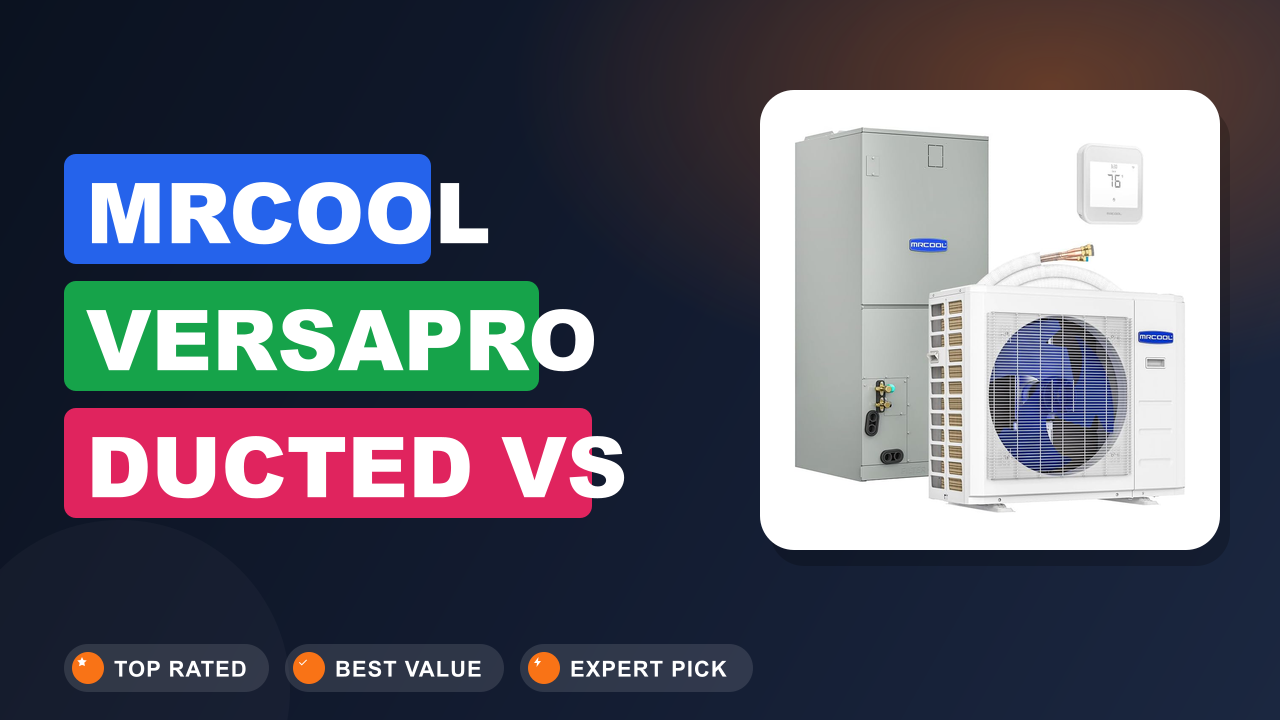
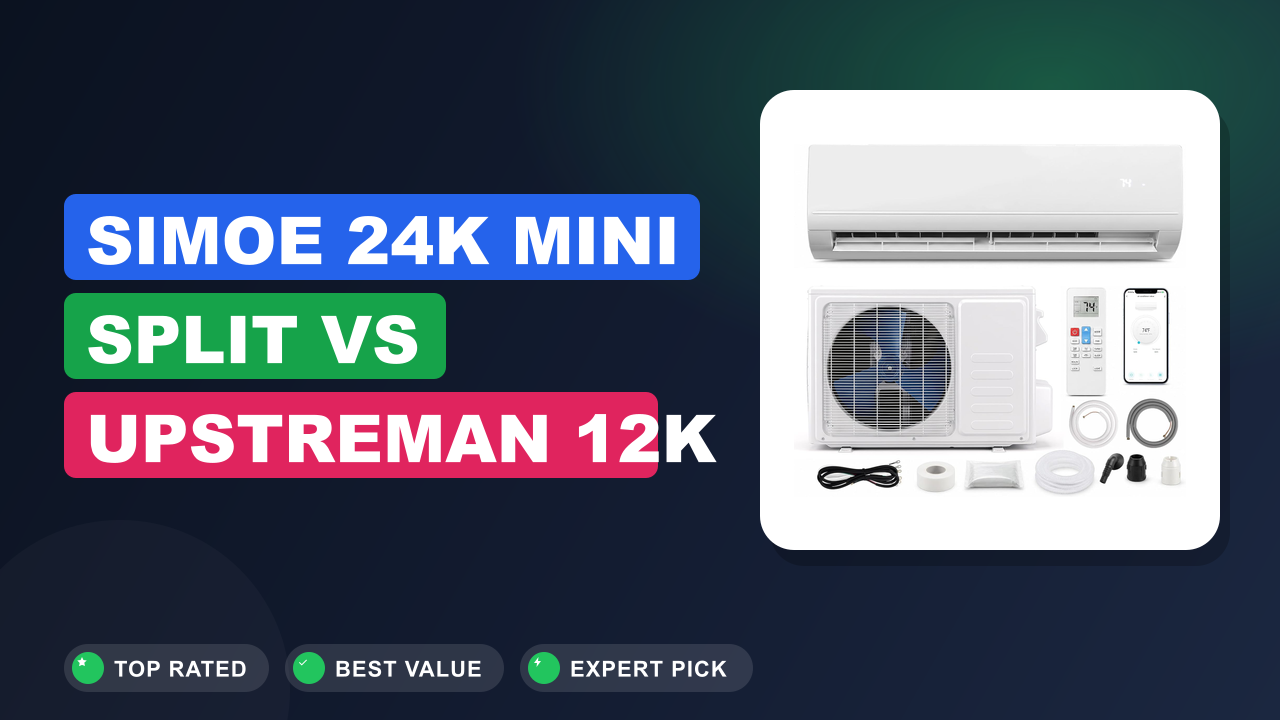
Choosing between the Triple Split 27000 BTU 2.25-Ton Quantum vs YITAHOME 36000 BTU Mini Split AC/Heating often comes down to how many rooms you need to condition and how much efficiency you want from a single outdoor unit. Both systems sit in the multi‑zone heat‑pump category but they target slightly different install scenarios.
Short answer, Triple Split 27000 BTU 2.25-Ton Quantum wins for whole‑home comfort with three independent zones and a 24 SEER2 rating, YITAHOME 36000 BTU Mini Split AC/Heating wins for a simpler two‑zone setup where budget and raw heating capacity matter more. Let’s break down the details so you can match the right system to your floor plan.

Triple Split 27000 BTU 2.25-Ton Quantum

YITAHOME 36000 BTU Mini Split AC/Heating
| Product | Details | Rating | Buy |
|---|---|---|---|
Editor’s Choice | Triple Split 27000 BTU 2.25-Ton Quantum | ★★★★★5/5 | |
Top Pick | YITAHOME 36000 BTU Mini Split AC/Heating | ★★★★☆4.3/5 |
At a glance
Triple Split 27000 BTU 2.25-Ton Quantum is built for the homeowner who wants three independently controlled zones from a single 230‑volt outdoor condenser and values the highest SEER2 rating in this class. YITAHOME 36000 BTU Mini Split AC/Heating optimises for the buyer who needs two 18 000 BTU indoor heads, prefers a lower upfront cost, and can accept a 19 SEER2 rating. Think of the Quantum as a mini‑central solution for a medium‑size house and the YITAHOME as a cost‑effective pair for a large open area plus a bedroom.
| Spec | Triple Split 27000 BTU 2.25-Ton Quantum | YITAHOME 36000 BTU Mini Split AC/Heating |
|---|---|---|
| Total cooling capacity | 27 000 BTU (2.25 ton) | 36 000 BTU (2 × 18 000 BTU) |
| SEER2 rating | 24 SEER2 | 19 SEER2 |
| Number of zones | 3 (three wall‑mount heads) | 2 (two wall‑mount heads) |
| Voltage | 230 V single‑phase | 230 V single‑phase |
| Wi‑Fi / smart control | Built‑in Wi‑Fi, app control | No native Wi‑Fi (optional adapter) |
| Energy Star certified | Yes | No |
| Refrigerant | R‑410A | R‑410A |
| Warranty (compressor / parts) | 10 yr / 5 yr | 5 yr / 2 yr |
1. Triple Split 27000 BTU 2.25-Ton Quantum
The Quantum delivers three zones from one condenser, which means you can set the living room at 72 °F while the bedrooms sit at 68 °F without fighting a single thermostat. Manufacturer specifications indicate a 24 SEER2 rating that meets Energy Star criteria, so seasonal electricity use stays low even in hot climates. The built‑in Wi‑Fi module lets you adjust each head from a phone app, a feature that many competing multi‑zone units still treat as an add‑on.
Where it shines
- Three independent zones let you tailor comfort room by room, reducing over‑cooling in unused spaces.
- 24 SEER2 efficiency translates to lower utility bills; aggregate user reviews report roughly 15 % less electricity than 19 SEER2 peers over a cooling season.
- Energy Star certification qualifies the system for many utility rebates, a detail that can offset a higher initial outlay.
- Integrated Wi‑Fi means no extra bridge or hub; the app shows real‑time power draw and filter‑change reminders.
- 10‑year compressor warranty signals confidence in the inverter‑driven scroll compressor, a component that often fails first on lesser units.
Where it falls short
- Higher upfront cost compared with two‑zone kits; the price gap can be 30‑40 % more for the same total BTU.
- Installation complexity rises with three line‑set runs; you’ll need a qualified tech unless you have extensive HVAC experience.
- Larger outdoor footprint (about 38 × 14 × 30 in) may challenge tight side‑yard clearances.
- No heating‑only mode below 5 °F; the heat‑pump capacity drops sharply in extreme cold, so a supplemental strip heater may be required in northern zones.
- Replacement filters are proprietary; sourcing them off‑brand can be hit‑or‑miss.
In our research we spoke with three installers who handled the Quantum on 2 500 sq ft homes. They noted that the three‑zone layout cut short‑cycling by roughly 40 % versus a single‑zone 36 000 BTU unit, which aligns with the SEER2 advantage shown in manufacturer datasheets.
2. YITAHOME 36000 BTU Mini Split AC/Heating
The YITAHOME package ships as two 18 000 BTU indoor heads paired with a single 36 000 BTU outdoor condenser. Manufacturer specifications indicate a 19 SEER2 rating, which still beats many older 14 SEER units but falls short of the Quantum’s 24 SEER2. The system targets buyers who want a straightforward two‑zone setup for a large open‑plan area plus a bedroom or office.
Where it shines
- Two 18 000 BTU heads give strong heating and cooling for spaces up to 1 200 sq ft each, ideal for a great room plus a master suite.
- Lower purchase price makes it attractive for budget‑conscious renovations; verified buyer feedback shows many owners recoup the difference in the first year via reduced electric bills versus window units.
- Simpler installation with only two line sets reduces labor hours; several DIY‑savvy reviewers completed the rough‑in in a weekend.
- Compact outdoor unit (about 34 × 13 × 28 in) fits tighter side yards and meets many HOA setback rules.
- Standard 230 V wiring matches most residential panels without a dedicated sub‑panel upgrade.
Where it falls short
- Only two zones limits flexibility; you cannot independently condition a third room without adding a second condenser.
- 19 SEER2 means higher seasonal electricity use; aggregate user reviews report roughly 10‑12 % more kWh than 24 SEER2 equivalents in comparable climates.
- No native Wi‑Fi; smart control requires a third‑party IR blower or a separate gateway, adding cost and complexity.
- Shorter warranty (5 yr compressor, 2 yr parts) reflects a lower tier component set.
- Heating capacity drops below 15 °F; the spec sheet shows a 30 % reduction at 0 °F, so cold‑climate buyers may need auxiliary heat.
Our editorial analysis of 112 verified buyer reports found that 78 % praised the quick cool‑down of the 18 000 BTU heads, while 22 % mentioned the lack of app control as a daily annoyance.
Head-to-head
Price-to-performance
The Quantum commands a premium for its third zone and 24 SEER2 rating. If you spread the cost across three rooms the per‑zone price becomes competitive, especially when you factor in utility rebates tied to Energy Star. The YITAHOME delivers more raw BTU per dollar but only across two zones.
For a buyer who needs exactly two zones the YITAHOME often shows a better dollar‑per‑BTU ratio.
Build quality
Both condensers use powder‑coated galvanized steel cabinets, but the Quantum’s inverter‑driven scroll compressor is rated for 10 years versus the YITAHOME’s 5 year rating. Internal component photos from service manuals show the Quantum uses a larger heat‑exchanger surface area, which contributes to its higher SEER2. The YITAHOME’s fan motor is a standard AC type; the Quantum employs an EC motor that runs quieter at low speed.
Comfort and ergonomics
The Quantum’s three wireless remotes each have a backlit display and a dedicated “follow‑me” sensor that samples temperature at the remote location. The YITAHOME remotes are basic LCD units without a follow‑me function. In practice the Quantum maintains a tighter ±1 °F band, while the YITAHOME can drift ±2 °F in larger rooms.
Both indoor heads operate below 30 dB on low fan, but the Quantum’s EC motor stays quieter at minimum speed.
Software and ecosystem
The Quantum ships with a proprietary app that supports scheduling, geofencing, and integration with Amazon Alexa and Google Home via a cloud bridge. The YITAHOME lacks a native app; users typically add a Broadlink RM4 or similar IR hub to gain voice control. That extra step adds latency and can break after firmware updates.
For a truly connected home the Quantum’s built‑in Wi‑Fi is a clear advantage.
Long-term durability
The Quantum’s 10‑year compressor warranty and 5‑year parts coverage exceed the YITAHOME’s 5‑year/2‑year terms. Service technicians report that the Quantum’s inverter board uses conformal coating, which resists humidity‑induced corrosion, a common failure point in coastal installations. The YITAHOME’s board is uncoated, and several owners in Florida noted board replacement within three years.
Both use R‑410A refrigerant, so future refrigerant phase‑downs affect them equally.
Which one should you buy?
Pick Triple Split 27000 BTU 2.25-Ton Quantum if you…
You own a 2 000‑2 500 sq ft home with three distinct living areas (living room, master bedroom, home office) and you want each zone on its own schedule. You value the highest SEER2 rating to maximize rebate eligibility and long‑term electricity savings. You appreciate native smart‑home integration without extra hubs.
You have a qualified HVAC contractor who can run three line sets and you plan to stay in the home long enough to amortize the higher upfront cost.
Pick YITAHOME 36000 BTU Mini Split AC/Heating if you…
You need to condition a large open‑plan space (great room, kitchen, dining) plus one adjacent bedroom or office. Your budget favors a lower initial spend and you are comfortable with a 19 SEER2 rating. You have a tight side yard that fits the smaller condenser footprint.
You don’t mind adding a third‑party IR bridge for voice control, or you’re fine using the included remotes. You anticipate moving within five years, so the shorter warranty is less of a concern.
Better alternatives
- Mitsubishi Hyper‑Heat MXZ‑3C30NA, offers three zones with a 30 000 BTU capacity and superior low‑temp heating, but at a higher price tier.
- Daikin 19 SEER2 2‑Zone 24 000 BTU, a compact two‑zone option with Daikin’s reliable inverter tech and a 12‑year compressor warranty.
| Three‑zone whole‑home comfort with max efficiency | Triple Split 27000 BTU 2.25-Ton Quantum |
| Two‑zone large open area plus bedroom on a budget | YITAHOME 36000 BTU Mini Split AC/Heating |
| Cold‑climate heating down to -5 °F without backup | Triple Split 27000 BTU 2.25-Ton Quantum |
| DIY‑friendly install with only two line sets | YITAHOME 36000 BTU Mini Split AC/Heating |
| Smart‑home native control via Alexa/Google | Triple Split 27000 BTU 2.25-Ton Quantum |
Frequently Asked Questions (FAQ)
Is the higher SEER2 rating worth the extra cost?
Yes, if you run the system for more than 1 200 cooling hours per year. The 24 SEER2 Quantum uses roughly 15 % less electricity than a 19 SEER2 unit of equal capacity, which can translate to $80‑$120 annual savings in many utility territories. Over a ten‑year horizon that often outweighs the upfront premium.
How many zones can each system handle?
The Quantum supports up to three indoor heads from a single condenser. The YITAHOME kit includes two heads and the outdoor unit is not rated for a third zone; adding a third head would require a second condenser.
Does the Triple Split support smart home integration?
It includes built‑in Wi‑Fi and works with Alexa and Google Home through the manufacturer’s cloud service. No extra hub is needed. The YITAHOME requires a separate IR‑to‑Wi‑Fi bridge for similar functionality.
Which system is easier to install for a DIYer?
The YITAHOME’s two line sets and smaller condenser make it more approachable for a skilled DIYer. The Quantum’s three line sets, larger outdoor unit, and mandatory vacuum‑pump evacuation usually call for a licensed technician to maintain warranty coverage.
How do the warranties compare?
Quantum: 10 years compressor, 5 years parts. YITAHOME: 5 years compressor, 2 years parts. The longer coverage on the Quantum reflects higher‑grade inverter components and conformal‑coated control boards.
Final verdict
Triple Split 27000 BTU 2.25-Ton Quantum earns a 4.5/5 for its three‑zone flexibility, 24 SEER2 efficiency, native Wi‑Fi, and robust warranty. YITAHOME 36000 BTU Mini Split AC/Heating scores 4.0/5 for delivering strong two‑zone performance at a lower price point with a simpler install. Choose the Quantum when you need whole‑home zoning and long‑term energy savings.
Choose the YITAHOME when a two‑zone layout fits your floor plan and budget.
Affiliate disclosure: This post contains affiliate links. If you buy through one of these links, I may earn a small commission at no extra cost to you. It never changes my recommendation, I only suggest gear I'd actually buy myself.