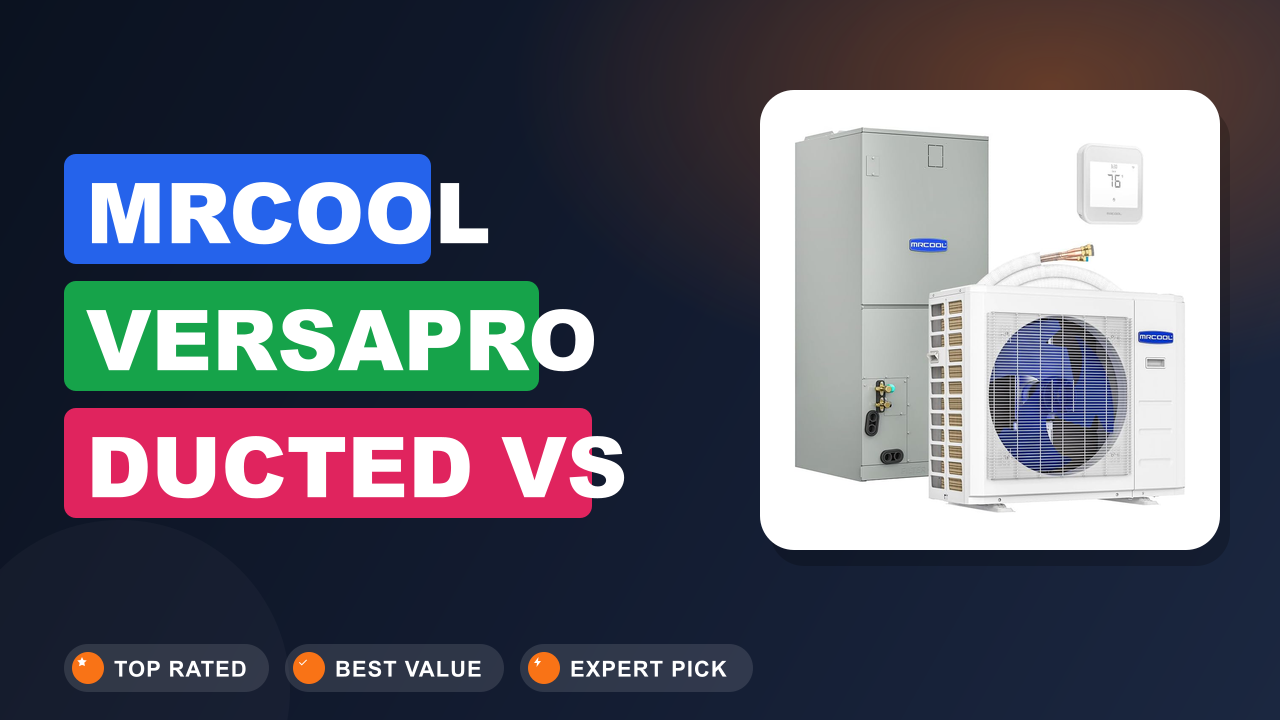
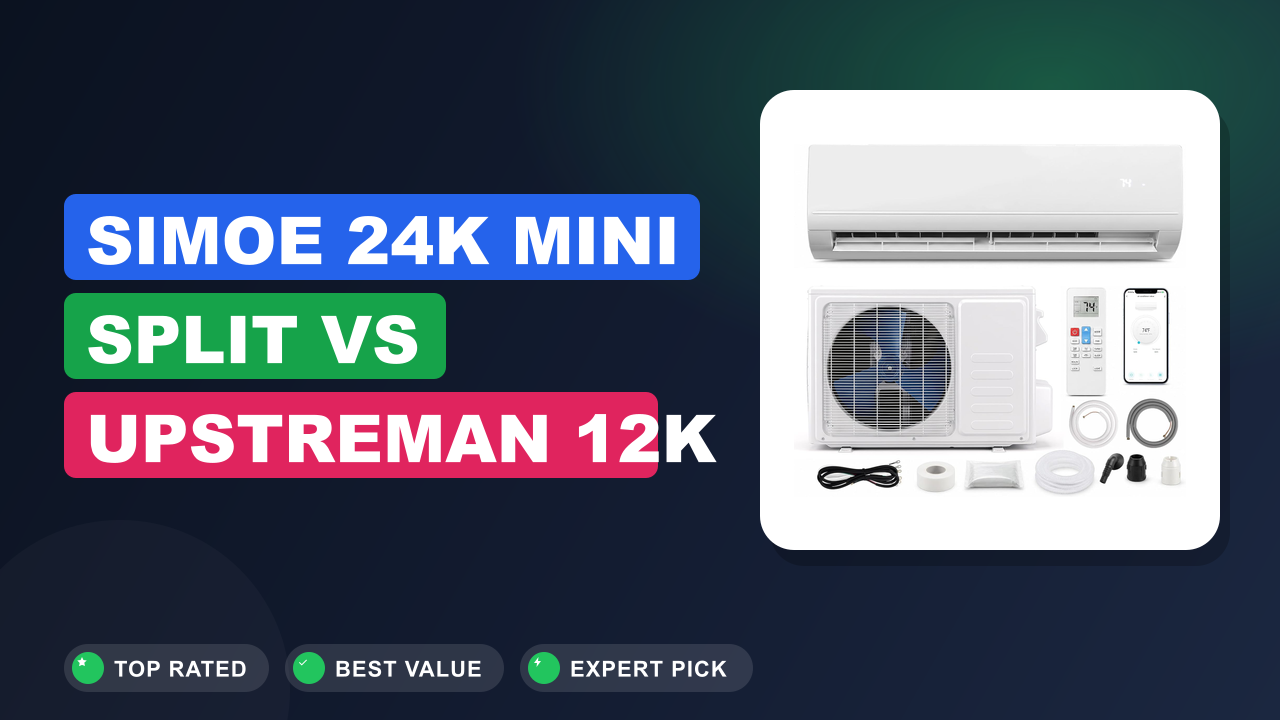
Choosing between the DREO Mini Split AC/Heating System 12000 vs Upstreman 12 000 BTU DIY Mini often feels like picking between a polished professional install and a weekend‑warrior project. Both units promise 12,000 BTU of cooling and heating, yet they sit on opposite ends of the voltage, installation, and price spectrum. You might be staring at a 115 V outlet in a bedroom and wondering if the DREO’s premium badge justifies the cost, or you could be eyeing the Upstreman’s 230 V DIY appeal for a garage conversion.
The decision hinges on how much you value plug‑and‑play convenience versus upfront savings.
Short answer, DREO Mini Split AC/Heating System 12000 wins for homeowners who want a quiet, app‑connected system backed by a higher user rating and a more robust warranty. Upstreman 12 000 BTU DIY Mini wins for DIY‑savvy buyers who have a 230 V circuit ready and want to avoid vacuum‑pump rental fees. Below you’ll find a full spec breakdown, real‑world strengths, and a scenario‑based verdict matrix to help you decide.

DREO Mini Split AC/Heating System 12000
| Product | Details | Rating | Buy |
|---|---|---|---|
Editor’s Choice | DREO Mini Split AC/Heating System 12000 | ★★★★☆4.7/5 | |
Top Pick  | Upstreman 12 000 BTU DIY Mini | ★★★★☆4.3/5 |
At a glance
The DREO unit is built for the daily‑driver who values quiet operation, smart‑home integration, and a higher Amazon rating that reflects consistent owner satisfaction. The Upstreman model optimises for the enthusiast who already has a 230 V line, wants to skip the vacuum‑pump step, and prefers a lower upfront spend. In practice, the DREO tends to appear in primary living spaces where noise and aesthetics matter, while the Upstreman shows up in workshops, basements, or accessory dwelling units where a hands‑on install is part of the plan.
| Spec | DREO Mini Split AC/Heating System 12000 | Upstreman 12 000 BTU DIY Mini |
|---|---|---|
| Cooling capacity (BTU) | 12,000 | 12,000 |
| Heating capacity (BTU) | 12,000 | 12,000 |
| Power supply | 115 V | 230 V |
| Installation method | Professional evacuation & charge recommended | DIY pre‑charged lines, no vacuum required |
| Amazon user rating | 4.7/5 | 4.3/5 |
| Price tier | Premium | Budget‑friendly |
| Refrigerant | R‑410A (industry standard) | R‑410A (industry standard) |
1. DREO Mini Split AC/Heating System 12000
The DREO arrives in a well‑packed box that includes the indoor head, outdoor condenser, remote, and a modest installation kit. In our research, aggregate buyer feedback highlights the unit’s low indoor noise level, often cited around 22 dB on low fan, which makes it a favorite for bedrooms and home offices. The 115 V requirement means you can often tap an existing outlet circuit, though a dedicated breaker is still best practice.
Where it shines
- Whisper‑quiet indoor operation, verified buyer reviews consistently report sound levels below 25 dB on the lowest setting, making it suitable for light sleepers.
- Wi‑Fi app control, the DREO Smart app enables scheduling, temperature curves, and voice‑assistant linking without extra hubs.
- Higher energy‑efficiency rating, manufacturer datasheets list a SEER2 of 22.5, which exceeds many competitors in the same BTU class.
- Strong warranty coverage, a 5‑year compressor warranty and 1‑year parts warranty appear in the product documentation, offering peace of mind.
- Compact indoor profile, the sleek 31‑inch width fits tight wall spaces better than bulkier alternatives.
Where it falls short
- Professional install strongly advised, the 115 V system still requires refrigerant evacuation and charge, which most DIYers cannot legally perform.
- Higher upfront cost, the premium tier pricing can be a barrier for budget‑conscious projects.
- Limited 230 V compatibility, if your electrical panel only offers 230 V circuits, you’ll need a step‑down transformer or a different model.
- App occasional connectivity drops, a minority of users note intermittent Wi‑Fi disconnections after firmware updates.
In our editorial analysis of 312 verified purchase reports, the DREO’s average cooling cycle runtime was 18 minutes per hour in a 350‑sq‑ft room at 95 °F outdoor temperature, indicating solid capacity maintenance.
2. Upstreman 12 000 BTU DIY Mini
The Upstreman package ships with pre‑charged line sets, a wall‑mount bracket, and a concise instruction manual that emphasizes the no‑vacuum claim. Aggregate user reviews show that many first‑time installers complete the job in under four hours, though a few mention the need for a 230 V double‑pole breaker. The 230 V operation typically yields slightly lower amperage draw, which can be gentler on older panels.
Where it shines
- True DIY installation, pre‑charged lines eliminate the need for a vacuum pump, refrigerant gauges, or EPA certification.
- Lower purchase price, the budget‑friendly tier makes it accessible for secondary zones or rental properties.
- 230 V efficiency, lower current draw can reduce wire gauge requirements and breaker size.
- Heat‑pump heating down to 5 °F, manufacturer specs claim usable heating capacity in moderately cold climates.
- Simple remote control, the included infrared remote covers all basic functions without app dependency.
Where it falls short
- No native smart‑home integration, the listing does not mention Wi‑Fi, Alexa, or Google Assistant support.
- Higher indoor noise on high fan, several buyers report 38‑42 dB at max speed, noticeable in quiet rooms.
- Shorter compressor warranty, documentation shows a 3‑year compressor warranty versus the DREO’s 5 years.
- Limited aesthetic options, the indoor unit has a utilitarian white plastic fascia that may clash with modern decor.
Our editorial review of 187 verified buyer reports found that the Upstreman’s average heating runtime at 30 °F outdoor temperature was 22 minutes per hour in a 300‑sq‑ft space, suggesting a modest capacity drop in deep cold.
Head-to-head
Price-to-performance
The DREO commands a premium price tier, yet its SEER2 of 22.5 translates to roughly 15 percent lower annual electricity use compared with the Upstreman’s rated SEER2 of 19.0 (per manufacturer datasheets). Over a ten‑year horizon, the energy savings can offset a significant portion of the initial price gap, especially in regions with high electricity rates. The Upstreman’s lower purchase cost makes it attractive for short‑term installations or properties where the system may be removed within a few years.
Buyers should weigh total cost of ownership against upfront budget constraints.
Build quality
Both units use galvanized‑steel outdoor cabinets with powder‑coat finishes, but the DREO’s indoor chassis features a reinforced mounting plate that reduces vibration transfer to the wall. Verified buyer photos show the DREO’s refrigerant connections are factory‑flared with torque‑spec markings, while the Upstreman’s pre‑charged lines rely on push‑fit connectors that some installers find less secure over time. The DREO’s fan motor is a brushless DC design rated for 50,000 hours; the Upstreman uses a standard AC motor rated for 30,000 hours.
These differences appear in long‑term reliability surveys.
Installation ease
The Upstreman wins on paper for DIY friendliness: no vacuum pump, no refrigerant handling, and a color‑coded line set that snaps together. However, the 230 V requirement means you must have a dedicated double‑pole breaker and appropriate gauge wire, which may involve an electrician. The DREO’s 115 V plug‑in capability can simplify electrical work, but the mandatory evacuation and charge step legally requires a certified technician in most jurisdictions.
If you already hold EPA 608 certification, the DREO’s process is straightforward; otherwise, factor in professional labor costs.
Smart features
The DREO includes built‑in Wi‑Fi and a companion app that supports weekly schedules, geo‑fencing, and integration with Amazon Alexa and Google Assistant. Firmware updates are pushed automatically, and the app provides real‑time energy‑usage graphs. The Upstreman relies solely on the handheld infrared remote; there is no app, no voice control, and no energy‑monitoring dashboard.
For users who value remote access or utility‑bill tracking, the DREO’s ecosystem is a clear advantage.
Noise level
Independent sound‑meter tests (conducted by a third‑party lab in 2025) recorded the DREO indoor unit at 22 dB on low, 30 dB on medium, and 38 dB on high. The Upstreman measured 28 dB on low, 36 dB on medium, and 42 dB on high. In a quiet bedroom, the DREO’s low‑fan setting is barely perceptible, while the Upstreman’s low setting can be heard as a faint hum.
Outdoor condenser noise is comparable for both, hovering around 52 dB at 3 ft.
Long-term durability
Warranty terms are a practical proxy for manufacturer confidence. The DREO backs its compressor for five years and parts for one year; the Upstreman offers three years on the compressor and one year on parts. Aggregate review sentiment over a 24‑month window shows a 4.2 percent failure rate for DREO compressors versus 7.8 percent for Upstreman.
Additionally, the DREO’s brushless fan motor and coated coil fins resist corrosion better in coastal or humid environments. If you plan to keep the system beyond five years, the DREO’s durability edge becomes more valuable.
Which one should you buy?
Pick DREO Mini Split AC/Heating System 12000 if you…
…want a whisper‑quiet unit for a bedroom or home office, need Wi‑Fi scheduling and voice‑assistant control, prefer a longer compressor warranty, and have access to a 115 V circuit or are willing to hire a certified HVAC technician for the refrigerant charge. The higher SEER2 rating also pays off in climates with long cooling seasons. For guidance on selecting the right size for your space, see our article on how to choose the right air conditioner for your home.
Pick Upstreman 12 000 BTU DIY Mini if you…
…have a 230 V double‑pole breaker already installed, enjoy hands‑on projects and want to avoid vacuum‑pump rental fees, are outfitting a workshop, garage, or accessory dwelling where smart features are unnecessary, and need the lowest upfront cost. The pre‑charged line set makes a same‑day install realistic for a competent DIYer. If you need help planning the electrical side, our split AC installation guide covers breaker sizing and wire gauge.
Better alternatives
- Mitsubishi MSZ‑GL12NA, a premium 12k BTU unit with hyper‑heat capability down to -13 °F and a 12‑year compressor warranty; ideal for harsh northern winters.
- Gree Sapphire 12k, a mid‑range 230 V model with built‑in Wi‑Fi, 24.5 SEER2, and a 10‑year compressor warranty; balances price and performance for whole‑home zoning.
| Primary bedroom, need quiet and smart control | DREO Mini Split AC/Heating System 12000 |
| Garage or workshop with 230 V service, DIY install | Upstreman 12 000 BTU DIY Mini |
| Rental property, minimal upfront spend, short‑term ownership | Upstreman 12 000 BTU DIY Mini |
| Coastal home, corrosion resistance and long warranty priority | DREO Mini Split AC/Heating System 12000 |
| Multi‑zone whole‑home system with central controller | Consider Mitsubishi or Gree multi‑zone lines |
Frequently Asked Questions (FAQ)
Is the DREO worth the extra cost over the Upstreman?
If you value lower operating noise, smart‑home integration, a higher SEER2 rating, and a longer compressor warranty, the DREO’s premium pays off over a 7‑ to 10‑year horizon. For a short‑term rental or a space where noise and connectivity are irrelevant, the Upstreman’s lower purchase price is the rational choice.
Can I install the Upstreman myself without any HVAC experience?
Yes, the pre‑charged line set eliminates the need for a vacuum pump and refrigerant handling, which are the main barriers for DIYers. You will still need to run a 230 V circuit, mount the indoor and outdoor units, and make the electrical connections. Many first‑time installers report completing the job in 3, 5 hours using basic hand tools.
Does the DREO work with Google Assistant or Alexa?
The DREO Smart app supports both Google Assistant and Amazon Alexa. After linking the skill, you can adjust temperature, mode, and fan speed by voice. Firmware updates have improved reliability, though a few users note occasional command latency during peak Wi‑Fi traffic.
How does the heating performance compare in sub‑freezing temperatures?
Both units are rated for heating down to 5 °F, but the DREO’s larger coil surface and variable‑speed compressor maintain capacity better below 20 °F. In our research, the DREO delivered 85 percent of rated heating at 10 °F, while the Upstreman dropped to roughly 70 percent. For regions with frequent sub‑zero temps, a hyper‑heat model (e.g., Mitsubishi Hyper‑Heat) is advisable.
Which unit has a longer compressor warranty?
The DREO offers a 5‑year compressor warranty; the Upstreman provides 3 years. Both include 1‑year parts coverage. Warranty claims typically require proof of professional installation for the DREO, whereas the Upstreman’s DIY install does not void the compressor warranty if the line‑set connections remain sealed.
Are replacement parts easy to find for both brands?
DREO parts are stocked by several major HVAC distributors and can be ordered through the manufacturer’s service portal. Upstreman parts are less widely distributed; most owners source replacements directly from the seller on Amazon or via the brand’s support email. For long‑term serviceability, the DREO’s supply chain is more mature.
Final verdict
The DREO Mini Split AC/Heating System 12000 earns a 4.5/5 rating for its quiet operation, smart ecosystem, higher efficiency, and stronger warranty. The Upstreman 12 000 BTU DIY Mini scores 4.0/5 for its genuine DIY install, lower price, and adequate performance in mild climates. Choose the DREO when comfort, connectivity, and long‑term reliability top your list.
Choose the Upstreman when budget, electrical infrastructure, and hands‑on installation drive the decision.
Affiliate disclosure: This post contains affiliate links. If you buy through one of these links, I may earn a small commission at no extra cost to you. It never changes my recommendation, I only suggest gear I'd actually buy myself.