Master your LG Portable Air Conditioner with this easy-to-follow 2026 guide. From unboxing and setup to daily use and smart features, you’ll learn everything to stay cool and energy-efficient all summer long.
Key Takeaways
- Proper setup is crucial: Correct window installation and leveling ensure optimal performance and prevent leaks or damage.
- Use the right mode for your needs: Cool, Fan, Dry, and Energy Saver modes help you adapt to changing weather and save energy.
- Smart controls enhance convenience: Connect via the LG ThinQ app to control your unit remotely, set schedules, and monitor energy use.
- Regular maintenance extends lifespan: Clean filters monthly and check drainage to avoid clogs and maintain efficiency.
- Optimize placement for airflow: Keep the unit away from heat sources and ensure at least 20 inches of clearance on all sides.
- Troubleshoot common issues quickly: Most problems like poor cooling or water leaks have simple fixes you can do at home.
- Energy efficiency saves money: Use timers, eco modes, and proper insulation to reduce electricity bills without sacrificing comfort.
How to Use the LG Portable Air Conditioner: A Complete 2026 Guide
As summer temperatures rise in 2026, staying cool and comfortable at home is more important than ever. The LG Portable Air Conditioner offers a flexible, energy-efficient solution for cooling single rooms without the hassle of permanent installation. Whether you’re renting, living in a small space, or just need extra cooling in a hot room, this unit is designed for convenience and performance.
In this comprehensive guide, you’ll learn everything you need to know about using your LG Portable Air Conditioner—from unboxing and setup to daily operation, smart features, maintenance, and troubleshooting. We’ll walk you through each step with clear instructions, practical tips, and real-world examples so you can get the most out of your unit all season long.
By the end of this guide, you’ll be able to install your air conditioner correctly, choose the best settings for your needs, connect it to your smartphone, keep it running efficiently, and solve common problems—all while saving energy and money.
Unboxing and Initial Setup
Before you start cooling your space, it’s important to properly unbox and prepare your LG Portable Air Conditioner. Taking the time to do this right ensures safe operation and optimal performance.
What’s in the Box?
When you open the box, you should find the following components:
- LG Portable Air Conditioner unit
- Exhaust hose (usually 5–7 feet long)
- Window installation kit (includes adjustable window bracket, foam seals, and screws)
- Remote control (with batteries)
- User manual and quick start guide
- Drain hose (for manual drainage, if applicable)
Double-check that all parts are included. If anything is missing or damaged, contact LG customer support immediately.
Choosing the Right Location
Placement is key to effective cooling. Follow these guidelines:
- Near a window: The unit must be close enough to vent hot air outside through the exhaust hose.
- Level surface: Place the AC on a flat, stable floor. Avoid carpets that can trap heat or uneven surfaces that may cause vibrations.
- Clearance: Leave at least 20 inches of space on all sides—especially the front and back—for proper airflow.
- Avoid heat sources: Keep the unit away from ovens, heaters, direct sunlight, or electronics that generate heat.
For best results, place the AC in the room you use most, such as a bedroom or home office.
Installing the Exhaust Hose and Window Kit
The exhaust hose removes hot air from your room and vents it outside. Proper installation prevents air leaks and maintains efficiency.
- Attach the hose to the unit: Connect one end of the exhaust hose to the back of the air conditioner. Most LG models use a quick-connect fitting—just push it in until it clicks.
- Prepare the window: Open your window slightly (usually 5–7 inches) and insert the adjustable window bracket. Slide the bracket to fit snugly.
- Seal gaps: Use the included foam seals to fill any gaps between the window and the bracket. This prevents hot air from sneaking back in.
- Connect the hose to the bracket: Attach the other end of the hose to the window bracket. Make sure it’s secure and not kinked.
- Test the setup: Turn on the unit briefly to ensure air is flowing out the window and not leaking into the room.
💡 Pro Tip: If you have a sliding window, use the vertical installation kit. For double-hung windows, the horizontal setup works best. Always follow the instructions specific to your window type.
Powering On and Basic Operation
Once your unit is installed, it’s time to power it on and start cooling.
Plugging In Safely
- Use a dedicated outlet: Avoid power strips or extension cords. Plug the AC directly into a grounded wall outlet.
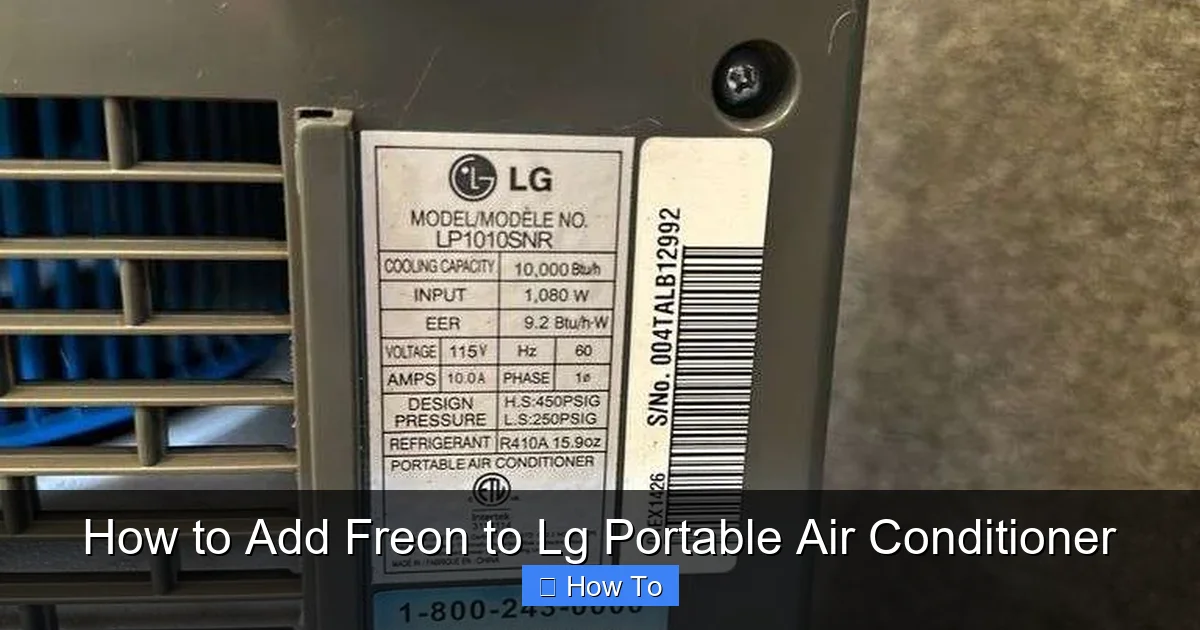
- Check voltage: Most LG portable ACs require 115V. Verify your outlet matches the unit’s requirements.
- Ensure the circuit can handle the load: Portable ACs draw significant power. Avoid running other high-wattage appliances on the same circuit.
Using the Control Panel
The front panel of your LG Portable Air Conditioner features a digital display and touch buttons. Here’s what each control does:
- Power: Turns the unit on or off.
- Mode: Cycles through Cool, Fan, Dry, and Energy Saver modes.
- Temperature: Adjusts the target temperature (usually between 60°F and 86°F).
- Fan Speed: Sets low, medium, or high airflow.
- Timer: Sets the unit to turn on or off after a set number of hours.
- Sleep Mode: Gradually adjusts temperature for comfort during sleep.
Using the Remote Control
The remote gives you full control from across the room. Insert the included AAA batteries and point the remote at the unit’s sensor (usually on the front panel).
- All main functions are available on the remote, including mode, temperature, and timer.
- Some models include a “Follow Me” feature, where the remote acts as a temperature sensor for more accurate cooling.
- Store the remote in a safe place when not in use to avoid misplacing it.
💡 Pro Tip: If the remote stops working, check the batteries and ensure nothing is blocking the sensor on the unit.
Understanding Operation Modes
Your LG Portable Air Conditioner has multiple modes to suit different needs. Choosing the right one improves comfort and saves energy.
Cool Mode
This is the standard cooling mode. The unit lowers the room temperature to your set level using refrigerant and a compressor.
- Best for hot, sunny days.
- Set the temperature 5–7°F below room temperature for quick cooling.
- Use high fan speed initially, then switch to low or medium once the room is cool.
Fan Mode
In Fan mode, the unit circulates air without cooling. It’s like a box fan with more power.
- Great for mild days or when you just need airflow.
- Uses less energy than Cool mode.
- Can help distribute cool air from another source, like a central AC.
Dry Mode
This mode reduces humidity without significantly lowering temperature—ideal for damp or rainy days.
- Helps prevent mold and mildew.
- Use in basements, laundry rooms, or humid climates.
- The unit acts like a dehumidifier, removing moisture from the air.
Energy Saver Mode
Also called Eco mode, this setting optimizes energy use by adjusting fan speed and compressor operation.
- Automatically turns off the compressor when the room reaches the target temperature.
- Restarts only when needed, reducing power consumption.
- Best for extended use or when you’re trying to save on electricity bills.
💡 Pro Tip: Use Energy Saver mode at night or when you’re away for a few hours. It keeps the room comfortable while cutting energy use by up to 20%.
Using Smart Features with LG ThinQ
In 2026, smart home integration is standard. Most LG Portable Air Conditioners are compatible with the LG ThinQ app, giving you remote control and advanced scheduling.
Downloading and Setting Up the App
- Download the LG ThinQ app from the Apple App Store or Google Play.
- Create an account or log in with your existing LG ID.
- Tap “Add Product” and select your air conditioner model.
- Follow the on-screen instructions to connect the unit to your Wi-Fi network.
💡 Pro Tip: Make sure your phone and the AC are on the same Wi-Fi network. Use 2.4GHz Wi-Fi—most portable ACs don’t support 5GHz.
Remote Control via Smartphone
Once connected, you can:
- Turn the unit on or off from anywhere.
- Adjust temperature, mode, and fan speed.
- Monitor energy usage and receive efficiency tips.
- Set custom cooling schedules (e.g., cool the bedroom at 7 PM every night).
Voice Control with Google Assistant and Alexa
Link your LG ThinQ account to Google Assistant or Amazon Alexa for voice commands.
- Say, “Hey Google, set the bedroom AC to 72 degrees.”
- Or, “Alexa, turn on the living room air conditioner.”
- Works seamlessly with smart speakers and displays.
💡 Pro Tip: Use voice commands to adjust settings without getting out of bed or off the couch—perfect for hot summer nights.
Maintenance and Cleaning
Regular maintenance keeps your LG Portable Air Conditioner running efficiently and extends its lifespan. Follow this routine to avoid common problems.
Cleaning the Air Filter
The air filter traps dust, pollen, and pet dander. A dirty filter reduces airflow and efficiency.
- Turn off and unplug the unit.
- Open the front panel and remove the filter (usually a slide-out mesh panel).
- Rinse it under warm water. Use mild soap if needed.
- Let it air dry completely before reinserting.
- Clean the filter every 2–4 weeks during heavy use.
💡 Pro Tip: Set a monthly reminder on your phone to clean the filter. A clean filter can improve cooling efficiency by up to 15%.
Checking the Exhaust Hose and Drainage
Over time, the exhaust hose can collect dust or develop kinks. Also, some models produce condensation that needs draining.
- Inspect the hose monthly for blockages or damage.
- Ensure it’s not bent or crushed, which restricts airflow.
- For units with a drain port, check if water has accumulated. If so, attach the drain hose and empty the tank.
- Some models have auto-evaporation, so manual draining is rare—but still check during humid weather.
Wiping Down the Exterior
Dust and fingerprints can build up on the unit’s surface.
- Use a soft, damp cloth to wipe the exterior.
- Avoid harsh chemicals or abrasive sponges.
- Clean the control panel gently to prevent damage to buttons.
Seasonal Storage
If you’re not using the AC in winter:
- Clean the filter and interior components.
- Drain any remaining water.
- Coil the exhaust hose neatly and store it in a dry place.
- Cover the unit with a breathable cloth to prevent dust buildup.
- Store in a cool, dry location—avoid attics or garages with extreme temperatures.
💡 Pro Tip: Take a photo of your setup before disassembling. It’ll make reinstallation easier next summer.
Troubleshooting Common Issues
Even the best units can have problems. Here’s how to fix the most common issues with your LG Portable Air Conditioner.
Unit Won’t Turn On
- Check the power cord: Is it plugged in securely?
- Test the outlet: Plug in another device to confirm it’s working.
- Check the circuit breaker: Has it tripped? Reset if needed.
- Remote issue: Try using the control panel instead. If it works, replace the remote batteries.
Poor Cooling Performance
- Dirty filter: Clean or replace it.
- Blocked airflow: Ensure vents aren’t covered and the room has proper ventilation.
- Incorrect mode: Make sure it’s set to Cool, not Fan or Dry.
- Room too large: Portable ACs are designed for rooms up to 300–500 sq ft. If your room is larger, consider a higher-capacity model.
- Hot outside air leaking in: Check the window seal and exhaust hose for gaps.
Water Leaking from the Unit
- Clogged drain: Clear any blockages in the drain port or hose.
- High humidity: In very humid conditions, the unit may produce more condensation. Use Dry mode or drain manually.
- Tilted unit: Ensure the AC is level. If it’s tilted, water may leak instead of draining properly.
Strange Noises or Odors
- Rattling: Check if the unit is level or if something is loose inside.
- Buzzing: Could indicate a electrical issue—turn off and contact LG support.
- Musty smell: Likely mold in the filter or drain pan. Clean thoroughly and run Fan mode to dry.
Remote Not Working
- Replace batteries.
- Ensure the remote sensor on the unit isn’t blocked.
- Reset the remote by removing batteries for 1 minute, then reinserting.
💡 Pro Tip: If troubleshooting doesn’t work, consult the user manual or contact LG customer support. Most 2026 models come with extended warranties and 24/7 chat support.
Energy-Saving Tips for 2026
Stay cool without breaking the bank. These tips help you use your LG Portable Air Conditioner efficiently.
- Use a timer: Set the unit to turn off after you fall asleep or when you leave home.
- Close curtains and blinds: Block sunlight to reduce heat gain.
- Seal windows and doors: Use weather stripping to prevent cool air from escaping.
- Use fans together: Ceiling or floor fans help circulate cool air, allowing you to raise the thermostat by 4°F with no loss in comfort.
- Avoid heat-generating appliances: Run the dishwasher, oven, or dryer during cooler parts of the day.
- Upgrade insulation: If possible, add insulation to walls or attics to keep cool air in.
💡 Pro Tip: In 2026, many utility companies offer rebates for energy-efficient appliances. Check if your LG unit qualifies for savings.
Conclusion
Using your LG Portable Air Conditioner in 2026 is easier than ever—thanks to smart features, energy-efficient designs, and user-friendly controls. By following this guide, you’ve learned how to set up your unit correctly, choose the right mode for every situation, connect it to your smartphone, maintain it properly, and solve common problems.
Remember, proper installation and regular maintenance are the keys to long-term performance. Keep the filter clean, check the exhaust hose, and use smart scheduling to save energy. With these tips, you’ll stay cool, comfortable, and in control all summer long.
Whether you’re cooling a bedroom, home office, or small apartment, your LG Portable Air Conditioner is a reliable partner in beating the heat. So plug it in, set your ideal temperature, and enjoy the cool breeze—your way.