How to Set Timer on Lg Window Air Conditioner
Setting the timer on your LG window air conditioner helps save energy and keeps your home comfortable. This guide walks you through scheduling start and stop times using the remote or control panel, with clear instructions for all models in 2026.
Key Takeaways
Timer Function Saves Energy: Using the timer prevents the AC from running unnecessarily, reducing electricity bills and environmental impact.
Two Timer Options Available: Most LG window ACs offer both a “Sleep Timer” and a “24-Hour On/Off Timer” for flexible scheduling.
Remote Control Is Primary Tool: The infrared remote is the easiest way to set timers—ensure it has fresh batteries and a clear line of sight to the unit.
Model-Specific Steps May Apply: While most LG window units follow similar procedures, always check your user manual for model-specific variations.
Troubleshooting Is Simple: If the timer doesn’t work, common fixes include resetting the remote, checking power settings, or performing a hard reset on the unit.
Smart Features in 2026 Models: Newer LG window ACs may support Wi-Fi and app-based scheduling via the LG ThinQ app for remote control.
Consistent Use Improves Comfort: Setting daily timers aligns cooling with your routine, ensuring rooms are cool when you arrive home or sleep.
In practice, a quick check of the manual before the first setup can save you a few minutes of trial‑and‑error later.
How to Set Timer on LG Window Air Conditioner
If you’ve ever walked into a sweltering room because your air conditioner turned off overnight—or cringed at your energy bill after forgetting to turn it off—you’ll appreciate the built-in timer function on your LG window air conditioner. In 2026, LG continues to refine its window AC units with intuitive controls, energy-saving features, and smart connectivity. One of the most useful tools? The timer. For more on this, see our guide on window air conditioner safety tips.
Whether you want your AC to shut off automatically after you fall asleep or start cooling your living room an hour before you get home from work, the timer function makes it easy. This comprehensive guide will walk you through every step—from basic timer setup to advanced scheduling—on LG window air conditioners available in 2026. You’ll learn how to use the remote control, navigate the display panel, troubleshoot common issues, and even connect newer models to your smartphone for remote access.
By the end of this guide, you’ll be able to program your LG window AC like a pro—saving energy, staying comfortable, and never worrying about leaving the AC on again. For more on this, see our guide on window air conditioner install tips.
Understanding the Timer Functions on LG Window ACs
Before diving into the steps, it’s important to understand what your LG window air conditioner can do. Most models come with two primary timer functions:
Sleep Timer: This gradually adjusts the temperature and turns off the unit after a set period—ideal for nighttime use.
24-Hour On/Off Timer: This lets you schedule when the AC turns on or off at specific times throughout the day, perfect for daily routines.
In 2026, many LG window units also include smart features. If your model has Wi-Fi capability (look for “LG ThinQ” compatibility), you can control timers remotely via the LG ThinQ app on your smartphone. This means you can adjust your schedule from the office, while traveling, or even from bed.
Regardless of your model, the core timer functions remain consistent. The key difference lies in how you access them—either through the physical remote, the unit’s control panel, or a mobile app. For more on this, see our guide on window air conditioner maintenance tips.
Some 2026 models add a “Weekly Schedule” option that lets you set different on/off times for weekdays and weekends—check the spec sheet if you need that flexibility.
Model‑Specific Timer Variations
LG’s 2026 lineup includes entry‑level units with only the basic Sleep Timer and premium models that support both the 24‑Hour timer and the ThinQ app. A common mistake is assuming every unit can repeat a daily schedule; budget models often require you to re‑enable the timer each day. If you’re unsure, locate the model number on the side label and compare it to the feature matrix on LG’s support site.
What You’ll Need Before Starting
Setting the timer is simple, but a few preparations ensure a smooth experience:
LG Remote Control: Make sure it’s working. Replace batteries if the signal is weak or unresponsive.
User Manual: Keep it handy. While most models follow similar steps, your specific unit may have unique features.
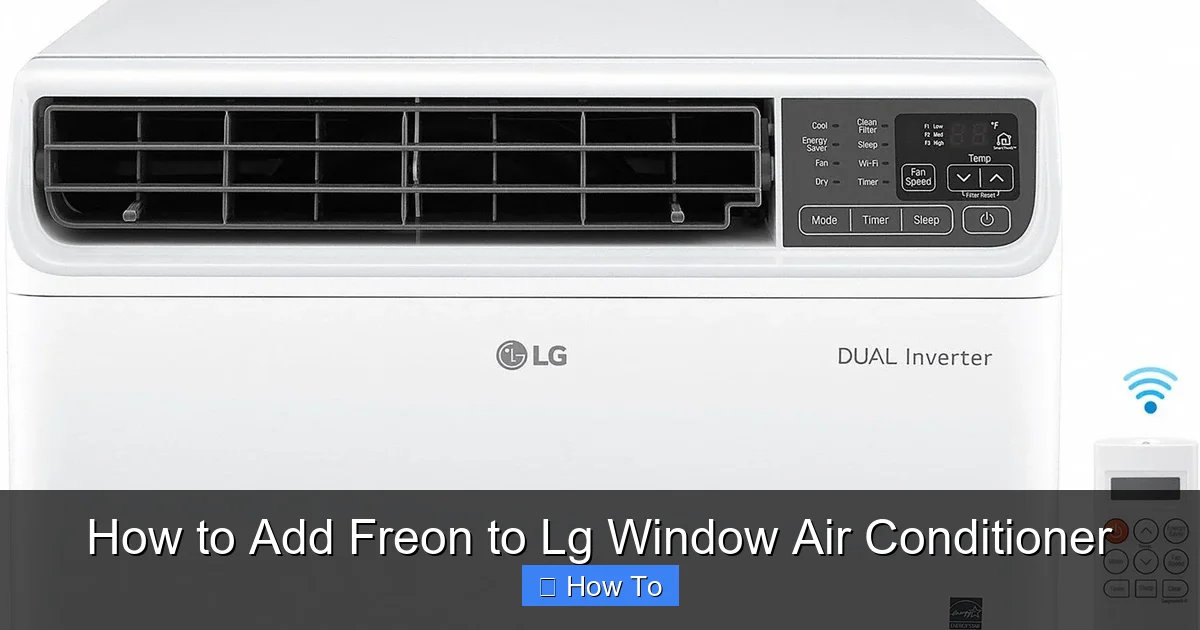
Clear Line of Sight: The remote communicates with the AC via infrared. Remove any obstacles between the remote and the unit’s sensor (usually on the front panel).
Stable Power Supply: Ensure the AC is plugged in and receiving power. Timer functions won’t work if the unit is off or in standby mode.
If you’ve misplaced your remote, don’t worry—many 2026 LG window ACs allow basic timer adjustments directly from the unit’s control panel. However, the remote offers more precision and convenience. For more on this, see our guide on window air conditioner tips and tricks.
Before you begin, verify the unit’s firmware is up to date (smart models only); an outdated version can cause the timer to drift.
Step-by-Step: How to Set the Sleep Timer
The Sleep Timer is perfect for nighttime use. It gradually increases the temperature (to save energy) and turns off the AC after a set time—so you don’t wake up shivering or with a high electric bill.
Step 1: Turn On the Air Conditioner
Press the Power button on the remote or the unit to turn on the AC. Wait for the display to light up and the fan to start running. For more on this, see our guide on hisense window air conditioner filter.
Step 2: Press the Timer Button
On most LG remotes, look for a button labeled Timer or Sleep Timer . It’s usually located near the temperature controls. Press it once to activate the timer menu.
Step 3: Set the Duration
Use the + and – buttons (or arrow keys) to select how long you want the AC to run before turning off. Common options include 30 minutes, 1 hour, 2 hours, up to 7 or 8 hours, depending on your model.
For example:
If you go to bed at 10 PM and want the AC off by 6 AM, set the timer for 8 hours.
If you prefer a cooler room for the first hour of sleep, set it for 1 or 2 hours.
Step 4: Confirm the Setting
Once you’ve selected the time, press the Timer button again or wait a few seconds. The display should show the remaining time counting down.
Step 5: Let It Work
The AC will continue cooling, but the temperature may gradually rise (to save energy) before shutting off automatically. You’ll hear the fan stop, and the display may turn off or show “Timer Off.”
Pro Tip: If you wake up and want to extend the timer, simply press the Timer button again and reset the duration. The previous setting will be canceled.
If a power outage occurs, the Sleep Timer resets; you’ll need to re‑enter the duration once power returns.
Step-by-Step: How to Set the 24-Hour On/Off Timer
The 24-hour timer gives you full control over when your AC turns on or off. This is ideal for daily routines—like cooling your home before you return from work or turning off the AC during peak electricity hours.
Step 1: Access the Timer Menu
With the AC on, press the Timer button on the remote. On some models, you may need to press it twice to switch from Sleep Timer to 24-hour mode.
Step 2: Choose On or Off Timer
You’ll typically see two options:
On Timer: Schedules when the AC will turn on.
Off Timer: Schedules when the AC will turn off.
Use the arrow or mode buttons to select the one you want.
Step 3: Set the Time
Use the + and – buttons to set the exact hour and minute. For example:
Set the On Timer to 4:30 PM so the AC starts cooling before you get home at 5 PM.
Set the Off Timer to 11:00 PM to save energy while you’re asleep.
Some models allow you to set both timers at once—turning on at 4:30 PM and off at 11:00 PM.
Step 4: Confirm and Activate
Press the Timer button again or wait for the display to confirm. You should see a timer icon or the scheduled time on the screen.
Step 5: Repeat Daily (If Needed)
By default, the timer runs once. To make it repeat daily, look for a “Daily” or “Repeat” option in the timer menu. Enable it so your schedule runs every day without manual input.
Example: If you work from 9 AM to 5 PM, set the Off Timer for 9:15 AM and the On Timer for 4:45 PM. Your home will be cool and ready when you return—and you’ll save energy while away.
On models without a “Daily” toggle, you’ll need to re‑activate the timer each morning; consider upgrading if you want true set‑and‑forget scheduling.
Using the Control Panel (Without Remote)
Lost your remote? No problem. Most LG window ACs have basic timer controls on the unit itself.
Step 1: Locate the Control Panel
Find the buttons on the front or side of the AC unit. Look for labels like “Timer,” “Mode,” or “Function.”
Step 2: Enter Timer Mode
Press and hold the Timer button (or “Function” button on some models) for 3–5 seconds until the display shows timer options.
Step 3: Adjust Settings
Use the Up and Down buttons to set the time. The process is similar to using the remote, but with fewer options.
Step 4: Confirm and Exit
Press the Timer button again to confirm. The unit will save the setting and return to normal operation.
Note: Control panel options are more limited than the remote. For advanced scheduling, use the remote or app.
For a deeper dive into unit‑level controls, see our ac installation guide.
Using the LG ThinQ App (2026 Smart Models)
If your LG window AC supports Wi-Fi and the LG ThinQ app (common in 2026 models), you can set timers from your smartphone—anywhere, anytime.
Step 1: Download the LG ThinQ App
Available on iOS and Android, the app is free and easy to set up.
Step 2: Connect Your AC to Wi-Fi
Follow the in-app instructions to connect your AC to your home network. You’ll need your Wi-Fi password.
Step 3: Add Your AC to the App
Scan the QR code on the unit or enter the model number. The app will detect and add your AC.
Step 4: Set Timers Remotely
Open the app, select your AC, and tap “Schedule” or “Timer.” You can:
Set daily on/off times.
Adjust temperature and fan speed for each schedule.
Create multiple schedules (e.g., weekday vs. weekend).
Step 5: Save and Monitor
Save your schedule. The app will send commands to your AC automatically. You can also check energy usage and receive maintenance reminders.
Bonus Feature: Use voice commands with Alexa or Google Assistant to adjust timers hands-free.
For official setup help, visit LG’s support portal.
Troubleshooting Common Timer Issues
Even the best technology can hiccup. Here’s how to fix common timer problems on your LG window AC.
Timer Won’t Activate
Check the Remote: Replace batteries. Test the remote by pointing it at a phone camera—press a button; if you see a light, it’s working.
Clear Obstructions: Make sure nothing is blocking the infrared sensor on the AC.
Reset the Unit: Unplug the AC for 5 minutes, then plug it back in. This resets the internal timer.
Timer Turns Off Too Early or Too Late
Verify Time Settings: Double-check the clock on the AC. If it’s wrong, the timer will be off. Adjust the time in the settings menu.
Update Firmware: For smart models, check for firmware updates in the LG ThinQ app.
Timer Icon Flashes or Doesn’t Appear
Low Battery Warning: The remote may be sending weak signals. Replace batteries.
Mode Conflict: Some modes (like “Fan Only”) don’t support timers. Switch to “Cool” or “Auto” mode.
App Won’t Connect or Schedule Fails
Check Wi-Fi Signal: Move the AC closer to the router or use a Wi-Fi extender.
Restart the App and AC: Close the app, restart your phone, and reboot the AC.
Reconnect the Device: Remove the AC from the app and re-add it.
If the unit still misbehaves after a hard reset, consult our troubleshoot ac blowing warm air guide for related airflow checks.
Tips for Maximizing Timer Efficiency
Using the timer wisely can save energy and extend the life of your AC.
Match Timer to Your Schedule: Set the On Timer 30–60 minutes before you arrive home. This gives the AC time to cool the room without running all day.
Use Sleep Timer Wisely: Set it for 2–3 hours instead of all night. Your body adapts to room temperature, and you’ll save energy.
Avoid Overcooling: Set the timer to turn off during the hottest part of the day if no one is home.
Combine with Fans: Use ceiling fans with the timer to circulate cool air, allowing you to raise the thermostat and save energy.
Seasonal Adjustments: In spring and fall, you may only need the AC for a few hours. Adjust timers accordingly.
Applying the energy‑saving settings recommended by the U.S. Department of Energy can shave another 5‑10 % off your cooling bill.
For a year‑round upkeep plan, see our seasonal upkeep guide.
Conclusion
Setting the timer on your LG window air conditioner is a simple yet powerful way to stay comfortable and save money. Whether you’re using the remote, the control panel, or the LG ThinQ app, the process is straightforward and highly customizable. In 2026, LG continues to make smart cooling accessible to everyone—with features that adapt to your lifestyle.
By mastering the Sleep Timer and 24-hour On/Off Timer, you’ll enjoy cooler homes, lower bills, and peace of mind. And if you run into issues, the troubleshooting tips in this guide will help you get back on track quickly.
So go ahead—program your AC to match your routine. Your future self (and your wallet) will thank you.
Frequently Asked Questions
How do I know if my LG window AC supports the ThinQ app?
Check the model label for “Wi‑Fi” or “ThinQ” branding; the user manual also lists smart features. Most 2026 mid‑range and premium units include it.
Can I set different on/off times for weekdays and weekends?
Only models with the “Weekly Schedule” option in the ThinQ app allow separate weekday/weekend programs; basic remotes repeat the same daily timer.
What should I do if the timer resets after a power outage?
After power returns, re‑enter your desired timer settings; the unit does not retain schedules through a hard power loss.
Why does the Sleep Timer stop cooling before the set time ends?
The Sleep Timer intentionally raises the set temperature gradually; if the room reaches the new target early, the compressor may cycle off.
Is there a way to control the timer with voice assistants?
Yes, once the AC is linked to ThinQ, enable the Alexa or Google Assistant skill and use commands like “Alexa, turn off the bedroom AC in 30 minutes.”
How often should I replace the remote batteries for reliable timer operation?
Replace them at least once a year or whenever the remote’s LED indicator dims; weak batteries cause intermittent infrared signals.