Resetting your LG air conditioner can solve common performance issues like poor cooling, error codes, or unresponsive controls. This guide walks you through simple reset methods—from power cycling to factory resets—so your unit runs smoothly again in minutes.
Key Takeaways
- Power cycling is the first step: Turn off the unit, unplug it for 5–10 minutes, then plug it back in to reset basic functions.
- Use the remote control for soft resets: Press and hold specific buttons (like “Mode” and “Fan”) to restart the system without losing settings.
- Factory reset restores original settings: Ideal after major errors or when preparing the unit for a new user.
- Check for error codes before resetting: LG units display error lights or codes—note them to diagnose underlying issues.
- Wi-Fi and smart features may need reconfiguration: After a reset, reconnect your AC to the LG ThinQ app for remote control.
- Regular maintenance prevents frequent resets: Clean filters and coils monthly to keep your AC running efficiently.
- Contact LG support if problems persist: Some issues require professional service even after a reset.
How to Reset a LG Air Conditioner: A Complete 2026 Guide
If your LG air conditioner isn’t cooling properly, showing error codes, or just acting up, a reset might be the quick fix you need. Whether you’re dealing with a window unit, portable AC, or a ductless mini-split, resetting your LG air conditioner is a simple process that can restore normal operation and improve efficiency.
In this comprehensive guide, you’ll learn multiple ways to reset your LG air conditioner—from basic power cycling to full factory resets. We’ll also cover troubleshooting tips, maintenance advice, and how to reconnect smart features after a reset. By the end, you’ll know exactly what to do when your AC acts up in 2026.
Let’s get started.
Why Reset Your LG Air Conditioner?
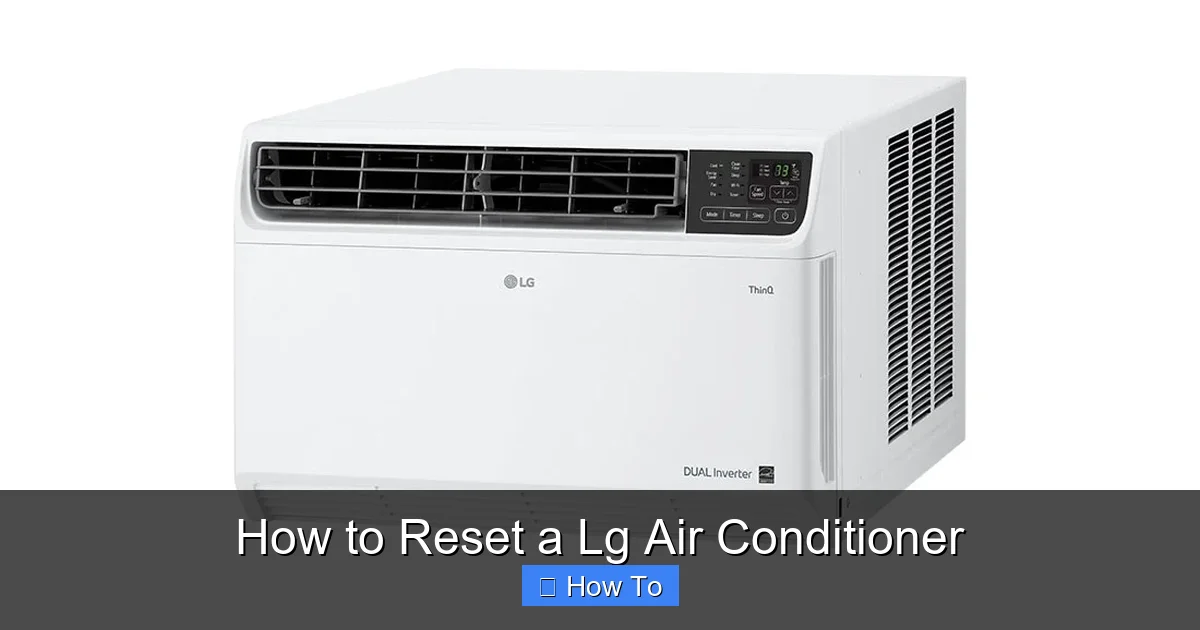
Visual guide about How to Reset a Lg Air Conditioner
Image source: smartacsolutions.com
Before diving into the steps, it’s important to understand why resetting your LG air conditioner can help. Over time, air conditioners can develop software glitches, memory errors, or communication issues—especially smart models connected to Wi-Fi. These problems may cause:
– The unit to stop cooling or heating
– The remote control to become unresponsive
– Error codes to appear on the display
– The fan to run continuously
– The AC to turn on and off randomly
A reset clears temporary memory, reboots the internal system, and often resolves these issues without needing a technician. It’s one of the first troubleshooting steps recommended by LG and HVAC professionals.
Types of LG Air Conditioner Resets
There are three main types of resets you can perform on an LG air conditioner:
1. **Power Cycle (Soft Reset)** – The simplest method. It restarts the unit by cutting power temporarily.
2. **Remote Control Reset** – Uses button combinations on the remote to reboot the system.
3. **Factory Reset** – Restores the unit to its original settings, erasing all custom preferences.
We’ll walk you through each method step by step.
Method 1: Power Cycling (Soft Reset)
Power cycling is the most common and effective way to reset your LG air conditioner. It’s safe, quick, and works on all models—window, portable, and split units.
Step 1: Turn Off the Air Conditioner
Start by turning off the unit using the remote control or the power button on the front panel. Make sure the display shows that the AC is off and the fan has stopped running.
Step 2: Unplug the Unit
Locate the power cord and unplug it from the wall outlet. For window units, this means pulling the plug from the socket. For portable units, unplug the main power cord. If you have a ductless mini-split, unplug the indoor unit’s power supply (usually behind a panel or at the circuit breaker).
Pro Tip: If your unit is hardwired or connected to a dedicated circuit, turn off the corresponding breaker in your electrical panel instead of unplugging.
Step 3: Wait 5 to 10 Minutes
This waiting period is crucial. It allows the internal capacitors to discharge and the system’s memory to clear. Skipping this step may prevent the reset from working properly.
Use this time to check the air filter—dirty filters can cause performance issues that mimic software problems.
Step 4: Plug the Unit Back In
After waiting, plug the air conditioner back into the power source. Turn the breaker back on if you switched it off.
Step 5: Turn On the AC
Use the remote or control panel to turn the unit back on. Set it to your desired temperature and mode (cool, heat, fan, etc.).
Step 6: Test the Unit
Let the AC run for 10–15 minutes. Check if it’s cooling properly, if the fan is working, and if the remote responds. If everything works, the reset was successful.
Example: Maria’s LG window AC stopped cooling after a power outage. She unplugged it for 8 minutes, plugged it back in, and the unit started working normally again.
Method 2: Remote Control Reset
Many LG air conditioners allow you to perform a soft reset using the remote control. This method is convenient because you don’t need to unplug the unit.
Step 1: Ensure the Remote Has Batteries
Check that the remote control has fresh batteries. Weak batteries can cause unresponsiveness, which may be mistaken for a system error.
Step 2: Press and Hold Specific Buttons
The exact button combination varies by model, but here are the most common methods:
– **For most LG window and portable units:** Press and hold the “Mode” and “Fan” buttons simultaneously for 3–5 seconds.
– **For LG dual-hose portable ACs:** Press and hold the “Timer” and “Fan Speed” buttons for 5 seconds.
– **For LG ductless mini-splits:** Press and hold the “Filter” and “Sleep” buttons for 3 seconds.
Watch the display—some models will flash or beep to confirm the reset.
Step 3: Wait for the Unit to Reboot
The air conditioner may turn off and back on automatically. This is normal. Once it restarts, test the cooling and remote functionality.
Note: If the remote reset doesn’t work, try the power cycle method instead.
Method 3: Factory Reset
A factory reset should be used only when other methods fail or when you’re preparing the unit for a new user. It erases all custom settings, including temperature preferences, timer settings, and Wi-Fi connections.
Step 1: Access the Control Panel
Locate the control panel on your air conditioner. For window and portable units, this is usually on the front. For mini-splits, it may be on the indoor unit or via the remote.
Step 2: Enter Reset Mode
The process varies by model, but here’s a general guide:
– **For LG window units:** Press and hold the “Reset” button (if available) for 5 seconds. Some models require pressing “Mode” + “Fan” + “Power” together.
– **For LG portable ACs:** Press and hold the “Function” and “Timer” buttons for 5 seconds until the display flashes.
– **For LG ductless mini-splits:** Use the remote to navigate to Menu > Settings > Reset > Factory Reset. Confirm when prompted.
Step 3: Confirm the Reset
The unit will display a confirmation message or flash lights. Confirm the reset if required. The AC will shut down and restart automatically.
Step 4: Reconfigure Settings
After the reset, you’ll need to set the time, temperature, and mode again. If your unit has Wi-Fi, you’ll also need to reconnect it to the LG ThinQ app.
Pro Tip: Take a photo of your current settings before resetting, so you can easily restore them.
Troubleshooting Common Reset Issues
Even after a reset, some problems may persist. Here’s how to handle common issues:
The AC Still Won’t Turn On
– Check the power source: Is the outlet working? Try plugging in another device.
– Inspect the circuit breaker: Has it tripped? Reset it if needed.
– Look for a blown fuse: Some units have internal fuses that may need replacement.
Error Codes Appear After Reset
LG air conditioners display error codes to help diagnose problems. Common ones include:
– **E1 or CH 01:** Sensor error—check the temperature sensor.
– **E6 or CH 06:** Communication error between indoor and outdoor units.
– **P1 or CH 11:** Power supply issue—check voltage and wiring.
Refer to your user manual or LG’s online error code guide for specific fixes.
The Remote Still Doesn’t Work
– Replace the remote batteries.
– Clean the remote’s infrared sensor.
– Ensure there’s no obstruction between the remote and the AC.
– Try resetting the remote by removing batteries for 1 minute.
The Unit Turns On but Doesn’t Cool
– Check the air filter—clean or replace it if dirty.
– Ensure the thermostat is set correctly.
– Verify that the unit isn’t in “Fan Only” mode.
– Check for blocked vents or dirty coils.
Reconnecting Smart Features After a Reset
If your LG air conditioner supports Wi-Fi and the LG ThinQ app, you’ll need to reconnect it after a factory reset.
Step 1: Download the LG ThinQ App
Available on iOS and Android, the LG ThinQ app lets you control your AC remotely, set schedules, and receive maintenance alerts.
Step 2: Put the AC in Pairing Mode
On most models, press and hold the “Wi-Fi” or “Connect” button on the unit or remote for 3–5 seconds until the Wi-Fi light blinks.
Step 3: Follow the App Instructions
Open the LG ThinQ app, select “Add Device,” and follow the on-screen steps. You’ll need to connect to your home Wi-Fi network and confirm the pairing.
Step 4: Test Remote Control
Once connected, use the app to turn the AC on and off, adjust the temperature, and set timers.
Note: Some 2026 LG models support voice control via Alexa or Google Assistant. Enable these features in the app after setup.
Preventing the Need for Frequent Resets
While resets are helpful, they shouldn’t be needed often. Regular maintenance can keep your LG air conditioner running smoothly.
Clean the Air Filter Monthly
A dirty filter restricts airflow and forces the unit to work harder. Remove the filter, rinse it with water, and let it dry before reinstalling.
Clean the Coils and Vents
Dust and debris on the evaporator and condenser coils reduce efficiency. Use a soft brush or vacuum to clean them every 3–6 months.
Check for Obstructions
Ensure nothing is blocking the indoor or outdoor unit. Keep plants, furniture, and curtains at least 2 feet away.
Schedule Professional Maintenance
Have a technician inspect your AC once a year. They can check refrigerant levels, tighten connections, and detect early signs of wear.
Update Firmware (If Available)
Some LG smart ACs receive firmware updates via the ThinQ app. Check for updates regularly to improve performance and fix bugs.
When to Call a Professional
If your LG air conditioner continues to malfunction after multiple resets, it may have a hardware issue. Contact LG customer support or a licensed HVAC technician if you notice:
– Burning smells or unusual noises
– Water leaks inside the room
– Ice buildup on the coils
– Frequent tripping of the circuit breaker
– Persistent error codes
Attempting to repair electrical or refrigerant components yourself can be dangerous and may void your warranty.
Conclusion
Resetting your LG air conditioner is a simple yet powerful way to fix common performance issues. Whether you use a power cycle, remote reset, or factory reset, these steps can restore your unit to peak condition in minutes.
Remember to start with the softest method—power cycling—and only move to a factory reset if necessary. Always check for error codes and maintain your unit regularly to prevent future problems.
With the tips in this guide, you’ll be able to troubleshoot your LG air conditioner confidently in 2026 and beyond. Stay cool!