Resetting your LG portable air conditioner can resolve common issues like error codes, unresponsiveness, or poor cooling. This guide walks you through simple, safe reset methods—including soft, hard, and factory resets—so you can restore optimal performance quickly and confidently.
Key Takeaways
- Soft resets fix minor glitches: A quick power cycle can clear temporary errors and restore normal operation without losing settings.
- Hard resets restore factory defaults: Use this method when your unit is unresponsive or showing persistent error codes like E1 or CH.
- Always unplug before resetting: Safety first—disconnect power to avoid electrical hazards during the reset process.
- Check the user manual for model-specific steps: LG models vary slightly; consult your manual or LG’s 2026 support site for exact instructions.
- Reset won’t fix hardware issues: If problems persist after a reset, the issue may be mechanical—contact LG support or a certified technician.
- Regular maintenance prevents resets: Clean filters and vents monthly to reduce the need for frequent resets.
- Use the LG ThinQ app for smart models: App-based resets offer convenience and diagnostics for Wi-Fi-enabled units.
How to Reset a LG Portable Air Conditioner: A Complete 2026 Guide
If your LG portable air conditioner suddenly stops cooling, displays an error code, or becomes unresponsive, don’t panic—chances are, a simple reset can get it back on track. Whether you’re dealing with a frozen evaporator, a clogged filter, or a software glitch, resetting your unit is often the fastest and most effective fix.
In this comprehensive 2026 guide, we’ll walk you through every method to reset your LG portable air conditioner—from basic power cycles to full factory resets. You’ll learn when to use each method, how to do it safely, and what to do if the problem persists. We’ll also cover troubleshooting tips, maintenance advice, and how smart features in newer LG models can simplify the process.
By the end of this guide, you’ll be able to confidently reset your LG portable AC, restore peak performance, and avoid unnecessary service calls. Let’s get started!
Why Reset Your LG Portable Air Conditioner?
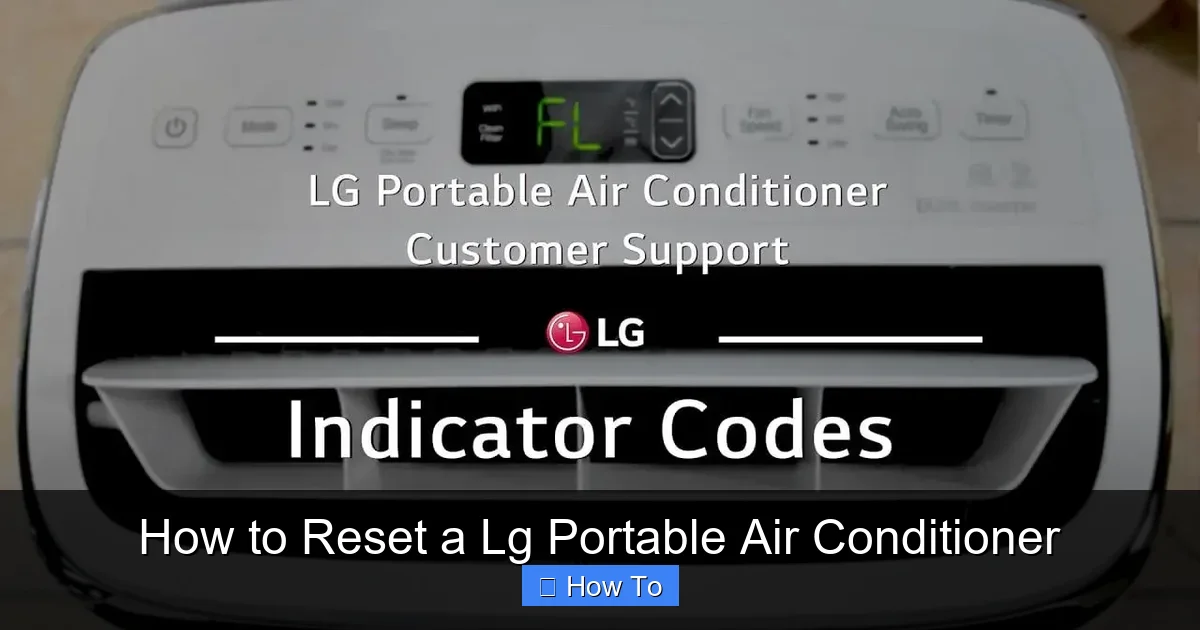
Visual guide about How to Reset a Lg Portable Air Conditioner
Image source: smartacsolutions.com
Before diving into the steps, it’s important to understand why resetting your LG portable air conditioner can be so effective. These units are packed with sensors, microprocessors, and safety features that monitor everything from temperature and humidity to airflow and refrigerant levels. When something goes slightly off—like a clogged filter or a temporary power surge—the system may lock up or display an error code to protect itself.
A reset essentially “reboots” the internal electronics, clearing temporary faults and allowing the unit to start fresh. Think of it like restarting your smartphone when an app freezes. In many cases, this simple action resolves issues without any further intervention.
Common reasons to reset your LG portable AC include:
- Error codes on the display: Codes like E1, CH, or FL indicate sensor or drainage problems.
- Unit not turning on: The power button may be unresponsive due to a software glitch.
- Poor cooling performance: The compressor or fan may be stuck in a low-power mode.
- Remote control not working: A reset can re-sync the remote with the unit.
- After a power outage: Surges or interruptions can confuse the control board.
Resetting is safe, free, and usually takes less than 10 minutes. It’s always worth trying before calling a technician.
Before You Reset: Safety and Preparation
Safety should always come first when working with any electrical appliance. Follow these steps to prepare for a safe and effective reset:
1. Turn Off and Unplug the Unit
Never attempt a reset while the air conditioner is plugged in. Locate the power cord and unplug it from the wall outlet. This cuts off all power to the unit and prevents electrical shock or damage to the internal components.
2. Let the Unit Cool Down
If the AC has been running recently, give it 10–15 minutes to cool off. Hot components can be dangerous to touch, and residual heat may affect sensor readings during the reset.
3. Check for Obvious Issues
Before resetting, do a quick visual inspection:
- Is the air filter clogged with dust?
- Is the exhaust hose kinked or blocked?
- Is water leaking from the unit (indicating a drainage issue)?
Fixing these issues first can prevent the problem from recurring after the reset.
4. Gather Your Tools
For most resets, you won’t need any tools. However, keep the following handy:
- User manual (or access to LG’s 2026 support website)
- Soft cloth (for cleaning)
- Bucket or towel (in case of water drainage)
5. Note Your Settings
If you’re performing a factory reset, you’ll lose custom settings like timer schedules, fan speeds, and Wi-Fi connections. Write down your preferred settings so you can reconfigure them afterward.
Method 1: Soft Reset (Power Cycle)
The soft reset—also known as a power cycle—is the easiest and most common way to reset your LG portable air conditioner. It’s ideal for minor glitches, unresponsive controls, or after a power outage.
Step-by-Step Soft Reset
1. Turn Off the Unit
Press the power button on the unit or remote to turn it off. Wait for the display to go dark.
2. Unplug the Power Cord
Disconnect the AC from the wall outlet. This ensures a complete power drain.
3. Wait 5–10 Minutes
This allows the internal capacitors to fully discharge and the system to “forget” any temporary errors. In 2026 models, LG has improved power management, so a full 10-minute wait is recommended for best results.
4. Plug the Unit Back In
Reconnect the power cord to a grounded outlet. Avoid using extension cords or power strips, as they can interfere with proper operation.
5. Turn the Unit On
Press the power button. The unit should start up normally. If it displays an error code, note it down—we’ll cover troubleshooting later.
6. Test Operation
Set the temperature to a low setting (e.g., 68°F) and let the unit run for 10–15 minutes. Check that cool air is blowing and the fan is working.
Tips for Success
- If the unit still doesn’t respond, try the soft reset again—sometimes it takes two attempts.
- For units with a built-in battery (rare), remove the battery for 30 seconds during the wait time.
- Use this method after cleaning the filter or emptying the water tank—it helps the system recalibrate.
Method 2: Hard Reset (Button Combination)
If the soft reset doesn’t work, a hard reset—also called a master reset—may be needed. This method forces the control board to reboot and is useful for persistent error codes or frozen displays.
Note: The exact button combination varies by model. The steps below apply to most 2026 LG portable ACs, but always check your user manual for confirmation.
Step-by-Step Hard Reset
1. Unplug the Unit
As always, start by disconnecting power for safety.
2. Locate the Control Panel
Find the buttons on the top or front of the unit. Common buttons include Power, Mode, Fan, Timer, and Temp Up/Down.
3. Press and Hold Specific Buttons
While the unit is unplugged, press and hold the following combination:
- Power + Mode buttons for 5–10 seconds.
Some models may require Power + Timer or Fan + Temp Down. Refer to your manual if unsure.
4. Plug the Unit Back In
While still holding the buttons, plug the power cord into the outlet.
5. Continue Holding for 10 Seconds
Keep the buttons pressed for at least 10 seconds after plugging in. You may see the display flash or hear a beep.
6. Release the Buttons
Let go and wait for the unit to restart. The display should reset to default settings.
7. Reconfigure Settings
Set your preferred temperature, mode (Cool, Fan, Dry), and fan speed. If your unit has Wi-Fi, you’ll need to reconnect it to the LG ThinQ app.
Important Notes
- Not all LG models support hard resets. If nothing happens, try the soft reset or factory reset instead.
- Avoid pressing too many buttons at once—this can trigger unintended modes.
- If the unit beeps but doesn’t reset, repeat the process with a longer hold time.
Method 3: Factory Reset (Full System Restore)
A factory reset returns your LG portable air conditioner to its original out-of-the-box settings. This is the most thorough reset and should be used only when other methods fail or when preparing the unit for resale.
Warning: This will erase all custom settings, including Wi-Fi credentials, timer schedules, and user preferences.
Step-by-Step Factory Reset
1. Ensure the Unit Is On
Turn on the air conditioner and let it run for a few minutes.
2. Access the Menu (If Available)
Some 2026 LG models have a digital menu. Press the “Menu” or “Settings” button (if present) and navigate to “Reset” or “Restore Defaults.”
3. Use the Button Combination
For models without a menu, use this common factory reset sequence:
- Press and hold Power + Timer + Fan for 10–15 seconds.
The display may flash “RESET” or show all lights blinking.
4. Confirm the Reset
Release the buttons. The unit will shut down and restart automatically.
5. Reconfigure the Unit
Set up the AC as if it were new:
- Choose language and region.
- Set date and time.
- Reconnect to Wi-Fi via the LG ThinQ app.
- Adjust temperature and fan settings.
Alternative: Use the LG ThinQ App
For smart models (e.g., LP1419IVSM, LP1217WSR), you can perform a factory reset through the app:
- Open the LG ThinQ app on your smartphone.
- Select your air conditioner.
- Tap the gear icon (Settings).
- Choose “Reset Device” or “Remove from Account.”
- Follow the on-screen prompts.
This method is convenient and provides confirmation that the reset was successful.
Troubleshooting Common Reset Issues
Even after a reset, some problems may persist. Here’s how to handle the most common post-reset issues:
Unit Still Won’t Turn On
- Check the power outlet with another device.
- Inspect the power cord for damage.
- Ensure the water tank isn’t full—some models won’t start if the tank is full.
- Try a different outlet or circuit.
Error Codes After Reset
Common 2026 LG error codes and fixes:
- E1: Sensor error. Clean the air intake and check for obstructions.
- CH: Communication error. Power cycle the unit and ensure the remote has fresh batteries.
- FL: Drainage issue. Empty the water tank and check the drain hose.
- CL: Child lock is on. Press and hold the Lock button for 3 seconds to disable.
Poor Cooling After Reset
- Clean or replace the air filter.
- Ensure the exhaust hose is properly vented and not kinked.
- Check that windows and doors are closed.
- Verify the room isn’t too large for the unit’s BTU rating.
Remote Control Not Working
- Replace the remote batteries.
- Re-sync the remote by pressing the “Reset” button (if available) or power cycling the unit.
- Ensure there’s no obstruction between the remote and the unit’s sensor.
Wi-Fi Connection Lost
- Reconnect via the LG ThinQ app.
- Ensure your home network is stable.
- Update the app and firmware if prompted.
Preventing the Need for Frequent Resets
While resets are helpful, the best strategy is to prevent problems before they start. Follow these maintenance tips to keep your LG portable air conditioner running smoothly in 2026 and beyond:
1. Clean the Air Filter Monthly
A dirty filter restricts airflow, causing the unit to overwork and potentially trigger error codes. Remove the filter, rinse it with warm water, and let it dry completely before reinstalling.
2. Empty the Water Tank Regularly
Most LG portable ACs have an auto-evaporation system, but in humid climates, the tank may fill up. Check it weekly and empty it when the “Full” indicator lights up.
3. Inspect the Exhaust Hose
Ensure the hose is securely connected and not bent or blocked. A kinked hose reduces efficiency and can cause overheating.
4. Keep the Area Around the Unit Clear
Leave at least 18–24 inches of space around the air intake and exhaust. Avoid placing the unit near heat sources like ovens or radiators.
5. Use a Surge Protector
Power surges can damage sensitive electronics. Plug your AC into a quality surge protector to safeguard against voltage spikes.
6. Schedule Annual Professional Maintenance
Have a certified technician inspect the unit once a year. They can check refrigerant levels, clean internal coils, and update firmware.
7. Update Firmware via LG ThinQ
LG releases firmware updates to improve performance and fix bugs. Use the ThinQ app to check for and install updates regularly.
When to Call a Professional
Resetting your LG portable air conditioner can solve many issues, but it’s not a cure-all. If you’ve tried all reset methods and the problem persists, it’s time to call a professional. Signs you need expert help include:
- Strange noises (grinding, clicking, or banging)
- Burning smells or smoke
- Refrigerant leaks (oily residue near the unit)
- Compressor not starting (humming but no cooling)
- Frequent error codes despite resets
In 2026, LG offers enhanced support through its website and app, including live chat, video diagnostics, and service scheduling. Visit [LG Support](https://www.lg.com) or use the ThinQ app to find a certified technician near you.
Conclusion
Resetting your LG portable air conditioner is a simple yet powerful way to restore performance, clear error codes, and keep your unit running efficiently. Whether you use a soft reset for minor glitches or a factory reset for deeper issues, these steps can save you time and money.
Remember to always prioritize safety—unplug the unit before resetting—and consult your user manual for model-specific instructions. With regular maintenance and smart use of LG’s 2026 features like the ThinQ app, you can minimize the need for resets and enjoy cool, comfortable air all season long.
If problems persist, don’t hesitate to reach out to LG support. Your comfort is worth it.