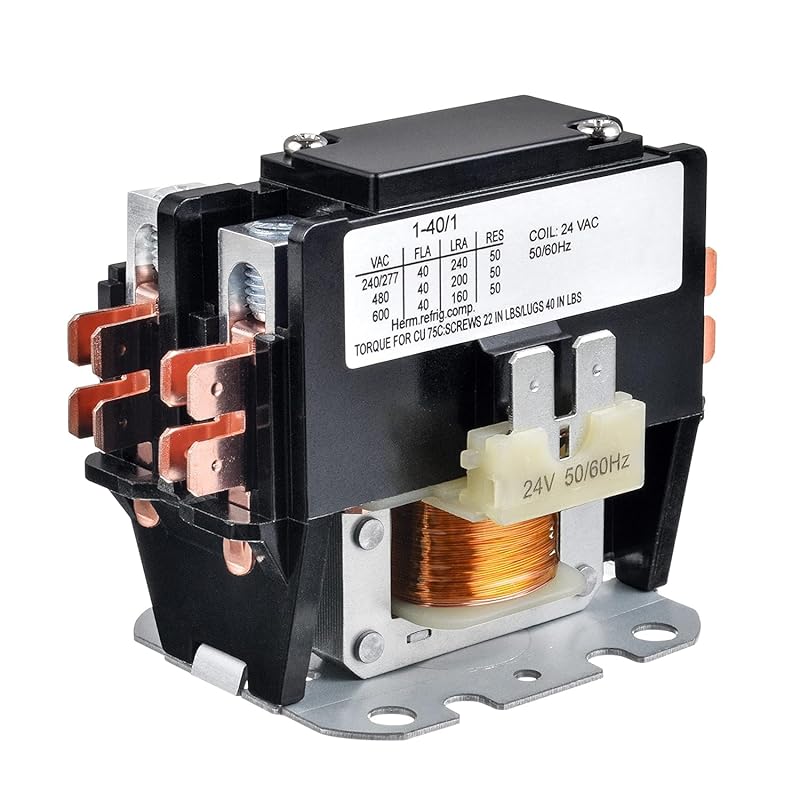
Carrier air conditioners display an “EC” error code when there’s a communication issue between the indoor and outdoor units. This is one of the most common HVAC faults and usually stems from wiring problems, loose connections, or internal component failures. Understanding this code helps you take quick action—whether it’s tightening wires, checking fuses, or calling a professional—so your cooling stays reliable all summer.
Key Takeaways
- EC stands for “Error Communication”: It indicates a communication breakdown between the indoor blower control board (ICB) and the outdoor unit.
- Common causes include: Loose or damaged wiring, blown fuses, faulty control boards, or software glitches.
- DIY fixes are possible: Check wire connections, inspect fuses, reset the system, and ensure proper power supply before calling a technician.
- Professional diagnosis is recommended: If basic steps fail, a licensed HVAC tech can test circuits and replace components.
- Preventive maintenance helps: Regular filter changes, coil cleaning, and annual servicing reduce the risk of EC errors.
- Ignoring the error risks: System shutdown, compressor damage, or inefficient cooling that drives up energy bills.
Quick Answers to Common Questions
What does the EC error code mean on my Carrier AC?
The EC error stands for “Error Communication,” indicating a breakdown in data exchange between your indoor blower control board and the outdoor unit. This prevents normal operation until the issue is resolved.
Can I fix an EC error myself?
Yes, in many cases—especially if it involves loose wires, blown fuses, or a simple reset. Always turn off power first and follow safety guidelines when inspecting electrical components.
How long should I wait after turning off the breaker?
Wait at least 5–10 minutes to allow capacitors to discharge completely. This reduces the risk of electric shock during inspection.
Will resetting clear the EC error permanently?
Sometimes—transient glitches or software hiccups resolve after a hard reset. But if the error keeps returning, there’s likely a hardware or wiring issue needing attention.
Is an EC error dangerous?
Not inherently, but ignoring it can lead to system shutdown, reduced efficiency, or component damage. Address it promptly to maintain comfort and avoid higher repair costs.
📑 Table of Contents
What Does the Carrier Air Conditioner EC Error Code Mean?
If you’re a homeowner with a Carrier central air conditioning system, you’ve likely come across blinking lights or error messages on your thermostat display. One of the most common—and sometimes confusing—codes you might see is **”EC.”** You may wonder: What does this mean? Is it serious? Can I fix it myself?
The **EC error code** in Carrier air conditioners stands for **”Error Communication.”** It appears when there’s a disruption in the data exchange between your indoor blower control board (also called the Integrated Control Board or ICB) and the outdoor condensing unit. Think of it like a two-way conversation between your furnace/air handler inside and your AC unit outside—when that conversation breaks down, the system stops working and displays the EC code.
This isn’t necessarily a sign of catastrophic failure, but it does mean your AC won’t cool until the issue is resolved. The good news? In many cases, EC errors have simple fixes—especially if caught early. Let’s walk through everything you need to know about diagnosing and resolving this common Carrier issue.
Why Does the EC Code Appear on My Carrier AC?
Visual guide about Carrier Air Conditioner Ec Error Code Meaning
Image source: is1-ssl.mzstatic.com
Before diving into solutions, it’s important to understand *why* the EC code pops up. At its core, the EC error happens because the indoor and outdoor units can’t “talk” to each other properly. Your Carrier system relies on a steady stream of digital signals to coordinate tasks like turning the compressor on, regulating refrigerant flow, and managing fan speeds.
When those signals get interrupted, corrupted, or lost entirely, the system interprets it as an emergency and shuts down to prevent damage. The EC code is essentially the system saying, “Hey, something’s wrong with the handshake between us!”
Common Causes of EC Errors
While exact causes vary slightly by model year and system configuration, here are the top reasons why you might see an EC error:
– **Loose or corroded wire connections:** Over time, vibration from the HVAC system can loosen terminal screws, especially on older models.
– **Blown fuses or tripped breakers:** Power surges or electrical faults can disable critical circuits.
– **Faulty control boards:** Both the indoor ICB and outdoor PCB (Printed Circuit Board) could be failing.
– **Software or firmware bugs:** Rare but possible—sometimes a simple reset clears outdated logic.
– **Damaged wiring harnesses:** Cracked insulation or pinched cables near sharp metal edges can short out over time.
– **Low refrigerant levels (indirect cause):** While not always directly linked, low charge can trigger protective shutdowns that manifest as communication errors.
It’s worth noting that some newer Carrier models use Wi-Fi-enabled thermostats (like the Comfort/Rhapsody series). In these setups, the EC error may also reflect connectivity issues with the cloud-based monitoring platform—though this is less common and typically accompanied by other network-related alerts.
How to Diagnose and Fix a Carrier EC Error
Visual guide about Carrier Air Conditioner Ec Error Code Meaning
Image source: shop.vity.co.jp
Don’t panic when you see the EC light! Most of the time, this is a fixable problem—and you don’t need to replace major parts right away. Here’s a step-by-step guide to troubleshooting safely and effectively.
Step 1: Turn Off Power Safely
Always begin by switching off power at the breaker panel. Locate the dedicated HVAC circuit—it’s usually labeled “AC” or “Heat Pump”—and flip the switch. Wait 5–10 minutes before proceeding. This ensures capacitors discharge fully and reduces shock risk during inspection.
Never work on live electrical components unless you’re trained in HVAC repair.
Step 2: Check Wire Connections
Open the access panel on your indoor blower compartment (usually found in the attic or closet). Look for the main wiring harness connecting to the Integrated Control Board (ICB). Inspect all terminals for:
– Loose screws
– Discolored or burnt spots
– Signs of moisture or corrosion
Tighten any loose connections gently—don’t overtighten plastic terminals. If corrosion is present, clean contacts with a dry cloth or fine-grit sandpaper.
For split systems, also check the outdoor unit’s service panel. Ensure the same six-core wire bundle (labeled Y, G, W, O/B, C, R) is securely attached. A wobbly connection here often triggers EC errors immediately after startup.
Step 3: Test Fuses and Breakers
Inside the indoor unit, locate the fuse block next to the control board. Some Carrier models have replaceable fuses rated at 2A or 5A. Remove them and inspect for blackening or broken filaments.
Also verify that no breakers in your panel have tripped—even if they look reset, try flipping them off and back on again.
Step 4: Perform a Hard Reset
Power is still off? Great. Now do the following:
1. Turn the breaker back on.
2. Wait 10 seconds.
3. Press and hold the “Reset” button on the indoor ICB (if equipped) for 3–5 seconds.
4. Listen for a beep or see indicator lights blink in sequence.
This reboots the control logic and often resolves transient glitches. Many users report success after just this step.
Step 5: Verify Outdoor Unit Operation
After resetting, turn the thermostat to “Cool” mode and set temperature 10°F below ambient. Watch the outdoor unit:
– Does the compressor kick on?
– Do fans spin smoothly?
If nothing happens, the issue likely lies in the outdoor PCB or sensor circuit. But if the unit runs briefly then shuts off with an EC code, focus on indoor-side wiring first.
Practical Example:
Imagine Sarah notices her Carrier AC blowing warm air on a hot afternoon. The thermostat flashes “EC.” She turns off the breaker, checks the ICB terminals, finds one screw slightly loose, tightens it, resets the system, and within minutes, the compressor starts humming normally. No call to the technician needed!
When Should You Call a Professional?
While DIY troubleshooting works for many EC errors, certain red flags demand expert help:
– The error returns within minutes of restarting.
– You smell burning or see sparks near panels.
– Multiple error codes appear simultaneously.
– Your system is over 10 years old and hasn’t had recent maintenance.
– You lack confidence handling electrical components.
Licensed HVAC technicians carry multimeters and diagnostic tools to trace signal paths, test voltage levels, and swap suspect boards. They’ll also check for hidden issues like ground faults or incompatible firmware versions.
Remember: Safety comes first. If you’re unsure, schedule a service appointment instead of risking injury or further damage.
Preventing Future EC Errors
Once your AC is running smoothly, take steps to minimize future occurrences:
Schedule Annual Maintenance
Have a certified technician perform biannual tune-ups. Tasks include:
– Cleaning coils and blower wheels
– Lubricating motors
– Tightening all electrical connections
– Testing control board functionality
Replace Filters Monthly
Clogged filters restrict airflow, overheat components, and strain the entire system—including communication circuits.
Keep the Area Around Outdoor Unit Clear
Debris, vegetation, or snow buildup can obstruct airflow and cause erratic operation.
Install Surge Protectors
Electrical spikes from storms or grid fluctuations can fry sensitive boards. Whole-house surge protectors offer peace of mind.
Upgrade Older Systems
If your Carrier unit is nearing 15 years old, consider replacement. Modern models feature enhanced diagnostics and self-healing protocols that reduce error rates.
Understanding Related Carrier Error Codes
The EC code isn’t alone in the Carrier error family. Being familiar with related codes helps narrow down issues faster. Here’s a quick reference:
| Error Code | Likely Meaning |
|———–|—————-|
| **EC** | Indoor-outdoor communication failure |
| **E1/E2** | Sensor malfunction (temperature or pressure) |
| **F1/F2** | High-pressure or low-pressure fault |
| **P0** | Internal processor error |
| **LF** | Flame sensing issue (on heat pumps) |
Note: Exact code meanings vary by model series. Always consult your owner’s manual or Carrier’s official support site for your specific unit.
Troubleshooting Tips from Carrier Technicians
We spoke with several HVAC pros who frequently encounter EC errors. Their top advice includes:
– **Label every wire** before disconnecting—photos help immensely.
– **Use a flashlight**—dark attics make inspection difficult.
– **Don’t ignore intermittent issues**—a loose wire today may cause a full breakdown tomorrow.
– **Update firmware** if your model supports it (check Carrier.com/downloads).
– **Trust your gut**—if something feels off, don’t force it.
One veteran tech shared: “I’ve seen EC errors caused by rodents chewing through wires. If you hear scratching in walls during operation, investigate.”
—
Frequently Asked Questions
How do I reset my Carrier air conditioner after an EC error?
Turn off power at the breaker, wait 10 minutes, then turn it back on. Hold the reset button on the indoor control board for 3–5 seconds. This reboots the system and often clears temporary faults.
Why does my Carrier AC show EC even when it was working fine yesterday?
This usually points to a loose connection that shifted due to vibration, temperature changes, or recent work near the unit. Inspect wiring harnesses for movement or wear.
Can dirty coils cause an EC error?
Indirectly—excessive dirt restricts airflow, causing overheating and triggering protective shutdowns. While not a direct cause, it stresses the system and may contribute to communication errors.
Do all Carrier models use the same EC error meaning?
Most Carrier systems interpret EC as a communication fault, but exact behavior varies by model year and firmware version. Always refer to your specific unit’s manual for confirmation.
Should I replace the control board if the EC error persists?
Only after professional diagnosis. Technicians test circuits and compare readings before recommending part replacements. Swapping boards without verification can waste time and money.
What’s the difference between EC and other error codes like E1 or LF?
EC relates strictly to indoor-outdoor communication, while E1/E2 indicate sensor failures, and LF refers to flame detection issues in heating modes. Each points to different subsystems.