
Older Carrier air conditioners are known for their durability and solid performance, often lasting decades with proper care. While they may lack modern smart features, many homeowners still rely on these trusted units for consistent cooling.
When it comes to home cooling, few brands have stood the test of time like Carrier. For decades, Carrier has been synonymous with reliability, innovation, and comfort. While today’s air conditioners boast smart thermostats, Wi-Fi connectivity, and ultra-high efficiency ratings, many homes still rely on older Carrier air conditioners that have been quietly humming along for 15, 20, or even 25 years. These vintage units may not have the sleek design or digital displays of modern models, but they’ve earned a reputation for toughness and dependability.
So, what makes older Carrier air conditioners so enduring? It starts with their build quality. Back in the 1980s, 1990s, and early 2000s, manufacturers like Carrier used heavier-gauge metal, robust compressors, and simpler mechanical systems that were easier to repair and less prone to failure. These units weren’t packed with complex electronics, which means fewer things could go wrong. For homeowners who value longevity over flashy features, these older models have been a trusted choice.
But owning an older air conditioner isn’t without its challenges. As these units age, they face wear and tear, declining efficiency, and the growing difficulty of finding replacement parts. Still, with proper care and attention, many older Carrier air conditioners continue to deliver reliable cooling. Whether you’re maintaining a vintage unit or considering whether it’s time to upgrade, understanding how these systems work—and how to keep them running—can save you time, money, and discomfort during the hottest months of the year.
Key Takeaways
- Built to Last: Older Carrier air conditioners were constructed with heavy-duty materials, contributing to their long lifespan—often 15–20 years or more.
- Energy Efficiency Varies: While reliable, many older models are less energy-efficient than today’s standards, leading to higher utility bills.
- Maintenance Is Crucial: Regular cleaning, filter changes, and professional tune-ups can keep older units running smoothly and prevent breakdowns.
- Parts May Be Harder to Find: As models age, replacement parts can become scarce, making repairs more challenging and costly.
- Consider Upgrading for Savings: Replacing an older unit with a modern, high-efficiency model can reduce energy use by 20–50%, saving money over time.
- Still Functional in Many Homes: Despite their age, well-maintained older Carrier units continue to provide dependable cooling in homes across the country.
- Know the Signs It’s Time to Replace: Frequent repairs, rising energy bills, and inconsistent cooling are strong indicators that an upgrade is due.
📑 Table of Contents
- A Look Back: The Legacy of Older Carrier Air Conditioners
- Performance and Efficiency of Older Models
- Maintenance Tips for Older Carrier Units
- Repair vs. Replace: What’s the Right Choice?
- Finding Parts and Service for Older Models
- Environmental and Financial Considerations
- Conclusion: Honoring the Past, Preparing for the Future
A Look Back: The Legacy of Older Carrier Air Conditioners
Carrier has been a leader in the HVAC industry since Willis Carrier invented the first modern air conditioner in 1902. Over the years, the company has introduced countless innovations, but some of its most durable models came from the late 20th century. These older Carrier air conditioners were built during a time when longevity and serviceability were top priorities.
Popular Models from the 1980s to Early 2000s
Some of the most well-known older Carrier models include the WeatherMaker series, the Comfort series, and the Performance series. These units were widely installed in homes across the U.S. and are still found in many residences today. For example, the Carrier WeatherMaker 50TQ and 50TJ models were popular central air systems known for their quiet operation and solid performance. The Comfort series, like the 38TQR, offered a balance of efficiency and affordability, making it a favorite among budget-conscious homeowners.
These models typically used R-22 refrigerant, also known as Freon, which was the standard at the time. While effective, R-22 was later found to contribute to ozone depletion, leading to its phaseout under the Montreal Protocol. As a result, servicing older Carrier units that use R-22 can be more expensive and complicated today.
Why They Were Built to Last
One reason older Carrier air conditioners have such a strong reputation is their mechanical simplicity. Unlike today’s systems, which rely heavily on circuit boards, sensors, and variable-speed compressors, older models used straightforward components like single-speed compressors, mechanical thermostats, and basic fan motors. This made them easier to diagnose and repair—often with basic tools and a little know-how.
Additionally, the cabinets were made from thicker steel, and the coils were often larger, allowing for better heat exchange. These design choices contributed to the units’ durability. Many homeowners report that their Carrier units lasted well beyond the average 10–15 year lifespan, with some still functioning after 25 years.
Performance and Efficiency of Older Models
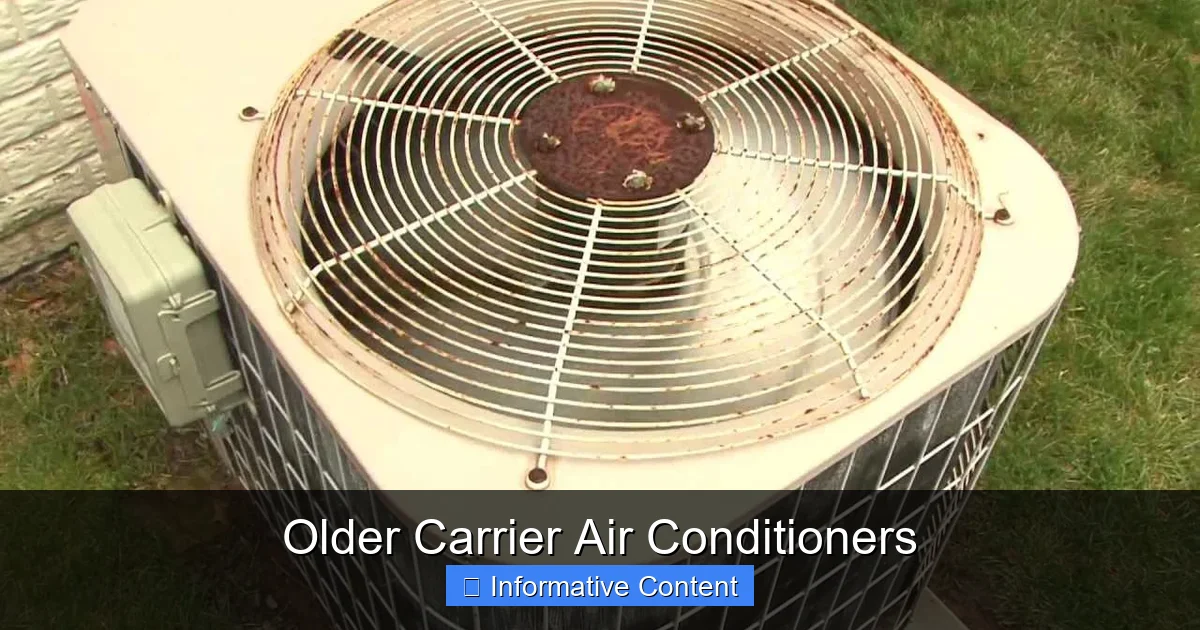
Visual guide about Older Carrier Air Conditioners
Image source: i.ytimg.com
While older Carrier air conditioners are praised for their reliability, their energy efficiency doesn’t compare to today’s standards. Modern units are required to meet strict SEER (Seasonal Energy Efficiency Ratio) ratings, but older models often fall far short of these benchmarks.
Understanding SEER Ratings
SEER measures how efficiently an air conditioner uses electricity over a typical cooling season. The higher the SEER rating, the less energy the unit consumes. In the 1990s, most air conditioners had SEER ratings between 6 and 10. By 2006, the federal minimum was raised to 13 SEER, and today, new units often range from 14 to 25+ SEER.
For example, a 20-year-old Carrier unit might have a SEER of 8 or 9. While that was considered good at the time, it’s significantly less efficient than a modern 16 SEER model. This difference translates to higher energy bills. According to the U.S. Department of Energy, upgrading from a 10 SEER to a 16 SEER unit can reduce cooling costs by up to 38%.
Real-World Performance
Despite lower efficiency ratings, many older Carrier air conditioners still cool homes effectively—especially in moderate climates. Their larger coils and robust compressors allow them to handle heat loads well, and they often run longer cycles, which can improve indoor air quality by reducing humidity more thoroughly.
However, in extreme heat or in larger homes, older units may struggle to keep up. They may run constantly on hot days, leading to increased wear and higher electricity use. Homeowners in hotter regions like Arizona or Texas may notice their older Carrier units working harder and costing more to operate.
Maintenance Tips for Older Carrier Units
One of the best ways to extend the life of an older Carrier air conditioner is through regular maintenance. Unlike modern systems that may alert you to problems via digital diagnostics, older units rely on your attention to detail and routine care.
Annual Professional Tune-Ups
It’s recommended to have a licensed HVAC technician inspect and service your older Carrier unit at least once a year, ideally before the cooling season begins. During a tune-up, the technician will:
– Clean the condenser and evaporator coils
– Check refrigerant levels (and recharge if needed)
– Inspect electrical connections and tighten loose wires
– Lubricate moving parts
– Test the thermostat and safety controls
– Check for leaks or corrosion
These steps can prevent small issues from turning into major breakdowns. For example, a dirty condenser coil can reduce efficiency by up to 30%, causing the compressor to work harder and potentially fail prematurely.
DIY Maintenance You Can Do
Between professional visits, there are several things homeowners can do to keep their older Carrier air conditioner in good shape:
– Change the air filter monthly: A clogged filter restricts airflow, forcing the system to work harder. Use a standard 1-inch pleated filter and replace it every 30–90 days, depending on usage and pets.
– Keep the outdoor unit clean: Remove leaves, grass, and debris from around the condenser unit. Trim back shrubs and plants to ensure at least 2 feet of clearance on all sides.
– Check the condensate drain: Over time, the drain line can clog with algae or mold, causing water to back up into the home. Flush it with a mixture of water and vinegar every few months.
– Inspect the thermostat: If your unit uses an older mechanical thermostat, consider upgrading to a programmable or smart thermostat. This can improve comfort and save energy, even with an older system.
Signs Your Unit Needs Attention
Even with regular maintenance, older air conditioners can develop problems. Watch for these warning signs:
– Weak airflow: Could indicate a dirty filter, blocked ductwork, or a failing blower motor.
– Strange noises: Grinding, squealing, or banging sounds may point to loose parts, worn bearings, or compressor issues.
– Icing on the coils: Often caused by low refrigerant, dirty coils, or restricted airflow.
– Frequent cycling: If the unit turns on and off rapidly, it may be overheating or have a faulty thermostat.
– Higher energy bills: A sudden spike in electricity use could mean the system is losing efficiency.
Addressing these issues early can prevent costly repairs or premature failure.
Repair vs. Replace: What’s the Right Choice?
One of the biggest decisions homeowners face with older Carrier air conditioners is whether to repair or replace the unit. This choice depends on several factors, including the unit’s age, condition, repair costs, and energy efficiency.
When to Repair
Repairing an older unit makes sense if:
– The repair cost is less than 50% of the price of a new system
– The unit is less than 10–15 years old
– The repair is minor (e.g., replacing a capacitor or contactor)
– You plan to stay in the home long-term and want to delay a major expense
For example, if your 18-year-old Carrier unit needs a new fan motor that costs $300 to replace, and a new system would cost $5,000, repairing it may be the smarter short-term choice.
When to Replace
Consider replacing your older Carrier air conditioner if:
– The unit is over 15 years old
– Repairs are becoming frequent and expensive
– The system uses R-22 refrigerant, which is costly and hard to find
– Your energy bills are rising due to inefficiency
– You want to improve indoor air quality or add smart features
Modern air conditioners offer significant advantages, including:
– Higher SEER ratings (16–25+)
– Inverter technology for quieter, more consistent cooling
– Smart thermostats and Wi-Fi connectivity
– Better humidity control
– Improved air filtration
Additionally, many utility companies offer rebates for upgrading to high-efficiency systems, which can offset the initial cost.
The Cost of Waiting
Delaying a replacement can lead to higher long-term costs. An older unit that breaks down in the middle of summer may require emergency service, which is often more expensive. Plus, continued use of an inefficient system means paying more in energy bills every month.
A good rule of thumb: if your repair costs exceed $1,000 and your unit is over 15 years old, it’s usually time to start shopping for a replacement.
Finding Parts and Service for Older Models
As older Carrier air conditioners age, finding replacement parts can become a challenge. While Carrier still supports many discontinued models, some components may no longer be in production.
Where to Look for Parts
If you need a part for your older Carrier unit, try these sources:
– Authorized Carrier dealers: Many dealers keep inventory of common parts or can order them through Carrier’s network.
– Online HVAC suppliers: Websites like HVACPartsShop.com, PartsWarehouse.com, and SupplyHouse.com carry a wide range of parts for older models.
– Local HVAC repair shops: Some shops stock or can source hard-to-find components.
– Salvage yards and online marketplaces: eBay, Craigslist, and HVAC salvage yards may have used parts from similar units.
Common parts that may need replacement include capacitors, contactors, fan motors, thermostats, and pressure switches.
Working with a Knowledgeable Technician
Not all HVAC technicians are familiar with older systems. When choosing a service provider, look for someone with experience in servicing vintage units. Ask if they’ve worked on Carrier models from the 1990s or 2000s, and whether they can source parts for discontinued systems.
A good technician will also help you weigh the cost of repairs against the benefits of upgrading. They can perform a load calculation to determine the right size for a new system and recommend energy-efficient models that fit your budget.
Environmental and Financial Considerations
Owning an older air conditioner has both environmental and financial implications. While keeping a unit running longer reduces waste, it may come at the cost of higher energy use and refrigerant concerns.
The R-22 Refrigerant Issue
As mentioned earlier, most older Carrier air conditioners use R-22 refrigerant, which is being phased out due to its environmental impact. While it’s still legal to use R-22 in existing systems, the supply is limited, and prices have risen significantly.
In 2020, the EPA banned the production and import of R-22, meaning only reclaimed or recycled refrigerant is available. This has driven up costs—recharging an older system can now cost $200–$600 or more, depending on the amount needed.
Some homeowners consider retrofitting their system to use a newer, more environmentally friendly refrigerant like R-410A. However, this is often not cost-effective and may void warranties or reduce performance. In most cases, replacing the entire system is the better long-term solution.
Energy Savings with Modern Units
Upgrading to a new, high-efficiency air conditioner can lead to substantial energy savings. For example, replacing a 10 SEER unit with a 16 SEER model can cut cooling costs by nearly 40%. Over 10 years, that could save $1,000 or more in electricity bills.
Additionally, modern units use eco-friendly refrigerants and are designed to minimize energy waste. Many also qualify for federal tax credits or local utility rebates, further reducing the upfront cost.
Disposal and Recycling
When it’s time to retire your older Carrier air conditioner, make sure it’s disposed of properly. HVAC technicians are required to recover any remaining refrigerant before dismantling the unit. The metal, copper, and other materials can often be recycled, reducing environmental impact.
Some HVAC companies offer take-back programs or can direct you to local recycling centers that accept old appliances.
Conclusion: Honoring the Past, Preparing for the Future
Older Carrier air conditioners have earned their place in HVAC history. Built with durability in mind, these units have kept homes cool for decades with minimal fuss. For many homeowners, they represent a time when appliances were made to last—and many still do.
However, as technology advances and energy costs rise, the limitations of older systems become more apparent. Lower efficiency, rising repair costs, and environmental concerns make upgrading an increasingly attractive option.
That said, if your older Carrier unit is still running well, there’s no need to rush into a replacement. With regular maintenance and timely repairs, it can continue to serve you reliably for years to come. But when the time comes to upgrade, you’ll benefit from quieter operation, lower bills, and smarter features that enhance your comfort and convenience.
Whether you’re maintaining a vintage Carrier or planning your next purchase, understanding the strengths and weaknesses of older air conditioners helps you make informed decisions. After all, the goal isn’t just to stay cool—it’s to stay smart, save money, and live comfortably, no matter the season.
Frequently Asked Questions
How long do older Carrier air conditioners typically last?
With proper maintenance, older Carrier air conditioners can last 15 to 20 years or more. Some well-cared-for units have even reached 25 years of service.
Are parts still available for older Carrier models?
Yes, many parts are still available through authorized dealers, online suppliers, and HVAC repair shops. However, some components may be harder to find or more expensive due to discontinued production.
Can I still use R-22 refrigerant in my older Carrier unit?
Yes, you can still use R-22 in existing systems, but it’s increasingly expensive and harder to obtain. The EPA has phased out production, so only reclaimed or recycled refrigerant is available.
Is it worth repairing a 20-year-old Carrier air conditioner?
It depends on the repair cost and the unit’s overall condition. If repairs cost less than half the price of a new system and the unit is otherwise reliable, repairing may be worthwhile. Otherwise, replacement is usually better.
How much can I save by upgrading to a new air conditioner?
Upgrading from a 10 SEER to a 16 SEER unit can reduce cooling costs by up to 38%. Over 10 years, this could save $1,000 or more in energy bills, depending on usage and electricity rates.
What should I do with my old Carrier air conditioner when I replace it?
Have a licensed technician recover the refrigerant, then recycle the metal and components. Many HVAC companies offer disposal services or can direct you to local recycling centers.

