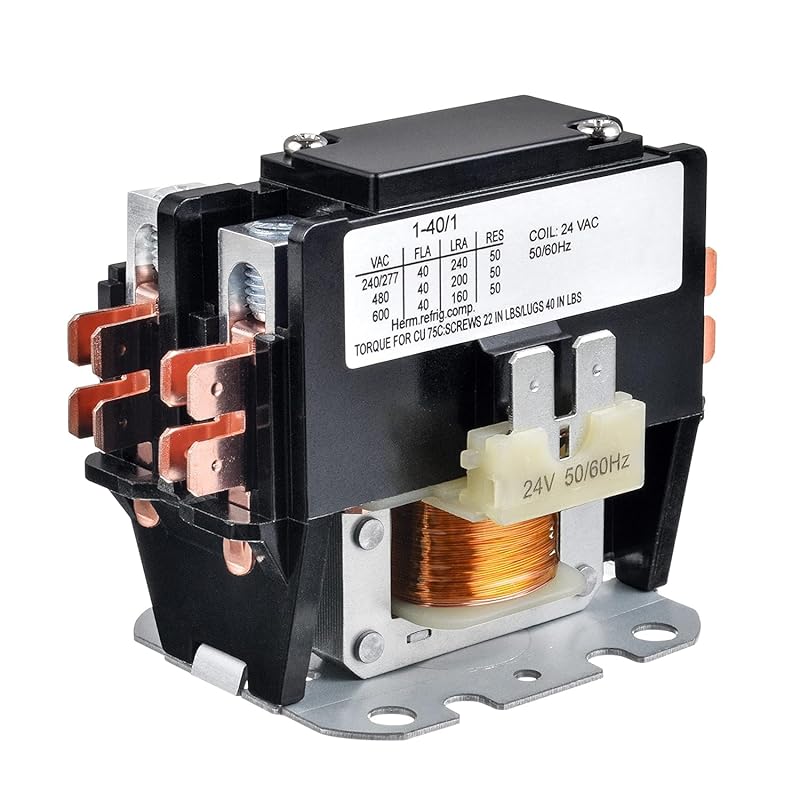
The dual run capacitor in a Carrier air conditioner powers both the compressor and blower motors, ensuring smooth, efficient operation. It stores electrical energy and stabilizes voltage, helping your system start strong and run quietly. When it fails, you’ll notice weak cooling, loud noises, or frequent cycling—prompting a timely replacement.
Have you ever noticed your Carrier air conditioner running louder than usual or struggling to cool your home on hot days? You might think the issue is with the thermostat or refrigerant levels, but the real culprit could be a worn-out dual run capacitor. This small but mighty component plays a critical role in keeping your AC system running smoothly. Without it, your unit simply can’t deliver the performance it was built for.
In this guide, we’ll walk you through everything you need to know about the Carrier air conditioner dual run capacitor—what it does, why it matters, how to spot problems, and when it’s time to replace it. Whether you’re a homeowner troubleshooting a noisy unit or just curious about your HVAC system’s inner workings, this article will give you clear, actionable insights. Let’s dive in.
Key Takeaways
- Dual Function: The dual run capacitor supports both the compressor and condenser fan motor, unlike single capacitors that only power one component.
- Voltage Stabilization: It maintains consistent voltage to prevent motor strain, reducing wear and improving energy efficiency.
- Failure Signs: Common symptoms include humming without starting, weak airflow, overheating, or tripped breakers.
- Lifespan Expectancy: Typically lasts 5–10 years under normal conditions; heat, dust, or poor maintenance can shorten its life.
- DIY Replacement Tips: Always turn off power at the breaker, discharge the capacitor safely, and match voltage and microfarad ratings exactly.
- Professional Help: If unsure about wiring or diagnosis, call an HVAC technician to avoid injury or further damage.
- Energy Savings: A healthy dual run capacitor reduces power draw, lowering utility bills and extending equipment lifespan.
Quick Answers to Common Questions
What happens if I ignore a bad dual run capacitor?
If ignored, a failing capacitor can cause the compressor to overheat, reduce cooling efficiency, or lead to complete system shutdown. In severe cases, it may damage other components like the compressor or fan motor.
Can I use any brand of dual run capacitor for my Carrier AC?
No. Always match the voltage, microfarad rating, and terminal configuration specified on your unit’s nameplate. Using incompatible capacitors risks performance issues or safety hazards.
How often should I replace my dual run capacitor?
Typically every 5–10 years under normal conditions. However, environmental factors like high humidity, dust, or frequent short cycling can shorten its lifespan.
Is it safe to touch a capacitor after turning off the power?
Not immediately. Capacitors retain charge even when disconnected. Always discharge them using an insulated screwdriver before handling.
Can a dual run capacitor cause a tripped breaker?
Yes. A shorted or degraded capacitor can draw excessive current, triggering the breaker. This is often mistaken for an electrical overload elsewhere in the system.
📑 Table of Contents
- What Is a Dual Run Capacitor in a Carrier Air Conditioner?
- Signs Your Dual Run Capacitor Needs Replacing
- How to Diagnose a Bad Dual Run Capacitor
- Replacing Your Carrier Dual Run Capacitor: Step-by-Step Guide
- Choosing the Right Dual Run Capacitor for Your Carrier AC
- Maintenance Tips to Extend Capacitor Life
- Common Myths About Dual Run Capacitors Debunked
What Is a Dual Run Capacitor in a Carrier Air Conditioner?
At its core, the dual run capacitor is a passive electrical device that helps your Carrier air conditioner’s motors operate efficiently. Unlike older models that used separate capacitors for the compressor and fan motor, modern Carrier units (especially those made after the mid-1990s) often use a single dual run capacitor to serve both roles. This design saves space, reduces wiring complexity, and improves reliability.
The capacitor stores electrical energy and releases it in controlled bursts to help motors start and maintain steady speed. In a dual run setup, one set of terminals connects to the compressor (main cooling motor), while another powers the condenser fan (which expels heat from the outdoor unit). Together, they ensure your system runs quietly, cools effectively, and doesn’t overwork.
How Does It Work?
Think of the dual run capacitor as a battery for your motors. When you turn on your AC, the capacitor provides an initial “boost” of electricity that helps the compressor overcome inertia and begin spinning. Once running, it continues to supply stable voltage, preventing fluctuations that could cause overheating or vibration.
Because both motors run continuously during cooling cycles, the capacitor must handle continuous electrical load—not just startup bursts like a start capacitor. That’s why dual run capacitors are rated higher in terms of microfarads (µF) and voltage (usually 370V or 440V).
Why Carrier Uses Dual Run Capacitors
Carrier, a leader in HVAC innovation, adopted dual run capacitors for several practical reasons:
– Simplified Wiring: Fewer components mean less chance for error or loose connections.
– Improved Reliability: One component serving two functions reduces points of failure.
– Better Efficiency: Modern capacitors are engineered for low energy loss and long service life.
– Space Savings: Compact design fits easily inside tight access panels.
These benefits translate into fewer service calls, longer compressor life, and more dependable cooling—especially important in extreme climates where Carrier systems are often pushed to their limits.
Signs Your Dual Run Capacitor Needs Replacing

Visual guide about Carrier Air Conditioner Dual Run Capacitor
Image source: imgv2-1-f.scribdassets.com
Ignoring capacitor issues rarely makes them go away. In fact, a failing capacitor often leads to bigger problems down the line, like compressor burnout or frozen evaporator coils. Here are the most common warning signs:
Unit Hums But Won’t Start
If your Carrier AC makes a loud humming sound but the compressor doesn’t kick in, the capacitor may be dead or dying. This is one of the clearest indicators—the motor has power but lacks the push to start rotating.
Weak Cooling or Warm Air
A weak or inconsistent capacitor can’t provide enough voltage to keep the compressor running efficiently. As a result, your indoor temperature stays high even when the unit runs constantly.
Loud or Erratic Noises
Unusual buzzing, rattling, or clicking sounds often point to electrical resistance caused by capacitor degradation. These noises usually worsen over time if left unaddressed.
Blower Motor Runs Slowly
Since the condenser fan also relies on the same capacitor, slow or sluggish fan operation indoors or outdoors suggests capacitor trouble.
Frequent Cycling
If your thermostat cycles the AC on and off every few minutes instead of running steadily, the capacitor may not be holding charge long enough to sustain operation.
Visible Damage or Leakage
Check the capacitor casing for bulges, cracks, or electrolyte leakage (a sticky residue near terminals). Any physical damage means immediate replacement is needed.
How to Diagnose a Bad Dual Run Capacitor
Visual guide about Carrier Air Conditioner Dual Run Capacitor
Image source: shutterstock.com
Before replacing anything, confirm the capacitor is actually the problem. Here’s a simple diagnostic process:
Step 1: Turn Off Power
Always shut off the circuit breaker powering your AC unit before touching any components. Safety first!
Step 2: Locate the Capacitor
On most Carrier systems, the dual run capacitor sits in a plastic or metal housing near the compressor and fan motor. It will have multiple wires attached—typically four or six terminals.
Step 3: Discharge the Capacitor
Even when unplugged, capacitors store dangerous voltages. Use an insulated screwdriver to short each terminal against the capacitor body for 10–15 seconds.
Step 4: Test with a Multimeter
Set your multimeter to capacitance mode and touch the probes to the correct terminals (check your unit’s manual for polarity). Compare readings to the nameplate values. A deviation of more than ±10% usually means replacement is needed.
Step 5: Visual Inspection
Look for melted spots, swollen ends, or corrosion around terminals. These are red flags.
If you’re uncomfortable performing these steps, skip straight to calling an HVAC professional. Mishandling capacitors can result in electric shock or damage to other components.
Replacing Your Carrier Dual Run Capacitor: Step-by-Step Guide
Replacing the capacitor yourself is a manageable DIY project for most homeowners. With basic tools and a little caution, you can save money on labor costs and get your AC back up and running quickly.
Gather Your Tools and Materials
You’ll need:
– New dual run capacitor (matching voltage and µF rating)
– Insulated screwdrivers
– Wire strippers/cutters
– Electrical tape
– Safety gloves and goggles
Remove the Old Capacitor
1. Turn off power at the main breaker.
2. Disconnect the wires from the old capacitor. Note which wire goes to which terminal using tape or a photo.
3. Unscrew or unclip the mounting bracket.
4. Carefully remove the defective capacitor.
Install the New Capacitor
1. Mount the new capacitor in the same orientation as the old one.
2. Reconnect wires according to your notes—double-check connections before powering back on.
3. Secure all screws tightly so there’s no loose contact.
Restore Power and Test
Turn the breaker back on and listen for normal startup sounds. Within 30 seconds, the compressor should engage and the fan should spin steadily. If everything works smoothly, you’re good to go!
Pro Tip:
Label your wires immediately after disconnecting them. This prevents confusion during reconnection and speeds up future repairs.
Choosing the Right Dual Run Capacitor for Your Carrier AC
Not all capacitors are created equal—especially when it comes to compatibility with Carrier systems. Using the wrong capacitor can lead to poor performance, motor damage, or even safety hazards.
Check the Nameplate Rating
Every Carrier AC unit has a data plate listing specifications including:
– Voltage (e.g., 370/440V)
– Microfarads (µF) for both compressor and fan circuits
– Temperature rating (often 85°C)
Match these numbers exactly when purchasing a replacement.
Understand Terminal Configuration
Most dual run capacitors have six terminals labeled C (common), S (start), and R (run) for each motor. Confirm your model uses a 6-terminal layout—some older units may differ.
Buy from Reputable Brands
Stick with trusted manufacturers like Capacitance Technologies, EBM Papst, or even OEM parts from Carrier. Avoid cheap knockoffs that may fail prematurely.
Consider Extended Warranty Options
Some suppliers offer warranty protection on capacitors. While not always necessary, it adds peace of mind for such a critical component.
Example Spec Match:
For a Carrier 24PSC60481 unit, you might need a capacitor rated at 440V, 50+30µF (compressor + fan). Always verify with your user manual or serial number lookup tool.
Maintenance Tips to Extend Capacitor Life
Like any mechanical part, capacitors benefit from routine care. While they don’t require frequent inspection, a few best practices can significantly prolong their lifespan:
Keep Outdoor Unit Clean
Debris buildup around the condenser coil forces the fan and compressor to work harder, increasing capacitor stress. Trim nearby plants, hose off leaves, and schedule annual cleaning.
Ensure Proper Clearances
Maintain at least 18 inches of clearance around the outdoor unit for airflow. Blocked vents cause overheating and unnecessary capacitor strain.
Monitor System Performance
Pay attention to changes in noise, temperature output, or energy bills. Early detection prevents catastrophic failures.
Schedule Annual HVAC Tune-Ups
Professional inspections catch capacitor degradation before it becomes critical. Technicians test capacitance values and look for subtle signs of wear.
Avoid Short Cycles
Frequent on/off switching stresses capacitors more than steady operation. Install a programmable thermostat to minimize unnecessary starts.
Protect from Moisture
While capacitors are sealed, prolonged exposure to humidity can corrode internal contacts. Ensure the unit’s housing remains intact and undamaged.
By following these tips, you’ll maximize the life of your dual run capacitor and protect your overall investment in your Carrier air conditioning system.
Common Myths About Dual Run Capacitors Debunked
There’s a lot of misinformation floating around about capacitors—let’s clear things up.
Myth #1: All Capacitors Are the Same
False. Dual run capacitors differ by voltage, capacitance, terminal count, and temperature tolerance. Using the wrong type risks motor damage or fire.
Myth #2: You Can Recharge a Dead Capacitor
Nope. Once a capacitor fails, it cannot be restored. Replacement is the only option.
Myth #3: Larger Capacitors Make the AC Cooler
Not true. Excessive capacitance causes motors to draw too much current, leading to overheating and reduced efficiency. Always follow manufacturer specs.
Myth #4: Only the Compressor Matters
Both motors rely on the capacitor. Neglecting the condenser fan due to capacitor issues can still ruin the compressor indirectly.
Myth #5: DIY Replacement Is Too Dangerous
With proper precautions (discharging, labeling, using insulated tools), DIY replacement is safe for experienced homeowners. But beginners should err on the side of caution.
Understanding these facts helps you make informed decisions and avoid costly mistakes.
Frequently Asked Questions
How do I know if my Carrier AC capacitor is bad?
Watch for humming without starting, weak cooling, unusual noises, or frequent cycling. Visually inspect for swelling or leakage, and test capacitance with a multimeter if comfortable doing so.
Can a failing capacitor damage my compressor?
Yes. Without proper voltage support, the compressor may overwork, overheat, or fail prematurely. Prompt replacement prevents cascading damage.
Where is the dual run capacitor located on a Carrier unit?
It’s typically mounted near the compressor and condenser fan motor inside the outdoor unit. Access may require removing a plastic cover or access panel.
Do I need special tools to replace the capacitor?
Basic tools like insulated screwdrivers, wire cutters, and a multimeter are sufficient. A flashlight and camera phone help document wire positions for easy reconnection.
Will replacing the capacitor improve my AC’s energy bill?
Often yes. A healthy capacitor ensures motors run efficiently, reducing wasted energy. Fixing a bad one can restore baseline performance and lower monthly usage.
Can weather affect capacitor lifespan?
Extreme heat, moisture, or salt air can accelerate internal corrosion. Units in coastal areas or shaded, poorly ventilated spaces may see faster degradation.