
A Carrier air conditioner fan is a critical component that ensures efficient airflow and optimal cooling performance in your HVAC system. Designed for durability and energy efficiency, it plays a vital role in maintaining indoor comfort, especially during hot summer months.
When the summer heat hits, few things are as comforting as walking into a cool, refreshing home. Behind that comfort is a well-functioning air conditioning system—and at the heart of it all is the Carrier air conditioner fan. This often-overlooked component plays a crucial role in keeping your indoor environment pleasant, energy-efficient, and healthy. Whether you’re a homeowner looking to understand your HVAC system better or considering an upgrade, knowing how the Carrier air conditioner fan works can help you make smarter decisions about your cooling needs.
Carrier has been a trusted name in the HVAC industry for over a century, known for innovation, reliability, and energy efficiency. Their air conditioner fans are no exception. Designed to deliver consistent airflow while minimizing noise and energy use, these fans are engineered to meet the demands of modern homes. From compact units for small spaces to powerful systems for large homes, Carrier offers a range of fan options tailored to different needs and climates.
But what exactly does the fan do? And why is it so important? In simple terms, the Carrier air conditioner fan—also known as the blower fan or indoor fan—circulates air over the evaporator coil, where heat is removed from the air. This cooled air is then pushed through your ductwork and into your living spaces. Without a properly functioning fan, your air conditioner can’t deliver cool air effectively, leading to uneven temperatures, higher energy bills, and potential system strain.
Key Takeaways
- Efficient Air Circulation: The Carrier air conditioner fan moves cool air throughout your home, ensuring even temperature distribution and improved comfort.
- Energy-Saving Design: Engineered with advanced motor technology, Carrier fans reduce energy consumption while maintaining powerful airflow.
- Quiet Operation: Carrier’s fan systems are built to operate quietly, minimizing noise disruption in your living space.
- Durability and Reliability: Made with high-quality materials, Carrier fans are designed to withstand long-term use with minimal maintenance.
- Easy Maintenance: Regular cleaning and inspection of the fan blades and motor help extend the lifespan and efficiency of your unit.
- Compatibility with Smart Systems: Many Carrier air conditioner fans integrate seamlessly with smart thermostats and home automation systems for enhanced control.
- Professional Installation Recommended: For optimal performance, it’s best to have your Carrier fan installed and serviced by certified HVAC technicians.
📑 Table of Contents
- How the Carrier Air Conditioner Fan Works
- Benefits of a High-Quality Carrier Air Conditioner Fan
- Maintenance Tips for Your Carrier Air Conditioner Fan
- Signs Your Carrier Air Conditioner Fan Needs Attention
- Upgrading to a New Carrier Air Conditioner Fan
- Carrier Air Conditioner Fan and Smart Home Integration
- Conclusion
How the Carrier Air Conditioner Fan Works
Understanding the inner workings of your air conditioner can demystify why it sometimes acts up—or why it runs so smoothly. The Carrier air conditioner fan is part of the indoor unit, typically located in your furnace or air handler. Its primary job is to pull warm air from your home through return vents, pass it over the cold evaporator coil to remove heat and moisture, and then push the cooled air back into your rooms.
This process relies on a motor-driven fan blade—often called an impeller or squirrel cage—that spins at varying speeds depending on your thermostat settings and system demands. Carrier uses advanced motor technologies, such as electronically commutated motors (ECMs), which allow for variable speed operation. This means the fan can adjust its speed based on cooling needs, improving efficiency and comfort.
For example, on a mild day, the fan might run at a lower speed to maintain a steady temperature without overcooling. On a scorching afternoon, it ramps up to deliver maximum airflow. This adaptability not only enhances comfort but also reduces wear and tear on the system, leading to longer lifespan and fewer repairs.
The Role of the Blower Motor
At the core of the Carrier air conditioner fan is the blower motor. This motor powers the fan blades and determines how effectively air moves through your system. Carrier’s ECM motors are particularly noteworthy because they use less electricity than traditional motors while providing better control over airflow.
Unlike older single-speed motors that run at full power or not at all, ECM motors can operate at multiple speeds. This allows for more precise temperature control and improved humidity management. For instance, running the fan at a lower speed for longer periods helps remove more moisture from the air, which is especially beneficial in humid climates.
Additionally, ECM motors generate less heat and operate more quietly, contributing to a more comfortable and peaceful home environment. They also respond quickly to changes in thermostat settings, ensuring your home reaches the desired temperature faster.
Airflow and System Efficiency
Proper airflow is essential for your air conditioner to work efficiently. If the Carrier air conditioner fan isn’t moving enough air, the system has to work harder to cool your home, which increases energy consumption and can lead to premature component failure.
Several factors affect airflow, including dirty filters, blocked vents, and improperly sized ductwork. A well-maintained fan ensures that air moves smoothly through the system, allowing the evaporator coil to absorb heat effectively. When airflow is restricted, the coil can freeze, causing the system to shut down or reduce cooling capacity.
Carrier designs its fans to optimize airflow while minimizing resistance. The shape and pitch of the fan blades, combined with the motor’s performance, are carefully engineered to move large volumes of air with minimal energy input. This balance is key to achieving high Seasonal Energy Efficiency Ratio (SEER) ratings, which measure how efficiently your air conditioner uses electricity over a typical cooling season.
Benefits of a High-Quality Carrier Air Conditioner Fan
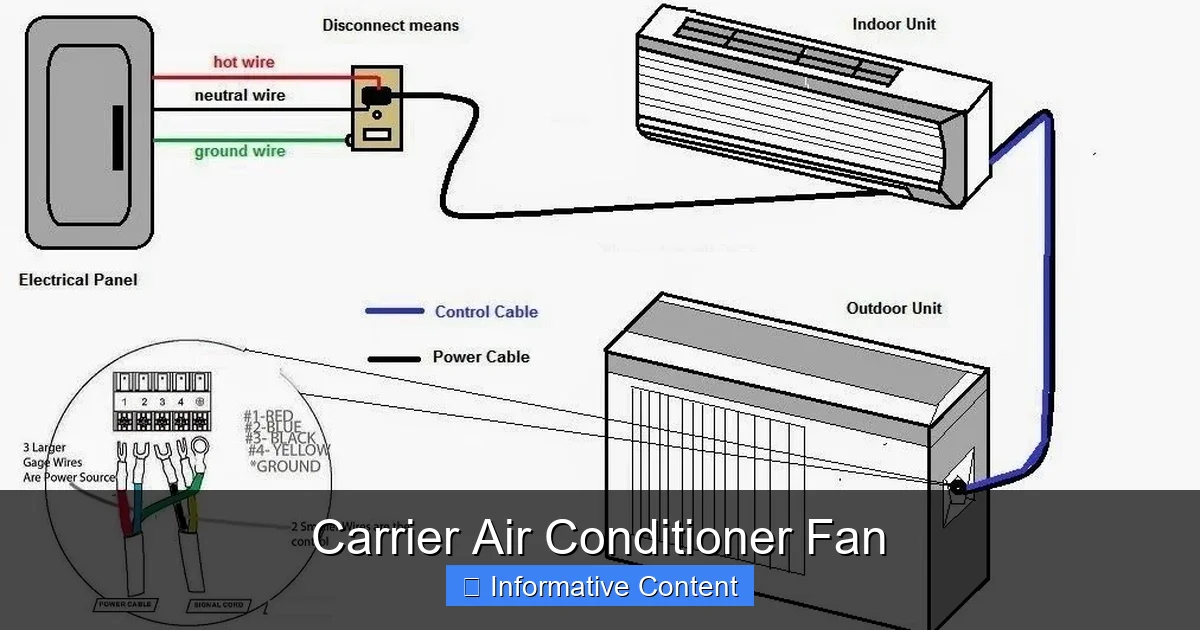
Visual guide about Carrier Air Conditioner Fan
Image source: i.pinimg.com
Investing in a reliable air conditioner fan—especially one from a reputable brand like Carrier—comes with a host of benefits. These go beyond just keeping your home cool; they impact your energy bills, indoor air quality, and overall system longevity.
One of the most significant advantages is energy efficiency. Carrier’s advanced fan motors consume less electricity while delivering superior performance. This translates to lower utility bills and a smaller carbon footprint. According to the U.S. Department of Energy, upgrading to a high-efficiency HVAC system can reduce cooling costs by up to 30%.
Another benefit is improved indoor air quality. The Carrier air conditioner fan doesn’t just move air—it also helps filter it. As air passes through the system, it goes through air filters that capture dust, pollen, pet dander, and other allergens. A properly functioning fan ensures that this filtered air is distributed evenly throughout your home, creating a healthier living environment.
Quiet Operation for Peaceful Living
Noise can be a major downside of older air conditioning systems. The constant hum or rattle of a struggling fan can disrupt sleep, work, and relaxation. Carrier addresses this issue with fan designs that prioritize quiet operation.
Their fans use precision-balanced blades and vibration-dampening mounts to reduce noise. Additionally, the ECM motors run more smoothly and with less mechanical stress, resulting in a quieter overall experience. Many homeowners report that their Carrier systems are so quiet, they forget the air conditioner is even running.
This is especially important in bedrooms, home offices, and living areas where noise levels matter. A quiet fan allows you to enjoy cool, comfortable air without the distraction of a loud motor.
Enhanced Comfort and Temperature Control
Comfort isn’t just about how cold your home gets—it’s also about consistency. A Carrier air conditioner fan helps maintain even temperatures from room to room, eliminating hot and cold spots.
Thanks to variable speed technology, the fan can run continuously at low speeds, gently circulating air and maintaining a steady temperature. This is known as “constant fan” mode and is often recommended for improved air quality and comfort. Unlike systems that cycle on and off, which can cause temperature swings, continuous low-speed operation keeps your home feeling consistently cool.
Moreover, Carrier fans work seamlessly with programmable and smart thermostats. You can set schedules, adjust fan speeds, and monitor performance from your smartphone. This level of control allows you to tailor your cooling experience to your lifestyle, whether you’re at home or away.
Maintenance Tips for Your Carrier Air Conditioner Fan
Like any mechanical component, the Carrier air conditioner fan requires regular maintenance to perform at its best. Neglecting it can lead to reduced efficiency, higher energy bills, and even system failure. Fortunately, with a few simple steps, you can keep your fan running smoothly for years.
The most important maintenance task is changing or cleaning your air filter regularly. A dirty filter restricts airflow, forcing the fan to work harder and reducing cooling efficiency. Experts recommend checking your filter every month and replacing it every 1–3 months, depending on usage and air quality.
Cleaning the Fan Blades and Motor
Over time, dust and debris can accumulate on the fan blades and inside the motor housing. This buildup can throw the fan off balance, cause noise, and reduce airflow. To clean the fan, turn off power to the unit at the breaker, remove the access panel, and gently wipe the blades with a soft cloth or brush. Avoid using water or harsh chemicals, as they can damage the motor.
If you’re not comfortable doing this yourself, schedule a professional HVAC tune-up once a year. A technician can clean the fan, inspect the motor, lubricate moving parts, and check for signs of wear.
Checking for Unusual Noises or Vibrations
Your ears can be a great diagnostic tool. If you hear grinding, squealing, or rattling noises coming from your air handler, it could indicate a problem with the fan motor or blades. Similarly, excessive vibration may suggest an unbalanced fan or loose mounting hardware.
Don’t ignore these signs. Addressing them early can prevent more serious issues down the line. For example, a failing motor might overheat and damage other components, leading to costly repairs.
Ensuring Proper Ductwork and Ventilation
The fan’s performance also depends on the condition of your ductwork. Leaky or poorly insulated ducts can reduce airflow and make your system less efficient. Have your ducts inspected and sealed if necessary, especially if you notice inconsistent cooling or higher-than-normal energy bills.
Also, make sure your return and supply vents are unobstructed. Furniture, curtains, or rugs blocking vents can restrict airflow and strain the fan. Keep at least 6–8 inches of clearance around all vents for optimal performance.
Signs Your Carrier Air Conditioner Fan Needs Attention
Even with regular maintenance, issues can arise. Knowing the warning signs can help you address problems before they escalate.
One common symptom is reduced airflow. If you notice that certain rooms aren’t cooling as well as others, or if the air coming from vents feels weak, the fan may be struggling. This could be due to a dirty filter, blocked ducts, or a failing motor.
Another red flag is unusual noises. A healthy Carrier air conditioner fan should run quietly. If you hear clicking, buzzing, or grinding sounds, it’s time to investigate. These noises often indicate loose parts, worn bearings, or electrical issues.
Frequent Cycling or System Shutdowns
If your air conditioner turns on and off frequently—known as short cycling—it could be related to the fan. A malfunctioning fan may not move enough air, causing the system to overheat and shut down as a safety measure. This not only reduces comfort but also increases wear on the compressor and other components.
Similarly, if the system shuts down unexpectedly, the fan motor might be overheating or drawing too much power. In such cases, a professional inspection is essential to diagnose and fix the issue.
Ice Buildup on the Evaporator Coil
Ice forming on the evaporator coil is often a sign of restricted airflow, and the fan is usually the culprit. When the fan can’t move enough air over the coil, moisture in the air freezes instead of being removed as condensation. This ice buildup insulates the coil, reducing its ability to absorb heat and potentially damaging the system.
If you see ice on the indoor unit, turn off the air conditioner and let the ice melt. Then check the filter, vents, and fan for obstructions. If the problem persists, contact a technician.
Upgrading to a New Carrier Air Conditioner Fan
If your current fan is old, noisy, or inefficient, upgrading to a new Carrier air conditioner fan can be a smart investment. Modern fans offer significant improvements in energy efficiency, noise reduction, and smart functionality.
When considering an upgrade, consult with a certified HVAC professional. They can assess your current system, recommend compatible models, and ensure proper installation. Carrier offers a range of fan options, including models with ECM motors, variable speed controls, and compatibility with smart thermostats.
Choosing the Right Model
Not all Carrier fans are the same. Factors to consider include motor type, airflow capacity (measured in cubic feet per minute, or CFM), noise level, and compatibility with your existing system. For example, if you have a high-efficiency air conditioner, pairing it with a high-performance fan ensures optimal operation.
Look for models with high AFUE (Annual Fuel Utilization Efficiency) or SEER ratings, as these indicate better energy performance. Also, check for warranties—Carrier typically offers strong coverage on their components, giving you peace of mind.
Professional Installation Matters
Even the best fan won’t perform well if it’s not installed correctly. Improper installation can lead to airflow issues, noise, and reduced efficiency. That’s why it’s crucial to hire a licensed HVAC technician familiar with Carrier systems.
A professional will ensure the fan is properly sized, securely mounted, and wired correctly. They’ll also test the system to confirm it’s operating at peak performance. This attention to detail can make a big difference in comfort and longevity.
Carrier Air Conditioner Fan and Smart Home Integration
In today’s connected world, your HVAC system doesn’t have to operate in isolation. Many Carrier air conditioner fans are designed to integrate with smart home systems, giving you greater control and convenience.
With a smart thermostat like the Carrier Infinity Touch, you can adjust fan settings remotely, set schedules, and monitor energy usage. Some models even use geofencing to detect when you’re home or away, automatically adjusting the fan speed to save energy.
For example, you can program the fan to run at a low speed during the day to maintain air quality, then increase speed in the evening when you return home. You can also receive alerts if the filter needs changing or if the fan detects a problem.
This level of integration not only enhances comfort but also helps you stay on top of maintenance, preventing small issues from becoming big problems.
Conclusion
The Carrier air conditioner fan is more than just a spinning blade—it’s a vital component that ensures your home stays cool, comfortable, and energy-efficient. From its advanced motor technology to its quiet operation and smart capabilities, it plays a central role in the performance of your HVAC system.
By understanding how it works, maintaining it properly, and recognizing signs of trouble, you can extend its lifespan and enjoy consistent cooling year after year. Whether you’re maintaining your current system or considering an upgrade, investing in a high-quality Carrier air conditioner fan is a decision that pays off in comfort, savings, and peace of mind.
Frequently Asked Questions
What does the Carrier air conditioner fan do?
The Carrier air conditioner fan circulates air over the evaporator coil to remove heat and moisture, then distributes cooled air throughout your home via ductwork. It’s essential for effective cooling and indoor comfort.
How often should I replace the air filter to protect the fan?
Check your air filter every month and replace it every 1–3 months, especially during peak cooling seasons. A clean filter ensures proper airflow and reduces strain on the fan.
Why is my Carrier air conditioner fan making noise?
Unusual noises like grinding or squealing may indicate a dirty fan, loose parts, or a failing motor. Turn off the system and contact an HVAC technician for inspection and repair.
Can I run the fan continuously?
Yes, many Carrier systems allow you to run the fan in “constant fan” mode. This improves air circulation and filtration but may slightly increase energy use. It’s ideal for maintaining even temperatures and air quality.
How do I know if my fan motor is failing?
Signs include weak airflow, frequent system cycling, overheating, or burning smells. If you notice these issues, have a professional inspect the motor and wiring immediately.
Is it worth upgrading to a Carrier ECM fan motor?
Yes, ECM motors are more energy-efficient, quieter, and offer better speed control than traditional motors. They can reduce energy costs and improve comfort, making them a worthwhile upgrade.

