Will a Home Warranty Cover HVAC Replacement?
Many homeowners ask, "Will a home warranty cover HVAC replacement?" This is a crucial question. Understanding your home warranty can save you money and stress. Let's dive deep into this topic.
What is a Home Warranty?
A home warranty is a service contract. It covers repair or replacement costs for home systems and appliances. These include your HVAC system, plumbing, and electrical systems. For more on this, see our guide on home warranty and hvac.
How Does A Home Warranty Work?
Home warranties are simple. When something breaks, you call the warranty company. They send a technician to fix the problem. If repair is not possible, they may replace the unit.
In practice, the first service call typically involves a diagnostic fee (often $75–$125) that you pay directly to the technician, even if the claim is later approved. A common mistake is assuming the warranty covers this fee — most plans treat it as a separate cost. Keep your maintenance records handy; adjusters routinely request them before authorizing a replacement. For more on this, see our guide on best home warranty company for hvac.

Diagram illustrating typical home warranty coverage for HVAC systems
Credit: www.cnn.com
Home Warranty vs. Home Insurance: Key Differences
Many homeowners confuse home warranties with homeowners insurance, but they serve distinct purposes. Home insurance protects against sudden, catastrophic events — fire, storms, theft, or liability claims. A home warranty covers mechanical breakdowns from normal wear and tear on systems and appliances. If your furnace fails in January because the heat exchanger cracked after 15 years, that’s a warranty claim. If a tree falls on your outdoor condenser during a storm, that’s an insurance claim. Carrying both fills the protection gap; relying on one alone leaves you exposed.
What is an HVAC System?
HVAC stands for Heating, Ventilation, and Air Conditioning. This system keeps your home comfortable. It heats in the winter and cools in the summer. For more on this, see our guide on hvac replacement cost florida.
Components Of An Hvac System
- Furnace: Heats the air in your home.
- Air Conditioner: Cools the air in your home.
- Ductwork: Carries heated or cooled air throughout your home.
- Thermostat: Controls the temperature in your home.
Modern systems often include additional components that affect warranty coverage: air handlers, evaporator coils, refrigerant lines, and increasingly, smart thermostats or zoning controls. Some warranty providers classify these as separate “add-on” items, so verify whether your plan covers the entire system or only the furnace and condenser.
Does a Home Warranty Cover HVAC Replacement?
The short answer is yes, but with conditions. Not all home warranties are the same. Coverage depends on the warranty provider and the plan you choose.
Typical Coverage
Most home warranties cover HVAC systems. They usually cover repairs. Some may cover replacement if repair is not possible.
Coverage tiers vary widely. A basic plan might cover only the furnace and central AC unit, excluding ductwork, refrigerant recharge, or code upgrades required during replacement. Mid-tier plans often add air handlers and evaporator coils. Premium plans may include ductwork modifications, permit fees, and even crane charges for rooftop units. Always confirm whether “replacement” means equivalent capacity/brand or a like-for-like match — some contracts allow the provider to install a lower-SEER unit if it meets minimum code.
Limitations And Exclusions
Home warranties have limits. They may not cover pre-existing conditions. Regular maintenance is crucial. Warranties may not cover units that haven't been maintained.
Covered Not Covered
Normal wear and tear Pre-existing conditions
Mechanical failures Lack of maintenance
Replacement if repair is impossible Cosmetic damages
Common denial reasons that catch homeowners off guard:
- Improper installation (e.g., undersized ductwork, incorrect refrigerant charge) — even if done by a licensed pro years ago.
- Missing annual maintenance records — most contracts require proof of professional tune-ups.
- Code upgrades — if local codes now require higher-efficiency equipment or new venting, the warranty often pays only for the old spec; you cover the delta.
- Secondary damage — water damage from a frozen coil leak is typically excluded; that falls to home insurance.
- R-22 refrigerant systems — many 2026 plans exclude or cap coverage for units still using phased-out R-22 (Freon), since replacement requires full system changeout.
Steps To Take For Hvac Replacement
- Check your home warranty plan.
- Call your warranty provider.
- Schedule an inspection.
- Wait for the technician's report.
- Follow the provider's instructions.
Realistic timeline: From claim filing to completed replacement, expect 5–14 business days in normal conditions. Peak summer/winter can stretch this to 3+ weeks if contractors are backlogged. The provider’s approved vendor network may not include your preferred local HVAC company — you can sometimes request an exception, but the provider must approve before work begins, or they may deny reimbursement.
Benefits of Home Warranty for HVAC Systems
Home warranties offer peace of mind. They save you from unexpected expenses. Here are some benefits:
- Cost Savings: Repair and replacement can be expensive.
- Convenience: One call to the warranty company does it all.
- Peace of Mind: You know your home is covered.
Potential drawbacks to weigh:
- Service-fee per claim adds up if multiple components fail in one season.
- Provider-chosen contractor may not be your first pick for quality or responsiveness.
- Coverage caps (e.g., $1,500–$3,000 per system per year) can leave you paying thousands on a full replacement.
- Renewal premiums often rise after a major claim, sometimes sharply.
Choosing the Right Home Warranty
Not all home warranties are the same. Choose a plan that suits your needs. Here are some tips:
Research Different Providers
Look for reputable companies. Read reviews. Ask friends for recommendations.
Compare Coverage Plans
Look at what each plan covers. Compare the costs. Make sure HVAC replacement is included.
Check The Fine Print
Read the contract carefully. Look for exclusions and limitations. Understand what is covered and what is not.
Quick comparison framework when evaluating plans:
| Feature | Basic Plan | Mid-Tier Plan | Premium Plan |
|---|---|---|---|
| Furnace & AC unit | ✅ | ✅ | ✅ |
| Air handler / coil | ❌ | ✅ | ✅ |
| Ductwork repairs | ❌ | ❌ | ✅ (often capped) |
| Refrigerant recharge | ❌ | Limited | ✅ |
| Code/permit fees | ❌ | ❌ | ✅ (partial) |
| Crane/rooftop access | ❌ | ❌ | ✅ |
| Annual premium (2026 avg.) | $400–$550 | $550–$750 | $750–$1,100+ |
| Service fee per call | $100–$125 | $75–$100 | $50–$75 |
Use this as a starting point — actual terms vary by provider and region.
https://www.youtube.com/watch?v=fA5laH1nX2E

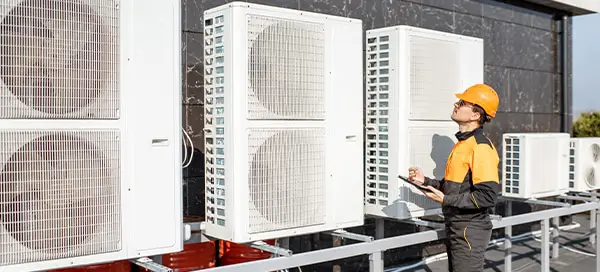
Typical split-system outdoor condenser — the component most often replaced under warranty claims
Credit: www.angi.com
Maintenance Requirements That Keep Coverage Valid
Most home warranty contracts require documented annual professional maintenance on the HVAC system to honor replacement claims. In 2026, “professional” typically means a licensed HVAC technician performing a written tune-up checklist: refrigerant pressures, combustion analysis (for gas furnaces), airflow measurements, electrical readings, and safety-control tests. A homeowner’s DIY filter changes — while essential — do not satisfy this clause. Keep every invoice and checklist for at least the life of the warranty term; digital scans in a cloud folder work well. If you skip a year, some providers allow a “catch-up” tune-up before filing a claim, but others treat the gap as a permanent exclusion. Check your specific contract language.
For seasonal upkeep that supports warranty compliance, see our seasonal air conditioning maintenance tips.
When Repair No Longer Makes Sense: The 50% Rule
A practical guideline many technicians use: if the repair estimate exceeds 50% of a comparable new system’s installed cost, replacement is usually smarter — especially if the unit is past 12–15 years (furnace) or 10–12 years (AC/heat pump). Warranty providers often apply a similar internal threshold, but their “repair cost” calculation may use their negotiated contractor rates, which can be lower than retail. Ask the adjuster for the total repair estimate they’re working from; you have a right to see it. If you disagree with a repair authorization, request a second opinion from another network technician — most contracts allow one, though you may need to cover the diagnostic fee.
Frequently Asked Questions
Will Home Warranty Cover Hvac Replacement?
Yes, most home warranties cover HVAC replacement if the system fails due to normal wear and tear.
What Is Covered Under Home Warranty?
Home warranties typically cover major appliances and systems, including HVAC, plumbing, electrical, and kitchen appliances.
Is Hvac Repair Included In Home Warranty?
Yes, HVAC repair is generally included in home warranties, provided the issue arises from normal use.
How To Claim Hvac Replacement Under Warranty?
Contact your home warranty provider, file a claim, and schedule a service visit for the HVAC system.
Does a Home Warranty Cover Ductwork Replacement?
Most basic and mid-tier plans exclude ductwork. Premium plans may cover repairs or modifications necessitated by a covered equipment replacement, but rarely full duct system replacement. Verify this explicitly if your home has older, undersized, or asbestos-wrapped ducts.
What If My HVAC System Uses R-22 (Freon)?
As of 2026, many providers limit or exclude coverage for R-22 systems because the refrigerant is no longer produced. A covered failure often triggers a full system replacement (condenser + coil + possibly furnace) to move to R-410A or newer A2L refrigerants — but the warranty may only pay up to the cost of an R-22 repair, leaving you with the balance. Read the refrigerant clause carefully.
Can I Choose My Own HVAC Contractor?
Usually no — you must use the provider’s network vendor. Some plans allow an out-of-network exception if pre-approved in writing, but reimbursement is often capped at the provider’s negotiated rate. If you have a strong relationship with a local company, ask the warranty provider about their “preferred vendor” enrollment process before buying the plan.
How Long Does a Home Warranty Claim Take for HVAC Replacement?
Typically 5–14 business days from claim approval to install completion. Peak-season demand, permit scheduling, and equipment lead times (especially for high-efficiency or communicating systems) can extend this. Ask the provider for their current average “time-to-completion” metric in your ZIP code.
Conclusion
Will a home warranty cover HVAC replacement? Yes, it can. However, it depends on your plan and provider. Understanding your coverage is crucial. Regular maintenance is also important. Choose a reliable home warranty plan. This can save you money and stress in the long run.
Next step: Pull your current contract (or the sample contract from providers you’re comparing) and highlight every HVAC-related exclusion, cap, and maintenance requirement. Then get a professional tune-up with full documentation — it’s the single best way to protect your claim eligibility. If you’re shopping for a new system alongside a warranty, our guide on choosing the right air conditioner for your home walks through sizing, efficiency ratings, and feature trade-offs that affect both comfort and warranty coverage.
For authoritative information on residential HVAC efficiency standards and refrigerant regulations, refer to the U.S. Department of Energy’s appliance standards page.