The dry function on an LG air conditioner removes excess moisture from the air without overcooling your space, making it perfect for humid days. It helps prevent mold, improves air quality, and saves energy by running the compressor at a lower speed.
Key Takeaways
Reduces Humidity: The dry function lowers indoor humidity levels by condensing moisture from the air, creating a more comfortable environment.
Energy Efficient: It uses less power than cooling mode since the compressor runs intermittently and at reduced capacity.
Prevents Mold and Mildew: By controlling moisture, it inhibits the growth of mold, mildew, and dust mites in your home.
Improves Air Quality: Less humidity means fewer allergens and a fresher, cleaner feel in your living space.
Gentle on Electronics: Lower humidity protects sensitive electronics and wooden furniture from warping or damage.
Quiet Operation: The fan and compressor run slower, resulting in quieter performance ideal for nighttime or office use.
Easy to Use: Simply press the “Dry” button on your LG remote or control panel to activate the function.
Quick Answers to Common Questions
What does the dry function on an LG air conditioner do?
It removes excess moisture from the air to reduce humidity without significantly lowering the temperature, making the room feel more comfortable.
Is dry mode the same as cooling mode?
No. Cooling mode lowers temperature, while dry mode focuses on dehumidifying the air using less energy.
Can I use dry mode all day?
Yes, but it’s best to run it in 2–4 hour intervals to avoid over-drying the air. Monitor humidity levels with a hygrometer.
Does dry mode save energy?
Yes. It uses less power than cooling mode because the compressor runs at a lower speed and cycles on and off.
When should I avoid using dry mode?
Avoid it during extremely hot weather when you need rapid cooling. Use cooling mode instead for fast temperature reduction.
📑 Table of Contents
- What Does Dry Function LG Air Conditioner Really Do?
- Benefits of Using the Dry Function on Your LG Air Conditioner
- When and How to Use the Dry Function
- Common Misconceptions About the Dry Function
- Maintenance Tips to Keep Dry Mode Working Well
- Dry Mode vs. Standalone Dehumidifiers: Detailed Comparison
- LG Model-Specific Dry Function Features
- Smart Control & Automation with LG ThinQ
- Seasonal Usage Guide for 2026
- Troubleshooting Common Dry Mode Issues
- Conclusion
What Does Dry Function LG Air Conditioner Really Do?
If you’ve ever looked at your LG air conditioner’s remote and wondered what that “Dry” button is for, you’re not alone. Many people assume it’s just another cooling mode, but it’s actually a smart, energy-saving feature designed specifically to tackle humidity—without making your room feel like a freezer. The dry function on an LG air conditioner is like having a dehumidifier built right into your AC unit. It’s perfect for those sticky, humid days when the temperature isn’t scorching, but the air feels heavy and uncomfortable.
Unlike the cooling mode, which focuses on lowering the temperature, the dry function prioritizes removing excess moisture from the air. This makes it especially useful during rainy seasons, in coastal areas, or in homes with poor ventilation. It’s also a great option if you’re sensitive to cold but still want to feel fresh and dry. Think of it as your AC’s way of saying, “I’ve got your back when it’s damp, not hot.”
How the Dry Function Works
So, how exactly does the dry function pull moisture out of the air? It all comes down to the refrigeration cycle—the same system your AC uses to cool, but with a twist. When you activate the dry mode, the compressor runs at a lower speed and cycles on and off more frequently. This allows the evaporator coil (the cold part inside the unit) to stay cold enough to condense moisture from the incoming air, but not so cold that it drastically drops the room temperature.
As warm, humid air passes over the cold evaporator coil, water vapor in the air turns into liquid droplets—just like how water beads form on a cold glass. These droplets collect in a drain pan and are then expelled outside through the drainage hose. The now-drier air is gently blown back into the room. The process repeats until the desired humidity level is reached.
One key difference from cooling mode is that the fan speed is usually reduced in dry mode. This slower airflow gives the air more time to interact with the cold coil, improving moisture removal efficiency. It also contributes to quieter operation, making dry mode ideal for use at night or in quiet environments like bedrooms or libraries.
Why Humidity Matters More Than You Think
You might be thinking, “It’s not that hot—why do I need to remove moisture?” But humidity plays a huge role in how comfortable you feel, even when the temperature is moderate. High humidity makes the air feel heavier and stickier because your body can’t cool itself effectively through sweat evaporation. This is why a 75°F (24°C) room can feel muggy and uncomfortable if the humidity is high, but refreshing if it’s dry.
Beyond comfort, excess moisture can cause real problems in your home. Damp environments are breeding grounds for mold, mildew, and dust mites—all of which can trigger allergies, asthma, and other respiratory issues. Wooden furniture, flooring, and musical instruments can warp or swell in high humidity. Electronics are also at risk, as moisture can lead to corrosion and short circuits over time.
Using the dry function on your LG air conditioner helps maintain a balanced indoor climate. It keeps humidity levels in the ideal range of 40% to 60%, which is recommended by health and HVAC experts. This not only makes your home more comfortable but also protects your health and belongings.
Benefits of Using the Dry Function on Your LG Air Conditioner
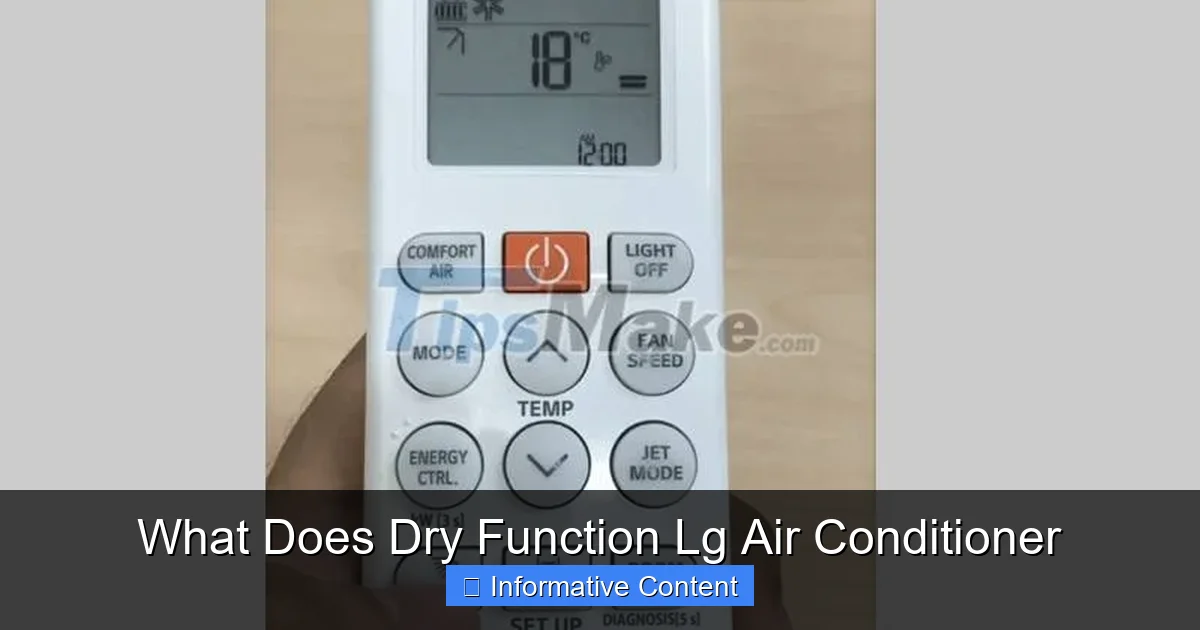
Visual guide showing the LG remote control with dry mode activated and key settings highlighted
Image source: tipsmake.com
The dry function isn’t just a niche feature—it offers a wide range of practical benefits that can improve your daily life, especially if you live in a humid region or have specific comfort needs. Let’s break down the top advantages of using this mode regularly.
1. Enhanced Comfort Without Overcooling
One of the biggest perks of the dry function is that it delivers comfort without the chill. On a humid day, you don’t necessarily need the room to be colder—you just need the air to feel lighter and drier. The dry mode achieves this by targeting moisture, not temperature. This means you can stay comfortable without cranking the AC and ending up with icy toes or a stuffy nose from cold air.
For example, imagine it’s a rainy afternoon in July. The temperature is a mild 78°F (26°C), but the humidity is pushing 80%. Instead of blasting the cooling mode and making the room feel like a walk-in freezer, you switch to dry mode. Within minutes, the air feels fresher, your clothes stop clinging to your skin, and you can breathe easier—all without turning into a human popsicle.
2. Energy Savings and Lower Utility Bills
Because the dry function uses the compressor less aggressively than cooling mode, it consumes significantly less energy. The compressor is the most power-hungry component of an air conditioner, so running it at a reduced speed or in short cycles translates to real savings on your electricity bill.
Studies have shown that using dry mode can reduce energy consumption by up to 30% compared to full cooling mode, depending on the conditions. This makes it an eco-friendly and cost-effective choice, especially during shoulder seasons (spring and fall) when humidity is high but temperatures are moderate. For more ways to optimize your settings, see our guide on energy-efficient temperature and fan configurations.
Plus, since the fan runs slower, there’s less wear and tear on the motor, potentially extending the lifespan of your unit. It’s a win-win for your wallet and the environment.
3. Healthier Indoor Air Quality
High humidity doesn’t just feel uncomfortable—it can be a health hazard. Mold spores, dust mites, and bacteria thrive in moist environments. By using the dry function, you create a less hospitable environment for these allergens, reducing the risk of respiratory issues and allergic reactions.
For families with children, elderly members, or individuals with asthma or allergies, maintaining low humidity is crucial. The dry mode helps keep the air clean and breathable, contributing to better sleep, fewer sniffles, and improved overall well-being.
Additionally, dry air reduces odors. Dampness often leads to musty smells in basements, closets, or bathrooms. By running the dry function periodically, you can eliminate these odors and keep your home smelling fresh.
4. Protection for Your Home and Belongings
Your home is full of items that don’t mix well with moisture. Wooden furniture, hardwood floors, books, artwork, and musical instruments can all suffer in high humidity. Wood expands when it absorbs moisture, leading to warping, cracking, or joint separation. Books can develop mold, and electronics can corrode.
Using the dry function helps maintain stable indoor conditions, protecting your investments. For instance, if you have a home office with a wooden desk and a collection of vintage records, running the dry mode during humid weeks can prevent costly damage.
Even your clothes benefit. Damp air makes laundry take longer to dry and can leave a musty smell. By keeping indoor humidity in check, your clothes dry faster and smell cleaner.
5. Quieter Operation for Peaceful Environments
If you’ve ever been woken up by the loud hum of your AC kicking on in the middle of the night, you’ll appreciate the quiet nature of dry mode. Since the compressor and fan operate at lower speeds, the unit produces much less noise. This makes it ideal for bedrooms, nurseries, home offices, or any space where silence is golden.
Imagine working from home on a humid Tuesday afternoon. Instead of blasting the cooling mode and dealing with distracting noise, you activate dry mode. The room stays comfortable, the air feels crisp, and you can focus without interruption. It’s a small change that makes a big difference in your daily routine.
When and How to Use the Dry Function
Now that you know what the dry function does and why it’s beneficial, let’s talk about when and how to use it effectively. Like any feature, it works best when used appropriately.
Best Times to Use Dry Mode
The dry function shines during specific weather conditions and times of day. Here are some ideal scenarios:
- Rainy or Overcast Days: When it’s not hot but the air feels heavy and damp.
- Early Morning or Late Evening: Temperatures are cooler, but humidity remains high.
- Spring and Fall: Transitional seasons often bring high humidity without extreme heat.
- After Rain or High Humidity Spells: To quickly dry out indoor air and prevent mold.
- In Basements or Bathrooms: Areas prone to moisture buildup.
Avoid using dry mode during extremely hot weather when you need rapid cooling. In those cases, cooling mode is more effective. But for moderate temperatures with high humidity, dry mode is your best friend.
How to Activate Dry Mode on Your LG Air Conditioner
Using the dry function is simple. Here’s how:
- Turn on your LG air conditioner using the remote or control panel.
- Press the “Mode” button until you see “Dry” displayed on the screen.
- Use the temperature and fan speed buttons to adjust settings if needed (though the system usually optimizes these automatically).
- Let the unit run until the humidity level drops to a comfortable range.
Most LG models also allow you to set a timer, so you can schedule the dry function to run for a few hours while you’re at work or asleep.
Tips for Maximum Efficiency
To get the most out of your dry function, follow these tips:
- Close Windows and Doors: Keep the room sealed to prevent humid outdoor air from entering.
- Use Exhaust Fans: In kitchens and bathrooms, run exhaust fans to remove moisture at the source.
- Clean the Air Filter Regularly: A dirty filter restricts airflow, reducing dehumidification efficiency.
- Don’t Overuse It: Running dry mode for too long can over-dry the air. Aim for 2–4 hours at a time, depending on conditions.
- Monitor Humidity Levels: Use a hygrometer to check indoor humidity and adjust usage accordingly.
Common Misconceptions About the Dry Function
Despite its usefulness, the dry function is often misunderstood. Let’s clear up some common myths.
Myth 1: Dry Mode Cools the Room Like Cooling Mode
No—dry mode does not actively cool the air. It removes moisture, which can make the room feel more comfortable, but it won’t lower the temperature significantly. If you need a cooler environment, use cooling mode instead.
Myth 2: Dry Mode Uses More Energy
Actually, the opposite is true. Because the compressor runs less, dry mode is more energy-efficient than full cooling. It’s a great way to stay comfortable without spiking your electricity bill.
Myth 3: You Should Only Use It in Summer
Dry mode is useful year-round, especially in humid climates. Spring rains, fall mists, and even winter condensation can create damp indoor conditions. Use it whenever humidity is high, regardless of the season.
Myth 4: It’s the Same as a Standalone Dehumidifier
While both reduce humidity, a standalone dehumidifier is designed solely for that purpose and may be more powerful in extreme cases. The dry function on your LG AC is a convenient, built-in solution for everyday use.
Maintenance Tips to Keep Dry Mode Working Well
To ensure your dry function performs optimally, regular maintenance is key.
Clean the Air Filter Monthly
A clogged filter reduces airflow and makes the unit work harder. Remove and clean the filter every 4–6 weeks, or more often if you have pets or allergies.
Check the Drain Pan and Drain Line
Since dry mode produces condensation, make sure the drain pan isn’t cracked and the drain line is clear. Standing water can lead to mold or leaks. Proper drainage is critical — if you’re installing a new unit, follow the split AC installation guide to ensure the condensate line has the correct slope and trap.
Schedule Professional Servicing Annually
Have a technician inspect your LG air conditioner once a year to check refrigerant levels, clean coils, and ensure all functions—including dry mode—are working properly. Seasonal tune-ups also catch early wear on components that affect dehumidification performance; our seasonal maintenance checklist covers what to ask for.
Dry Mode vs. Standalone Dehumidifiers: Detailed Comparison
Many homeowners wonder whether to rely on their LG’s dry function or invest in a dedicated dehumidifier. The answer depends on your climate, space, and humidity severity. Below is a practical comparison to help you decide.
| Factor | LG Dry Function | Standalone Dehumidifier |
|---|---|---|
| Primary purpose | Supplemental dehumidification during AC operation | Dedicated moisture removal |
| Capacity (pints/day) | ~10–20 (varies by model) | 20–50+ for residential units |
| Energy use | Lower (piggybacks on AC compressor) | Higher (separate compressor + fan) |
| Temperature impact | Minimal cooling effect | Slightly warms room (reheat) |
| Drainage | Uses existing AC condensate line | Manual bucket or continuous drain hose |
| Noise level | Quiet (reduced fan/compressor speed) | Moderate to loud |
| Best for | Moderate humidity, occupied living spaces | High humidity, basements, unconditioned areas |
| Cost | Included with AC purchase | $150–$400+ additional |
In practice: If your indoor humidity stays above 60% even with dry mode running, or if you need to dry a basement or crawl space, a standalone unit is more effective. For everyday living-area comfort in humid weather, the LG dry function is usually sufficient and far more convenient.
Authority note: The U.S. EPA recommends maintaining indoor relative humidity between 30% and 50% to control mold and allergens — see EPA indoor air quality guidance.
LG Model-Specific Dry Function Features
LG has refined the dry function across its lineup. Knowing what your specific model offers helps you use it more effectively.
- Dual Inverter models (2022–present): Variable-speed compressor allows finer humidity control with less temperature swing. The compressor can modulate down to 10% capacity, maintaining steady dehumidification without short-cycling.
- Artcool / Gallery series: Include “Auto Dry” logic that targets a humidity setpoint (adjustable via ThinQ app) rather than running on a fixed timer.
- Window and portable units: Dry mode works similarly but has lower capacity; best for single rooms under 350 sq. ft.
- Multi-zone systems: Each indoor head can run dry mode independently — useful when only certain zones are humid.
A common mistake is assuming all LG remotes label the mode identically. Some use a water-drop icon, others spell “DRY.” Check your manual or the LG support site for your model’s exact terminology.
Smart Control & Automation with LG ThinQ
If you own a Wi-Fi–enabled LG unit (most 2020+ models), the ThinQ app adds meaningful automation for dry mode:
- Humidity-triggered start: Set a target RH (e.g., 50%); the AC switches to dry mode automatically when the room sensor exceeds it.
- Geo-fencing: Activate dry mode when you’re 15 minutes from home so the space feels fresh on arrival.
- Voice integration: “Hey Google, set living room AC to dry mode” works with Google Assistant and Alexa.
- Energy reports: The app breaks down dry-mode runtime vs. cooling-mode runtime, helping you verify savings.
These features reflect broader air conditioning innovations that prioritize sensor-driven comfort over fixed schedules.
Seasonal Usage Guide for 2026
Humidity patterns shift through the year. Here’s a practical 2026 calendar for dry-mode strategy:
| Season | Typical Conditions | Recommended Dry-Mode Approach |
|---|---|---|
| Late Winter (Feb–Mar) | Cold outside, indoor RH 30–40% from heating | Rarely needed; monitor for window condensation |
| Spring (Apr–Jun) | Rising temps, frequent rain, RH 60–80% | Prime season — run 2–4 hrs daily, especially mornings |
| Summer (Jul–Aug) | Hot, RH 65–75% | Use cooling mode primary; dry mode evenings only if RH > 60% |
| Early Fall (Sep–Oct) | Mild temps, lingering humidity | Resume 2–3 hr cycles; ideal for basement drying |
| Late Fall/Winter (Nov–Jan) | Cold, dry air indoors (RH < 30%) | Do not use — risk of over-drying; consider humidifier instead |
Adjust for your region: Gulf Coast and Southeast may need dry mode 8–9 months; Southwest may need it only during monsoon season.
Troubleshooting Common Dry Mode Issues
Even with proper use, dry mode can underperform. Here are the most frequent symptoms and fixes:
| Symptom | Likely Cause | Fix |
|---|---|---|
| Room feels cool but still clammy | Undersized unit / high latent load | Add standalone dehumidifier; verify BTU sizing with choosing the right AC guide |
| Unit runs but no water in drain | Refrigerant low / coil not cold enough | Schedule pro service — check charge and superheat |
| Musty smell from vents | Dirty coil or drain pan biofilm | Clean coil with no-rinse foam; flush drain line with vinegar |
| Dry mode won’t activate | Remote lock / child lock / wrong mode | Hold “Mode” 3 sec to unlock; ensure not in “Fan Only” |
| Short-cycling (on/off every 3 min) | Oversized unit or faulty humidity sensor | ThinQ app firmware update may recalibrate; else pro diagnosis |
If the unit blows warm air in any mode, our troubleshooting guide for warm-air issues covers the root causes.
Conclusion
The dry function on your LG air conditioner is more than just a button—it’s a smart, efficient way to control humidity, improve comfort, and protect your home. Whether you’re dealing with a rainy day, a humid basement, or just want to breathe easier, this feature offers real benefits without the chill or high energy costs of traditional cooling.
By understanding how it works and when to use it, you can make the most of your LG AC and enjoy a fresher, healthier indoor environment year-round. So next time you feel that sticky, muggy air, don’t reach for the cooling mode—try the dry function instead. Your skin, your lungs, and your electricity bill will thank you.
Frequently Asked Questions
How often should I use the dry function?
Use it whenever indoor humidity feels high, such as during rainy days or in damp areas. Regular use during humid seasons helps maintain comfort and prevent mold.
Can the dry function damage my LG air conditioner?
No, it’s a safe, built-in feature designed for regular use. Just ensure proper maintenance, like cleaning filters and checking drainage, to keep it running smoothly.
Will dry mode make my room too dry?
It can if overused. Aim for humidity levels between 40% and 60%. Use a hygrometer to monitor and adjust usage as needed.
Does dry mode work in all LG air conditioner models?
Most modern LG AC units include a dry function. Check your user manual or look for the “Dry” button on the remote to confirm.
Can I use dry mode with a smart LG AC?
Yes. Smart LG air conditioners allow you to activate dry mode via the LG ThinQ app, set timers, and monitor performance remotely.
Is dry mode effective in large rooms?
It works best in properly sized spaces. For large rooms, ensure your LG AC has sufficient capacity (measured in BTUs) for effective dehumidification.