
The Panasonic ductless mini split air conditioner with heat pump offers exceptional year-round comfort with high efficiency, whisper-quiet operation, and smart controls. Whether you're cooling a single room or upgrading your entire home, this system delivers reliable performance without the hassle of ductwork. With advanced inverter technology and eco-friendly refrigerants, it’s a smart investment for modern living.
Key Takeaways
Energy Efficiency: The inverter-driven compressor adjusts cooling and heating output to match demand, reducing energy use by up to 40% compared to traditional systems.
Year-Round Comfort: Built-in heat pump functionality allows the unit to provide both cooling in summer and efficient heating in winter.
Easy Installation: Ductless design means no attic or wall modifications — ideal for existing homes, additions, or rentals.
Quiet Operation: Advanced noise reduction ensures indoor sound levels stay below 35 dB during operation.
Smart Connectivity: Most models include Wi-Fi compatibility for remote control via smartphone apps and voice assistants like Alexa and Google Assistant.
Eco-Friendly Design: Uses R-32 refrigerant, which has lower global warming potential than older alternatives.
Customizable Zones: Install multiple indoor units to independently control temperature in different rooms.
Quick Answers to Common Questions
Can a mini split heat my home in freezing temperatures?
Yes, most Panasonic heat pump mini splits can extract heat from outdoor air even when it’s 5°F or colder, though efficiency decreases slightly. Models with auxiliary heat strips can maintain warmth in extreme cold.
Do I need a permit to install a ductless mini split?
Permit requirements vary by city and state, but most jurisdictions require one for HVAC installations. Your contractor should handle this as part of the process.
How long do Panasonic mini splits typically last?
With proper maintenance, these systems often last 15–20 years. Panasonic backs many models with a 10-year compressor warranty and 5-year parts coverage.
Can I add a mini split later if I don’t install one initially?
Absolutely. Since there’s no ductwork involved, you can install additional units anytime. Just ensure your electrical panel and outdoor space can accommodate the new system.
Are mini splits safe for people with allergies?
Yes. Many Panasonic models include washable HEPA-grade filters that capture dust, pollen, and pet dander. Regular cleaning improves air quality significantly.
📑 Table of Contents
- Introduction: Why Upgrade to a Panasonic Ductless Mini Split with Heat Pump?
- How Does a Ductless Mini Split with Heat Pump Work?
- Benefits of Choosing a Panasonic Ductless Mini Split
- Choosing the Right Size and Configuration
- Installation Tips and Best Practices
- Maintenance Made Simple
- Real-World Applications and Success Stories
- Conclusion: Is a Panasonic Ductless Mini Split Right for You?
Introduction: Why Upgrade to a Panasonic Ductless Mini Split with Heat Pump?
Imagine stepping into a room where the air is perfectly cool in the summer and comfortably warm in the winter — all with the touch of your phone. That’s the promise of the Panasonic ductless mini split air conditioner with heat pump. Unlike traditional HVAC systems that rely on bulky ductwork, these sleek, modern units deliver precise climate control directly to individual rooms. Whether you're renovating, building a new space, or simply tired of uneven temperatures and sky-high utility bills, this system could be exactly what you need.
What sets the Panasonic model apart isn’t just its performance — it’s the thoughtful engineering behind every feature. From whisper-quiet compressors to smart home integration, Panasonic has designed a system that doesn’t just cool or heat — it enhances your lifestyle. And because it uses advanced inverter technology and eco-friendly refrigerants, you’re not just comfortable; you’re also doing your part for the planet.
In this guide, we’ll walk you through everything you need to know about the Panasonic ductless mini split air conditioner with heat pump. We’ll cover how it works, why it’s more efficient than conventional systems, installation tips, maintenance best practices, and even how to choose the right size for your space. By the end, you’ll have all the information to make an informed decision — and maybe even get excited about turning down your thermostat (or up your heat) with confidence.
How Does a Ductless Mini Split with Heat Pump Work?
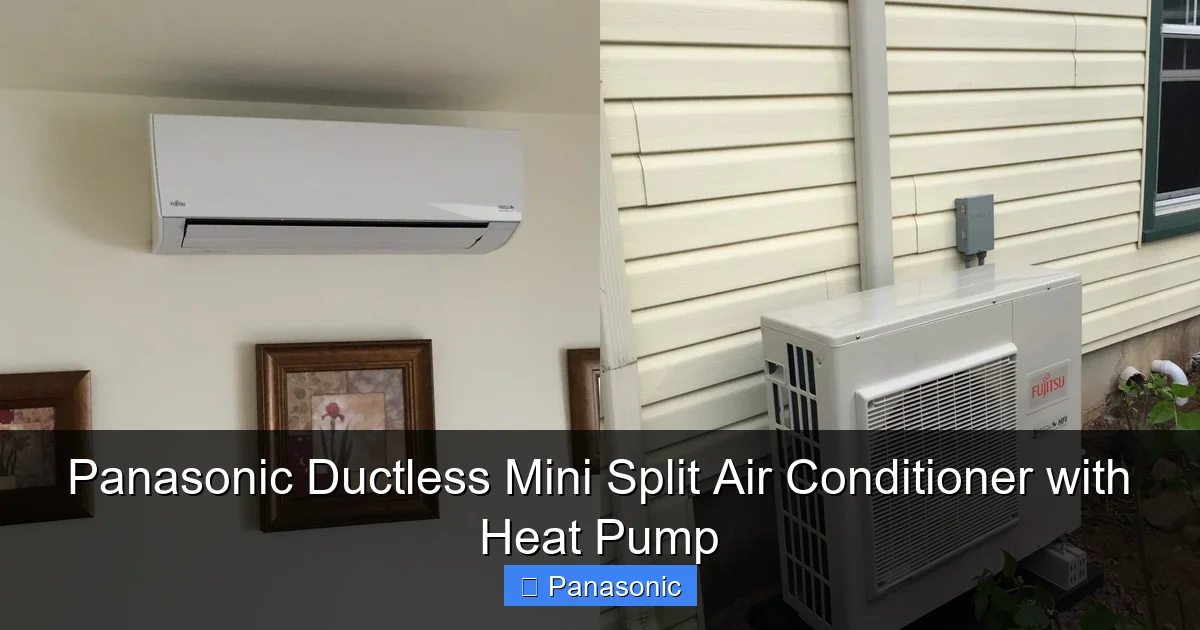
Diagram showing the outdoor condenser, indoor air handler, and the small conduit linking them — no ductwork required.
Image source: sintonair.com
At its core, a ductless mini split system is made up of two main components: an outdoor compressor/condenser unit and one or more indoor air-handling units. These are connected by a small conduit that carries power, refrigerant, and data — no ductwork required. The magic happens when the heat pump reverses the refrigeration cycle. In cooling mode, it pulls heat from inside your home and releases it outdoors. But flip the switch, and it does the opposite — pulling heat from the outside air (even in cold weather!) and pumping it indoors.
Panasonic takes this concept further with inverter technology. Instead of running at full speed all the time like traditional AC units, the compressor adjusts its output based on real-time temperature needs. This means it starts strong, then fine-tunes performance — saving energy and preventing temperature swings. For example, if your bedroom hits 72°F, the unit slows down instead of shutting off completely. This keeps the air steady and reduces wear and tear.
The Role of the Heat Pump
A heat pump might sound like science fiction, but it’s actually a marvel of modern engineering. During winter, it extracts heat from the outside air — yes, even when it’s 40°F — and transfers it inside. This process is far more efficient than electric resistance heaters, which waste energy by converting electricity directly into heat. Panasonic’s heat pumps are engineered to maintain efficiency even in colder climates, making them ideal for regions with moderate winters.
Inverter Technology Explained
Traditional air conditioners turn on and off in cycles — a process called "on/off cycling." This causes sudden temperature changes and spikes in energy consumption. In contrast, inverter-driven mini splits like the Panasonic model continuously adjust their speed. Think of it like a car with cruise control: smooth, consistent, and fuel-efficient. This results in quieter operation, better humidity control, and longer equipment life.
Cold Climate Performance & Defrost Cycles
In practice, the biggest question for northern homeowners is how well the heat pump handles sustained sub-freezing temperatures. Panasonic’s cold-climate models (often labeled “Hyper Heat” or similar) maintain 80%+ of rated heating capacity down to 5°F and can operate down to -15°F. During freezing weather, the outdoor coil inevitably accumulates frost. The system automatically runs a defrost cycle — briefly reversing to cooling mode to melt ice — which may last 5–15 minutes. You’ll notice the indoor fan slow or stop during this time; it’s normal. A common mistake is covering the outdoor unit to “protect” it, which actually traps moisture and makes defrost cycles longer and less effective. Keep the area clear of snow drifts and ensure the unit sits on a stand or brackets at least 12 inches above grade so meltwater drains freely.
Benefits of Choosing a Panasonic Ductless Mini Split
When you invest in a Panasonic ductless mini split with heat pump, you’re not just buying an appliance — you’re upgrading your entire living experience. Here’s why homeowners and professionals alike trust this brand:
1. Superior Energy Efficiency
Panasonic mini splits often boast SEER ratings above 20 and HSPF ratings over 12, meaning they use significantly less energy than central air systems. In fact, the Department of Energy estimates that replacing an old furnace or AC with an efficient heat pump can cut heating costs by up to 50%. Combine that with the inverter’s ability to avoid wasteful cycling, and you’re looking at real savings on your monthly bill.
For example, a typical 1,500-square-foot home using a 14 SEER central AC spends around $1,200 annually on cooling. Switching to a 22 SEER Panasonic mini split could reduce that to under $600 — all while keeping the house cooler and more comfortable. Pairing the system with optimal temperature schedules can push savings even higher without sacrificing comfort.
2. Quiet, Discreet Operation
One of the biggest complaints about HVAC systems is noise. Central ACs hum loudly through vents, and window units vibrate like a lawnmower. Not so with ductless mini splits. Panasonic models operate at sound levels as low as 35 decibels — quieter than a library. The indoor unit’s slim design blends seamlessly into walls or ceilings, and the outdoor unit is compact and unobtrusive.
Imagine working from home without being distracted by fan noise, or sleeping through the night with only soft breezes. That’s the Panasonic difference.
3. Flexible Installation Options
Because there’s no ductwork, installation is faster and less invasive. Most units can be mounted on walls or ceiling cassettes within a day. This makes them perfect for:
- Older homes where adding ducts would require tearing down walls
- Room additions or sunrooms
- Apartments and rental properties (landlords love them!)
- Garages, workshops, or home offices
Plus, the conduit hole is only 3 inches wide — barely noticeable once installed. For a step-by-step look at what the process entails, see our split AC installation overview and the dedicated guides for indoor unit mounting and outdoor unit placement.
4. Smart Home Integration
Many Panasonic mini split models come with Wi-Fi-enabled remotes and companion apps. You can pre-cool your home before arriving, adjust settings while grocery shopping, or set schedules so the system turns on automatically at 7 a.m. Voice control via Amazon Alexa or Google Assistant adds another layer of convenience.
For tech-savvy users, some models even support geofencing — the system detects when you’re near home and begins adjusting the temperature accordingly. These features reflect broader air conditioning innovations that put control in your hands.
5. Eco-Conscious Design
Panasonic uses R-32 refrigerant, which has a Global Warming Potential (GWP) of just 675 — less than half that of older refrigerants like R-410A. Lower GWP means reduced environmental impact without sacrificing performance. Additionally, the inverter technology cuts energy use, further lowering your carbon footprint. This aligns with the latest innovation in air conditioning toward lower-GWP refrigerants and smarter controls.
Panasonic Model Lines & Key Features
Panasonic organizes its ductless lineup into a few core families, each targeting different priorities:
- Exterios E / E2 series — entry-level single-zone units with SEER up to 24.5, HSPF up to 13.0, and basic Wi-Fi. Good for bedrooms, home offices, or supplemental cooling.
- ClimaPure XE series — mid-range with nanoe™ X air purification (hydroxyl radicals that suppress viruses, bacteria, and odors), SEER up to 28.5, and enhanced cold-climate heating down to -15°F. Ideal for allergy-sensitive households.
- Multi-zone MXZ / RM series — one outdoor unit serving 2–8 indoor heads (wall, cassette, ducted, or floor-console). Mix capacities per zone; each head gets independent control. Outdoor units range from 18k to 48k BTU.
- Commercial VRF (Variable Refrigerant Flow) — for light commercial or large residential; not covered in this guide but worth knowing if you scale beyond 8 zones.
All current residential models use R-32 refrigerant and include a 10-year compressor / 5-year parts limited warranty when registered. Confirm exact terms for your model at purchase.
Choosing the Right Size and Configuration
One of the most common mistakes people make is oversizing or undersizing their mini split. An oversized unit cools too quickly, short-cycles, and wastes energy. Undersized units struggle to reach desired temperatures, especially on hot days or in poorly insulated spaces.
Calculating BTUs for Your Space
To determine the correct capacity, use this simple rule of thumb:
- 1 ton = 12,000 BTUs
- For every square foot, aim for 20–25 BTUs (adjust based on climate, insulation, and sun exposure)
Example: A 300-square-foot bedroom with good insulation and shade needs roughly 6,000–7,500 BTUs → a 0.5-ton unit. A 600-square-foot sunroom with poor insulation? You might need a 1.5-ton system.
Panasonic offers a range of capacities — from 9,000 BTU (0.75 tons) to 36,000 BTU (3 tons) and beyond. Always consult a professional for complex layouts or multi-zone setups. For a broader framework on sizing and selection, see our guide on how to choose the right air conditioner for your home.
Single-Zone vs. Multi-Zone Systems
- Single-zone: One indoor unit paired with one outdoor unit. Best for bedrooms or home offices.
- Multi-zone: One outdoor unit powers multiple indoor units (up to 8 on some models). Perfect for whole-home comfort.
With Panasonic, you can mix and match wall-mounted, ceiling cassette, or floor-standing indoor units — all controlled from a single remote or app.
Multi-Zone Design Considerations
When planning a multi-zone system, two practical details often get overlooked:
- Piping length & height limits — Each indoor unit has a maximum equivalent piping length (typically 50–165 ft depending on model) and a maximum vertical rise (often 40–50 ft) from the outdoor unit. Exceeding these reduces capacity and can cause oil-return issues. Map the route before committing to unit locations.
- Diversity factor (simultaneity) — The outdoor unit’s total capacity is usually smaller than the sum of all connected indoor units’ max capacities (e.g., a 36k outdoor with four 12k heads). This works because not every zone runs at peak simultaneously. But if you do regularly max out multiple zones (e.g., a hot afternoon with all bedrooms calling for cooling), the system will proportionally throttle each head. Discuss your usage patterns with the installer so they can select an outdoor unit with enough “headroom.”
Installation Tips and Best Practices
While DIY enthusiasts might attempt installation, hiring a licensed HVAC technician is strongly recommended. Incorrect wiring, refrigerant leaks, or improper sizing can void warranties and reduce efficiency.
That said, here are some tips to ensure a smooth process:
- Location matters: Mount the indoor unit high on the wall (7–8 feet) for optimal airflow. Keep it away from direct sunlight and heat sources.
- Outdoor unit placement: Choose a spot with clear airflow, away from shrubs or fences. Ensure at least 18 inches of clearance on all sides.
- Conduit routing: Plan the route carefully. Avoid long runs (over 50 feet) and sharp bends, which reduce efficiency.
- Electrical requirements: Most units need 240V circuits. Confirm your breaker panel can handle the load. A dedicated double-pole breaker is required per outdoor unit; wire gauge depends on MCA (Minimum Circuit Ampacity) listed on the nameplate — typically 14–10 AWG. If your panel is full or outdated, budget for a sub-panel or service upgrade. The disconnect box must be within sight of the outdoor unit (NEC 440.14).
After installation, schedule a tune-up every 6–12 months to clean filters, check refrigerant levels, and inspect electrical connections.
Maintenance Made Simple
Unlike central systems, mini splits are low-maintenance — but regular care extends lifespan and keeps performance high.
Monthly Tasks
Vacuum or wipe the front grille and louvers
Replace or clean washable filters (once a month during heavy use)
Seasonal Care
Before cooling season: Inspect outdoor unit for debris, trim nearby plants
Before heating season: Run the unit on low heat for 15 minutes to circulate oil
Avoid covering the outdoor unit with tarps or storing snow on it — this traps moisture and damages components. If you notice weak airflow or strange noises, contact a technician immediately. For a deeper seasonal checklist, refer to our seasonal air conditioning maintenance tips.
Troubleshooting Common Issues
Even well-maintained units can develop hiccups. Here are the most frequent calls technicians get for Panasonic mini splits, with quick-diagnosis steps:
| Symptom | Likely Cause | First Step |
|---|---|---|
| Indoor unit shows “H99” / “F91” error | Communication fault between indoor/outdoor | Power-cycle at breaker for 2 minutes; check conduit wiring for damage |
| Weak heating below 20°F | Normal defrost cycle or low refrigerant | Wait 15 min; if no recovery, call for pressure check |
| Water dripping from indoor head | Clogged condensate drain line | Flush drain with 50/50 vinegar-water; verify slope toward exit |
| Outdoor unit ices up in heat mode | Faulty defrost sensor or low charge | Do not chip ice; call tech — refrigerant check needed |
| Wi-Fi drops repeatedly | Router band-steering or 5 GHz incompatibility | Lock unit to 2.4 GHz SSID; disable band-steering |
If an error code persists after a power reset, note the code and contact a Panasonic-authorized servicer — some codes (e.g., compressor overcurrent) can cause permanent damage if ignored.
Rebates, Incentives & Financing Options
The conclusion mentions utility rebates; here’s how to actually capture them in 2026:
- Federal 25C tax credit — 30% of equipment + installation cost up to $2,000/year for qualified heat pumps (must meet CEE Tier 2 or ENERGY STAR Cold Climate specs). File IRS Form 5695 with your return. Many Panasonic ClimaPure XE and multi-zone outdoor units qualify; verify the AHRI certificate with your installer.
- State/utility rebates — Programs vary widely. Examples: NYS Clean Heat ($500–$1,500/ton), Mass Save (up to $10,000 for whole-home displacement), CA TECH Clean California (varies by IOU). Most require a participating contractor and pre-approval.
- Manufacturer promotions — Panasonic occasionally runs spring/fall rebates ($100–$300 per indoor unit). Check the current offers page or ask your dealer.
- Financing — Many contractors offer 0% APR for 12–60 months through partners like GreenSky or Synchrony. Compare total cost vs. paying cash; sometimes a instant rebate beats a long 0% term.
Action tip: Before scheduling estimates, visit your utility’s website and search “heat pump rebate.” Print or screenshot the requirements so you can confirm the installer’s paperwork matches.
Selecting a Qualified Installer
A great system installed poorly will underperform. Vet contractors with these questions:
- “Are you a Panasonic Authorized Dealer / Diamond Contractor?” — Factory training matters for warranty registration and advanced diagnostics.
- “Can you share 2–3 recent mini split references in my town?” — Call them; ask about communication, cleanup, and follow-up.
- “Do you perform a Manual J load calculation?” — If they size by square footage alone, keep looking.
- “Who handles permits and the final inspection?” — Should be them, not you.
- “What’s your warranty labor coverage?” — Manufacturer covers parts; many dealers add 1–5 years of labor. Get it in writing.
Avoid any installer who pressures same-day sign-ups, quotes without a site visit, or suggests “topping off” refrigerant without leak-checking first.
Real-World Applications and Success Stories
Homeowners across the U.S. are discovering the benefits of Panasonic mini splits in surprising ways:
- Sarah, Denver, CO: “We replaced a drafty 1970s radiator with a 12,000 BTU Panasonic unit in our sunroom. Now it’s usable year-round — even when it’s 10°F outside!”
- Mike & Lisa, Austin, TX: “Our old window AC was loud and didn’t cool evenly. After installing two wall-mounted Panasonic units, every room is perfect. Our electric bill dropped $150/month.”
- Property Manager, Chicago: “I rent out three apartments. Each tenant gets a mini split — they love the quiet and control. Maintenance calls went down 80%.”
These stories highlight universal truths: comfort, savings, and simplicity go hand in hand.
Conclusion: Is a Panasonic Ductless Mini Split Right for You?
If you’re tired of outdated HVAC systems that cost too much to run and install, the answer is almost certainly yes. The Panasonic ductless mini split air conditioner with heat pump combines cutting-edge technology with user-friendly design. It’s energy-efficient, quiet, customizable, and built to last. Whether you want to cool a single room or upgrade your entire home, this system adapts to your needs.
And let’s be honest — who wouldn’t want to control their home’s climate from bed, with a voice command or a tap on their phone? With smart features, eco-friendly operation, and reliable performance, Panasonic delivers comfort that feels almost futuristic — yet accessible today.
Ready to take the plunge? Start by checking local rebates (many utilities offer $300–$600 incentives for heat pumps), then schedule a free estimate with a certified installer. Your future self — and your utility bill — will thank you. For a broader look at top residential systems, see our roundup of the best HVAC air conditioning systems for residential use.
Frequently Asked Questions
What is the difference between a mini split and central air?
Central air uses ductwork to distribute cooled air throughout a home, while mini splits deliver conditioned air directly to individual rooms via separate indoor units. Mini splits are more efficient, quieter, and ideal for homes without ducts.
How much does a Panasonic ductless mini split cost?
Prices typically range from $1,500 to $4,000 installed, depending on capacity, number of zones, and installation complexity. Rebates may reduce net cost by 30% or more.
Can I install multiple indoor units with one outdoor unit?
Yes, many Panasonic models support up to eight indoor units per outdoor unit, allowing independent temperature control in different rooms or floors.
Is a mini split noisy?
No. Panasonic mini splits operate at sound levels as low as 35 dB indoors — comparable to a quiet conversation — and the outdoor unit emits minimal noise.
Do I need special tools to install a mini split?
Professional installation requires specialized HVAC tools, refrigerant handling certification, and knowledge of electrical codes. While DIY kits exist, improper installation can damage the system or create safety hazards.
How often should I replace the filter?
Washable filters should be cleaned monthly during peak seasons. Replaceable filters typically need changing every 1–3 months, depending on usage and air quality.
What happens during a defrost cycle in winter?
The system temporarily reverses to cooling mode to melt frost on the outdoor coil. Indoor fan may pause for 5–15 minutes; you’ll feel a brief cool draft. It’s automatic and normal — do not turn the unit off.
Can I run a mini split on a generator during a power outage?
Only if the generator supplies clean 240V power with low total harmonic distortion (<5%) and enough surge capacity for compressor start-up (typically 3–5× running watts). Inverter generators rated 5,000W+ often work for single-zone units; multi-zone systems need larger units. Always verify with an electrician.
