
Panasonic Ducted Air Conditioner Troubleshooting
Having trouble with your Panasonic ducted air conditioner? From weak airflow to unresponsive controls, this guide walks you through practical troubleshooting steps to diagnose and resolve common problems quickly. Whether it’s a refrigerant leak, dirty filters, or a faulty thermostat, you’ll find clear solutions to keep your system running efficiently and extend its lifespan.
Your Panasonic ducted air conditioner is a powerful system designed to keep your entire home cool and comfortable. But like any complex appliance, it can occasionally run into hiccups—whether it's weak airflow, strange noises, or an unresponsive remote. The good news? Many common issues have straightforward fixes, and understanding how to troubleshoot them can save you time, money, and frustration.
In this comprehensive guide, we’ll walk you through the most frequent problems homeowners face with Panasonic ducted systems—and how to resolve them safely and effectively. Whether you're dealing with a sudden drop in cooling, error messages on the display, or simply want to learn how to maintain your unit better, this article will give you the knowledge to keep your air conditioner running smoothly all summer long.
Key Takeaways
Regular maintenance prevents most issues: Clean filters and check ducts monthly to ensure optimal performance and energy efficiency.
Error codes are helpful diagnostics: Refer to your unit’s manual to decode indicators like E1, E3, or P8 for targeted repairs.
Thermostat settings matter: Incorrect temperature settings or a malfunctioning thermostat can cause inconsistent cooling—verify calibration and wiring.
Unusual sounds signal problems: Squealing, rattling, or hissing may point to loose parts, fan issues, or refrigerant leaks requiring professional attention.
Power cycling often resets minor glitches: Turn off the unit at the breaker for 5–10 minutes to reset the control board and clear temporary errors.
Professional help is key for complex issues: For electrical faults, refrigerant handling, or compressor problems, always call a certified technician.
Quick Answers to Common Questions
Why is my Panasonic ducted AC blowing warm air?
Warm air usually stems from incorrect thermostat settings, clogged filters, or a refrigerant issue. Start by checking the mode and filter condition. If those look fine, the problem may involve low refrigerant levels, which requires a technician to recharge safely.
How often should I replace my air filters?
Standard flat filters should be replaced every 1–2 months during heavy use. HEPA or antimicrobial filters last longer—typically 6–12 months. Always refer to your owner’s manual for model-specific guidance.
What does error code E3 mean on my Panasonic unit?
E3 indicates high-pressure protection, often triggered by restricted airflow or overcharged refrigerant. Clear vents and filters first. If the code persists, contact a technician to inspect the condenser coil and refrigerant lines.
Can I clean the indoor unit myself?
Yes, but only after turning off the power. Gently wipe the casing with a damp cloth and mild detergent. Never spray water into electrical components or use abrasive cleaners that could damage coatings.
Is it normal for my ducts to make occasional clicking sounds?
A soft click when the system starts or stops is normal—it’s the expansion valve or relay engaging. Loud or repeated clicking may signal loose wiring or a failing component and should be checked by a pro.
📑 Table of Contents
- Understanding Your Panasonic Ducted Air Conditioner
- Common Issues and How to Fix Them
- Error Codes and What They Mean
- Thermostat and Control Problems
- Energy Efficiency Tips to Prevent Future Issues
- When to Call a Professional
Understanding Your Panasonic Ducted Air Conditioner
Before diving into troubleshooting, it helps to understand how your ducted AC works. Unlike window units or portable fans, ducted systems distribute cooled air through a network of insulated ducts hidden in ceilings or walls. They rely on a central indoor unit (often in the attic or rooftop), a compressor in the outdoor unit, and precise controls to regulate temperature throughout your home.
Panasonic models are known for their energy efficiency, quiet operation, and smart features like Wi-Fi connectivity and adaptive climate control. However, because they’re more intricate than smaller units, they require slightly more attention when something goes wrong. That said, most problems stem from simple causes—like clogged filters or tripped breakers—rather than major mechanical failures.
Key components to know: The indoor unit houses the evaporator coil, blower fan, and control board. The outdoor unit contains the compressor, condenser coil, and expansion valve. Refrigerant (typically R32 in newer Panasonic models) cycles between them, absorbing heat indoors and releasing it outside. Familiarity with these parts makes it easier to pinpoint where a fault originates.
Common Issues and How to Fix Them
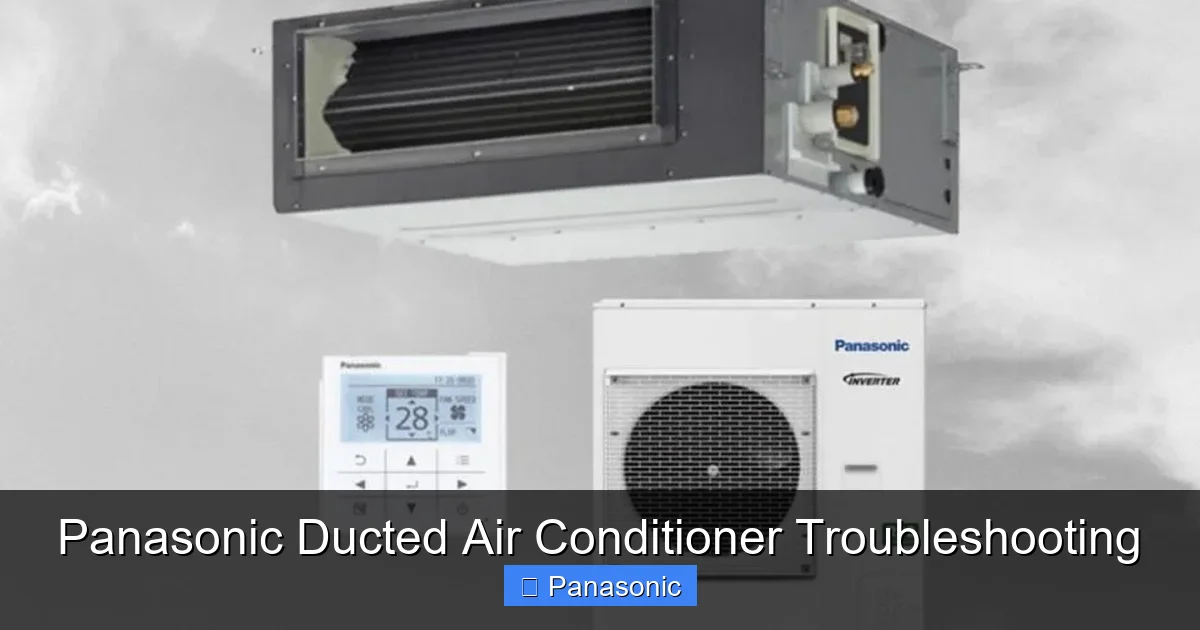
Diagram illustrating key components of a Panasonic ducted system for troubleshooting reference.
Image source: tenmenelectrical.com
Let’s start with the most typical complaints and what you can do about them right away.
No Cooling or Insufficient Airflow
If your ducts aren’t blowing cold air—or not blowing enough—it could be due to several factors. First, check the thermostat setting. Is it actually set to “cool” mode? Sometimes users accidentally switch to “fan only” or “heat pump” mode, which explains the lack of cooling. Also, make sure the temperature is set lower than the current room temperature; otherwise, the system won’t activate.
Next, inspect the air filters. Dirty or blocked filters restrict airflow and force the compressor to work harder, reducing efficiency and potentially damaging components over time. Panasonic recommends replacing flat-panel filters every 1–2 months and HEPA-style filters annually. If yours haven’t been changed recently, that’s likely your culprit.
Another possibility is blocked supply or return vents. Furniture placement, curtains, or dust buildup near grilles can impede airflow. Move obstacles away and gently vacuum around registers to improve circulation.
Finally, listen for unusual sounds coming from the indoor blower motor. A grinding noise might indicate worn bearings, while a humming sound without movement suggests a failing motor. These usually require professional service.
Strange Noises During Operation
Loud or odd sounds from your ducted unit are never a good sign. Here’s what different noises typically mean:
- Squealing or whining: Often caused by a loose belt on older models or misaligned fan blades. Tightening screws or realigning components may help—but if the belt is frayed, replacement is necessary.
- Rattling or vibrating: Usually means something inside the cabinet has come loose—like panels, screws, or even small debris caught in the fan. Turn off the unit, open the access panel (if safe), and gently shake it to identify loose parts. Secure anything rattling.
- Hissing or bubbling: This is rarely normal. It could signal a refrigerant leak—a serious issue that requires immediate attention from a licensed HVAC technician. Do not attempt to repair this yourself.
Always remember: safety first. Never open electrical compartments unless you’re certain the power is disconnected.
Water Leaks Around Vents
Water dripping from ceiling vents is one of the most common ducted AC complaints—and it’s almost always fixable at home. The primary cause is a clogged condensate drain line. Over time, algae, mold, or mineral deposits can block the PVC pipe that carries excess moisture away from the indoor unit.
To clear it:
- Locate the drain line—usually near the indoor unit in the attic.
- Remove the cap at the end and flush with warm water mixed with vinegar.
- Use a wet/dry vacuum to suck out stubborn blockages.
- Reinstall the cap and test by pouring a cup of water into the tray to confirm proper flow.
Also check the condensate pump (if equipped). Some Panasonic models include a float switch that shuts off the system if water levels get too high. If the pump isn’t working, the unit will stop cooling as a safety measure.
Outdoor Unit Maintenance and Troubleshooting
The outdoor condenser unit is just as critical as the indoor components. Debris such as leaves, grass clippings, and dirt can accumulate on the condenser coil, reducing heat exchange efficiency and causing the compressor to overheat. In practice, a dirty condenser coil is one of the most overlooked causes of poor cooling performance.
To maintain the outdoor unit:
- Turn off power at the disconnect box near the unit.
- Remove the protective grille (usually secured with screws).
- Gently brush loose debris from the coil fins with a soft brush.
- Spray the coil with a commercial coil cleaner or a mild detergent solution, then rinse with a garden hose (low pressure) from the inside out.
- Straighten any bent fins with a fin comb.
- Ensure at least 2 feet of clearance around the unit for proper airflow.
If the outdoor fan isn’t spinning, check the capacitor (a cylindrical component) for bulging or leaking—a common failure point. A multimeter can test capacitance, but replacement is best left to a technician due to stored charge risk. Also listen for a humming compressor that doesn’t start; this often indicates a bad start capacitor or a seized compressor.
Error Codes and What They Mean
Modern Panasonic ducted units display error codes when sensors detect anomalies. While each model varies slightly, here are some standard codes you might encounter:
- E1/E2: Indoor/outdoor temperature sensor fault. Try power-cycling the unit first. If the code returns, the sensor may need recalibration or replacement.
- E3: High-pressure protection. Indicates possible refrigerant overcharge or restricted airflow. Check filters and vents before calling tech.
- E7: Communication error between indoor and outdoor units. Often resolved by checking wiring connections or updating firmware via Panasonic’s mobile app.
- P8: Drain overflow. As mentioned earlier, this means the condensate line is blocked or the pump failed.
Refer to your user manual for your exact model number—codes differ across series like CS-CZ12EK, CU-CZ18EK, and others. You can usually download the manual from Panasonic’s official website if you lose the paper copy.
Tip: Keep a photo of the error code screen on your phone when calling for service—it helps the technician arrive with the right parts.
Thermostat and Control Problems
Sometimes the issue isn’t the AC itself—it’s the brain telling it what to do. Panasonic offers both wired and wireless thermostats, including smart options compatible with Alexa and Google Home.
If your system won’t turn on despite correct settings, verify the thermostat batteries (for wireless models) and ensure wires aren’t loose behind the faceplate. Wiggle connections gently; if the display flickers, reseat them firmly.
For smart thermostats, check your Wi-Fi connection and app sync status. Restart the app and router if commands aren’t registering. Also, confirm that geofencing or scheduling features aren’t overriding your preferences.
Calibration drift is another subtle issue. Thermostats can become inaccurate over time due to ambient heat exposure. Compare readings with a separate digital thermometer placed near the unit. If there’s a consistent difference of more than 2°F, contact Panasonic support for recalibration instructions.
Smart Features and App Connectivity Troubleshooting
Panasonic’s Comfort Cloud app (or similar platforms) enables remote control, scheduling, and energy monitoring. If the app shows “offline” or fails to connect:
- Ensure the indoor unit’s Wi-Fi module is powered (some models have a dedicated LED indicator).
- Reboot your router and the AC unit (power cycle at breaker).
- Delete and re-add the device in the app, following the pairing procedure in the manual.
- Check for firmware updates in the app settings—outdated firmware can cause communication errors.
A common mistake is placing the indoor unit too far from the router or behind dense insulation. A Wi-Fi extender near the air handler often resolves intermittent drops.
Energy Efficiency Tips to Prevent Future Issues
Prevention is always better than cure. Keeping your Panasonic ducted system efficient reduces wear and tear—and minimizes breakdowns.
Start with routine maintenance:
- Replace filters every 1–2 months during peak use.
- Vacuum around vents and grilles quarterly.
- Schedule annual professional servicing, including coil cleaning, refrigerant checks, and electrical inspections.
Seal duct leaks using mastic tape or foil-backed caulk—especially in unconditioned spaces like attics. Leaky ducts waste up to 30% of cooled air.
Set your thermostat between 76–78°F when you’re home and raise it when absent. Use programmable or smart modes to automate this. And avoid placing heat-generating appliances directly under supply vents.
Lastly, never ignore warning signs. A slight decrease in airflow or a brief spike in noise could evolve into a costly repair if left unattended.
Seasonal Maintenance Checklist
Spring (pre-cooling season):
- Replace or clean all air filters.
- Inspect and clean outdoor condenser coil.
- Clear condensate drain line and test pump operation.
- Verify thermostat calibration with a standalone thermometer.
- Check duct insulation for damage or gaps.
- Confirm refrigerant pressures (requires technician).
Fall (post-cooling season):
- Clean indoor unit evaporator coil (accessible via panel).
- Cover outdoor unit with a breathable cover if heavy debris expected.
- Turn off power to outdoor unit if system won’t be used for months.
- Review energy bills for unusual spikes indicating inefficiency.
Following this checklist annually can extend system life by years and keep operating costs predictable.
Warranty and Support Resources
Panasonic typically offers a 5-year parts warranty and 10-year compressor warranty on ducted systems (varies by region and model). Register your unit within 60 days of installation to activate full coverage. Keep records of all professional maintenance—invoices are often required for warranty claims.
For support:
- Panasonic HVAC support portal: panasonic.com/us/hvac-support (manuals, firmware, FAQs).
- Certified dealer locator for warranty service.
- Energy Star’s guide to efficient home cooling: energystar.gov/products/heating_cooling/air_conditioning_central — useful for benchmarking your system’s performance.
When to Call a Professional
While many ducted AC issues are DIY-friendly, some situations demand expert intervention:
- Refrigerant leaks (hissing sounds, ice on coils)
- Compressor failure (unit doesn’t start, loud clicking)
- Electrical faults (burning smell, smoke)
- Major duct damage or insulation loss
- Persistent error codes after power cycling
Panasonic-certified technicians have specialized tools to diagnose rare faults and handle refrigerants safely—something untrained individuals cannot legally do in most regions.
Before calling, gather details: model number, age of unit, specific symptoms, and any recent changes (e.g., filter swaps, renovations). This helps the technician prepare and reduces diagnostic time—and cost.
Frequently Asked Questions
How do I reset my Panasonic ducted air conditioner?
Turn off the circuit breaker controlling the unit for 5–10 minutes. Wait until all lights on the indoor unit turn off completely, then restore power. This resets the control board and clears temporary faults. Avoid removing fuses unless specified in your manual.
Why is my condensate drain overflowing?
This happens when the drain line is clogged with algae, sediment, or mold. Flush the line with vinegar and water, or use a wet/dry vacuum to clear blockages. Ensure the indoor unit is level so gravity drains properly.
Can dirty filters damage my system?
Yes. Restricted airflow forces the compressor to work harder, increasing energy use and risking overheating. It can also cause frost buildup on the evaporator coil, leading to shutdowns and potential water damage.
Should I upgrade to a smart thermostat?
If your Panasonic model supports smart features (like CZ-WMU series), upgrading can improve efficiency through remote control and learning algorithms. But basic programmable thermostats also offer significant savings compared to manual operation.
What’s the best temperature setting for energy savings?
Set your thermostat to 78°F when occupied and 85°F when away. Each degree above 72°F saves about 3% on cooling costs. Pair this with ceiling fans to enhance comfort without lowering the thermostat further.
How long do Panasonic ducted units typically last?
With proper maintenance, most last 15–20 years. Outdoor compressors degrade faster due to weather exposure. Signs of nearing end-of-life include frequent repairs, rising bills, and declining performance despite cleaning.
