Panasonic air conditioners deliver powerful cooling with cutting-edge technology like Inverter systems , nanoe™ X air purification, and eco-friendly refrigerants . Known for energy efficiency and whisper-quiet operation, they’re ideal for modern homes seeking comfort and sustainability. Whether you're upgrading or installing a new unit, Panasonic offers reliable performance backed by innovation and durability.
Key Takeaways
Energy Efficiency: Panasonic Inverter ACs adjust compressor speed to save up to 70% on electricity compared to non-Inverter models.
Advanced Filtration: nanoe™ X technology neutralizes allergens, bacteria, and odors, improving indoor air quality.
Smart Connectivity: Many models support Wi-Fi control via smartphones, allowing scheduling and monitoring from anywhere.
Eco-Friendly Design: Use R32 refrigerant, which has lower global warming potential than older alternatives.
Durable Build: Copper coils and anti-corrosion coatings ensure long-lasting performance in humid climates.
Quiet Operation: Noise levels as low as 24 dB make Panasonic ACs perfect for bedrooms and study rooms.
Customizable Comfort: Features like sleep mode, turbo cool, and multiple fan speeds let users tailor airflow to their needs.
Quick Answers to Common Questions
How does the Inverter technology in Panasonic ACs save energy?
Panasonic Inverter ACs adjust the compressor speed based on room temperature, avoiding constant on/off cycles. This reduces energy spikes and maintains stable cooling, cutting electricity use by up to 70%.
What is nanoe™ X and how does it improve air quality?
nanoe™ X releases hydroxyl radicals that neutralize pollutants like bacteria, allergens, and odors. It works continuously, even when cooling is off, making indoor air cleaner and safer.
Can I control my Panasonic AC with my smartphone?
Yes! Many Panasonic models support Wi-Fi connectivity through the Panasonic Comfort Cloud app, allowing remote control, scheduling, and energy monitoring from anywhere.
Are Panasonic ACs noisy during operation?
No—Panasonic models operate as quietly as 24 dB, similar to a soft whisper. This makes them ideal for bedrooms and study rooms where silence matters.
Do Panasonic ACs use environmentally friendly refrigerants?
Yes, most newer models use R32 refrigerant, which has a much lower global warming potential than older refrigerants, helping reduce environmental impact.
📑 Table of Contents
- The Rise of Panasonic Air Conditioners: Cooling Comfort Meets Innovation
- Why Choose Panasonic Air Conditioners?
- Choosing the Right Panasonic AC for Your Space
- Installation and Maintenance Tips
- Customer Experiences and Real-World Performance
- The Future of Cooling: What’s Next for Panasonic?
- Conclusion: Why Panasonic Stands Out
The Rise of Panasonic Air Conditioners: Cooling Comfort Meets Innovation
When it comes to staying cool during scorching summers or beating the chill of winter, few appliances offer the reliability and innovation that Panasonic air conditioners do. Whether you're looking for a window unit for your small apartment or a split system for your entire home, Panasonic has a model designed to fit your lifestyle—and your budget. But what makes these units stand out in a crowded market?
It all starts with engineering excellence. Panasonic, a brand synonymous with trust and quality since the 1918 founding, brings decades of experience to its air conditioning line. From energy-saving Inverter technology to air-purifying nanoe™ X, every feature is thoughtfully designed to enhance your comfort while reducing environmental impact. And let’s not forget the quiet operation—perfect for those who value peace and tranquility, especially at night.
Why Choose Panasonic Air Conditioners?
If you're on the fence about which brand to pick, consider this: Panasonic doesn’t just sell air conditioners; they sell solutions. Their commitment to sustainability, user-centric design, and continuous improvement sets them apart from competitors. Let’s dive deeper into what makes Panasonic a top-tier choice.
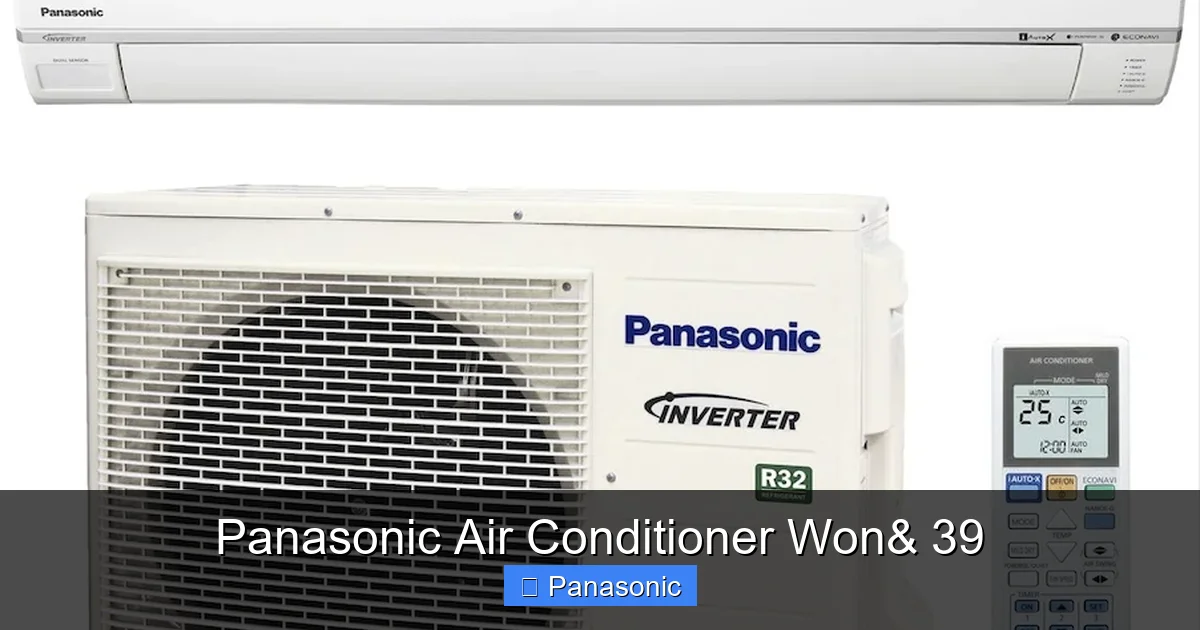
Panasonic split system indoor unit showing sleek design
Image source: logicoolair.com.au
Superior Energy Efficiency
One of the biggest reasons homeowners choose Panasonic is its focus on energy efficiency. Traditional AC units run at full capacity constantly, cycling on and off—this creates power surges and wasted electricity. Panasonic’s Inverter technology changes the game by adjusting the compressor speed based on room temperature needs. When your room reaches the desired coolness, the compressor slows down instead of shutting off completely. This results in:
Up to 70% less energy consumption compared to non-Inverter models
More stable temperatures with fewer fluctuations
Longer appliance lifespan due to reduced wear and tear
For example, if you set your AC to 24°C, the Inverter model will maintain that temperature without overworking the system. Imagine running your AC for eight hours straight—without an Inverter, it might cycle on/off six times, consuming more power each time. With an Inverter, it runs smoothly, quietly, and efficiently.
In practice, households in hot climates often see the higher upfront cost of an Inverter unit paid back through lower electricity bills within one to two cooling seasons. Checking the SEER rating on the specific model gives a standardized efficiency comparison; Panasonic's premium lines frequently exceed 20 SEER. For independent verification of inverter benefits, the U.S. Department of Energy provides a clear overview of how variable-speed compressors reduce energy use.
Cutting-Edge Air Purification
It’s not just about cooling—it’s about breathing better air. Panasonic integrates advanced filtration systems like nanoe™ X into many of its models. This innovative technology releases hydroxyl radicals that:
Neutralize airborne viruses and bacteria
Break down allergens like pollen, mold, and pet dander
Eliminate unpleasant odors from cooking or smoke
What’s even cooler (pun intended) is that nanoe™ X works continuously, even when the cooling function is off. That means your air stays fresh 24/7. It’s especially beneficial for people with asthma, allergies, or respiratory sensitivities.
The nanoe™ X generator itself requires no replacement, but the pre-filters that catch larger particles should be vacuumed or washed monthly during heavy use to maintain airflow and purification efficiency. Replacement filter kits are inexpensive and widely available through authorized service centers.
Smart Controls for Modern Living
Gone are the days of fumbling with buttons in the dark. Panasonic offers Wi-Fi-enabled models that let you control your AC from your smartphone. Using the Panasonic Comfort Cloud app, you can:
Turn the AC on or off remotely
Set schedules so it turns on before you arrive home
Monitor energy usage in real time
Receive maintenance alerts when filters need cleaning
This level of convenience isn’t just nice—it helps you save money and extend the life of your unit. For instance, if you forget to turn off the AC before leaving work, no worries! Just pull out your phone and switch it off instantly. You can also pre-cool your home during peak electricity hours when rates are lower.
The app supports both iOS and Android, integrates with Google Assistant and Amazon Alexa for voice commands, and allows multiple users to manage the same unit — handy for families or shared rentals. Firmware updates are pushed automatically, adding new features over time.
Eco-Friendly Refrigerants and Materials
Sustainability is at the heart of Panasonic’s design philosophy. Most of their newer models use R32 refrigerant , which has a global warming potential (GWP) of 675—significantly lower than older refrigerants like R410A (GWP of 2088). This reduction helps minimize your carbon footprint without sacrificing performance.
Additionally, Panasonic uses recyclable materials in packaging and emphasizes eco-conscious manufacturing processes. They also encourage responsible disposal through take-back programs, ensuring old units don’t end up in landfills.
The EPA's Significant New Alternatives Policy (SNAP) program lists R32 as an acceptable substitute with lower climate impact; you can review the current refrigerant status listings for details. Panasonic also participates in regional e-waste recycling schemes, so ask your installer about local take-back options when replacing an old unit.
Durability and Low Maintenance
You don’t want to buy an AC only to replace it every few years. Panasonic builds their units to last. Key components like copper coils resist corrosion better than aluminum, and internal parts are protected against dust and moisture. Many models come with a 5-year warranty on the compressor, giving you peace of mind.
Maintenance is simple too. Removable filters are easy to clean, and some models have self-diagnostic functions that alert you when service is needed. Regular cleaning once a month keeps performance high and extends filter life.
In coastal or high-humidity areas, the anti-corrosion “Blue Fin” coating on the outdoor heat exchanger makes a measurable difference — technicians report noticeably less coil degradation after five years compared to uncoated units. A quick visual inspection of the outdoor fins twice a year catches early salt buildup before it affects heat transfer.
Quiet Operation for Better Sleep
No one likes a noisy AC disrupting their sleep or work. Panasonic achieves ultra-low noise levels—as little as 24 decibels in some models—comparable to a soft whisper. This is thanks to sound-absorbing materials and precision-engineered fan blades.
Whether you install it in your bedroom, study room, or living area, you’ll barely notice it’s there—except for the refreshing cool air.
For context, 24 dB is roughly the sound of rustling leaves; a typical library is around 30 dB. If the outdoor unit must sit near a bedroom window, request a vibration-isolation mount during installation — it eliminates structure-borne hum that can travel through walls.
Troubleshooting Common Panasonic AC Issues
Even well-maintained units can develop faults. Below are the most frequent “won’t” scenarios and the first steps to diagnose them before calling a technician.
Unit Won’t Turn On
- Check the circuit breaker — a dedicated 15–20 A breaker for the AC may have tripped.
- Verify the remote has fresh batteries and is within line-of-sight of the indoor unit’s receiver.
- Ensure the outdoor disconnect box (usually a pull-out or switch near the condenser) is engaged.
- If the display shows an error code, note it and consult the error-code table later in this article.
Unit Runs but Won’t Cool
- Confirm the mode is set to “Cool” (snowflake icon) and the set-point is below room temperature.
- Clean the return-air filter; a clogged filter cuts airflow and triggers safety shutdowns.
- Inspect the outdoor coil for debris — grass clippings, leaves, or cottonwood seeds can block heat rejection.
- Listen for the compressor; a humming sound with no cooling often indicates a capacitor or refrigerant issue requiring a pro.
Water Leaking from Indoor Unit
- The condensate drain line is likely clogged. Flush it with a 50/50 vinegar-water mix using a wet/dry vacuum at the outdoor end.
- Check that the indoor unit is level; a tilted unit lets water spill over the drain pan lip.
- In high-humidity climates, a secondary drain pan with a float switch adds insurance against ceiling damage.
Unusual Noises (Rattling, Buzzing, Clicking)
- Rattling: loose grille screws or debris in the blower wheel — tighten or remove after power-off.
- Buzzing: often a failing contactor or capacitor in the outdoor unit — replace promptly to avoid compressor damage.
- Clicking on startup: normal for the first few seconds; persistent clicking suggests a relay or control-board fault.
Weak Airflow
- Dirty filter or blocked supply vents — clear all registers.
- Frozen evaporator coil (ice on copper lines) — turn to “Fan Only” for an hour to thaw, then check filter and refrigerant charge.
- Blower motor speed set too low — adjust via the app or remote “Fan Speed” menu.
Pro tip: Keep a photo of the model/serial plate (inside the front panel) on your phone. It speeds up parts lookup and warranty checks when you call support.
Panasonic AC Error Codes and Quick Meanings
| Code | Typical Meaning | First Action |
|---|---|---|
| H11 | Indoor/outdoor communication error | Check wiring connections; power-cycle both units |
| H23 | Refrigerant pressure abnormal (low) | Likely leak — requires licensed tech |
| H27 | Compressor over-current | Clean outdoor coil; check capacitor |
| F11 | Indoor fan motor fault | Inspect for obstructions; test motor resistance |
| F90 | Memory/EEPROM error | Power off 5 min; if persists, replace PCB |
Exact codes vary by series (CS/CU, XE, Z, etc.). Always cross-reference with the service manual for your specific model.
Choosing the Right Panasonic AC for Your Space
With so many options, how do you pick the right Panasonic air conditioner? The answer depends on your room size, usage patterns, and budget. Let’s break it down.
Room Size and BTU Rating
BTU (British Thermal Unit) measures cooling capacity. Too low, and your room won’t cool evenly. Too high, and it wastes energy. Here’s a quick guide:
10–15 sqm: 0.8 ton (~9,000 BTU)
15–20 sqm: 1 ton (~12,000 BTU)
20–25 sqm: 1.5 tons (~18,000 BTU)
25–35 sqm: 2 tons (~24,000 BTU)
Panasonic offers models across all these categories, including compact wall-mounted units for smaller spaces and floor-standing units for larger rooms.
Ceiling height, insulation quality, window orientation, and local climate all shift the real load. A west-facing room with poor insulation in a hot region may need the next size up. For a precise load calculation, use the ACCA Manual J method or ask your installer for a room-by-room analysis before quoting.
Window vs. Split System
Window ACs are affordable and easy to install but block natural light and can be visually intrusive. Split systems, on the other hand, have an indoor unit (hidden on the wall) and outdoor unit, offering better aesthetics and quieter operation.
For most homes, a split inverter AC is the best choice because it balances efficiency, noise reduction, and style.
| Feature | Window AC | Split Inverter AC |
|---|---|---|
| Installation complexity | Low (DIY possible) | Requires pro |
| Noise level (indoor) | 45–55 dB | 24–35 dB |
| Energy efficiency | Low (fixed speed) | High (variable speed) |
| Aesthetics | Visible in window | Discreet wall mount |
| Cost (unit only) | $150–$400 | $600–$1,500 |
Budget Considerations
Yes, Inverter models cost more upfront—but they pay for themselves in energy savings within 1–2 years. Panasonic offers entry-level, mid-range, and premium models, so you can find something that fits your wallet. Don’t forget to factor in installation costs and any rebates or subsidies available in your region for energy-efficient appliances.
Total cost of ownership over 10 years (unit + install + electricity + maintenance) typically favors the mid-range Inverter split. Many utilities offer instant rebates of $100–$300 for ENERGY STAR® certified models — ask your dealer to apply them at purchase.
Installation and Maintenance Tips
Proper setup and care are essential for peak performance. Here’s what you should know:
Professional Installation Is Key
Even the best AC won’t perform well if installed incorrectly. Always hire a certified technician. They’ll check refrigerant levels, seal ductwork (if applicable), and ensure proper drainage to prevent leaks or water damage.
A proper install includes: nitrogen-purged brazing, deep vacuum to 500 microns, correct refrigerant charge weighed in, and a full startup commissioning report. Skipping any step risks premature failure. For a detailed checklist, see this professional installation guide.
Monthly Maintenance Checklist
Clean or replace air filters
Wipe down grilles and vents
Check remote control batteries
Ensure no obstructions around outdoor unit
Once a year, schedule a professional tune-up to inspect coils, clean internal components, and verify refrigerant levels.
Supplement the monthly list with a quarterly coil rinse (gentle garden hose, power off) and an annual drain-line flush. The seasonal maintenance checklist covers these tasks in more depth.
Energy-Saving Hacks
Use ceiling fans to circulate cool air
Close curtains during the day to block heat
Set temperature between 24–26°C for optimal comfort
Use sleep mode at night to reduce noise and energy use
Raising the set-point by 1 °C cuts cooling load roughly 6–8 %. Combining a ceiling fan with a 25 °C set-point feels as cool as 23 °C without the fan, per ASHRAE comfort studies. For more tuning tips, review the optimal temperature settings guide.
Customer Experiences and Real-World Performance
Thousands of satisfied customers rave about Panasonic ACs online. One user shared: “I upgraded from a basic window unit to a Panasonic 1.5-ton Inverter. Within weeks, my electricity bill dropped by 30%. Plus, the nanoe™ X feature made a huge difference for my daughter’s allergies.”
Another mentioned: “The installation was smooth, and the technician explained how to use the app. Now I turn on the AC while commuting, so it’s already cool when I walk in.”
These testimonials highlight not just performance, but the overall user experience—from purchase to daily use.
A third owner in a coastal town noted: “After three years the outdoor fins still look new — the blue coating really holds up against salt air. Only maintenance has been filter cleaning and one drain flush.”
The Future of Cooling: What’s Next for Panasonic?
Panasonic continues to innovate. Upcoming models may include AI-powered climate control, integration with voice assistants like Alexa or Google Assistant, and even solar-compatible designs. Their research into biodegradable refrigerants shows a strong commitment to environmental responsibility.
As of 2026, AI-driven adaptive cooling and voice-assistant integration are already shipping on the flagship Z and XE series; solar-ready outdoor units are in field trials. Panasonic’s R&D roadmap also targets R290 (propane) for future ultra-low-GWP systems, aligning with tightening global regulations.
As climate change increases the frequency of heatwaves, efficient cooling becomes not just a luxury—but a necessity. Brands like Panasonic are leading the way by making sustainable technology accessible to everyone.
Explore the latest cooling technologies shaping the next generation of home comfort.
Conclusion: Why Panasonic Stands Out
When it comes to air conditioners, Panasonic combines reliability, innovation, and eco-conscious design. Their Inverter technology saves energy, nanoe™ X improves air quality, and smart controls add convenience. Whether you're cooling a cozy bedroom or a spacious living room, there's a Panasonic model built to deliver lasting comfort.
Investing in a Panasonic AC isn’t just about beating the heat—it’s about creating a healthier, smarter, and more sustainable home. So next time you shop for cooling, remember: Panasonic doesn’t just make air conditioners. They engineer peace of mind.
Ready to upgrade? Explore Panasonic's latest models at authorized dealers for a cooler, healthier home.
Frequently Asked Questions
What is the difference between Inverter and non-Inverter ACs?
Inverter ACs adjust compressor speed to maintain temperature, saving energy. Non-Inverter models run at full speed constantly, cycling on/off and wasting electricity.
How often should I clean the air filters?
Clean or replace filters every 2–4 weeks during heavy use. Dirty filters reduce airflow and efficiency, and can even spread dust and allergens.
Can I install a Panasonic AC myself?
While some DIYers attempt it, professional installation is recommended. Improper setup can void warranties and cause leaks or poor performance.
What is the typical lifespan of a Panasonic AC?
With proper maintenance, Panasonic ACs last 8–12 years. The compressor often comes with a 5-year warranty, reflecting the brand’s confidence in durability.
Are Panasonic ACs suitable for humid climates?
Absolutely. Panasonic units feature anti-corrosion coatings, efficient dehumidification, and robust drainage systems, making them ideal for tropical or coastal regions.
Does Panasonic offer customer support for AC servicing?
Yes, Panasonic provides nationwide service centers, online support, and mobile apps with troubleshooting guides to assist with maintenance and repairs.
What do the error codes H11, H23, and F11 mean?
H11 indicates a communication fault between indoor and outdoor units; H23 signals abnormal refrigerant pressure (usually low); F11 points to an indoor fan motor problem. Power-cycling the system clears transient codes, but persistent codes require a technician.
Is there a warranty difference between the compressor and other parts?
Most Panasonic splits carry a 5-year compressor warranty and 1-year parts warranty; labor is typically covered for the first year only. Extended warranty plans are available through authorized dealers at purchase.
Can I run the nanoe™ X purification without cooling or heating?
Yes. Select “Fan” or “Auto” mode with nanoe™ X enabled on the remote or app; the generator runs independently of the compressor, consuming only ~30 W.