
Panasonic non-inverter air conditioners offer solid performance, affordability, and durability for everyday cooling needs. While not as energy-efficient as inverter models, they’re ideal for smaller spaces or occasional use. If you’re looking for a straightforward, budget-friendly AC with dependable operation, Panasonic’s non-inverter lineup is worth considering.
Key Takeaways
- Energy Efficiency: Non-inverter ACs operate at full capacity when turned on and shut off completely when the desired temperature is reached, leading to higher electricity consumption compared to inverter models.
- Cost-Effective Initial Purchase: These units typically have a lower upfront cost than inverter versions, making them attractive for budget-conscious buyers.
- Durability & Simplicity: With fewer moving parts and no complex variable-speed compressor, non-inverter ACs are mechanically simpler and often more reliable over time.
- Suitable for Small Spaces: Ideal for bedrooms or small rooms where constant temperature control isn’t critical and usage is intermittent.
- Quieter Operation: Since they don’t cycle on and off frequently like some inverter models, they can run more smoothly and quietly during steady-state operation.
- Maintenance Ease: Fewer electronic components mean easier troubleshooting and lower long-term maintenance costs.
- Limited Temperature Control: Once powered off, they must be manually restarted—less convenient if ambient temperatures change suddenly.
Quick Answers to Common Questions
Are Panasonic non-inverter ACs louder than inverter models?
Not necessarily. While inverter ACs can sound quieter due to smooth operation, non-inverter models often have consistent noise levels when running. However, the “on-off” cycle can create noticeable hum changes, which some find disruptive. Overall, noise depends more on model design than inverter status.
Can I install a non-inverter AC myself?
Basic installation (wall mounting, remote setup) is safe for most homeowners. But connecting refrigerant lines and electrical wiring requires certification. Always hire a BEE-registered technician for safety and warranty compliance. DIY mistakes can void warranties or damage the unit.
Do non-inverter ACs freeze up?
Yes, especially if filters are clogged or refrigerant levels drop. Freezing usually happens in the evaporator coil. Regular filter cleaning and professional servicing prevent this issue. Non-inverters aren’t immune—maintenance matters more than the compressor type.
How long do Panasonic non-inverter ACs last?
With proper care, they typically last 8–12 years. Panasonic uses durable materials and rigorous testing, so their non-inverter models often outlast cheaper alternatives. Annual servicing extends lifespan significantly.
Is it worth upgrading from a non-inverter to an inverter later?
Only if you use AC heavily and notice rising bills. Upgrading involves removing the old unit and installing new piping—costly. For light users, sticking with a well-maintained non-inverter may be smarter financially.
📑 Table of Contents
- Introduction: Why Consider a Panasonic Non-Inverter Air Conditioner?
- How Do Panasonic Non-Inverter Air Conditioners Work?
- Advantages of Choosing a Panasonic Non-Inverter AC
- Disadvantages and Limitations
- Who Should Buy a Panasonic Non-Inverter Air Conditioner?
- Top Panasonic Non-Inverter Models to Consider
- Tips for Maximizing Efficiency and Lifespan
- Environmental Impact and Sustainability
- Conclusion: Is a Panasonic Non-Inverter AC Right for You?
Introduction: Why Consider a Panasonic Non-Inverter Air Conditioner?
When it comes to keeping your home cool and comfortable, air conditioning has become almost essential in many regions. Among the top brands offering reliable cooling solutions, Panasonic stands out for its innovation, quality, and wide range of products. One category that often raises questions among consumers is the **Panasonic air conditioner non inverter** model. You might be wondering: “Why would someone choose a non-inverter unit when newer technology offers better efficiency?” The answer lies in a mix of practicality, cost, and performance tailored to specific needs.
Unlike modern inverter ACs that adjust compressor speed based on room temperature, non-inverter models run at full power until the set temperature is reached, then shut off completely. This simple mechanism makes them straightforward to operate and maintain. For many households—especially those living in milder climates or using ACs sparingly—the trade-off in energy savings may not outweigh the convenience and upfront savings these units provide.
In this comprehensive guide, we’ll explore everything about Panasonic non-inverter air conditioners, from how they work and what makes them different from inverter units, to their pros, cons, ideal use cases, and tips for getting the most out of your purchase. Whether you’re upgrading an old unit or shopping for your first AC, understanding the nuances of non-inverter technology will help you make a smarter decision.
—
How Do Panasonic Non-Inverter Air Conditioners Work?
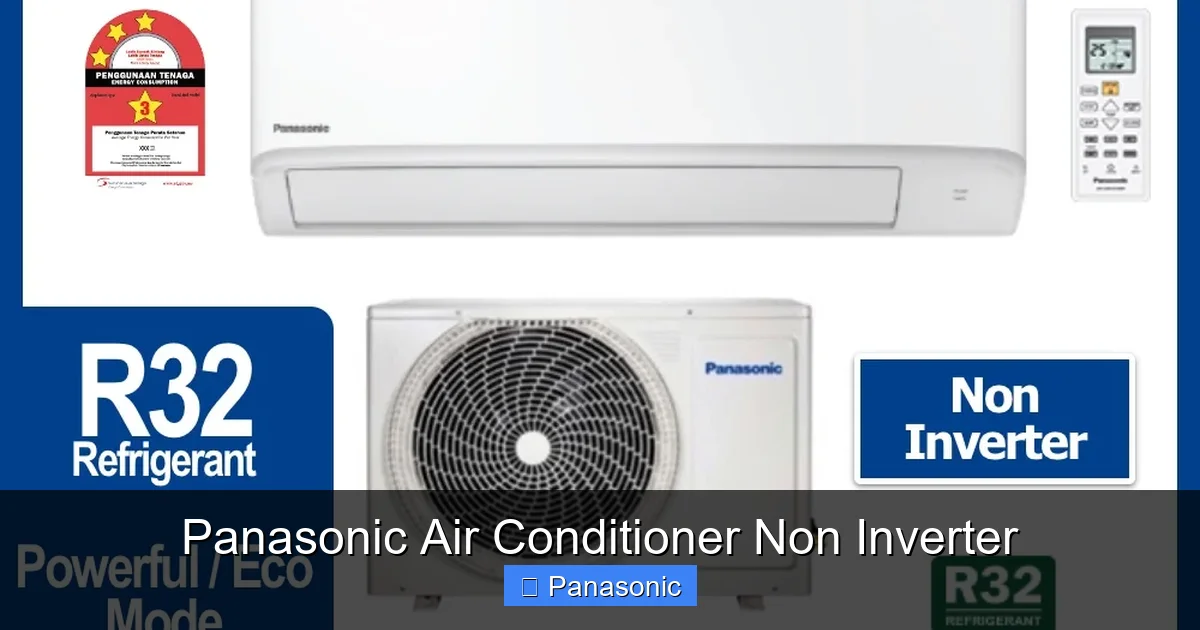
Visual guide about Panasonic Air Conditioner Non Inverter
Image source: down-my.img.susercontent.com
At the heart of every air conditioner—whether inverter or non-inverter—is the refrigeration cycle. This process removes heat from inside your room and releases it outside, cooling the indoor air. What sets non-inverter ACs apart is their compressor operation.
The Basic Refrigeration Cycle
The core components include:
- Compressor: Pressurizes refrigerant gas, raising its temperature.
- Condenser Coil: Releases hot gas into the outdoor unit, converting it back to liquid.
- Expansion Valve: Reduces pressure, causing the refrigerant to cool rapidly.
- Evaporator Coil: Absorbs heat from indoor air, cooling it before circulating back.
Non-Inverter vs. Inverter Compressors
In a **Panasonic air conditioner non inverter**, the compressor runs at a fixed speed—either on at 100% capacity or off entirely. When you turn it on, it works continuously until the thermostat detects the desired temperature. Once reached, the compressor stops, and the fan (if set to auto) may keep blowing air until manually switched off.
By contrast, inverter models use variable-speed compressors that modulate between high, medium, and low speeds to maintain consistent temperatures without cycling on/off. This results in smoother operation and reduced energy draw.
For users who don’t mind the on/off cycle and prioritize simplicity, non-inverter units deliver effective cooling with less complexity.
—
Advantages of Choosing a Panasonic Non-Inverter AC
While inverter technology dominates today’s market for good reason, non-inverter ACs still hold strong advantages—especially for certain lifestyles and budgets.
Lower Upfront Cost
One of the biggest draws is price. A **Panasonic air conditioner non inverter** typically costs 20–30% less than comparable inverter models. For buyers on a tight budget or replacing older units quickly, this affordability is hard to ignore.
Simple Maintenance
With fewer electronic controls and no frequency converters, there’s less that can go wrong. Routine tasks like cleaning filters or checking refrigerant levels are straightforward. And since there are no delicate variable-speed motors, mechanical wear tends to be slower.
Durable Design
Panasonic is known for robust build quality. Their non-inverter models often feature corrosion-resistant materials, sturdy casings, and reliable internal components that stand up well to daily use—even in humid environments.
Reliable Performance in Moderate Climates
If you live in a region with mild summers or only need AC for short periods (like evenings or summer nights), a non-inverter unit gets the job done efficiently enough. It doesn’t overwork the system by trying to fine-tune temperatures constantly.
No Need for Advanced Controls
Some users find smart thermostats and app-based controls overwhelming. Non-inverter ACs come with basic remote controls and manual settings—perfect for those who just want “set and forget” functionality.
—
Disadvantages and Limitations
Despite their strengths, Panasonic non-inverter air conditioners aren’t perfect for everyone.
Higher Electricity Bills Over Time
Because the compressor cycles on and off abruptly, each startup consumes a surge of power. Inverter models avoid this spike, making them significantly more efficient—sometimes up to 40% better in energy use. For homes running ACs for hours daily, this difference adds up fast.
Limited Temperature Precision
Once the AC reaches the target temperature, it shuts off. If someone opens a window or enters a warm room later, the system won’t kick back in automatically unless manually restarted. Inverter units sense gradual changes and respond instantly.
Less Comfort During Transitions
The sudden stop-start nature can create brief drafts or temperature fluctuations, which some find uncomfortable. Inverter ACs provide a gentler, more stable climate.
Not Ideal for Large Spaces
Non-inverter units work best in small to medium-sized rooms (under 150 sq ft). Larger areas require longer run times to cool down, increasing energy waste and strain on the compressor.
—
Who Should Buy a Panasonic Non-Inverter Air Conditioner?
Understanding your household’s habits and environment helps determine whether a non-inverter model fits your needs.
The Budget-Conscious Homeowner
If you’re replacing an old AC and need something functional without spending extra, a **Panasonic air conditioner non inverter** delivers value. Look for models with decent BTU ratings and energy labels like BEE 3-star or higher to balance cost and efficiency.
The Occasional User
Do you only run your AC during peak heatwaves or at night? Non-inverters are perfectly capable of handling short bursts of cooling without the premium price tag.
Small Room Applications
Bedrooms, study rooms, or guest rooms under 150 square feet are ideal candidates. Pair it with curtains, rugs, and insulation to maximize comfort and reduce runtime.
Those Prioritizing Reliability Over Features
If you don’t need Wi-Fi connectivity, sleep mode, or eco settings, skip the bells and whistles. A basic non-inverter unit focuses purely on cooling—no frills, just function.
Avoid non-inverters if you:
- Run ACs 8+ hours daily
- Live in extreme climates requiring precise temperature control
- Prefer silent, continuous airflow
- Plan to sell your home soon (inverter units add resale value)
—
Top Panasonic Non-Inverter Models to Consider
Panasonic offers several non-inverter models under brands like CS/CU series. While exact availability varies by region, here are representative examples:
CS/CU-12WKYH – 1.5 Ton Split AC
- Non-inverter compressor
- Copper condenser coils for better heat exchange
- Anti-corrosion coating on outdoor unit
- Auto-clean function (helps prevent mold)
- Ideal for medium-sized rooms
CS/CU-12WKYF – 1.5 Ton with Dust Filter
Includes enhanced air purification features—great for allergy sufferers. Still uses non-inverter tech but adds health-focused extras.
CS/CU-09WKYH – 1 Ton Unit
Compact and affordable, perfect for single occupants or small studios. Matches well with Panasonic’s eco-friendly packaging and recycling initiatives.
When selecting a model, always check:
- BEE star rating (aim for ≥3 stars)
- Refrigerant type (R32 is newer and eco-friendly)
- Installation requirements (pipe length, drainage)
- Warranty coverage (typically 1 year on product, 5 on compressor)
—
Tips for Maximizing Efficiency and Lifespan
Even though non-inverter ACs consume more power, smart usage habits can stretch their performance and longevity.
Set Realistic Temperatures
Keeping your AC at 24°C instead of 22°C saves significant energy. Every degree above room temperature reduces workload.
Use Timer Functions Wisely
Many Panasonic non-inverters include timers. Schedule cooling to begin 30 minutes before you wake up or return home—this avoids wasteful full-power startups.
Clean Filters Regularly
Clogged filters force the system to work harder. Clean monthly with mild soap and water; let dry fully before reinserting.
Seal Gaps Around Windows and Doors
Cold air escapes easily. Use weather stripping or draft stoppers to keep conditioned air inside.
Install in Shaded Areas
If possible, mount the outdoor unit where it won’t absorb direct sunlight or heat from nearby walls.
Avoid Overloading the System
Don’t block vents or place furniture too close. Good airflow ensures even cooling and prevents short cycling.
—
Environmental Impact and Sustainability
You might assume inverter ACs are always greener, but non-inverters have their place in sustainability too.
R32 Refrigerants Are a Step Forward
Modern Panasonic non-inverter models increasingly use R32 refrigerant—a natural gas with low global warming potential (GWP) compared to older R22 or R410a. Even without inverter efficiency, R32 systems leak less and break down faster.
Longer Lifespans Mean Less Waste
Simpler mechanics often mean longer service life. If your non-inverter AC lasts 10+ years with proper care, you’re reducing e-waste versus replacing frequent units.
That said, inverter models still win on pure energy conservation. But for responsible consumers, choosing a well-rated non-inverter with eco-friendly refrigerants is a balanced approach.
—
Conclusion: Is a Panasonic Non-Inverter AC Right for You?
Choosing between inverter and non-inverter air conditioning boils down to priorities. If you value upfront savings, simplicity, and reliability over cutting-edge efficiency, then a **Panasonic air conditioner non inverter** could be an excellent fit. These units prove that sometimes, less technology means more peace of mind.
They’re not obsolete—just evolved for different needs. Whether you’re outfitting a cozy bedroom, cooling a tiny apartment, or simply avoiding high electricity bills, Panasonic’s non-inverter lineup delivers dependable performance without complexity.
Just remember: match the unit size to your space, maintain it regularly, and pair it with smart home habits to get the best bang for your buck. Cooling your world doesn’t have to be complicated. Sometimes, the simplest solution is the most effective.
—
Frequently Asked Questions
What’s the main difference between inverter and non-inverter ACs?
Inverter ACs adjust compressor speed to maintain temperature smoothly, saving energy. Non-inverter ACs run at full power until the target temp is reached, then shut off completely. This makes non-inverters simpler but less efficient over time.
Are Panasonic non-inverter ACs energy efficient?
They’re less efficient than inverter models, consuming more electricity due to frequent start-stop cycles. However, newer non-inverter units with BEE 3-star+ ratings offer decent efficiency for their class, especially in moderate climates.
Can I use a non-inverter AC in large rooms?
It’s not recommended. Non-inverter ACs work best in small to medium rooms (up to 150 sq ft). Larger spaces require higher tonnage and longer runtimes, increasing energy waste and wear on the compressor.
Do non-inverter ACs require special maintenance?
No—they need standard care like cleaning filters, checking drainage, and annual servicing. Their simpler design means fewer components to maintain compared to inverter units.
Which Panasonic non-inverter model is best for small apartments?
The CS/CU-09WKYH (1-ton) is ideal for studios or single occupants. It balances cooling capacity, energy rating, and compact size. Always verify local availability and install with a certified technician.
Will a non-inverter AC work during power cuts?
Yes, once powered back on, it resumes normal operation. Unlike some inverter models with backup batteries, non-inverters restart instantly without delay—ideal for areas with frequent outages.
