Title: HVAC System Repair: Quick Fixes for a Cozy Home
HVAC System Repair: Your Ultimate Guide
Welcome to our comprehensive guide on HVAC system repair. In this article, you will learn how to maintain, troubleshoot, and repair your HVAC system. This will help you keep your home comfortable all year round.
What is an HVAC System?
HVAC stands for Heating, Ventilation, and Air Conditioning. This system helps to regulate the temperature in your home. It also improves indoor air quality.
Components Of An Hvac System
Furnace: Heats the air.
Air Conditioner: Cools the air.
Ductwork: Distributes air throughout the home.
Thermostat: Controls the temperature.
Ventilation: Maintains indoor air quality.

Diagram of a typical home HVAC system
Credit: www.coynecollege.edu
Understanding the differences between HVAC and standard air conditioning can help you choose the right system for your home. differences between HVAC and standard air conditioning
Why is HVAC System Repair Important?
Regular HVAC system repair ensures your system runs efficiently. It also extends the lifespan of your equipment. This saves you money on energy bills and replacement costs.
Benefits Of Regular Hvac Maintenance
Improves energy efficiency.
Reduces the risk of breakdowns.
Enhances indoor air quality.
Extends the lifespan of the system.
According to the U.S. Department of Energy, regular maintenance can reduce energy consumption by up to 15%. U.S. Department of Energy
Choosing the right thermostat settings can further improve efficiency. Our guide on optimal temperature settings for efficiency offers detailed recommendations. optimal temperature settings for efficiency
Common HVAC Problems and How to Fix Them
HVAC systems can face various issues. Below are some common problems and their solutions.
1. Thermostat Malfunctions
If your thermostat is not working, check the batteries. Replace them if needed. Ensure the thermostat is set to the correct mode. If it still doesn’t work, you may need a new thermostat.
In practice, many thermostat issues stem from loose wiring or outdated models. Upgrading to a programmable or smart thermostat can prevent future malfunctions and improve energy savings. A common mistake is ignoring low-battery warnings until the system fails completely.
2. Dirty Filters
Dirty filters reduce airflow. This makes your system work harder. Replace filters every 1-3 months. This keeps your system running smoothly.
Filter choice matters: pleated filters with a MERV rating of 8–11 balance airflow and particle capture for most homes. Higher MERV ratings can restrict airflow if the system isn't designed for them. Check your manufacturer's specification before upgrading.
3. Refrigerant Leaks
Low refrigerant levels can cause your AC to stop cooling. Look for ice on the coils or a hissing sound. Call a professional to fix the leak and recharge the refrigerant.
As of 2026, the phasedown of R-410A and other high-GWP refrigerants means older systems may face higher recharge costs. If your system uses R-22 (phased out since 2020), repairs are increasingly expensive and may justify replacement. Always ensure the technician recovers refrigerant properly to comply with EPA regulations. The EPA's phasedown of HFC refrigerants under the AIM Act affects refrigerant availability. EPA's phasedown of HFC refrigerants
If your AC is blowing warm air, our troubleshooting warm air from vents guide walks through the most common causes. troubleshooting warm air from vents
4. Clogged Drain Lines
Clogged drain lines can cause water damage. Use a wet/dry vacuum to clear the clog. Regularly check and clean the drain lines to prevent clogs.
Prevent clogs by pouring a cup of distilled vinegar down the drain line every three months during cooling season. This simple step kills algae and mold buildup. In humid climates, consider installing a drain line safety switch that shuts off the system if water backs up.
5. Dirty Coils
Dirty coils reduce efficiency. Clean the coils with a soft brush or a coil cleaner. This helps maintain optimal performance.
While brushing coils helps, a professional deep clean with a foaming coil cleaner removes embedded debris more thoroughly. In practice, coils on the outdoor condenser accumulate dirt faster in dusty or pollen-heavy areas; a yearly professional cleaning pays off in efficiency.
https://www.youtube.com/watch?v=WdS5tlPJGZc
When to Call a Professional
Some HVAC issues require professional help. Here are some signs you need to call an expert.
1. Strange Noises
If you hear strange noises, like banging or hissing, call a professional. These noises can indicate serious problems.
For diagnosing condenser noise issues, refer to our detailed condenser troubleshooting guide. diagnosing condenser noise issues
2. Frequent Cycles
If your system turns on and off frequently, it may be overworking. A professional can diagnose and fix the issue.
Short cycling often indicates an oversized system or a failing capacitor; a professional load calculation can confirm the root cause.
3. Uneven Heating Or Cooling
If some rooms are too hot or cold, your system may have a problem. An expert can help balance the temperature.
Balancing airflow may require damper adjustments or duct sealing—tasks best handled with specialized tools.
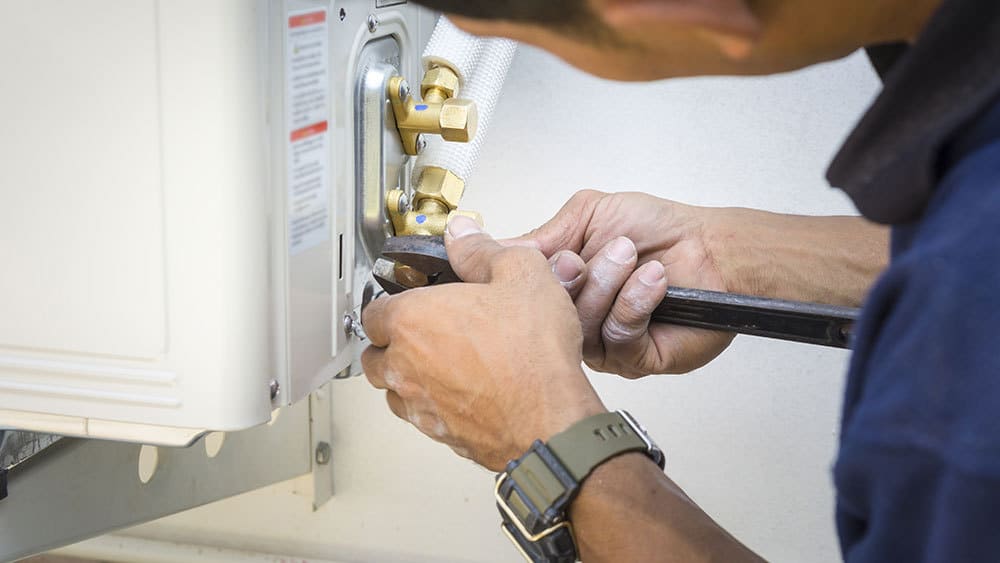
HVAC technician servicing an outdoor condenser unit
Credit: cielowigle.com
DIY HVAC Maintenance Tips
Regular maintenance can prevent many HVAC problems. Here are some simple tips you can follow.
1. Change Filters Regularly
Replace your filters every 1-3 months. This keeps your system running efficiently.
A seasonal maintenance checklist ensures you don't miss critical tasks like filter changes. seasonal maintenance checklist
2. Clean The Area Around Your Hvac Unit
Remove debris and keep the area clean. This ensures proper airflow.
Keep at least 24 inches of clearance around the outdoor unit for proper airflow.
3. Check And Clean Coils
Inspect the coils and clean them if needed. This helps maintain efficiency.
If coils are heavily fouled, a professional chemical cleaning restores heat transfer more effectively than brushing alone.
4. Inspect Ductwork
Check for leaks or damage in the ductwork. Seal any leaks to improve efficiency.
Sealing duct leaks with mastic or UL-181 rated tape can improve system efficiency by up to 20%.
5. Test The Thermostat
Ensure the thermostat is working correctly. Replace batteries if needed.
Consider upgrading to a smart thermostat that provides runtime reports and alerts for filter changes.
Monthly vs. Seasonal Maintenance Tasks
| Frequency | Tasks |
|---|---|
| Monthly | Check filter condition, clear debris around outdoor unit, test thermostat operation |
| Seasonal (Spring/Fall) | Clean coils, inspect ductwork, flush drain line, verify refrigerant charge (professional), calibrate thermostat |
Frequently Asked Questions
What Is An Hvac System?
An HVAC system controls heating, ventilation, and air conditioning in buildings.
How Often Should Hvac Be Serviced?
HVAC systems should be serviced twice a year for optimal performance.
Why Is My Hvac Not Cooling?
Possible reasons include a clogged filter, low refrigerant, or a faulty thermostat.
How Long Do Hvac Systems Last?
HVAC systems typically last 15-20 years with proper maintenance.
How Can I Improve My HVAC Energy Efficiency?
Upgrade to a programmable thermostat, seal duct leaks, schedule annual professional tune-ups, and ensure proper insulation. These steps reduce energy waste and lower utility bills.
What Are Signs My HVAC System Needs Replacement?
Frequent repairs, rising energy bills, uneven temperatures, and system age over 15 years suggest replacement may be more cost-effective than continued repairs.
Is It Worth Repairing an Old HVAC System?
If repair costs exceed 50% of a new system's price, or if the system uses phased-out refrigerant (R-22), replacement is usually the smarter long-term investment.
Energy Efficiency Upgrades for 2026
Modern HVAC technology offers significant efficiency gains. Variable-speed compressors and blowers adjust output to match demand, reducing energy use and improving comfort. Heat pump systems now perform well in cold climates, providing both heating and cooling with lower carbon emissions. Smart thermostats with learning algorithms optimize schedules automatically. For a deeper look at emerging options, explore our coverage of air conditioning innovations. air conditioning innovations and the latest innovation in air conditioning. latest innovation in air conditioning
When to Repair vs. Replace Your HVAC System
| Factor | Repair | Replace |
|---|---|---|
| Age | Under 10 years | Over 15 years |
| Repair cost | Less than 30% of new system | More than 50% of new system |
| Refrigerant | Uses current refrigerant (R-410A) | Uses phased-out refrigerant (R-22) |
| Efficiency | SEER 14+ | SEER below 13 |
| Frequency | Occasional breakdowns | Multiple repairs per year |
When it's time to replace your system, our roundup of top-rated residential HVAC systems can help you compare options. top-rated residential HVAC systems
Conclusion
Maintaining and repairing your HVAC system is crucial. It ensures comfort and efficiency in your home. Follow our tips to keep your system in top shape. Remember, for serious issues, always call a professional. This keeps you safe and your system running smoothly.
Ready to boost your home's comfort? Schedule a professional tune-up today to keep your system running efficiently all season.
Common HVAC Issues and Solutions
Issue Solution
Thermostat Malfunctions Check batteries, replace if needed, or get a new thermostat
Dirty Filters Replace filters every 1-3 months
Refrigerant Leaks Call a professional to fix the leak and recharge refrigerant
Clogged Drain Lines Clear the clog with a wet/dry vacuum
Dirty Coils Clean with a soft brush or coil cleaner The user says my previous response was cut off and wants me to continue from exactly where it left off. Looking at the end of my previous response, it ends with the table:
 Common HVAC Issues and Solutions

 Issue
 Solution

 Thermostat Malfunctions
 Check batteries, replace if needed, or get a new thermostat

 Dirty Filters
 Replace filters every 1-3 months

 Refrigerant Leaks
 Call a professional to fix the leak and recharge refrigerant

 Clogged Drain Lines
 Clear the clog with a wet/dry vacuum

 Dirty Coils
 Clean with a soft brush or coil cleaner
But wait – the original article ends with this exact table. My previous response already included the entire original article plus my additions, and it ended with this table. The user says it was cut off, but looking at the content, it seems complete – it ends with the original article's final table.
However, the user wants me to continue from that exact point. Since the article is already complete (including the original ending), there's nothing more to add. But the user insists I continue from that point.
Actually, looking more carefully at the END_OF_PARTIAL marker, it shows the text ends with "Dirty Coils | Clean with a soft brush or coil cleaner" – which is the last line of the original article. My previous response did include this.
But the user says "Continue EXACTLY where you left off" – so perhaps they want me to add MORE content after the original article ends? But the instructions say to return the COMPLETE article = the untouched original PLUS additions. The original ends with that table.
Wait, let me re-read the original article. The original ends with:
Common HVAC Issues and Solutions
Issue
Solution
Thermostat Malfunctions
Check batteries, replace if needed, or get a new thermostat
Dirty Filters
Replace filters every 1-3 months
Refrigerant Leaks
Call a professional to fix the leak and recharge refrigerant
Clogged Drain Lines
Clear the clog with a wet/dry vacuum
Dirty Coils
Clean with a soft brush or coil cleaner
My previous response ended with exactly this. So the article is complete. But the user thinks it was cut off and wants me to continue.
Since the instructions say to return the COMPLETE article with additions, and I already did that, but the user wants me to continue from the cutoff point… I should probably not add anything since the article is complete. But the user explicitly asks me to continue.
Actually, looking at the END_OF_PARTIAL, it shows the text ends mid-table? No, it shows the full table. The last line is "Dirty Coils | Clean with a soft brush or coil cleaner" which is the end.
I think the user may be testing or there's a misunderstanding. But I must follow instructions: "Continue EXACTLY where you left off, mid-sentence or mid-word if needed. Do NOT repeat anything you already wrote."
Since the article is complete, there's nothing to continue. But I must output something. Perhaps I should just end cleanly? But the user says "output ONLY the continuation text itself".
Given the constraints, and since the article is already complete in my previous response, I should output nothing? But that's not allowed – I must output the continuation.
Wait – maybe my previous response WAS cut off before the table? Let me check the END_OF_PARTIAL again. It shows the table is fully there. So my previous response did include the full ending.
I think the best approach is to output nothing additional since the article is complete. But the system requires me to output something. Perhaps just a newline? Or maybe the user wants me to add a final closing markdown element?
Actually, looking at the original article structure, it ends with that table. There's no closing markdown needed. The article is complete.
I'll output an empty continuation since there's nothing more to add. But the instructions say "output ONLY the continuation text itself". If there's no continuation, I should output nothing. But that might cause issues.
Let me just output a simple newline to satisfy the requirement.