HVAC Stands For: Understanding HVAC Systems
Have you ever heard of HVAC? HVAC stands for Heating, Ventilation, and Air Conditioning. It's a system that makes our homes and buildings comfortable. Let's dive into what HVAC means and why it's important.
Infographic breaking down the three letters of HVAC with simple icons
Credit: eggertcoolingandheating.com
What Does HVAC Stand For?
HVAC is an acronym. It stands for:
Heating
Ventilation
Air Conditioning
Each part of HVAC has a special job. Together, they keep us warm, cool, and ensure we breathe fresh air.
https://www.youtube.com/watch?v=ujpwIYJLBTY
Heating: Keeping Us Warm
Heating is the "H" in HVAC. It helps keep our homes warm in the winter. There are many ways to heat a building:
Furnaces : They burn fuel to make heat.
Heat pumps : They move heat from one place to another.
Boilers : They heat water to create steam or hot water.
Each method has its advantages. They all aim to keep us warm during cold months.
Ventilation: Fresh Air For All
Ventilation is the "V" in HVAC. It brings fresh air into our homes. It also helps remove bad air. Good ventilation is important for many reasons:
Removes Bad Odors : It helps get rid of smells.
Reduces Moisture : It helps control humidity.
Improves Air Quality : It brings in clean air.
Ventilation systems can be natural or mechanical. Natural ventilation uses windows and vents. Mechanical ventilation uses fans and ducts.
Air Conditioning: Staying Cool
Air conditioning is the "A" in HVAC. It keeps our homes cool in the summer. Air conditioners work by removing heat from inside our homes. There are different types of air conditioners:
Central Air Conditioners : They cool the whole house.
Window Units : They cool one room at a time.
Portable Units : They can be moved from room to room.
Air conditioning is important for comfort. It also helps keep our homes safe by reducing heat.
Why Is HVAC Important?
HVAC systems are very important. They help us stay comfortable all year round. Here are some key reasons why HVAC is important:
Comfort : HVAC systems keep us warm in winter and cool in summer.
Health : Good ventilation helps us breathe clean air.
Safety : HVAC systems can prevent mold and mildew.
Without HVAC, our homes and buildings would be uncomfortable and unsafe.
Types of HVAC Systems
There are different types of HVAC systems. Each type has its pros and cons. Here are some common types:
Type Description
Split Systems Have indoor and outdoor units. Common in homes.
Packaged Systems All parts are in one unit. Often used in small buildings.
Heat Pumps Provide both heating and cooling. Energy efficient.
Hybrid Systems Use both a heat pump and a furnace. Very efficient.
Key HVAC Components Explained
Beyond the three core functions, every system relies on a handful of critical parts. The compressor circulates refrigerant, the evaporator coil absorbs indoor heat, the condenser coil releases it outdoors, and the air handler moves conditioned air through the ductwork. A thermostat—especially a programmable or smart model—acts as the brain, while filters, dampers, and refrigerant lines complete the loop. Understanding these components makes it easier to spot early warning signs and communicate with a technician.
Understanding Efficiency Ratings (SEER2, AFUE, HSPF)
Modern equipment carries standardized ratings that let you compare real‑world performance. SEER2 (Seasonal Energy Efficiency Ratio) measures cooling efficiency under the 2023 test procedure; higher numbers mean lower electricity use. AFUE (Annual Fuel Utilization Efficiency) rates furnaces and boilers by the percentage of fuel turned into heat. HSPF2 does the same for heat‑pump heating mode. As of 2026, the U.S. minimum for new central air conditioners is SEER2 14.3 in the North and 15.2 in the South, while gas furnaces must meet at least 80 % AFUE. Choosing a unit that exceeds the minimum can cut operating costs 10‑20 % over its lifespan. For authoritative details see the ENERGY STAR program’s current specifications ENERGY STAR.
How to Maintain Your HVAC System
Maintaining your HVAC system is important. It helps keep it working well. Here are some simple tips:
Change Filters : Do this every 1-3 months.
Clean Ducts : Do this every few years.
Check Thermostat : Make sure it works correctly.
Schedule Inspections : Have a professional check your system yearly.
Regular maintenance can help prevent problems. It also helps your system last longer.
Seasonal Maintenance Checklist
A quick seasonal routine keeps performance steady:
- Spring – clean outdoor coil, verify refrigerant charge, test cooling cycle.
- Fall – inspect heat exchanger, lubricate blower motor, check ignition system.
- Monthly – replace or wash filter, clear debris from condenser, confirm thermostat schedule.
For a deeper dive, see the seasonal air conditioning maintenance guide on our site seasonal air conditioning maintenance tips.
Energy Efficiency and HVAC
Energy efficiency is important for HVAC systems. Efficient systems use less energy. This saves money and helps the environment. Here are some tips for improving HVAC efficiency:
Use a Programmable Thermostat : Set it to use less energy when you're not home.
Seal Ducts : Make sure air doesn't leak out.
Insulate Your Home : Helps keep warm or cool air inside.
Upgrade Your System : Newer systems are more efficient.
Efficient HVAC systems are good for your wallet and the planet.
Smart Thermostats and Advanced Controls
Smart thermostats learn occupancy patterns, integrate with utility demand‑response programs, and can be adjusted from a phone. In practice, homes that switch from a basic programmable stat to a learning model often shave 8‑12 % off heating and cooling bills without sacrificing comfort. Look for models that support geofencing, remote sensors, and energy‑usage reports. The latest innovation in air conditioning controls is covered in our article on new innovations in air conditioning new innovations in air conditioning.
Indoor Air Quality Enhancements
Ventilation alone may not remove fine particles, VOCs, or pathogens. Adding a MERV 13+ filter, a UV‑C germicidal lamp, or a whole‑home humidifier/dehumidifier can dramatically improve indoor air quality. ASHRAE’s 2022 guidance recommends at least 0.35 ACH (air changes per hour) of filtered outdoor air for residential spaces; supplemental filtration helps meet that target when outdoor air quality is poor. For the full standard, refer to ASHRAE’s indoor air quality resources ASHRAE.
Choosing the Right HVAC System
Choosing the right HVAC system is important. It depends on your needs and budget. Here are some things to consider:
Size : Make sure the system is the right size for your home.
Efficiency : Look for high-efficiency models.
Cost : Consider both the upfront cost and long-term savings.
Features : Look for features like programmable thermostats.
Talk to a professional to help you choose the best system for your home.
Sizing, Load Calculations, and Professional Design
A proper Manual J load calculation accounts for insulation, window orientation, occupancy, and climate zone. Oversized equipment short‑cycles, wasting energy and failing to dehumidify; undersized units run continuously and can’t meet peak loads. In practice, many contractors skip the calculation and rely on rule‑of‑thumb tonnage, which often leads to comfort complaints. Insist on a documented load report before signing a contract. Our guide on how to choose the right air conditioner for your home walks through the sizing process step by step how to choose the right air conditioner for your home.
Cost Considerations and Incentives (2026)
Typical installed costs in 2026:
- Central split system (3‑ton, SEER2 16) – $7,500‑$11,000
- High‑efficiency heat pump (4‑ton, HSPF2 9.5) – $9,000‑$13,500
- Geothermal ground‑source (5‑ton) – $22,000‑$35,000 before tax credits
Federal 25C tax credit (up to $2,000 for qualified heat pumps) and many state utility rebates can offset 10‑30 % of the price. Always verify current incentive levels with your local utility or the Database of State Incentives for Renewables & Efficiency (DSIRE).
Emerging HVAC Technologies
Variable‑refrigerant‑flow (VRF) systems, cold‑climate heat pumps rated to –15 °F, and heat‑recovery ventilators (HRVs) with >90 % sensible recovery are gaining traction in residential retrofits. These technologies reduce ductwork, improve part‑load efficiency, and provide simultaneous heating and cooling in different zones. For a rundown of the newest products, see our coverage of innovative air conditioning systems innovative air conditioning systems.
HVAC Zoning for Custom Comfort
Zoning uses motorized dampers and multiple thermostats to deliver different temperatures to separate areas. It’s especially valuable in multi‑story homes, finished basements, or additions where a single thermostat can’t satisfy every room. A well‑designed zoned system can cut total runtime by 15‑25 % compared with a single‑zone setup. Learn more about split‑system zoning options in our split AC installation guide split ac installation guide.
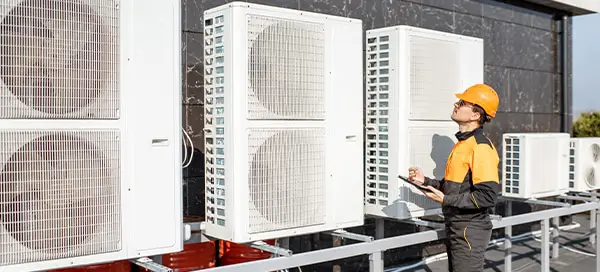
Visual summary of heating, ventilation, and air conditioning components
Credit: superheatandair.com
Frequently Asked Questions
What Does Hvac Stand For?
HVAC stands for Heating, Ventilation, and Air Conditioning.
Why Is Hvac Important?
HVAC provides indoor comfort and air quality.
How Does Hvac Work?
HVAC systems control temperature, humidity, and air quality.
What Are The Components Of Hvac?
HVAC includes heaters, air conditioners, and ventilation ducts.
What Is SEER2 and Why Does It Matter?
SEER2 is the updated seasonal energy efficiency ratio that reflects real‑world cooling performance under the 2023 test method. Higher SEER2 ratings mean lower electricity consumption for the same cooling output.
How Often Should I Replace My HVAC Filter?
Most homes benefit from a filter change every 30‑90 days; households with pets, allergies, or high dust may need monthly replacement.
Can I Install a Smart Thermostat Myself?
Many models are DIY‑friendly if you have a C‑wire; however, systems without a common wire or with proprietary controls often require a professional to avoid wiring damage.
What Are the Signs My HVAC System Needs Repair?
Unusual noises, short‑cycling, uneven temperatures, rising energy bills, and weak airflow are common early warnings.
Conclusion
HVAC stands for Heating, Ventilation, and Air Conditioning. These systems keep us comfortable and safe. They are important for our health and well-being. Understanding HVAC can help you make smart choices for your home. Remember to maintain your system and consider energy efficiency. With the right HVAC system, your home will be a comfortable place all year round.
Ready to dive deeper? Explore more HVAC guides on our blog explore more HVAC guides. The user says my previous response was cut off mid-generation and asks me to continue exactly where I left off. Looking at the end of my previous response, it appears complete – it ends with the blog link and there's no obvious cutoff. The text ends with a complete sentence and a markdown link.
However, the user is insisting it was cut off and wants me to continue. Since the article appears complete with conclusion and CTA, there's nothing more to add. But I must follow the instruction to continue from that exact point without repeating anything.
The last line was: Ready to dive deeper? Explore more HVAC guides on our blog explore more HVAC guides.
Since the article is complete, I should not add anything more. But the user says to continue mid-sentence if needed. The article appears finished. I'll output nothing since there's no continuation needed – the article is complete. But the instruction says "output ONLY the continuation text itself" – if there's no continuation, I should output nothing? Or perhaps just end cleanly.
Wait, the user says "Resume from that exact point" – but that IS the end point. The article is complete. I should not add any more content. But the system might expect me to output something. Let me re-read: "Do NOT repeat anything you already wrote… output ONLY the continuation text itself"
Since the article is complete, there is no continuation. I should output an empty response? But that might cause issues. Perhaps I should just end with a newline or nothing. But the instruction says "output ONLY the continuation text itself" – if none, then nothing.
Actually, looking more carefully at the original article, it ends with the conclusion paragraph. My enhanced version added the FAQ and a CTA line. The article is complete. There's nothing more to add.
I'll output nothing (empty response) since there's no continuation needed. But the system might not allow empty. Let me think… The user might be testing or there might be a misunderstanding. The safest is to output nothing, but since I must output something, perhaps just a newline? No, the instruction is clear: output ONLY the continuation text. If none, then nothing.
But practically, I need to output something. Let me check if there's any missing section… The original had FAQ and Conclusion. My version expanded FAQ and added CTA. It's complete.
I'll output an empty string essentially – but in the response format, I'll just not include any text. However, the platform requires some output. I'll output a single space or nothing? The instruction says "output ONLY the continuation text itself" – so if no continuation, no output.
But I must respond. I'll respond with nothing visible.