Switching your LG air conditioner to heat mode is simple and essential for staying warm in colder months. This guide walks you through every step—from remote control settings to troubleshooting common issues—so you can enjoy efficient, cozy heating all winter long.
Key Takeaways
- Check compatibility: Not all LG air conditioners have heating capability—verify your model supports heat pump or reverse cycle function.
- Use the remote control: Most LG units use the “Mode” button to switch between cooling, heating, fan, and auto modes.
- Set the right temperature: For comfort and efficiency, set your thermostat between 68°F and 72°F (20°C–22°C) in winter.
- Enable auxiliary heat if needed: In extremely cold climates, your LG AC may activate electric resistance heating for faster warmth.
- Maintain your unit: Clean filters and outdoor coils regularly to ensure optimal heating performance and energy efficiency.
- Troubleshoot common issues: If heat isn’t working, check power, settings, and outdoor unit obstructions before calling a technician.
- Use smart features: Many 2026 LG models support Wi-Fi and voice control via LG ThinQ for remote heating management.
How to Turn LG Air Conditioner to Heat: A Complete 2026 Guide
As temperatures drop in 2026, many homeowners are relying on their LG air conditioners not just for cooling, but for efficient, reliable heating too. Thanks to advanced heat pump technology, modern LG units can reverse their operation to pump heat into your home—even when it’s chilly outside. Whether you’ve just moved into a new place or are using your LG AC for heating for the first time, this comprehensive guide will walk you through every step to turn your LG air conditioner to heat mode safely and effectively.
You’ll learn how to use your remote control, adjust settings for maximum comfort, maintain your unit, and troubleshoot common problems. By the end, you’ll be confident in managing your LG AC’s heating function like a pro—saving energy, staying warm, and avoiding unnecessary service calls.
Understanding How LG Air Conditioners Provide Heat
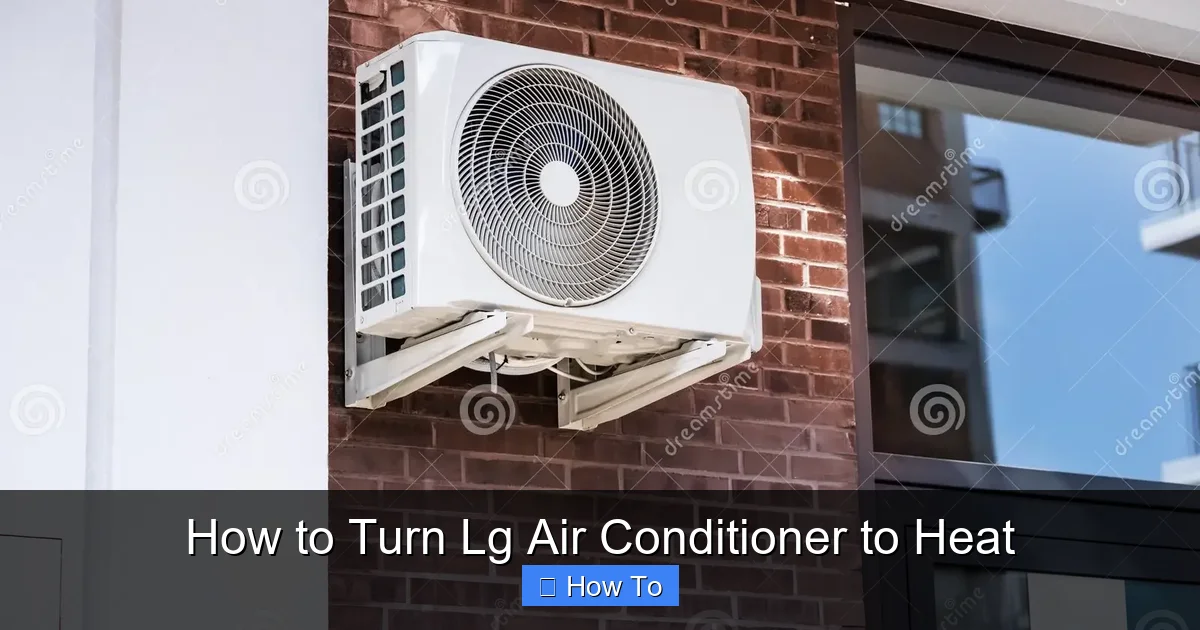
Visual guide about How to Turn Lg Air Conditioner to Heat
Image source: thumbs.dreamstime.com
Before flipping the switch, it’s important to understand how your LG air conditioner generates heat. Unlike traditional furnaces that burn fuel, most modern LG units use a **heat pump system**. This technology extracts heat from the outside air—even in cold weather—and transfers it indoors. It’s highly efficient, using up to 50% less energy than electric resistance heaters.
In 2026, LG has enhanced this technology with **inverter-driven compressors** and **smart defrost cycles**, allowing their units to operate efficiently even when outdoor temperatures dip below freezing. Some models also include **auxiliary electric heat strips** that kick in during extreme cold to provide extra warmth quickly.
Not every LG air conditioner can heat your home. Only models with **“heat pump” or “reverse cycle”** functionality support heating. If your unit has a remote with a “Heat” or “Mode” button, chances are it’s capable. Always check your model number (usually on a label inside the front panel or on the outdoor unit) and consult the user manual or LG’s official website to confirm.
Step-by-Step: Turning Your LG Air Conditioner to Heat Mode
Switching your LG AC to heat mode is straightforward—if you know where to look. Follow these steps to get cozy in no time.
Step 1: Locate and Power On the Remote Control
Most LG air conditioners are operated via an infrared remote. Make sure the remote has fresh batteries and is pointed at the indoor unit’s receiver (usually on the front panel). Press the **Power button** to turn on the unit. You should see the display light up and hear a soft beep.
If your LG model supports **Wi-Fi and smart controls** (like those in the 2026 LG ThinQ series), you can also use the **LG ThinQ app** on your smartphone to power on the unit and switch modes remotely. This is especially handy if you want to warm up your home before you arrive.
Step 2: Press the “Mode” Button
Look for the **“Mode” button** on your remote—it’s typically labeled and may have icons like snowflake (cool), sun (heat), fan, and auto. Press it repeatedly until the display shows the **heat symbol** (often a sun or flame icon).
On some 2026 models, the screen will clearly display “HEAT” or “HEATING” once selected. The unit may take a few seconds to respond as it switches from cooling to heating mode.
Step 3: Set Your Desired Temperature
Once in heat mode, use the **up and down arrow buttons** to set your preferred temperature. For optimal comfort and energy efficiency, experts recommend setting your thermostat between **68°F and 72°F (20°C–22°C)** during winter.
Avoid setting the temperature too high (e.g., 80°F) in hopes of warming the room faster. Heat pumps work gradually, and cranking the thermostat won’t speed things up—it may just waste energy.
Step 4: Adjust Fan Speed (Optional)
You can control how quickly warm air circulates using the **Fan Speed button**. Options usually include:
– **Auto**: The unit adjusts fan speed based on temperature needs.
– **Low/Medium/High**: Manual settings for quieter operation or faster heating.
For most users, **Auto fan speed** is the best choice—it balances comfort and efficiency. If you’re in a hurry, switch to **High** for quicker warmth, then drop back to **Low** once the room is comfortable.
Step 5: Enable Auxiliary Heat if Needed (Cold Climates)
In regions where winter temperatures frequently drop below 35°F (2°C), your LG unit may struggle to extract enough heat from the outside air. In these cases, the system may automatically activate **auxiliary (or emergency) heat**—electric resistance coils that provide instant warmth.
You’ll usually see an **“AUX HEAT” or “EM HEAT” indicator** on the display. This mode uses more energy, so it’s best used sparingly. If your unit frequently relies on auxiliary heat, consider scheduling a professional inspection to ensure the heat pump is functioning properly.
Step 6: Use Timer or Smart Scheduling (Optional)
Many 2026 LG models include **timer functions** or integration with **smart home systems**. Use the **Timer button** on your remote to set the AC to turn on 30 minutes before you wake up or return home. This ensures your space is warm and cozy without running the heater all day.
With the **LG ThinQ app**, you can create custom heating schedules, monitor energy usage, and even control your AC with voice commands via Alexa or Google Assistant.
Using Smart Features for Heating (2026 LG Models)
LG’s 2026 lineup emphasizes smart home integration. If your unit supports **Wi-Fi connectivity**, you can unlock powerful features that make heating more convenient and efficient.
Connect to the LG ThinQ App
Download the **LG ThinQ app** (available on iOS and Android), create an account, and follow the on-screen instructions to pair your air conditioner. Once connected, you can:
– Turn heating on/off from anywhere
– Adjust temperature and fan speed remotely
– View energy consumption reports
– Receive maintenance alerts
Set Up Geofencing
Enable **geofencing** in the app to automatically turn on heating when you’re near home. Using your phone’s location, the system detects when you’re within a set distance (e.g., 1 mile) and starts warming your space—so it’s cozy by the time you walk in.
Voice Control with Alexa or Google
Link your LG ThinQ account to Amazon Alexa or Google Assistant. Then say commands like:
– “Hey Google, set the living room AC to 70 degrees.”
– “Alexa, turn on heat mode.”
This hands-free control is perfect for cold mornings when you’re still in bed or busy in the kitchen.
Maintaining Your LG Air Conditioner for Optimal Heating
To keep your LG AC heating efficiently all winter, regular maintenance is key. Neglecting upkeep can lead to reduced performance, higher energy bills, and even system failure.
Clean or Replace Air Filters Monthly
Dirty filters restrict airflow, forcing the system to work harder. Remove the front panel, take out the filter, and either wash it (if reusable) or replace it (if disposable). Most 2026 LG models have washable filters—rinse with lukewarm water, let dry completely, and reinstall.
Inspect and Clean the Outdoor Unit
The outdoor condenser unit can collect leaves, snow, and ice, blocking airflow. Turn off power at the breaker, then gently clear debris with a brush or hose. Never use high-pressure washers—they can damage coils.
In snowy areas, keep a 2-foot clearance around the unit. If snow accumulates on top, carefully brush it off. Avoid piling snow or placing objects on the unit.
Check for Ice Buildup
During defrost cycles, your LG unit may briefly switch to cooling mode to melt ice on the outdoor coil. This is normal. However, if you see **excessive ice** or the unit runs constantly in defrost, there may be a refrigerant leak or sensor issue. Contact LG support or a certified technician.
Schedule Annual Professional Maintenance
Even with DIY care, have a licensed HVAC technician inspect your system once a year. They’ll check refrigerant levels, test electrical connections, clean coils, and ensure the heat pump is operating efficiently.
Troubleshooting Common Heating Issues
Sometimes, your LG air conditioner may not heat properly—even when set correctly. Here’s how to diagnose and fix the most common problems.
Problem: No Heat Coming Out
– **Check the mode:** Ensure the remote is set to “Heat,” not “Cool” or “Fan.”
– **Verify temperature setting:** The set temperature must be higher than the current room temperature.
– **Inspect the outdoor unit:** If it’s covered in snow or ice, clear it gently.
– **Test the remote:** Replace batteries or try controlling the unit manually via the panel buttons (if available).
Problem: Weak or Lukewarm Air
– **Dirty filters:** Replace or clean them.
– **Low refrigerant:** Requires professional recharge.
– **Faulty thermostat sensor:** May need recalibration or replacement.
Problem: Unit Turns On but Shuts Off Quickly
– **Overheating protection:** The system may shut down if filters are clogged or airflow is blocked. Clean filters and vents.
– **Thermostat issue:** The sensor might be misreading room temperature. Try resetting the unit by turning it off for 5 minutes.
Problem: Auxiliary Heat Won’t Turn Off
– **Extreme cold:** The system may need auxiliary heat below 30°F. This is normal.
– **Heat pump failure:** If auxiliary heat runs constantly above 40°F, the heat pump may be malfunctioning. Call a technician.
Problem: Error Codes on Display
Modern LG units display error codes (e.g., CH 01, CH 09) to indicate issues. Refer to your user manual or LG’s support website for code meanings. Common fixes include resetting the unit, checking wiring, or replacing sensors.
Energy-Saving Tips for LG Heat Mode
Heating can spike your energy bill, but smart habits can keep costs down.
– **Use a programmable thermostat or app scheduling** to avoid heating an empty home.
– **Seal windows and doors** to prevent heat loss.
– **Use ceiling fans on low, reverse direction** (clockwise) to push warm air down.
– **Close curtains at night** to retain heat, open them during sunny days for passive solar gain.
– **Avoid frequent temperature changes**—constant adjustments waste energy.
Conclusion
Turning your LG air conditioner to heat mode in 2026 is easier than ever, thanks to intuitive remotes, smart apps, and advanced heat pump technology. By following this guide, you can enjoy reliable, efficient warmth all winter long.
Remember to verify your model’s heating capability, use the “Mode” button to switch to heat, set a comfortable temperature, and maintain your unit regularly. Take advantage of smart features like the LG ThinQ app and voice control for added convenience.
If you encounter issues, don’t panic—most problems have simple fixes. And when in doubt, consult your user manual or contact LG customer support.
With the right knowledge and care, your LG air conditioner will keep you cozy, save energy, and perform reliably for years to come. Stay warm and smart in 2026!