This guide walks you through the simple process of changing the filter on your LG ThinQ air conditioner, helping you maintain optimal performance and cleaner air. With clear instructions and helpful tips, you’ll keep your AC running smoothly all season long.
Key Takeaways
- Regular filter changes improve air quality: A clean filter traps dust, pollen, and allergens, ensuring healthier indoor air.
- Frequency matters: Replace or clean your LG ThinQ AC filter every 1–2 months during peak usage seasons.
- Locate the filter correctly: Most LG ThinQ models have front-access filters behind the front panel or grille.
- Use genuine LG filters when possible: Original parts ensure proper fit and maximum efficiency.
- Reset the filter indicator light: After replacement, reset the reminder to avoid false alerts.
- Check for multiple filters: Some models have two filters—don’t forget to service both.
- Maintenance boosts efficiency: A clean filter reduces energy consumption and extends your unit’s lifespan.
How to Change Filter on LG ThinQ Air Conditioner
Keeping your LG ThinQ air conditioner running at peak performance isn’t just about setting the right temperature—it’s also about regular maintenance. One of the most important yet often overlooked tasks is changing or cleaning the air filter. A dirty filter restricts airflow, reduces cooling efficiency, increases energy bills, and can even lead to costly repairs over time. Worse, it can circulate dust, mold, and allergens throughout your home.
The good news? Changing the filter on an LG ThinQ air conditioner is quick, easy, and doesn’t require any special tools. Whether you’re a first-time user or just need a refresher, this comprehensive guide will walk you through every step—from locating the filter to resetting the system reminder. By the end, you’ll know exactly how to keep your LG ThinQ AC clean, efficient, and ready to deliver crisp, cool air all summer long.
In this guide, you’ll learn:
– Why filter maintenance matters
– How often to change your filter
– Step-by-step instructions for different LG ThinQ models
– Tips for cleaning reusable filters
– How to reset the filter alert
– Troubleshooting common issues
Let’s get started!
Why Changing Your LG ThinQ Air Conditioner Filter Matters
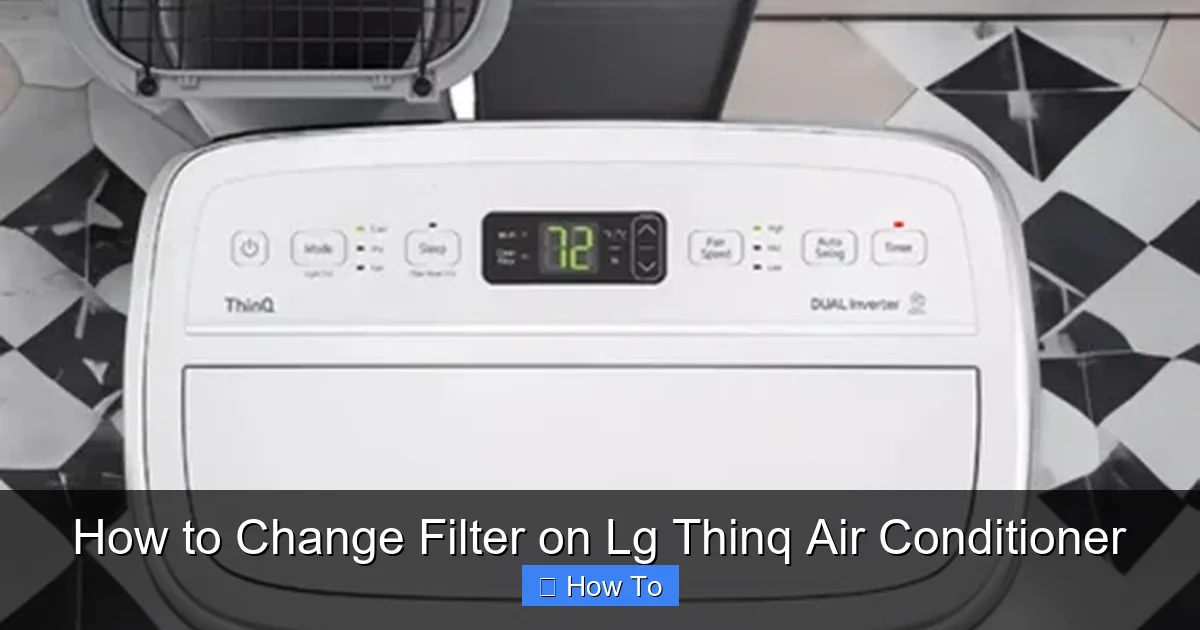
Visual guide about How to Change Filter on Lg Thinq Air Conditioner
Image source: machinologist.com
Before diving into the how-to, it’s worth understanding why this simple task has such a big impact. Your air conditioner’s filter acts as the first line of defense against airborne contaminants. As air circulates through the unit, the filter captures dust, pet dander, pollen, mold spores, and other particles. Over time, these build up and clog the filter.
A clogged filter forces your AC to work harder to pull in air. This not only reduces cooling power but also increases energy consumption—sometimes by as much as 15%. In extreme cases, restricted airflow can cause the evaporator coil to freeze, leading to system shutdowns or damage.
Moreover, a dirty filter compromises indoor air quality. Instead of filtering out pollutants, a saturated filter may start releasing trapped particles back into your living space. For people with allergies, asthma, or respiratory conditions, this can trigger symptoms or worsen health issues.
LG ThinQ air conditioners are designed with smart features like Wi-Fi connectivity and automatic filter alerts. These reminders make it easier than ever to stay on top of maintenance. But even with technology on your side, knowing how to properly change the filter ensures you’re getting the full benefit of your investment.
How Often Should You Change the Filter?
The frequency of filter changes depends on several factors, including usage, environment, and filter type. Here’s a general guideline:
– **Standard homes (light use):** Every 2–3 months
– **High-use households (daily cooling, pets, smokers):** Every 1–2 months
– **Allergy or asthma sufferers:** Every 4–6 weeks
– **During peak seasons (summer/winter):** Check monthly
LG recommends inspecting your filter at least once a month. If you see visible dirt, discoloration, or reduced airflow, it’s time for a change—even if it hasn’t been a full month.
Some LG ThinQ models come with reusable washable filters, while others use disposable ones. Reusable filters can be cleaned and reused, but they still need regular attention. Disposable filters should never be washed—they’re designed for one-time use and must be replaced.
Pro tip: Mark your calendar or set a phone reminder after each filter change. Consistency is key to maintaining efficiency and air quality.
Tools and Materials You’ll Need
One of the best things about changing an LG ThinQ air conditioner filter is that it requires minimal supplies. Here’s what you’ll typically need:
– **Replacement filter** (if using disposable type) – Check your model number to ensure compatibility
– **Soft cloth or microfiber towel** – For wiping down surfaces
– **Vacuum cleaner with brush attachment** (optional) – To remove loose dust before removing the filter
– **Mild soap and water** (for reusable filters only)
– **Gloves** (optional) – Especially if you have sensitive skin or allergies
Always turn off your air conditioner before starting. This prevents the unit from pulling in dust during the process and ensures your safety.
Step-by-Step Guide: Changing the Filter on LG ThinQ Air Conditioner
Now that you understand the importance and frequency, let’s walk through the actual process. While specific steps may vary slightly depending on your LG ThinQ model (window unit, portable, or ductless mini-split), the core principles remain the same.
Step 1: Turn Off the Air Conditioner
Safety first! Before touching any part of your AC unit, make sure it’s completely powered off. Use the remote control or the power button on the unit itself to shut it down. For extra precaution, unplug the unit from the wall outlet—especially if you’re working on a window or portable model.
This step prevents accidental startup and protects internal components from dust exposure.
Step 2: Locate the Air Filter
Most LG ThinQ air conditioners have the filter located behind the front panel or grille. Here’s how to find it based on common models:
– **Window Units:** Look for a front-facing grille or panel. It’s usually held in place by clips or screws.
– **Portable ACs:** The filter is often behind a side or front vent cover.
– **Ductless Mini-Splits:** The filter sits behind the front panel, which swings open like a door.
Gently press the release tabs or unscrew the panel (if needed) to access the filter compartment. Don’t force anything—LG designs these panels to open smoothly with light pressure.
Step 3: Remove the Old Filter
Once the panel is open, you’ll see the filter(s) inside. Some models have a single filter, while others (like certain LG Dual Inverter models) have two—one on each side.
Carefully slide the filter out of its slot. Note the direction it was installed (many filters have arrows indicating airflow direction). This helps when reinstalling the new one.
If the filter is reusable, inspect it for heavy buildup. If it’s disposable and visibly dirty, it’s time to replace it.
Step 4: Clean or Replace the Filter
Now comes the decision: clean or replace?
**For Reusable Filters:**
1. Shake off loose dust outdoors.
2. Rinse under lukewarm water. Use a mild soap if needed, but avoid harsh chemicals.
3. Gently scrub with a soft brush if necessary.
4. Let it air dry completely—never reinstall a wet filter, as moisture can promote mold growth.
**For Disposable Filters:**
1. Discard the old filter responsibly.
2. Take the new filter out of its packaging.
3. Ensure it matches the size and model number of your unit (check the label inside the filter compartment if unsure).
4. Insert the new filter with the airflow arrow pointing toward the unit (usually inward).
Pro tip: Take a photo of the old filter before removing it. This helps you remember the orientation and type when buying a replacement.
Step 5: Reinstall the Filter and Close the Panel
Slide the clean or new filter back into place, making sure it sits flat and secure. Double-check that it’s not bent or misaligned—this can cause air leaks or reduce efficiency.
Close the front panel or grille firmly. Listen for a click or snap to confirm it’s locked in place. If your model uses screws, tighten them gently—don’t overtighten, as this can crack the plastic.
Step 6: Reset the Filter Indicator Light
Many LG ThinQ models feature a “Filter” or “Clean Filter” indicator light that turns on after a set number of operating hours. After replacing the filter, you’ll need to reset this reminder.
Here’s how:
1. Turn the unit back on.
2. Press and hold the “Filter” or “Reset” button on the remote or control panel for 3–5 seconds.
3. The indicator light should turn off, confirming the reset.
If your model doesn’t have a physical button, check the user manual for app-based reset instructions. Some LG ThinQ units can be managed via the LG ThinQ mobile app, where you can reset alerts directly from your smartphone.
Model-Specific Instructions
While the general process is consistent, a few LG ThinQ models have unique features. Here’s a quick reference:
LG Window Air Conditioners (e.g., LW8016ER, LW1216ER)
– Filter located behind front grille.
– Grille lifts up and tilts forward.
– Single reusable filter—clean monthly.
LG Portable Air Conditioners (e.g., LP1419IVSM, LP0821WSR)
– Filter behind front or side vent.
– May require removing a plastic cover.
– Some models have dual filters—check both sides.
LG Ductless Mini-Split (e.g., LS120HSV5, LMU36CHV)
– Front panel swings open like a door.
– Two washable filters—clean both.
– Reset via remote or wall controller.
Always consult your user manual for model-specific details. You can download a copy from LG’s official support website if you’ve misplaced the physical version.
Tips for Maintaining Your LG ThinQ Air Conditioner
Changing the filter is just one part of AC care. Here are additional tips to keep your unit in top shape:
– **Vacuum the exterior vents** monthly to prevent dust buildup.
– **Keep the area around the unit clear**—avoid blocking airflow with furniture or curtains.
– **Schedule professional maintenance** annually, especially for ductless systems.
– **Use the LG ThinQ app** to monitor performance, receive alerts, and control settings remotely.
– **Check the drain line** (for portable units) to prevent clogs and water leaks.
A little effort goes a long way in extending the life of your air conditioner and saving money on energy bills.
Troubleshooting Common Issues
Even with proper maintenance, you might encounter occasional hiccups. Here’s how to handle them:
Filter Won’t Slide Out Easily
Don’t force it. Check for hidden clips or screws holding the panel in place. Some models have a secondary latch near the bottom.
Indicator Light Won’t Turn Off After Reset
Ensure the filter is properly seated. If the light persists, try unplugging the unit for 10 minutes, then restart and reset again.
Reduced Cooling After Filter Change
Verify the filter is installed in the correct direction. Also, check that the front panel is fully closed—air leaks can reduce efficiency.
Water Leaking from the Unit
This could indicate a clogged drain line (portable units) or frozen coils due to a dirty filter. Clean the filter and inspect the drainage system.
If problems continue, contact LG customer support or a certified technician.
Conclusion
Changing the filter on your LG ThinQ air conditioner is a simple yet powerful way to protect your investment, improve air quality, and keep your home comfortable. With just a few minutes of effort every month or two, you can prevent common issues, reduce energy costs, and enjoy cleaner, cooler air year-round.
Remember: consistency is key. Use the built-in filter alerts, set reminders, and always use the right filter for your model. Whether you’re dealing with a window unit, portable AC, or ductless system, the steps are straightforward and user-friendly.
By following this guide, you’re not just maintaining your air conditioner—you’re taking control of your indoor environment. So grab a new filter, follow these steps, and breathe easy knowing your LG ThinQ is running at its best.