
Your Carrier air conditioner fan motor may stop working due to power issues, debris buildup, or internal faults. Common causes include a tripped circuit breaker, dirty fan blades, or worn-out motor bearings. While some problems can be fixed with simple troubleshooting, others require professional repair. This guide walks you through practical steps to diagnose and resolve fan motor issues safely and effectively.
Key Takeaways
- Power Supply Issues: Check the circuit breaker, thermostat settings, and wiring connections before assuming a motor failure.
- Debris and Obstructions: Dirty fan blades or clogged vents restrict airflow and strain the motor, often mimicking a malfunction.
- Motor Overheating: Continuous operation without rest can cause the motor to overheat and shut down as a safety measure.
- Bearing Wear: Worn motor bearings increase friction, leading to noise, vibration, and eventual motor failure.
- Capacitor Problems: A failing start/run capacitor can prevent the fan from spinning, even if the motor itself is intact.
- Age and Lifespan: Most Carrier fan motors last 10–15 years; older units are more prone to failure and may need replacement.
- Safety First: Always turn off power at the breaker before inspecting or cleaning any part of the AC unit.
Quick Answers to Common Questions
Why is my Carrier AC fan not spinning?
Answer: The fan may not spin due to a tripped breaker, dirty air filter, failed capacitor, or worn motor bearings. Start by checking power and cleaning the filter, then test the capacitor. If those don’t work, inspect for obstructions or call a technician.
Can I replace the fan motor myself?
Answer: Only if you’re comfortable working with electricity and have basic HVAC knowledge. Replacing a motor requires disconnecting wiring and handling electrical components. If unsure, hire a licensed HVAC technician to avoid injury or damage.
How much does it cost to replace a Carrier AC fan motor?
Answer: Expect to pay $300–$600 total, including parts and labor. The motor itself costs $150–$400 depending on the model, while labor adds another $100–$200. Warranty coverage may reduce out-of-pocket costs.
Is a noisy fan motor a sign of failure?
Answer: Yes, especially if it’s grinding, squealing, or vibrating excessively. These sounds often indicate worn bearings or misaligned fan blades. Continuing to run the unit can damage other components, so address it promptly.
Will a dirty air filter stop the fan?
Answer: Not directly, but a severely clogged filter restricts airflow, causing the motor to overheat and potentially shut down as a safety feature. Replace or clean the filter regularly to prevent this.
📑 Table of Contents
- Why Is My Carrier Air Conditioner Fan Motor Not Working?
- Understanding Your Carrier AC Fan Motor System
- Troubleshooting Steps for a Non-Working Carrier AC Fan Motor
- DIY Fixes vs. Professional Repair
- Preventative Maintenance to Avoid Future Failures
- What to Expect During a Motor Replacement
- Energy Efficiency Tips for Your Carrier AC
- Final Thoughts
Why Is My Carrier Air Conditioner Fan Motor Not Working?
If your Carrier air conditioner isn’t blowing cold air—or worse, no air at all—the first thing you should suspect is the fan motor. The fan motor is the heart of your AC system’s airflow mechanism. It pulls warm air from your home, passes it through the evaporator coil, and pushes cool air back into the room. When the fan motor stops working, your entire cooling system grinds to a halt. But don’t panic—most fan motor issues have clear causes and solutions.
In this comprehensive guide, we’ll walk you through everything you need to know about diagnosing and fixing a Carrier air conditioner fan motor that’s not working. Whether you’re a DIY enthusiast or just trying to avoid an expensive service call, these practical tips will help you get your AC back up and running quickly and safely.
Understanding Your Carrier AC Fan Motor System
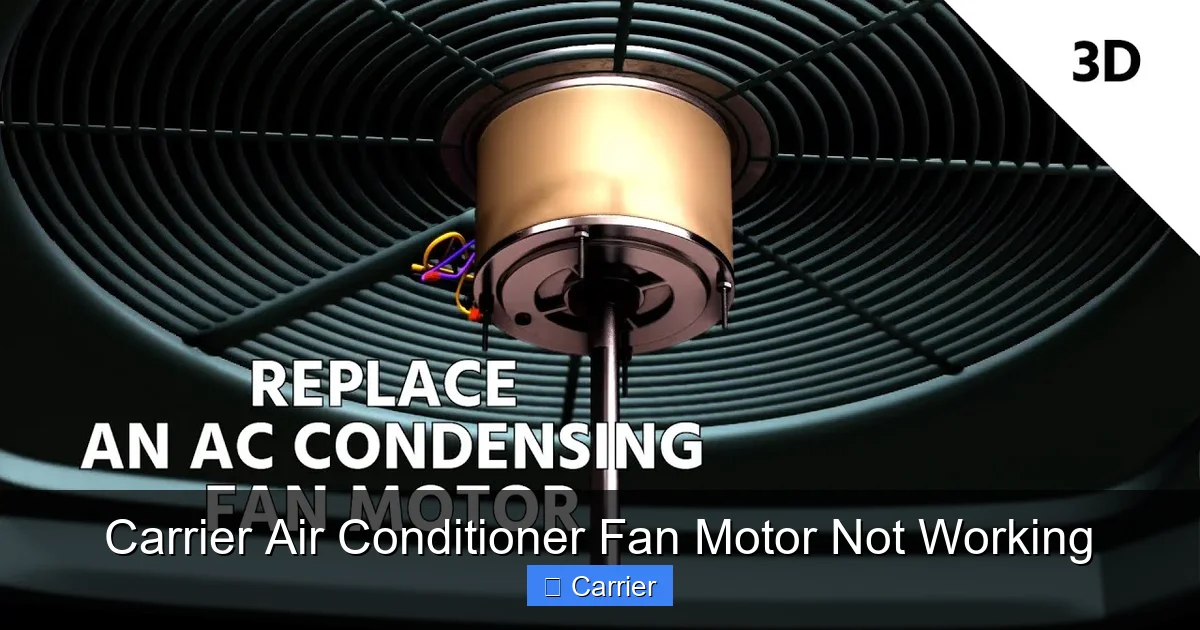
The fan motor in your Carrier air conditioner is typically located in the indoor blower assembly or the outdoor condenser unit, depending on the model. In central air systems, the indoor blower motor draws air across the evaporator coils and forces it through your ductwork. In window or portable units, the motor drives the fan directly over the cooling coils.
Visual guide about Carrier Air Conditioner Fan Motor Not Working
Image source: i.ytimg.com
How the Fan Motor Works
The fan motor receives electrical signals from your thermostat and control board. When you set your AC to “cool,” the thermostat tells the compressor and fan motor to activate. The motor spins the fan blades, creating airflow. At the same time, refrigerant circulates through the coils, absorbing heat from the air. Without the fan moving air over the coils, the refrigerant can’t release heat efficiently, and your home stays warm.
Modern Carrier models often use variable-speed motors (ECMs) instead of traditional single-speed motors. These ECMs offer better energy efficiency and quieter operation but can be more complex to diagnose when they fail.
Common Symptoms of a Faulty Fan Motor
Not all fan motor problems look the same. Here are the most common signs that your Carrier AC fan motor might be failing:
- No air flow: The unit runs, but you feel little to no air coming out of the vents.
- Unusual noises: Grinding, squealing, or rattling sounds from the indoor or outdoor unit.
- Tripping breakers: The circuit breaker trips repeatedly when the AC turns on.
- Overheating: The motor feels hot to the touch or emits a burning smell.
- Intermittent operation: The fan starts and stops randomly during runtime.
Keep in mind that these symptoms can also point to other issues like a bad capacitor, faulty wiring, or a clogged air filter. That’s why proper diagnosis is key.
Troubleshooting Steps for a Non-Working Carrier AC Fan Motor
Before replacing any parts, try these troubleshooting steps. Many fan motor issues are caused by something simple like a dirty air filter or a tripped breaker.
Visual guide about Carrier Air Conditioner Fan Motor Not Working
Image source: image.ajunews.com
Step 1: Check the Power Supply
The first thing to do is verify that your AC has power. Go to your circuit breaker panel and make sure the breaker for the AC unit hasn’t tripped. If it has, reset it and see if the fan starts working. If the breaker trips again immediately, there’s likely a short circuit or overload—call an HVAC technician right away.
Also, check your thermostat. Make sure it’s set to “cool” and the temperature is below the current room temperature. Some digital thermostats have a “fan only” mode—ensure it’s not stuck in that setting.
Step 2: Inspect the Air Filter and Vents
A clogged air filter restricts airflow and forces the motor to work harder. Replace your air filter if it’s dirty—usually every 1–3 months depending on usage. Also, check that supply and return vents aren’t blocked by furniture, rugs, or curtains. Even a partially closed vent can reduce airflow and trigger motor stress.
Step 3: Listen for Strange Noises
Turn on your AC and listen closely to the indoor blower unit. If you hear a high-pitched whine or grinding sound, the motor bearings may be worn out. Bearings support the motor shaft and allow smooth rotation. Over time, they wear down and create friction, leading to noise and eventual failure.
If the noise is coming from the outdoor unit, the issue could be with the condenser fan motor, which cools the refrigerant. Either way, persistent noise usually means mechanical wear and may require motor replacement.
Step 4: Test the Capacitor
The capacitor stores electrical energy and helps the motor start and run smoothly. A weak or failed capacitor is one of the most common causes of a Carrier AC fan motor not working. You can test the capacitor using a multimeter or visually inspect it for bulging, leaking, or burn marks.
To test: Turn off power, remove the capacitor cover, and check the voltage rating against the label. If the capacitance is significantly lower than rated, replace the capacitor. Never touch the capacitor terminals with bare hands—they can hold a dangerous charge.
Step 5: Examine the Wiring and Connections
Loose or corroded wires can interrupt power delivery to the motor. Open the access panel on your indoor blower unit (usually near the furnace or air handler) and check for loose screws, frayed wires, or burnt connectors. Tighten any loose connections and clean corrosion with a wire brush if needed.
Also, inspect the control board. A blown fuse or damaged relay can prevent the motor from receiving power. Refer to your user manual to locate the fuse and test it with a multimeter.
DIY Fixes vs. Professional Repair
Some Carrier AC fan motor issues can be fixed at home, while others require professional attention. Let’s break it down.
When You Can Fix It Yourself
Simple fixes like replacing a clogged air filter, resetting a tripped breaker, or swapping a bad capacitor are within reach for most homeowners. These tasks take less than 30 minutes and cost almost nothing. Just remember to turn off the power before starting any work.
For example, replacing a capacitor costs between $10 and $25 and can restore fan operation in many cases. Similarly, cleaning the blower wheel and surrounding area can remove debris that’s jamming the fan blades.
When to Call a Professional
If your Carrier AC fan motor still isn’t working after basic troubleshooting, or if you notice:
- Burning smells or visible smoke from the unit
- Physical damage to the motor housing
- Repeated breaker trips
- Warranty concerns (DIY repairs may void coverage)
Then it’s time to call an HVAC technician. They have the tools, experience, and parts to safely diagnose and replace the motor. For Carrier systems, certified technicians can also check refrigerant levels, inspect ductwork, and ensure optimal performance.
Professional repairs typically cost between $300 and $600 for motor replacement, depending on the model and labor rates. While this seems expensive, it’s often cheaper than waiting for further system damage.
Preventative Maintenance to Avoid Future Failures
The best way to avoid a Carrier air conditioner fan motor not working is through regular maintenance. Here are some easy habits to keep your AC running smoothly:
1. Change Air Filters Monthly
A clean filter reduces strain on the motor and improves indoor air quality. Set a reminder on your phone or calendar to check filters every month during cooling season.
2. Schedule Annual Tune-Ups
Have a licensed technician inspect your system once a year. They’ll clean components, lubricate moving parts, check refrigerant levels, and test motor performance. This can extend the life of your fan motor by several years.
3. Keep the Area Around the Unit Clear
Outdoor units should have at least 2 feet of clearance around them for proper airflow. Trim bushes, remove weeds, and clear away leaves or debris that could block ventilation.
4. Monitor Thermostat Settings
Aggressive temperature changes or constant cycling can stress the motor. Use programmable thermostats to maintain steady temperatures and reduce wear.
5. Install Surge Protection
Power surges can damage sensitive motor components. Consider installing whole-house surge protection to safeguard your AC system.
What to Expect During a Motor Replacement
If your Carrier AC fan motor needs replacement, here’s what typically happens during a professional service call:
- Diagnosis: The technician confirms the motor is faulty using diagnostic tools.
- Quote: You receive a detailed estimate including parts and labor.
- Removal: The old motor is carefully disconnected and removed.
- Installation: The new motor is installed, wired correctly, and tested.
- System Check: The technician ensures proper airflow, refrigerant levels, and thermostat function.
Most replacements take 1–2 hours. Afterward, your AC should blow cold air consistently and quietly. Ask the technician for maintenance tips and warranty details on the new part.
Energy Efficiency Tips for Your Carrier AC
A working fan motor isn’t just about comfort—it affects your energy bill. Here’s how to maximize efficiency:
- Set thermostat to 78°F or higher: Every degree above 78°F saves about 3% on cooling costs.
- Use ceiling fans: They help circulate air, allowing you to raise the thermostat setting.
- Seal duct leaks:: Leaky ducts waste energy and reduce airflow.
- Upgrade to a smart thermostat:: Models like the Nest or Ecobee learn your schedule and adjust temperatures automatically.
Carrier offers Energy Star-rated models with advanced fan motor technology that uses 20–30% less electricity than older units.
Final Thoughts
A Carrier air conditioner fan motor not working is frustrating, but it’s rarely an emergency. By following the troubleshooting steps in this guide, you can identify the root cause and decide whether to fix it yourself or call a pro. Remember: safety comes first. Always turn off power before inspecting electrical components.
With proper care, your Carrier AC fan motor can last 10–15 years. Regular maintenance, timely repairs, and smart usage habits will keep your home cool and your energy bills low. And if you ever find yourself staring at a silent, warm house on a hot day, you’ll know exactly where to start.
Don’t wait until it’s too late. Take action today—check your filter, test the capacitor, and schedule that tune-up. Your future self (and your wallet) will thank you.
Frequently Asked Questions
How long should a Carrier AC fan motor last?
Answer: Most Carrier fan motors are designed to last 10 to 15 years with proper maintenance. Factors like humidity, usage frequency, and environmental conditions can affect lifespan. Regular tune-ups help extend motor life.
Can a bad capacitor cause the fan to stop working?
Answer: Yes, a failing start/run capacitor provides the initial boost needed to spin the fan. Without sufficient capacitance, the motor may not start or will stall shortly after activation.
Should I replace the entire blower assembly or just the motor?
Answer: Usually, only the motor needs replacement. However, if the blower wheel is damaged or the housing is cracked, replacing the entire assembly may be more cost-effective in the long run.
Does a Carrier warranty cover fan motor replacement?
Answer: It depends on the warranty type and age of the unit. Manufacturer warranties may cover parts for 5–10 years. Always check your warranty terms or contact Carrier customer service for confirmation.
Can extreme weather affect fan motor performance?
Answer: Yes. High humidity or dusty environments can cause condensation or debris buildup, leading to motor strain. Outdoor units exposed to direct sunlight or heavy rain may also experience thermal stress.
What’s the difference between an indoor and outdoor fan motor?
Answer: The indoor motor (blower motor) moves air through your home. The outdoor motor (condenser fan) cools the refrigerant by blowing air over the condenser coils. Both are essential but serve different roles in the cooling cycle.

