Why Does My Car AC Fail? Troubleshoot & Cool Down!
Why Does the Air Conditioning in My Car Not Work?
When summer comes, we all want a cool car. But what if your car's air conditioning stops working? This can be very frustrating. Understanding why this happens can help you fix it. Let’s look at some common reasons why your car's air conditioning might not work.
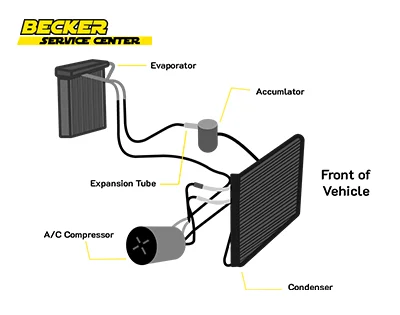
 Diagram of a typical automotive AC system
Common Problems with Car Air Conditioning
There are many reasons why your air conditioning might fail. Here are some of the most common problems:
1. Low Refrigerant Level
Your air conditioning system uses refrigerant. This is a special fluid that cools the air. If the level is low, your AC won't cool. A leak is usually the cause of low refrigerant. You need to refill it to fix the problem.
In practice, a slow leak often shows up as a gradual loss of cooling performance rather than an abrupt failure. Checking the system pressure with a manifold gauge set can confirm whether the charge is low before you add refrigerant. For a step‑by‑step guide on diagnosing warm‑air issues, see the warm‑air troubleshooting guide.
2. Faulty Compressor
The compressor is the heart of your AC system. It pumps refrigerant through the system. If it is broken, the air conditioning will not work. You may hear strange noises if the compressor is failing.
A failing compressor frequently produces a metallic grinding or a high‑pitched whine that changes with engine speed. Because the compressor is driven by the serpentine belt, a worn belt or tensioner can mimic compressor noise. The condenser diagnostic steps outline how to isolate compressor‑related sounds from belt‑related ones.
3. Broken Condenser
The condenser cools the refrigerant. It looks like a small radiator. If it is dirty or damaged, air cannot flow properly. This can stop the AC from working correctly.
Road debris, bugs, and bent fins are the most common culprits. A visual inspection combined with a pressure test can reveal restricted airflow across the condenser. The condenser fault checklist provides a quick reference for technicians.
4. Clogged Or Dirty Filter
Your car has a cabin air filter. This filter keeps dust and dirt out of the AC system. If it is clogged, air cannot flow. This makes the air conditioning less effective.
Replacing the cabin filter is a low‑cost, high‑impact service that many owners overlook. A dirty filter not only reduces airflow but can also cause the evaporator to freeze, leading to a complete loss of cooling. The seasonal upkeep checklist includes filter replacement intervals for most makes.
5. Electrical Issues
Modern cars have many electrical parts. Sometimes, wires can break or connections can fail. This can stop the AC from getting power. A blown fuse can also cause problems.
Corroded connectors at the compressor clutch or pressure switches are frequent failure points. Using a multimeter to verify voltage at the clutch coil can pinpoint whether the issue is upstream (fuse, relay) or at the component itself.
6. Broken Blower Motor
The blower motor pushes air through the vents. If it stops working, you won’t feel cool air. You may hear strange sounds if the motor is broken.
A failing blower motor often produces a rattling or squealing noise that varies with fan speed. In many vehicles the motor resistor pack fails first, causing only certain speed settings to work. Testing each speed setting helps isolate the resistor from the motor.
7. Faulty Thermostat
The thermostat controls the temperature of the air. If it is broken, the AC might not cool properly. You may feel hot air instead of cool air.
In automotive systems the “thermostat” is usually the temperature‑control blend door actuator. A stuck actuator can lock the system in heat mode even when the AC is on. Scan tools that read HVAC module data can confirm actuator position errors.
Refrigerant Types in 2026
Most 2026‑model‑year vehicles use the low‑global‑warming‑potential refrigerant R‑1234yf, while older models still run on R‑134a. The two refrigerants are not interchangeable; using the wrong type can damage the compressor and void warranties. The EPA’s phase‑out schedule for ozone‑depleting substances provides the regulatory background for this transition (EPA ozone‑layer protection). Always verify the refrigerant label under the hood before servicing.
How to Diagnose the Problem
Now that you know the common problems, let’s see how to find out what is wrong with your AC.
Check For Airflow
Turn on the AC and feel the air. Is it cold? If not, check the airflow. If there is little or no airflow, you may have a clogged filter or a broken blower motor.
A simple hand‑held anemometer or even a piece of tissue held near the vent can quantify airflow loss. Compare the reading to the manufacturer’s spec (often listed in the service manual) to decide whether the restriction is upstream (filter, evaporator) or downstream (blower, ducts).
Listen For Noises
Turn on the AC and listen. Do you hear strange noises? If you hear clunking or grinding, the compressor might be broken.
Record the noise with a smartphone and compare it to known‑good samples online. Frequency analysis can differentiate a bearing‑related whine (compressor) from a belt‑slip chirp (tensioner). This auditory fingerprint helps avoid unnecessary compressor replacement.
Check The Refrigerant Level
You can check the refrigerant level. Some auto parts stores sell refrigerant kits. Follow the instructions carefully to see if you need more refrigerant.
For a more accurate assessment, connect a manifold gauge set to the high‑ and low‑side service ports. The pressure readings, combined with ambient temperature, reveal whether the system is under‑charged, over‑charged, or has a restriction. Never rely solely on the “cold‑air feel” test.
Look For Leaks
Check for any signs of leaks. Look under your car for puddles. If you see oil or a green fluid, you may have a refrigerant leak.
UV dye added to the system during a recharge makes leaks glow under a black light, pinpointing even tiny seepage at O‑rings, hose fittings, or the evaporator core. This method is standard in professional shops and reduces guesswork.
Using a Manifold Gauge Set
A manifold gauge set is the definitive tool for AC diagnostics. Connect the blue (low‑side) and red (high‑side) hoses to the service ports, then observe the gauge needles while the engine runs at 1,500 rpm with the AC on max. Low‑side pressure below spec suggests under‑charge or a restriction; high‑side pressure above spec points to a blocked condenser or over‑charge. The NHTSA vehicle‑safety resources outline safe handling procedures for refrigerant recovery equipment (NHTSA vehicle safety).
When to Call a Mechanic
If you try to diagnose the problem and cannot find it, call a mechanic. Some problems are too complicated to fix on your own. Here are some signs that you should get help:
If the AC still does not work after refilling refrigerant.
If you hear strange sounds from the AC system.
If you see leaks under your car.
If the air is still hot after checking the filter.
Need a certified shop fast? Use the more AC articles index to locate a trusted local technician.
 Visual guide to frequent AC failure signs
How to Prevent Future Problems
Preventing problems is always better than fixing them. Here are some tips to keep your air conditioning running well:
1. Regular Maintenance
Take your car for regular check-ups. A mechanic can check the AC system for you. This can help find small problems before they get big.
Schedule an AC performance test at least once a year, preferably before the hot season. A pressure‑test and temperature‑drop check can catch early refrigerant loss or compressor wear.
2. Change The Cabin Air Filter
Change your cabin air filter every year. A clean filter lets air flow freely. This helps the AC work better.
If you drive in dusty or pollen‑heavy environments, consider a high‑efficiency particulate‑air (HEPA) cabin filter for superior filtration and airflow.
3. Use The Ac Regularly
Use your AC even in winter. This keeps the system lubricated. It helps prevent parts from drying out or breaking.
Running the AC for 10‑15 minutes each month circulates refrigerant oil through the compressor seals, reducing the risk of seal shrinkage and leakage.
4. Keep The Condenser Clean
Make sure the condenser is clean. Remove any dirt or leaves. A clean condenser works more efficiently.
A gentle rinse with low‑pressure water (never a pressure washer) clears debris without bending fins. Inspect the condenser after off‑road trips or heavy pollen seasons.
Quick maintenance checklist
| Task | Frequency | Tools Needed |
|---|---|---|
| Cabin filter replacement | 12 months / 15 k mi | Screwdriver, new filter |
| Condenser visual clean | Every 6 months | Soft brush, low‑pressure water |
| Refrigerant pressure check | Annually (pre‑summer) | Manifold gauge set |
| Compressor clutch inspection | At each service | Multimeter, flashlight |
| Blower motor speed test | Annually | Scan tool or manual speed selector |
https://www.youtube.com/watch?v=nOAPJCPNp6o
Frequently Asked Questions
Why Isn't My Car's Air Conditioning Blowing Cold Air?
The car's air conditioning might need more refrigerant. It could also have a leak or a faulty compressor.
What Are Common Reasons For Ac Failure In Cars?
Common reasons include low refrigerant, a broken compressor, or a clogged condenser. Electrical issues can also cause problems.
How Do I Know If My Car Ac Needs Repair?
Signs include weak airflow, strange noises, or warm air instead of cold. Look for leaks under the car too.
Can I Fix My Car's Ac Myself?
Some minor issues, like replacing a fuse, can be fixed at home. For major problems, it’s best to seek professional help.
What Refrigerant Does My 2026 Vehicle Use?
Most 2026 models use R‑1234yf, a low‑GWP refrigerant. Check the label under the hood or the owner’s manual to confirm before any service.
How Often Should I Recharge the AC System?
A properly sealed system should not need routine recharging. If you’re adding refrigerant regularly, a leak search is required.
Is It Safe to Drive With a Faulty AC Compressor?
Driving with a seized compressor can snap the serpentine belt, disabling power steering, alternator, and water pump. Have it inspected promptly.
Comparison Table: Symptoms vs Likely Causes
| Symptom | Most Likely Cause(s) | Quick Test |
|---|---|---|
| No cold air, normal airflow | Low refrigerant, compressor clutch inoperative | Manifold gauge pressure check |
| Weak airflow, cold air at vent | Clogged cabin filter, failing blower motor | Measure vent velocity, test blower speeds |
| Clicking noise when AC engages | Faulty compressor clutch relay or coil | Listen for clutch click, check relay |
| Sweet, chemical smell inside cabin | Refrigerant leak at evaporator core | UV dye + black‑light inspection |
| AC works intermittently | Electrical connector corrosion, pressure switch fault | Wiggle connectors while monitoring operation |
Conclusion
Your car's air conditioning is important for comfort. If it stops working, it can be frustrating. Understanding common problems helps you find solutions. Regular maintenance can prevent many issues. If you are not sure, call a mechanic. They can help you fix the problem quickly. Stay cool and enjoy your drives!
Ready to keep your cabin comfortable all year? Book a professional AC inspection today and drive with confidence.