Carrier air conditioners with built-in dehumidification help maintain a comfortable indoor environment by removing excess moisture from the air. These units are especially beneficial in humid regions where high moisture levels can lead to discomfort, mold growth, and poor air quality. Whether you’re upgrading your home HVAC system or researching energy-efficient cooling options, knowing which Carrier models offer dehumidification is key to smarter climate control.
When it comes to staying cool during hot, muggy days, most people think of lowering the thermostat. But what many don’t realize is that temperature isn’t the only factor affecting indoor comfort—humidity plays just as big a role. High humidity can leave you feeling sticky, sluggish, and uncomfortable, even if the air feels “cool.” That’s where dehumidification comes in. And when it comes to reliable, high-performance air conditioning systems, Carrier has long been a trusted name in the industry. But not all Carrier air conditioners are created equal—some come with advanced dehumidification features that go beyond simple cooling.
So, what Carrier air conditioner units has dehumidification? The short answer is: almost all of them. Carrier designs its residential and light commercial air conditioners with integrated dehumidification as a core function. Whether you’re installing a new central air system, upgrading an older model, or considering a ductless mini-split, understanding how dehumidification works—and which Carrier units support it—can help you make a smarter choice for your home.
In this article, we’ll break down exactly which Carrier AC models include dehumidification, explain how it benefits your home and health, and give you practical tips for maximizing its performance. Let’s dive in.
Key Takeaways
- Dehumidification improves comfort: By reducing indoor humidity, Carrier AC units create a more pleasant living space, especially during summer months.
- Many Carrier models include it: Most Carrier central air conditioners and heat pumps come with built-in dehumidification features as standard.
- It saves energy: Efficient dehumidification reduces the workload on your AC, lowering electricity bills over time.
- Protects your home: Lower humidity levels prevent mold, mildew, and damage to furniture, flooring, and electronics.
- Smart controls available: Some Carrier systems integrate smart thermostats that optimize both temperature and humidity automatically.
- Ideal for humid climates: If you live in a region with high humidity, dehumidifying AC units make a noticeable difference in air quality.
- Professional installation matters: Proper setup ensures maximum dehumidification performance and system longevity.
📑 Table of Contents
- Why Dehumidification Matters in Air Conditioning
- Which Carrier Air Conditioner Models Include Dehumidification?
- How Does Carrier’s Dehumidification Technology Work?
- Benefits of Using a Carrier AC With Built-In Dehumidification
- Practical Tips for Maximizing Dehumidification Performance
- Comparing Carrier to Other Brands
- Final Thoughts: Is a Carrier AC With Dehumidification Right for You?
Why Dehumidification Matters in Air Conditioning
You might be wondering: why does my air conditioner need to remove humidity? After all, isn’t the main job of an AC unit just to cool the air? While that’s true, cooling and dehumidification are deeply connected processes. When warm, moist air passes over the cold evaporator coils inside your AC, the moisture condenses into water droplets—this is dehumidification. So even without extra features, most central AC systems naturally remove some humidity.
However, in humid climates, standard dehumidification may not be enough. That’s because typical AC units are optimized primarily for cooling, not moisture removal. They may lower the temperature but leave behind high humidity levels, making the room feel clammy and uncomfortable. This is where Carrier’s enhanced dehumidification systems shine.
Carrier’s engineering focuses on balancing temperature and humidity for optimal comfort. Their systems are designed to extract more moisture efficiently while maintaining consistent airflow and cooling. This means you get drier, fresher air without overworking the unit or increasing your energy bill.
Which Carrier Air Conditioner Models Include Dehumidification?

Visual guide about What Carrier Air Conditioner Units Has Dehumidification
Image source: images.twinkl.co.uk
The good news is that most Carrier air conditioner and heat pump models come with built-in dehumidification capabilities. You don’t need to buy a special “dehumidifier” accessory—it’s already part of the system. Here’s a breakdown of the major categories:
Residential Central Air Conditioners
Carrier’s lineup includes several series of residential central AC units, such as the Performance™, Comfort™, and Infinity® lines. All of these models feature automatic dehumidification as a standard feature. For example, the Carrier 24VNA9 (Infinity) and 24BQE6 (Performance) both use advanced coil designs and variable-speed compressors to maximize moisture removal while minimizing energy use.
Even entry-level models like the 24ANB7 include dehumidification, though higher-end units offer more precise control and greater efficiency. The key takeaway: if you’re buying a Carrier central AC, you’re already getting dehumidification.
Ductless Mini-Splits
For homes without ductwork, Carrier offers ductless mini-split systems like the 42QCNV and 42QCV series. These units deliver targeted cooling and dehumidification to individual rooms or zones. Because they operate independently of central ducts, they can adjust humidity levels room by room—perfect for basements, sunrooms, or bedrooms.
These mini-splits use inverter-driven compressors that run continuously at low speeds, allowing steady moisture removal without frequent cycling. This results in better humidity control and quieter operation compared to traditional window units.
Heat Pumps
Carrier heat pumps—such as the 25HCC and 25HCA models—also provide effective dehumidification during both heating and cooling seasons. In fact, during mild weather, heat pumps often dehumidify more efficiently than conventional ACs because they operate at lower temperatures and higher run times.
This makes Carrier heat pumps ideal for year-round comfort in humid regions. They keep your home dry and comfortable whether it’s 90°F outside or 50°F indoors.
Commercial and Light Commercial Units
For larger spaces like offices, retail stores, or small warehouses, Carrier offers commercial-grade units such as the 50TC and 50TA series. These systems include enhanced dehumidification modes tailored for high-occupancy environments where humidity buildup can affect air quality and equipment performance.
While primarily designed for businesses, these units showcase Carrier’s commitment to comprehensive climate control—not just cooling, but true indoor air quality management.
How Does Carrier’s Dehumidification Technology Work?
Visual guide about What Carrier Air Conditioner Units Has Dehumidification
Image source: imperialacsupply.com
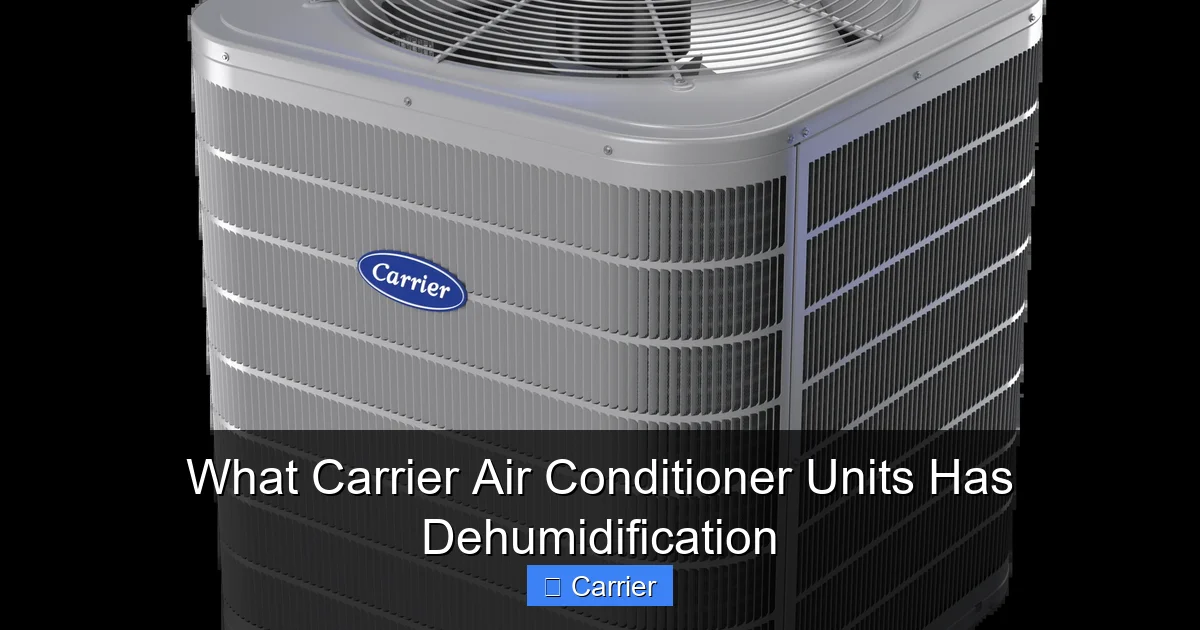
Carrier doesn’t just rely on basic condensation—they use intelligent design and smart controls to optimize moisture removal. Here’s how their dehumidification works:
Variable-Speed Compressors
Many Carrier systems, especially those in the Infinity and Performance lines, use variable-speed compressors. Instead of turning on and off like older models, these compressors run at adjustable speeds based on demand. This allows them to remove humidity steadily and quietly, without the frequent starts and stops that can trap moisture in the air.
For instance, during peak humidity hours, the compressor might run slower to pull more moisture from the air. At night or in cooler weather, it ramps up slightly to maintain temperature while still prioritizing dehumidification.
Enhanced Evaporator Coils
Carrier designs its evaporator coils with wider spacing and improved surface area to promote better contact between air and refrigerant. This increases condensation efficiency, meaning more water is extracted per pass through the system.
Some models also include hydrophilic coatings on the coils, which attract and spread moisture evenly for faster drainage. This prevents ice buildup and keeps the system running smoothly even in damp conditions.
Smart Thermostat Integration
Units paired with Carrier’s Wi-Fi enabled thermostats, like the Côr or Prestige series, allow homeowners to set not only target temperatures but also desired humidity levels. The thermostat communicates with the AC unit to maintain both conditions automatically.
Imagine setting your home to “Comfort Mode” at 72°F and 50% humidity—the system will cool and dehumidify as needed until both goals are met. This level of automation is rare in standard AC units and sets Carrier apart from competitors.
Drainage and Moisture Management
Proper drainage is essential for effective dehumidification. Carrier systems include internal condensate pumps and wide-diameter drain lines that move collected water quickly and safely out of your home. This prevents water backup, leaks, or stagnant pools inside the unit.
Additionally, some models have sensors that monitor humidity levels and adjust fan speed accordingly. If the indoor air feels too damp, the system will increase airflow over the coils to extract more moisture.
Benefits of Using a Carrier AC With Built-In Dehumidification
Choosing a Carrier air conditioner with dehumidification isn’t just about comfort—it impacts your health, home, and wallet in meaningful ways.
Improved Indoor Comfort
Ever felt sweaty and sticky even when your AC is running? That’s usually a sign of high humidity. By removing excess moisture, Carrier’s dehumidifying units create a more pleasant atmosphere where you can breathe easier and relax fully.
Better Sleep and Productivity
Humid nights disrupt sleep patterns. Studies show that optimal indoor humidity (between 30% and 50%) promotes deeper rest. A Carrier AC helps maintain this range, so you wake up refreshed and alert.
Protection Against Mold and Mildew
Excess moisture feeds mold growth—especially in basements, bathrooms, and around windows. Carrier’s efficient dehumidification reduces this risk, protecting your walls, ceilings, and belongings from costly damage.
Energy Savings
Contrary to popular belief, dehumidifying doesn’t cost more—it saves money. When your AC removes moisture effectively, it doesn’t need to run as long to reach the same comfort level. This lowers energy consumption and reduces utility bills.
Extended Appliance Life
High humidity can corrode electronics, warp wood floors, and damage HVAC components. By keeping indoor humidity in check, Carrier systems help preserve your home’s integrity and extend the life of your appliances.
Healthier Air Quality
Mold spores, dust mites, and allergens thrive in damp environments. Removing humidity cuts down on these irritants, making Carrier ACs a great choice for allergy sufferers or families with young children.
Practical Tips for Maximizing Dehumidification Performance
Even the best Carrier AC won’t perform well if it’s not installed or maintained properly. Here are some actionable tips to get the most out of your system:
Schedule Regular Maintenance
Have your Carrier unit inspected annually by a certified technician. Clean or replace filters every 1–3 months, especially during heavy use. Dirty filters restrict airflow, reducing dehumidification efficiency.
Use the Right Thermostat Settings
If your Carrier system supports humidity control, enable it. Set your thermostat to prioritize dehumidification during humid periods. Avoid setting the temperature too low—this wastes energy and can lead to over-dehumidification.
Ensure Proper Sizing
An oversized AC cools your home quickly but runs for shorter cycles, missing opportunities to remove moisture. Have a professional perform a Manual J load calculation to size your Carrier unit correctly.
Maintain Ventilation
Open windows briefly during low-humidity mornings to let fresh air in. Use exhaust fans in kitchens and bathrooms to reduce indoor moisture sources before it enters your AC system.
Consider a Whole-Home Dehumidifier (Optional)
If you live in an extremely humid area, you might supplement your Carrier AC with a dedicated whole-home dehumidifier like Carrier’s EraDry™ model. These plug directly into your HVAC system and fine-tune humidity levels beyond what the AC alone can achieve.
Monitor Humidity Levels
Invest in a digital hygrometer ($20–$30) to track indoor humidity. Aim for 30–50% relative humidity for optimal comfort and health.
Comparing Carrier to Other Brands
While many brands claim to offer “smart” or “intelligent” dehumidification, Carrier stands out for its decades of innovation and field-tested reliability. Unlike cheaper models that merely mention “humidity control” in marketing materials, Carrier embeds dehumidification into the core engineering of nearly every product.
Brands like Trane, Lennox, and Rheem also offer dehumidification features, but Carrier typically leads in integration—meaning you get seamless coordination between temperature, airflow, and moisture removal without manual adjustments.
Moreover, Carrier’s extensive service network ensures that support is always nearby, whether you need installation, repairs, or maintenance advice.
Final Thoughts: Is a Carrier AC With Dehumidification Right for You?
If you’ve been struggling with dampness, musty odors, or inconsistent comfort despite running your AC constantly, upgrading to a Carrier air conditioner with built-in dehumidification could be a game-changer. From residential central units to ductless mini-splits and commercial systems, Carrier delivers reliable moisture removal alongside superior cooling.
And the best part? You don’t need to do anything extra—dehumidification is already built into the system. With smart thermostats, variable-speed technology, and expert engineering, Carrier makes staying dry and comfortable effortless.
Whether you’re building a new home, replacing an old unit, or simply want better indoor air quality, choosing a Carrier AC means investing in lasting comfort, energy savings, and peace of mind.
Frequently Asked Questions
Do all Carrier air conditioners have dehumidification?
Yes, most Carrier residential and light commercial air conditioners include built-in dehumidification as a standard feature. Even entry-level models are designed to remove excess moisture from indoor air.
Can I manually turn on dehumidification on my Carrier AC?
In most cases, no—you don’t need to activate it separately. Carrier systems automatically dehumidify as part of normal operation. However, if you have a smart thermostat, you can set preferred humidity levels for automatic adjustment.
How much moisture can a Carrier AC remove per day?
A typical Carrier residential unit can remove between 80 and 120 pints of moisture per day under normal conditions, depending on the model, climate, and runtime. Higher-end models may remove even more.
Does dehumidification increase my electric bill?
No, dehumidification actually helps reduce energy costs. By removing moisture efficiently, your AC doesn’t need to run as long or as hard to maintain comfort, leading to lower electricity usage.
Should I install a separate dehumidifier if I have a Carrier AC?
Only if you live in an extremely humid region or experience persistent dampness. Most Carrier systems already handle dehumidification well, but a whole-home dehumidifier like Carrier’s EraDry can provide extra support when needed.
How do I know if my Carrier AC is working properly to remove humidity?
Check your indoor humidity level with a hygrometer—ideally between 30% and 50%. Also, listen for steady operation without short cycling. If you notice mold, condensation around vents, or lingering dampness, schedule a service check.