Carrier is a top-tier HVAC manufacturer that produces several well-known air conditioner brands under its umbrella. These include Carrier, Bryant, and Payne, each offering reliable cooling solutions tailored to different budgets and needs. Whether you’re upgrading your home or building a new system, understanding what brands Carrier makes can help you make an informed decision.
If you’ve ever walked into a big-box store looking at air conditioners and seen names like Carrier, Bryant, and Payne, you might wonder: What brands of air conditioners does Carrier make? The answer isn’t as simple as “just one.” Carrier Corporation—one of the most respected names in heating, ventilation, and air conditioning (HVAC)—actually manufactures several well-known brands under its umbrella. This gives homeowners a range of choices depending on their budget, efficiency needs, and desired level of features.
In this article, we’ll walk through everything you need to know about the different air conditioner brands made by Carrier. From the top-of-the-line Carrier models to the more affordable Payne units, we’ll break down what sets each brand apart. You’ll also learn how to pick the right system for your home, understand key performance differences, and even get tips on maximizing efficiency and comfort. So whether you’re replacing an old unit or installing a new central AC, read on—this guide will help you make a confident decision.
Key Takeaways
- Carrier owns multiple air conditioner brands: In addition to its flagship Carrier brand, the company manufactures air conditioners under Bryant and Payne.
- Each brand targets different market segments: Carrier focuses on premium, high-efficiency systems; Bryant offers mid-range options with solid performance; Payne provides budget-friendly solutions.
- All Carrier-branded ACs meet strict quality standards: Despite varying price points, all models undergo rigorous testing for durability and energy efficiency.
- Carrier leads in innovation: The company pioneered modern HVAC technology, including smart thermostats and variable-speed compressors.
- Installation matters more than brand: Proper sizing, professional installation, and regular maintenance are crucial regardless of which Carrier brand you choose.
- Warranty coverage varies by brand: Higher-end models like Carrier typically come with longer and more comprehensive warranties.
📑 Table of Contents
Who Is Carrier Corporation?
Before diving into the specific brands, it helps to understand who Carrier really is. Founded in 1915 by Willis Carrier, the company is credited with inventing modern electrical air conditioning. Over more than a century, Carrier has grown from a small Buffalo, New York workshop into a global leader in climate control solutions. Today, it operates in over 170 countries and continues to innovate in areas like energy efficiency, smart home integration, and sustainable cooling technologies.
One of the reasons Carrier stands out is its commitment to research and development. The company invests heavily in creating systems that use less energy, reduce environmental impact, and deliver better indoor air quality. Its R&D labs test thousands of prototypes every year to ensure reliability and performance. Because of this focus, Carrier-branded products often set industry benchmarks for efficiency and durability.
But here’s the interesting part: while Carrier sells directly under its own name, it also licenses and manufactures products for other brands. That’s how we end up with Bryant and Payne air conditioners—both of which are made by Carrier but sold under different labels. Each brand serves a slightly different customer segment, allowing Carrier to reach a broader audience without diluting its core reputation for quality.
What Brands of Air Conditioners Does Carrier Make?
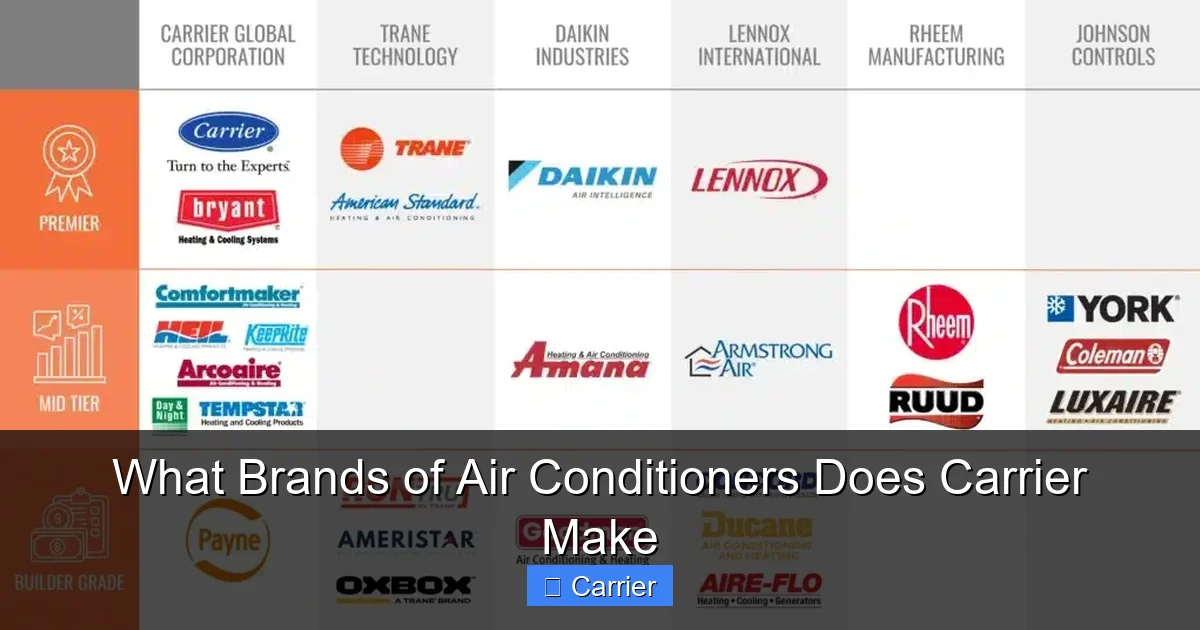
Visual guide about What Brands of Air Conditioners Does Carrier Make
Image source: atlasacrepair.com
So, back to your original question: What brands of air conditioners does Carrier make? The short answer is: three main ones—Carrier, Bryant, and Payne. Each comes with distinct characteristics, pricing tiers, and feature sets. Let’s explore them in detail.
1. Carrier Brand: The Gold Standard
When people think of high-performance air conditioners, Carrier is usually the first name that comes to mind. As the flagship brand, Carrier offers some of the most advanced and efficient residential cooling systems available today. These units are ideal for homeowners who prioritize top-tier performance, whisper-quiet operation, and smart home compatibility.
Carrier air conditioners often come with cutting-edge features like variable-speed compressors, two-stage cooling, and integrated air purification systems. Many models are ENERGY STAR® certified, meaning they meet strict government guidelines for energy efficiency. For example, the Carrier Infinity Series includes systems with up to 26 SEER (Seasonal Energy Efficiency Ratio), making them among the most efficient on the market.
Another advantage of choosing a Carrier brand AC is warranty support. Most Carrier units come with a 10-year parts warranty and an extended compressor warranty—sometimes up to 15 years—if professionally installed and registered. That kind of protection gives homeowners peace of mind, especially when investing in a premium system.
2. Bryant Brand: Reliable Mid-Range Performance
Next on the list is Bryant, another brand manufactured by Carrier. Bryant sits squarely in the mid-to-upper range of the residential market. It’s positioned between Carrier and Payne in terms of features and price point. If you want better-than-average performance without paying top dollar, Bryant might be your sweet spot.
Bryant air conditioners offer excellent energy efficiency—typically ranging from 14 to 18 SEER—and come with solid construction and dependable components. They’re known for quiet operation and consistent temperature control, thanks to features like multi-stage compressors and advanced airflow management. While they may not have every luxury feature found in Carrier models, Bryant still delivers strong value for families who want reliability and decent energy savings.
One thing to note: Bryant used to be an independent company before being acquired by Carrier in 2014. Since then, it’s operated as a subsidiary, producing quality equipment using Carrier’s manufacturing standards. This means you get many of the same engineering benefits, just at a slightly lower price tier.
3. Payne: Budget-Friendly Comfort
At the entry-level end of the spectrum is Payne. Like Bryant, Payne is also a Carrier-owned brand, but it targets cost-conscious consumers who still want dependable cooling. Payne air conditioners are generally priced lower than both Carrier and Bryant models, making them a popular choice for first-time homeowners or those on tight budgets.
Despite their lower upfront cost, Payne units still meet basic safety and efficiency standards. They usually range from 13 to 16 SEER, which is adequate for most homes in moderate climates. Payne systems are straightforward to install and maintain, and they come with standard warranties (typically 5–10 years on parts). However, they lack some of the advanced features found in higher-end models, such as variable-speed fans or smart controls.
That said, Payne shouldn’t be dismissed outright. Many homeowners find that a properly sized Payne AC runs efficiently and keeps their home comfortable during hot months. Just keep in mind that if you live in a region with extreme heat or humidity, you might benefit from upgrading to a Bryant or Carrier system for better long-term performance.
How Do These Brands Compare in Performance?
Now that you know what brands of air conditioners Carrier makes, you might be wondering how they stack up against each other. Let’s compare them across several key factors: efficiency, noise levels, features, and overall value.
Efficiency is probably the biggest differentiator. Carrier tops the list with SEER ratings up to 26, followed by Bryant (up to 18 SEER) and Payne (up to 16 SEER). Higher SEER means lower utility bills over time, so if energy savings are important, Carrier or Bryant would be smarter picks.
Noise is another consideration. Carrier models often boast ultra-low decibel ratings due to sound-dampening materials and optimized fan designs. Bryant units are also relatively quiet, though not quite as refined as Carriers. Payne systems can be louder, especially older models, but modern versions have improved significantly.
Features vary widely too. Carrier offers things like Wi-Fi connectivity, allergen filtration, and remote diagnostics. Bryant includes some smart capabilities but focuses more on mechanical reliability. Payne keeps things simple—basic thermostat compatibility and manual controls.
Ultimately, the best brand depends on your priorities. Need maximum efficiency and smart features? Go Carrier. Want balance between cost and performance? Choose Bryant. Looking to save money upfront? Payne could work—as long as you don’t mind fewer bells and whistles.
Choosing the Right System for Your Home
Picking the right air conditioner isn’t just about picking the brand. A poorly matched system—even if it’s a Carrier—won’t cool your house effectively or efficiently. Here’s how to make sure you get the perfect fit.
First, consider your home’s size. An oversized unit cycles on and off too frequently, wasting energy and causing uneven temperatures. Undersized units struggle to keep up. A licensed HVAC contractor can perform a Manual J load calculation to determine the correct tonnage for your space.
Second, think about climate. In hotter, humid regions, a high-efficiency system with dehumidification capabilities (like Carrier or Bryant) is worth the investment. In milder areas, a Payne may suffice.
Third, evaluate ductwork. Older homes sometimes have leaky ducts that reduce AC effectiveness. Sealing and insulating ducts can improve performance regardless of brand.
Finally, don’t forget about the outdoor unit. All Carrier-made ACs include both indoor (air handler) and outdoor (condenser) components. Make sure both pieces are compatible and rated for your local conditions.
Pro tip: Always get multiple quotes from reputable contractors. Prices can vary widely based on installation complexity, permits, and add-ons like programmable thermostats.
Maintenance Tips to Extend Lifespan
No matter which brand you choose, proper maintenance keeps your air conditioner running smoothly and extends its life. Carrier, Bryant, and Payne units all follow similar care routines, but following manufacturer-specific guidelines ensures optimal performance.
Start with monthly checks: Replace or clean filters every 1–3 months, depending on usage. Dirty filters restrict airflow and force the system to work harder. Also, clear debris from around the outdoor unit—leaves, grass clippings, and dust can block vents.
Yearly professional servicing is essential. A technician should inspect refrigerant levels, clean coils, check electrical connections, and lubricate moving parts. This prevents breakdowns and maintains efficiency. Most manufacturers recommend service once per year, ideally before summer.
For Carrier models, take advantage of built-in diagnostics. Many newer units alert you via the thermostat when something’s wrong, like low freon or a dirty coil. Bryant and Payne systems also provide error codes, so refer to the owner’s manual when troubleshooting.
Lastly, schedule a mid-season tune-up if possible. Catching minor issues early avoids costly repairs later. And remember: always hire a licensed contractor—not just anyone who says they can do HVAC work.
Environmental Impact and Sustainability
As concerns about climate change grow, so does interest in eco-friendly appliances. Fortunately, Carrier has been at the forefront of green HVAC innovation for decades. All three brands—Carrier, Bryant, and Payne—use R-410A refrigerant, which is more environmentally friendly than older chemicals like R-22.
Even better, Carrier leads the industry in developing next-gen refrigerants and systems designed to reduce global warming potential. Some newer models use lower-GWP alternatives, helping cut carbon emissions without sacrificing performance.
Energy efficiency plays a huge role here too. A high-SEER Carrier unit uses less electricity than a low-SEER Payne model, meaning fewer fossil fuels burned at power plants. Over time, this translates to lower carbon footprints and utility bills.
If sustainability matters to you, look for ENERGY STAR certification and ask your contractor about geothermal or hybrid heat pump options. While not air conditioners per se, these systems complement cooling needs while slashing energy use.
Final Thoughts: Which Brand Should You Pick?
So, what brands of air conditioners does Carrier make? Carrier, Bryant, and Payne—each serving a unique role in the market. Carrier represents the pinnacle of performance and innovation, Bryant balances quality and affordability, and Payne delivers essential cooling at a lower price.
Your final choice should reflect your budget, climate, home size, and personal preferences. Don’t feel pressured to overspend—a well-maintained Payne can serve you well for years. Likewise, if you value smart features and peak efficiency, Carrier is worth the investment.
The most important factor? Hire a qualified installer and stick to a maintenance schedule. Even the best brand loses value without proper care.
Whether you go with Carrier’s latest tech or Payne’s no-frills approach, you’re getting products backed by over 100 years of engineering excellence. That’s something few companies can claim—and it shows in every unit they produce.
Frequently Asked Questions
Does Carrier only make Carrier-brand air conditioners?
No, Carrier manufactures air conditioners under multiple brands, including Bryant and Payne, in addition to its own Carrier name. These brands target different price points and feature sets.
Are Bryant and Payne air conditioners as good as Carrier?
Yes, they’re built to high standards since Carrier oversees production. Bryant offers strong mid-range performance, while Payne provides budget-friendly options—but Carrier typically leads in innovation and efficiency.
Can I mix brands in my HVAC system?
It’s possible, but not recommended unless specified by the manufacturer. Mixing brands can void warranties and complicate maintenance. Stick with matching indoor and outdoor units from the same line.
Which Carrier brand is best for energy savings?
Carrier models generally offer the highest SEER ratings (up to 26), making them the most energy-efficient. Bryant and Payne are more affordable but less efficient.
Do all Carrier-made ACs require special installation?
Most don’t, but high-efficiency models like Carrier Infinity may need advanced setup. Always confirm with your contractor that the system suits your home’s electrical and ductwork capacity.
Where can I buy Carrier, Bryant, or Payne air conditioners?
These brands are sold through authorized HVAC dealers, online retailers like Amazon, and major home improvement stores like Lowe’s and Home Depot. Always verify dealer credentials to avoid counterfeit products.