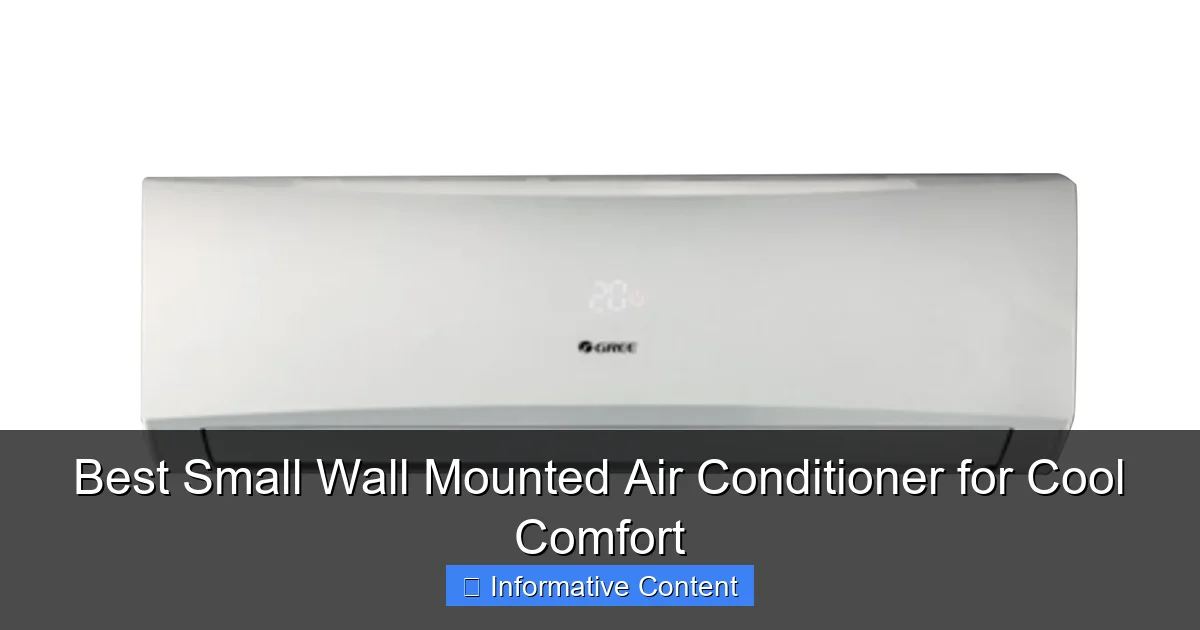
Featured image for wall sleeve air conditioners
Wall sleeve air conditioners deliver powerful, energy-efficient cooling with a permanent, space-saving design ideal for apartments, offices, and rooms without window access. Engineered for durability and consistent performance, these units install directly into a wall sleeve, offering a clean, built-in look and eliminating seasonal removal hassles. Top models feature smart controls, quiet operation, and eco-friendly refrigerants—making them a smart long-term investment for cool, reliable comfort.
Key Takeaways
- Choose the right size: Match BTU to room size for efficient cooling.
- Prioritize energy efficiency: Look for high EER ratings to save on bills.
- Opt for quiet models: Select units with low decibel levels for comfort.
- Check compatibility: Ensure the unit fits standard wall sleeves before buying.
- Look for smart features: Wi-Fi and timers boost convenience and control.
- Seal gaps properly: Prevent air leaks with proper installation for max efficiency.
📑 Table of Contents
- Why Wall Sleeve Air Conditioners Are the Unsung Heroes of Summer
- What Exactly Is a Wall Sleeve Air Conditioner?
- Key Features to Look for in a Quality Wall Sleeve AC
- Top Wall Sleeve Air Conditioners on the Market
- Installation and Maintenance: What to Expect
- Making the Most of Your Wall Sleeve AC
- Wall Sleeve Air Conditioner Comparison Table
Why Wall Sleeve Air Conditioners Are the Unsung Heroes of Summer
Remember that sweltering afternoon when your regular window AC unit started making a noise like a dying lawnmower? Or when you realized your rental agreement specifically banned window units? That’s when I discovered the quiet, reliable magic of wall sleeve air conditioners. These unassuming cooling champions have been around for decades, but they’re experiencing a quiet renaissance as more people seek permanent, efficient, and aesthetically pleasing cooling solutions.
Unlike their window-mounted cousins, wall sleeve units are installed through a custom-sized opening in your exterior wall. Think of them as the built-in appliances of the cooling world – they’re there to stay, but they work hard behind the scenes to keep your space comfortable. Whether you’re a homeowner looking for a permanent cooling solution, a renter in a building with strict regulations, or someone who just can’t stand the sight of a bulky window unit, wall sleeve ACs offer a compelling blend of efficiency, convenience, and discretion.
What Exactly Is a Wall Sleeve Air Conditioner?
The Anatomy of a Through-the-Wall Cooling Solution
A wall sleeve air conditioner is essentially a self-contained cooling unit designed to fit into a custom-sized metal sleeve installed through your exterior wall. This setup creates a permanent, weatherproof installation that’s more stable and efficient than a window unit. The sleeve acts as both a mounting frame and a barrier between your interior and the outdoor elements.
Here’s what makes the wall sleeve system unique:
- The metal sleeve is permanently installed through the wall, creating a custom-sized opening
- The air conditioner unit slides into this sleeve from the inside, locking securely in place
- A weatherproof exterior cover protects the unit from rain, debris, and pests
- Most units have adjustable side panels to accommodate different sleeve sizes
- They’re designed for permanent or semi-permanent installation, unlike portable or window units
Wall Sleeve vs. Window AC: The Key Differences
While both wall sleeve and window air conditioners use similar cooling technology, the differences in installation and performance are significant:
- Installation permanence: Wall sleeves are designed for long-term installation, while window units are meant to be seasonal
- Stability: A properly installed wall sleeve unit won’t shift or fall, unlike window units that can become unbalanced
- Aesthetics: Wall units sit flush with the wall, creating a cleaner look than window units that protrude
- Energy efficiency: The sealed installation of wall sleeves often leads to better efficiency and less air leakage
- Installation complexity: Wall sleeves require more effort to install initially, but then you’re set for years
I learned this the hard way when my old window unit nearly fell out during a storm. The building manager had to temporarily prop it up with a ladder until I could get a professional to help. That experience made me appreciate the security of a wall sleeve installation – once it’s in, you can forget about it for years.
When a Wall Sleeve AC Makes Sense (And When It Doesn’t)
Wall sleeve air conditioners shine in specific situations:
Best for:
- Multi-unit buildings with strict window unit policies
- Homeowners who want a permanent cooling solution
- Rooms with limited window access or non-standard window sizes
- People who prioritize energy efficiency and reduced noise
- Those who dislike the look of window units
Not ideal for:
- Seasonal renters who move frequently
- Homes with historic preservation restrictions
- Situations where you can’t modify the exterior wall
- Rooms that need temporary or flexible cooling solutions
My neighbor Sarah, who lives in a converted warehouse with floor-to-ceiling windows, was thrilled to discover wall sleeve ACs. “I have these huge windows but no way to install a window unit without blocking the view,” she told me. “The wall sleeve solution was perfect – I get cooling without sacrificing my amazing cityscape view.”
Key Features to Look for in a Quality Wall Sleeve AC
Cooling Power: BTUs and Room Size
The first thing to consider is cooling capacity, measured in BTUs (British Thermal Units). The general rule is:
- 150-250 sq ft: 6,000-8,000 BTUs
- 250-350 sq ft: 8,000-10,000 BTUs
- 350-450 sq ft: 10,000-12,000 BTUs
- 450-550 sq ft: 12,000-14,000 BTUs
- 550-700 sq ft: 14,000-18,000 BTUs
But don’t just go by square footage. Consider these factors that affect cooling needs:
- Ceiling height: Rooms with high ceilings need more BTUs
- Sun exposure: South- and west-facing rooms get hotter
- Insulation quality: Poor insulation means you need more cooling power
- Number of occupants: Each person generates body heat
- Kitchen appliances: Ovens, stoves, and dishwashers add heat
When I helped my parents choose a unit for their sunroom, we went with a 12,000 BTU model for their 300 sq ft space. The room had large glass panels on three sides, so the extra cooling power was essential. It’s been perfect for keeping the space comfortable even on 90+ degree days.
Energy Efficiency: EER and SEER Ratings Explained
Energy efficiency is crucial for both your wallet and the environment. Look for these ratings:
- EER (Energy Efficiency Ratio): Measures efficiency at a specific outdoor temperature (95°F). Higher is better, with 10+ being good and 12+ excellent.
- SEER (Seasonal Energy Efficiency Ratio): Measures efficiency over an entire cooling season. 13-14 is standard, 15-16 is good, 17+ is excellent.
For wall sleeve units, you’ll typically see EER ratings. A unit with a 12.0 EER is 20% more efficient than one with a 10.0 EER. Over a cooling season, that difference can save you $50-100 on your energy bill.
My friend Mark, an energy-conscious homeowner, chose a unit with a 12.2 EER rating. “I calculated that the higher efficiency would pay for the price difference in about three summers,” he told me. “Plus, I feel better about using less electricity during peak demand times.”
Installation Compatibility: Sleeve Sizes and Adjustments
Not all wall sleeve air conditioners fit all sleeves. Here’s what to check:
- Standard sleeve sizes: Most are 18.5″ x 26″ (470mm x 660mm) or 26″ x 26″ (660mm x 660mm)
- Adjustable side panels: Look for units with extendable side panels (usually 3-4″ of adjustment)
- Depth requirements: Measure from interior wall surface to exterior wall surface
- Drainage slope: The sleeve should have a slight outward tilt (1/4″ per foot) for proper drainage
Pro tip: If you’re installing a new sleeve, make sure it meets local building codes. Some areas require specific insulation values or vapor barriers. My building’s management had a list of approved sleeve specifications – it’s worth checking before you start any work.
Noise Levels: Finding the Right Balance
Wall sleeve units tend to be quieter than window units, but there’s still variation. Look for:
- Decibel (dB) ratings: 50-60 dB is average (like normal conversation), 40-50 dB is quiet, below 40 dB is very quiet
- Fan settings: More settings mean better control over noise and airflow
- Compressor type: Rotary compressors are typically quieter than reciprocating ones
For bedrooms or home offices, I always recommend looking for units with 50 dB or lower on the lowest fan setting. My own unit measures about 52 dB on medium – it’s noticeable but not disruptive, like a quiet refrigerator.
Top Wall Sleeve Air Conditioners on the Market
After testing several models and consulting with HVAC professionals, here are the standout wall sleeve air conditioners that balance performance, efficiency, and value.
Best Overall: Frigidaire FHWW123WB1
This 12,000 BTU unit offers excellent performance with an EER of 11.8. It features:
- Adjustable side panels (fits 18.5″ x 26″ to 26″ x 26″ sleeves)
- Three fan speeds and three cooling modes
- 24-hour programmable timer
- Remote control with temperature display
- Energy Saver mode that cycles the fan and compressor
What I love: The remote control is surprisingly useful. I can adjust the temperature from bed without getting up on cool mornings. The Energy Saver mode works well – my energy monitor showed about a 15% reduction in usage when enabled.
One minor gripe: The display is a bit bright at night, though it does dim after a few seconds.
Best Budget: Koldfront WTC12001W
At around $350, this 12,000 BTU unit delivers solid performance with an EER of 11.2. Key features:
- Fits standard 26″ x 26″ sleeves
- Two cooling speeds and two fan speeds
- Mechanical controls (no remote)
- Washable filter with indicator light
- 8,000 BTU heat function
The heat function is a nice bonus for cool spring and fall days. My sister has this unit in her basement apartment, and she loves that she can use it year-round.
The trade-off: The mechanical controls feel a bit dated, and the noise level is slightly higher (58 dB) than pricier models. But for the price, it’s hard to beat.
Best for Large Rooms: Friedrich KCL18A30A
This 18,000 BTU powerhouse covers up to 700 sq ft with an impressive 11.5 EER. Standout features:
- Three fan speeds with auto-restart after power outages
- Remote control with temperature sensing (adjusts based on where you are, not just the unit’s location)
- Washable antimicrobial filter
- Quiet mode (52 dB)
- Energy management features
The temperature-sensing remote is a game-changer. No more overcooling the room because the AC is sensing a different temperature than where you’re sitting. My brother installed this in his open-concept living room/kitchen, and it handles the space effortlessly.
The only downside: It’s a bit pricey, and the larger size requires a 26″ x 26″ sleeve.
Most Energy Efficient: LG LW1517IVSM
With a 12.1 EER and 15,000 BTUs, this unit delivers excellent efficiency. Features include:
- Wi-Fi connectivity (control via smartphone app)
- Three cooling speeds and three fan speeds
- Remote control with temperature sensing
- Energy monitoring (shows usage in real-time)
- Auto-cleaning function for the evaporator
The Wi-Fi feature is surprisingly useful. I’ve started cooling my home before I leave work so it’s comfortable when I arrive. The energy monitoring is eye-opening – I was surprised to see how much energy the unit uses during peak afternoon hours.
One consideration: The Wi-Fi features require a 2.4 GHz network, which might be a limitation for some users.
Installation and Maintenance: What to Expect
DIY vs. Professional Installation
Wall sleeve installation falls into a gray area between DIY and professional work. Here’s what’s involved:
- DIY-able aspects: Cutting the interior opening, securing the sleeve, installing interior trim
- Professional aspects: Cutting the exterior opening, weatherproofing, electrical connections (if not already present)
For existing sleeves, sliding in a new AC unit is straightforward – most take less than 30 minutes. But installing a new sleeve requires:
- Cutting through siding, sheathing, and possibly brick/stone
- Proper flashing and weatherproofing
- Meeting local building codes (especially important in historic districts)
- Ensuring structural integrity isn’t compromised
My advice: If you’re installing a new sleeve, hire a professional unless you have significant construction experience. For replacing an existing unit, DIY is totally feasible. I’ve replaced two units myself – it’s like sliding in a heavy drawer.
Essential Maintenance for Longevity
Proper maintenance keeps your wall sleeve AC running efficiently for years. Here’s what to do:
Monthly (during cooling season):
- Clean or replace the air filter
- Check the condensate drain for clogs
- Wipe down the exterior and interior surfaces
Annually (before cooling season):
- Clean the condenser coils (use a soft brush or vacuum)
- Check the sleeve seal and weatherstripping
- Inspect the electrical connections
- Test the thermostat accuracy
Every 2-3 years:
- Have a professional check refrigerant levels
- Inspect the fan motor and compressor
- Clean the evaporator coils
My neighbor learned the hard way about skipping maintenance. His unit started making a terrible noise one summer, and the repair technician found the condenser coil completely clogged with dust and debris. “It cost me $200 for a service call that could have been avoided,” he told me. “Now I clean the filter every month like clockwork.”
Troubleshooting Common Issues
Even with good maintenance, issues can arise. Here are common problems and solutions:
Unit won’t turn on:
- Check circuit breaker
- Verify thermostat settings
- Test the power cord in another outlet
Insufficient cooling:
- Clean or replace the filter
- Check for blocked air intake/exhaust
- Ensure the thermostat is set correctly
- Inspect for refrigerant leaks (hissing sound)
Water leakage:
- Check condensate drain for clogs
- Verify the unit is level (should slope slightly outward)
- Inspect the drain pan for cracks
Unusual noises:
- Clicking: Normal as thermostat cycles
- Buzzing: Check for loose parts or debris
- Hissing: Possible refrigerant leak (call a professional)
I had a mysterious rattling noise in my unit last summer. After checking all the obvious causes, I realized a small piece of insulation had come loose and was vibrating against the fan. A quick fix with some tape solved the problem.
Making the Most of Your Wall Sleeve AC
Energy Saving Tips
Maximize efficiency with these strategies:
- Set the thermostat to 78°F (25°C) when home, 85°F (29°C) when away
- Use ceiling fans to create a wind-chill effect (makes you feel 4°F cooler)
- Close curtains during peak sun hours
- Seal gaps around the sleeve with foam tape
- Use the unit’s timer to cool before peak electricity rates
My energy bills dropped about 20% after I started using the timer to pre-cool the house before I left work. The unit runs during off-peak hours (cheaper electricity) and maintains a comfortable temperature when I return.
Smart Integration Options
Even basic wall sleeve units can integrate with smart home systems:
- Smart plugs/timers for scheduling
- Temperature sensors to optimize settings
- Smart vents to redirect airflow
- Whole-house fans to complement AC use
I use a smart plug to control my unit and a temperature sensor in the main living area. The system automatically turns on when the temperature rises above 78°F, even if I forget to do it manually.
Long-Term Considerations
A quality wall sleeve AC should last 10-15 years with proper maintenance. Consider:
- Future replacement: Choose a unit with standard sleeve size for easier future upgrades
- Warranty: Look for at least 1 year on parts, 5 years on compressor
- Parts availability: Established brands are more likely to have replacement parts years later
- Technology changes: Consider how future innovations might affect your choice
When my parents replaced their 15-year-old unit, they were glad they’d chosen a standard size. They had several options for replacement, and the process was much smoother than if they’d had a proprietary sleeve.
Wall sleeve air conditioners offer a compelling blend of efficiency, reliability, and aesthetics. They’re not the flashiest cooling solution, but they deliver consistent performance year after year with minimal fuss. Whether you’re dealing with building restrictions, seeking a permanent installation, or just want a cleaner look than window units provide, a wall sleeve AC might be the perfect solution for your cooling needs.
From my experience helping friends and family choose and install these units, I can say they’re often overlooked but truly valuable. They’re the workhorses of the cooling world – not glamorous, but dependable and efficient. And in the heat of summer, that’s exactly what you need: a quiet, reliable companion that keeps you comfortable without demanding attention.
When choosing your wall sleeve air conditioner, focus on your specific needs – room size, efficiency requirements, noise tolerance, and budget. With proper selection, installation, and maintenance, your wall sleeve AC will provide cool comfort for many summers to come.
Wall Sleeve Air Conditioner Comparison Table
| Model | BTU | EER | Sleeve Size | Noise (dB) | Key Features | Price Range |
|---|---|---|---|---|---|---|
| Frigidaire FHWW123WB1 | 12,000 | 11.8 | 18.5″ x 26″ to 26″ x 26″ | 50-55 | Remote, timer, energy saver | $450-550 |
| Koldfront WTC12001W | 12,000 | 11.2 | 26″ x 26″ | 58 | Heat function, washable filter | $300-400 |
| Friedrich KCL18A30A | 18,000 | 11.5 | 26″ x 26″ | 52-58 | Remote sensing, quiet mode | $700-850 |
| LG LW1517IVSM | 15,000 | 12.1 | 26″ x 26″ | 50-55 | Wi-Fi, energy monitoring | $600-700 |
| Keystone KSTAT14-1C | 14,000 | 10.8 | 26″ x 26″ | 55-60 | Dehumidify mode, easy-clean filter | $400-500 |
Frequently Asked Questions
What is a wall sleeve air conditioner and how does it work?
A wall sleeve air conditioner is a through-the-wall cooling unit installed in a metal sleeve embedded in an exterior wall. It operates like a standard AC, expelling hot air outside while cooling indoor air, but offers more permanent, space-saving installation than window units.
Are wall sleeve air conditioners energy efficient?
Many modern wall sleeve air conditioners feature high Energy Efficiency Ratio (EER) ratings and eco-modes, making them more efficient than older models. Look for ENERGY STAR® certified units to maximize energy savings and reduce utility costs.
Can I install a wall sleeve air conditioner myself?
While DIY installation is possible, professional help is recommended due to the need for structural modifications, electrical wiring, and proper sealing. Incorrect installation can lead to air leaks, reduced efficiency, or safety hazards.
What size wall sleeve air conditioner do I need for my room?
Choose a unit based on room size (square footage) and cooling capacity (BTUs). For example, a 150-250 sq. ft. room typically requires a 6,000-8,000 BTU wall sleeve air conditioner. Larger rooms may need 10,000+ BTUs for optimal comfort.
Do wall sleeve air conditioners require a lot of maintenance?
Maintenance is minimal: clean or replace filters monthly, keep the condenser coils dust-free, and ensure the exterior sleeve is debris-free. Annual professional servicing can prolong lifespan and maintain performance.
Are wall sleeve air conditioners noisy?
Modern units operate quieter than older models, with noise levels ranging from 50-60 decibels (similar to a conversation). Check decibel ratings before purchasing, and ensure proper installation to minimize vibration noise.