Featured image for through the wall air conditioner installation cost
Image source: uploads-ssl.webflow.com
Through the wall air conditioner installation typically costs between $300 and $800, depending on unit type, labor rates, and electrical or structural modifications. Professional installation is strongly recommended to ensure proper sealing, safety, and optimal performance, preventing energy loss and water leaks. While DIY may seem cost-effective, improper setup can lead to higher long-term expenses and reduced efficiency.
Key Takeaways
- Plan your budget: Expect to pay $300–$1,000 for professional installation.
- Size matters: Choose the right BTU capacity to reduce long-term costs.
- DIY risks: Avoid voiding warranties; hire a pro for electrical and structural work.
- Permit costs: Check local codes; permits may add $50–$200 to total expenses.
- Energy savings: Invest in ENERGY STAR models to cut utility bills over time.
- Maintenance counts: Regular cleaning and servicing prevent costly repairs later.
📑 Table of Contents
- What Is a Through the Wall Air Conditioner?
- Factors That Influence Installation Cost
- Average Through the Wall Air Conditioner Installation Cost
- DIY vs. Hiring a Professional: What’s the Real Cost?
- How to Save Money on Installation (Without Cutting Corners)
- Long-Term Value: Is It Worth the Cost?
- Data Table: Installation Cost Comparison
- Final Thoughts: Make an Informed Decision
What Is a Through the Wall Air Conditioner?
Imagine this: it’s the middle of July, and the heat is relentless. You’re sweating through your shirt just sitting on the couch, and the idea of opening a window only brings in more hot air and bugs. You’ve tried portable ACs, but they’re noisy, inefficient, and always in the way. Then you hear about through the wall air conditioners—units that fit snugly into a wall sleeve, delivering cool air without taking up floor space. Sounds like a dream, right?
Unlike window units that hang precariously on your sill or portable ACs that require hoses and constant emptying, through the wall air conditioners are built to last. They’re installed directly into an exterior wall, with the condenser side outside and the cooling side inside. They offer a cleaner look, better energy efficiency, and often quieter operation. But before you start picturing a cool, serene living room, there’s one big question: How much does a through the wall air conditioner installation cost?
Factors That Influence Installation Cost
When it comes to installation, the price isn’t just about slapping a unit into a wall and calling it a day. Several factors can make the cost swing from a few hundred dollars to well over a thousand. Let’s break them down so you know exactly what you’re paying for—and why.
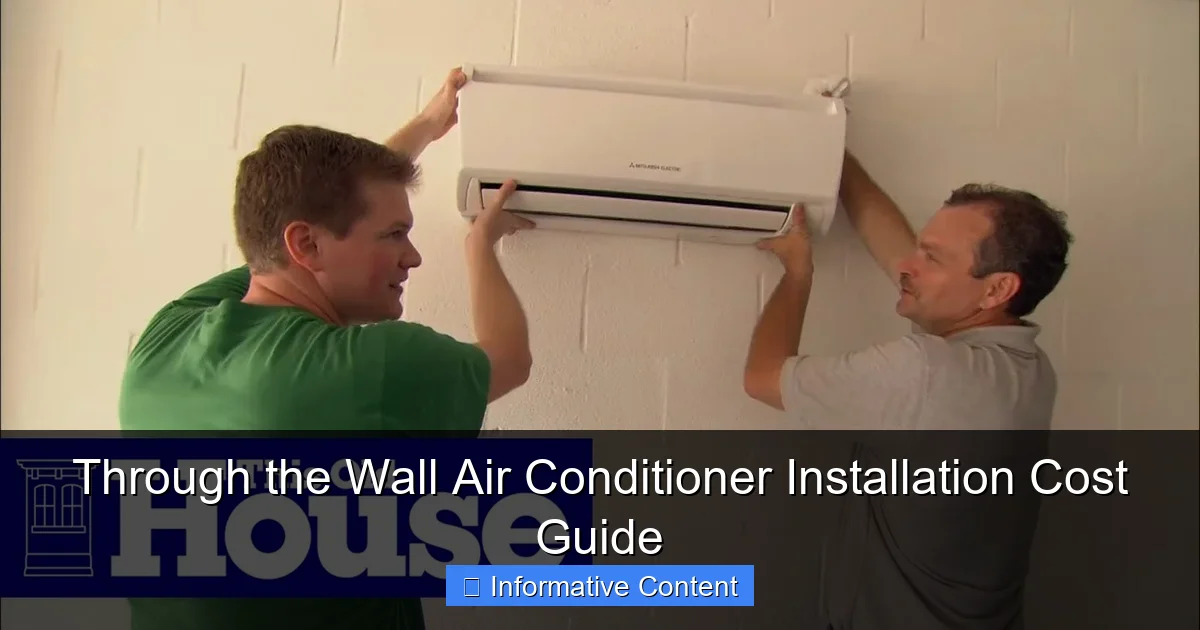
Visual guide about through the wall air conditioner installation cost
Image source: i.ytimg.com
1. Type of Wall
The material your home is made of plays a big role in installation difficulty. Installing a sleeve into a wooden frame wall is relatively straightforward. But if you’re dealing with brick, concrete, or stucco, the job becomes more labor-intensive. Cutting through masonry requires special tools, more time, and sometimes even structural reinforcement.
For example, I helped a friend install a unit in her 1950s brick bungalow. The installer spent nearly three hours just cutting the opening—and that was before the actual mounting and wiring. Expect to pay 15–30% more for masonry walls due to the added labor and materials.
2. Wall Thickness
Most through the wall units are designed for walls between 4 and 6 inches thick. But older homes—especially those with thick brick or double walls—can be 8 to 12 inches. If the wall is too thick, you’ll need a custom sleeve extension or a unit with a deeper chassis, both of which increase cost.
One homeowner in a 1920s brownstone had to spend an extra $200 just for a custom sleeve. It’s a small detail, but it can add up fast.
3. Electrical Requirements
Many through the wall units require a dedicated 240-volt circuit. If your home doesn’t already have one, you’ll need an electrician to run new wiring from the breaker panel. This can cost anywhere from $300 to $800, depending on the distance and panel access.
I once helped a client in a high-rise apartment. The panel was in the basement, and the unit was on the 12th floor. The electrician had to run conduit through multiple floors—total cost? Nearly $1,000 just for the wiring. So always check your electrical setup before buying the unit.
4. Location and Accessibility
Is the wall on the first floor with easy outdoor access? Great—installers can get in and out quickly. But if it’s on the third floor with no elevator and a narrow hallway, expect extra labor fees. Some companies charge a “floor surcharge” for multi-level installations.
Also, consider outdoor space. If the unit needs to go above a deck, near a roofline, or in a tight alley, scaffolding or special equipment might be needed. One installer told me he once had to use a crane to lift a unit onto a rooftop in Manhattan—definitely not your average job.
5. Permits and Building Codes
In some cities and neighborhoods, you need a building permit to cut into an exterior wall. This is especially true for historic districts or multi-family buildings. The permit itself might cost $50–$200, but the real expense comes from the inspection and paperwork. Some contractors include this in their quote; others charge extra.
Always ask: “Does your quote include permits?” I’ve seen homeowners get hit with surprise fees because the installer assumed the permit was the owner’s responsibility.
Average Through the Wall Air Conditioner Installation Cost
Now, let’s get to the numbers. How much should you actually budget? Costs vary widely based on the factors above, but here’s a realistic breakdown based on national averages and real-world quotes from HVAC pros.
National Cost Ranges (2024)
- Basic Installation (wood frame, existing circuit): $300–$600
- Mid-Range (masonry wall, new sleeve, basic electrical): $700–$1,200
- High-End (thick masonry, new 240V circuit, permit, multi-floor): $1,300–$2,500+
Remember: these are installation-only costs. The unit itself is extra—typically $500 to $1,200 depending on BTU size and features.
Cost Breakdown by Task
To help you understand where your money goes, here’s a typical cost breakdown for a mid-range installation:
- Cutting wall opening and installing sleeve: $250–$400
- Electrical work (new 240V circuit): $400–$700
- Permit and inspection: $100–$200
- Weatherproofing and sealing: $50–$100
- Labor (2–4 hours at $75–$125/hour): $150–$500
One installer I spoke with said, “Most homeowners are shocked when they hear $1,000. But when you break it down, it’s not just ‘installing an AC.’ It’s construction, electrical, and compliance work rolled into one.”
Regional Price Differences
Costs also vary by region. In high-cost areas like New York, San Francisco, or Boston, expect to pay 20–40% more than the national average. In the Midwest or South, prices tend to be lower due to lower labor rates and less stringent building codes.
For example, a basic install in Chicago might cost $450, while the same job in San Francisco could be $700. Always get local quotes—don’t rely on national averages alone.
DIY vs. Hiring a Professional: What’s the Real Cost?
You’re handy. You’ve built shelves, replaced a toilet, maybe even rewired a lamp. So why not install your own through the wall AC? It seems like a way to save hundreds—maybe even thousands. But before you grab a saw, let’s talk about the real cost of DIY.
When DIY Makes Sense
If you’re experienced with construction and electrical work, and your home has a simple wood frame wall with an existing 240V outlet, DIY might work. You’ll need:
- Circular saw or reciprocating saw
- Jigsaw (for sleeve cutout)
- Level, measuring tape, stud finder
- Weatherproofing materials (flashing, sealant)
- Basic electrical tools (if connecting to existing circuit)
Total tool investment: $200–$400 (if you don’t already own them). Time investment: 6–10 hours.
One DIYer I know, Mark, installed a 10,000 BTU unit in his garage. He had the tools and the electrical knowledge. He saved about $500—but he also spent two full days on the project. “It wasn’t easy,” he said. “I had to cut through drywall, insulation, and siding. And sealing it properly took three tries.”
When You Should Hire a Pro
Most of the time, hiring a pro is the smarter move. Here’s why:
- Structural integrity: Cutting into a load-bearing wall or exterior masonry can compromise your home. Pros know how to avoid this.
- Electrical safety: A mistake in wiring can cause a fire or damage your home’s electrical system. Licensed electricians are insured and code-compliant.
- Weatherproofing: A poorly sealed unit can let in water, pests, and cold air in winter. Pros use proper flashing, sealants, and vapor barriers.
- Warranty protection: Many manufacturers void the warranty if the unit isn’t installed by a licensed HVAC technician.
- Time and stress: Let’s be honest—most of us don’t have 10 free hours to spend on a project that could go wrong.
One woman I spoke with tried to install a unit herself. She cut the hole, mounted the sleeve, and connected the power. But she didn’t seal the edges properly. Two months later, rain leaked into her living room during a storm. The repair cost? $1,200—more than a professional install would’ve been.
Hybrid Approach: DIY Prep, Pro Finish
If you want to save money but reduce risk, consider a hybrid approach. Do the prep work yourself—measure, mark, maybe even cut the interior drywall. Then hire a pro to handle the exterior cutting, sleeve installation, electrical, and sealing. This can save you 30–50% on labor while still ensuring a safe, code-compliant install.
Just be honest with the contractor. Say, “I’ve cut the interior hole. I need you to handle the exterior, sleeve, and electrical.” Most will appreciate the prep work and charge less for the reduced labor.
How to Save Money on Installation (Without Cutting Corners)
You don’t have to break the bank to get a through the wall AC installed. With a little planning and smart choices, you can save hundreds—without sacrificing safety or quality.
1. Get Multiple Quotes
Always get at least three written quotes from licensed HVAC contractors. Compare not just the total price, but what’s included. One might charge $1,000 and include the permit; another might charge $900 but exclude it. Ask:
- Is the permit included?
- Does the price include weatherproofing and sealing?
- What’s the warranty on labor?
- Are they licensed and insured?
I once helped a neighbor compare quotes. One company quoted $1,400, another $1,100, and a third $950. The cheapest one included everything—permit, electrical, sealing, and a 2-year labor warranty. The most expensive one? They forgot to mention a $200 “equipment fee.” Always read the fine print.
2. Choose the Right Time of Year
HVAC companies are busiest in spring and summer. Installers are booked weeks in advance, and prices can rise due to demand. If you install in fall or winter, you’ll often get faster service and lower rates.
One homeowner scheduled his install in January. The contractor gave him a 15% discount and completed the job in two days. “They were eager for work,” he said. “I got a great deal.”
3. Use a Standard Sleeve Size
Most through the wall units use a standard 24” x 18” sleeve. If you use a non-standard size, you might need a custom sleeve or modifications—adding $100–$300. Check the unit’s specs before buying. Brands like Friedrich, Frigidaire, and GE offer many models with standard sleeves.
4. Prepare the Area
Clear the room, move furniture, and protect floors. If you can remove baseboards or trim, even better. The less time the installer spends prepping, the lower your labor cost. One contractor told me, “When a homeowner has the room ready, we can finish in half the time. It saves them $100–$200.”
5. Consider a Package Deal
Some HVAC companies offer package deals—buy the unit and get discounted or free installation. Look for promotions from local dealers or big-box stores like Home Depot or Lowe’s. Just make sure the unit is the right size and quality for your needs.
Long-Term Value: Is It Worth the Cost?
You’ve spent $1,000 on installation. Is it worth it? Let’s look beyond the upfront cost and consider the long-term value.
Energy Efficiency and Savings
Through the wall units are generally more efficient than window or portable ACs. They’re sealed tightly, reducing air leaks and heat gain. Many models have Energy Star ratings, which can save you 10–15% on cooling costs.
For example, a 10,000 BTU unit might cost $80/month to run in peak summer. A less efficient window unit could cost $100–$120. Over five years, that’s a $1,200–$2,400 savings. The installation cost starts to pay for itself.
Home Value and Aesthetics
A clean, built-in unit adds value to your home. Unlike a bulky window AC that blocks light and looks messy, a through the wall unit blends into the wall. Real estate agents say it’s a minor but noticeable upgrade—especially in urban condos or historic homes where aesthetics matter.
One homeowner installed a unit before selling. The buyer loved the “clean, modern look” and mentioned it during negotiations. It wasn’t the deciding factor, but it helped.
Durability and Maintenance
When installed properly, through the wall units can last 10–15 years with minimal maintenance. Just clean the filter every few months and check the seal annually. Compare that to a portable AC, which might need replacing every 3–5 years.
One installer told me, “I’ve seen units from the 1990s still running strong. They’re built like tanks.”
Peace of Mind
Let’s not forget the intangible benefit: peace of mind. No more worrying about a window unit falling out, a portable AC tripping a circuit, or a DIY job causing leaks. You have a permanent, professional solution that works every summer.
Data Table: Installation Cost Comparison
| Scenario | Unit Cost | Installation Cost | Total Cost | Key Factors |
|---|---|---|---|---|
| Wood frame, existing 240V circuit | $550 | $400 | $950 | Easy access, no electrical work |
| Brick wall, standard sleeve, new circuit | $700 | $1,100 | $1,800 | Masonry cutting, electrical upgrade |
| Concrete wall, custom sleeve, permit | $850 | $1,800 | $2,650 | Thick wall, structural work, inspection |
| Third-floor apartment, no elevator | $600 | $1,400 | $2,000 | Access difficulty, labor surcharge |
| DIY (tools + unit) | $550 | $0 (your time) | $550+ | High risk, time-consuming |
Final Thoughts: Make an Informed Decision
Installing a through the wall air conditioner isn’t cheap—but it’s an investment. You’re not just buying cool air. You’re buying comfort, efficiency, durability, and peace of mind. The installation cost might sting at first, but over time, it pays off in lower bills, fewer repairs, and a more livable home.
My advice? Don’t rush. Get quotes, check reviews, and choose a contractor you trust. If your budget is tight, look for off-season deals or package offers. And if you’re tempted to DIY, ask yourself: “Am I really ready for the risks?”
At the end of the day, a well-installed through the wall AC is one of those home upgrades you’ll be glad you made—especially on that sweltering August afternoon when the air is thick and the sun is relentless. You’ll sit back, sip your iced tea, and think, “Worth every penny.”
Frequently Asked Questions
What is the average through the wall air conditioner installation cost?
The average through the wall air conditioner installation cost ranges from $300 to $1,000, depending on labor, wall modifications, and unit complexity. Costs may rise if electrical upgrades or custom framing are needed.
Can I install a through the wall air conditioner myself to save money?
While DIY installation can reduce expenses, it’s not recommended unless you have HVAC and electrical expertise. Improper installation can lead to leaks, poor efficiency, or safety hazards, potentially increasing long-term costs.
Does the type of wall affect the installation cost?
Yes, the wall type significantly impacts the through the wall air conditioner installation cost. Concrete or brick walls require more labor and tools than drywall, increasing the price by $100–$300.
Are permits required for through the wall AC installation?
Permits may be required, especially for electrical or structural changes, and fees typically range from $50 to $200. Check local building codes to ensure compliance and avoid fines.
How long does it take to install a through the wall air conditioner?
Professional installation usually takes 3–6 hours, but complex projects (e.g., thick walls or electrical work) may take longer. Labor time directly affects the total installation cost.
What factors influence the final price of installation?
Key factors include labor rates, wall material, unit size, electrical requirements, and regional pricing. Always request a detailed quote to understand what’s included in your through the wall air conditioner installation cost.