
A continuously blinking timer light on your Panasonic air conditioner usually signals a simple issue—like a dirty filter or power fluctuation—but it can also point to more complex problems like refrigerant leaks or control board faults. Understanding the cause is key to restoring normal operation without unnecessary service calls. This article walks you through common reasons, DIY fixes, and when to contact a technician.
Have you ever looked at your Panasonic air conditioner only to see that little timer light blinking nonstop? It’s more than just an annoying flicker—it’s your AC trying to tell you something important. While a single blink might mean nothing, continuous blinking? That’s almost always a signal that something isn’t quite right inside your unit. Whether you’re cooling your living room, office, or entire home, this persistent indicator deserves attention. Ignoring it could lead to bigger problems down the line, including reduced efficiency, higher energy bills, or even complete system failure.
The good news? In many cases, a blinking timer light points to straightforward fixes you can tackle yourself. But first, you need to understand what it means. Is it a harmless hiccup or a serious alert? How do you decode its message? And more importantly, what should you do next? This comprehensive guide dives deep into everything you need to know about why your Panasonic AC’s timer light keeps blinking and how to resolve it—whether you’re dealing with a dusty filter, a power surge, or something more technical.
Key Takeaways
- Common causes include dirty filters, power interruptions, or internal errors. These issues trigger the unit’s safety protocols, causing the timer light to blink as a warning.
- Resetting the unit often resolves minor glitches. Unplugging the AC for 5–10 minutes can clear temporary faults and reset the control system.
- Sensor obstructions or misalignment may activate error codes. Check vents, remote sensors, and ensure nothing blocks airflow around the indoor unit.
- Refrigerant levels or compressor problems require professional diagnosis. Persistent blinking after basic troubleshooting suggests deeper mechanical issues.
- Model-specific behavior varies—consult your manual for accurate interpretation. Some Panasonic models use different LED patterns to indicate specific faults.
- Preventive maintenance reduces future occurrences. Regularly clean filters and schedule annual servicing to keep your AC running smoothly.
Quick Answers to Common Questions
Is a blinking timer light dangerous?
No, it’s not immediately dangerous, but it indicates a fault that could worsen if ignored. Continuing to operate the AC during blinking may strain components and raise energy costs or cause breakdowns.
Can I stop the light from blinking by covering it?
Absolutely not. Covering the light hides the warning sign and prevents you from diagnosing the real problem. Always address the underlying cause instead of masking symptoms.
Will resetting fix all blinking issues?
Resetting helps with temporary glitches like power surges or minor software hiccups. However, if the root cause is hardware-related (e.g., faulty sensor), a reset won’t resolve it permanently.
How long should I unplug the unit for a reset?
At least 10 minutes. This ensures capacitors fully discharge and allows the control board to reboot cleanly. Longer durations (up to 30 minutes) can sometimes yield better results.
Are blinking lights covered under warranty?
If caused by manufacturing defects, yes—but misuse (like ignoring filter clogs) voids coverage. Document your maintenance history to support warranty claims.
📑 Table of Contents
Why Does the Timer Light Blink Continuously?
Before jumping to solutions, let’s unpack what actually triggers this behavior. The timer light on your Panasonic air conditioner serves multiple purposes: it shows standby mode, countdown timers, sleep functions, and—crucially—error alerts. When it starts blinking repeatedly, it’s essentially sending you an SOS. Most Panasonic models follow standardized LED signaling protocols, where specific blink patterns correspond to particular fault types. For example, two blinks followed by a pause might indicate a temperature sensor issue, while five rapid flashes could signal a communication error between indoor and outdoor units.
One of the most frequent culprits behind constant blinking is a clogged air filter. Over time, dust, pet dander, and debris accumulate in the return air filter, restricting airflow. Your AC works harder to pull in air, which raises internal temperatures and pressure. To prevent damage, the system enters protective mode, shutting off components and blinking the timer light as a warning. Similarly, if your home experiences frequent power outages or voltage fluctuations (common during storms), the sudden reboot can confuse the control board, triggering false alarms until fully reset.
Another possibility is sensor malfunction. Panasonic ACs rely on precise thermal sensors to regulate cooling cycles. If one of these sensors gets dirty, misaligned, or fails entirely, the unit misinterprets room conditions and activates safety locks. You might notice inconsistent cooling, strange noises, or the light staying on longer than usual. In rare cases, loose wiring connections—often due to vibrations over years of operation—can disrupt communication between parts, leading to erratic behavior like endless blinking.
How to Diagnose the Problem Yourself
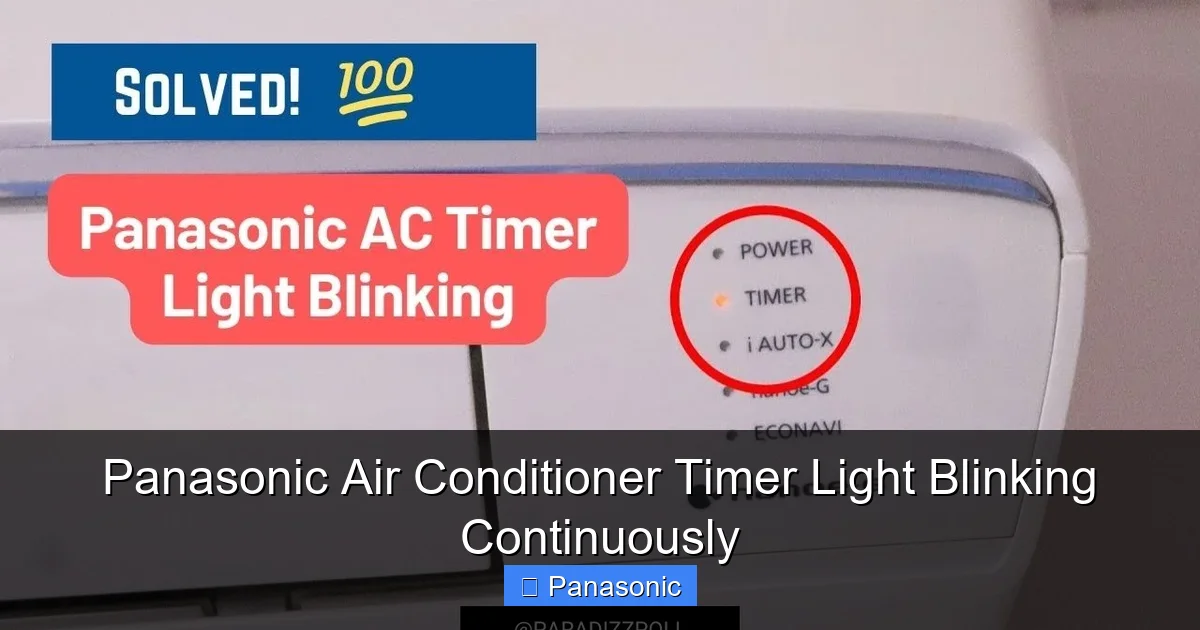
Visual guide about Panasonic Air Conditioner Timer Light Blinking Continuously
Image source: i.ytimg.com
You don’t need a degree in HVAC engineering to figure out what’s going on. Start with the basics: observe the pattern of the blinking. Does it blink once every few seconds? Twice per cycle? Count the number of flashes between pauses; most Panasonic models encode diagnostic information this way. Refer to your owner’s manual—it’ll list each pattern alongside its meaning. If you’ve misplaced the manual, Panasonic’s official website offers downloadable PDF versions by model number.
Next, perform a visual inspection. Turn off the unit and unplug it from the wall outlet. Remove the front grille (usually held by clips or screws) and check the filter. A visibly dirty filter is often the smoking gun. While you’re there, inspect the evaporator coils too—if they’re caked with dust, it indicates poor maintenance and could explain why the AC overheats. Also look for any visible signs of water leakage, unusual odors, or physical damage near the indoor unit.
If the filter looks clean and there are no obvious blockages, try resetting the system. Plug the AC back in and wait 30 seconds before turning it on. If the light stops blinking immediately, you may have resolved a temporary glitch. However, if it continues, consider whether anything changed recently—did someone adjust thermostat settings? Was there a storm that caused a brownout? These contextual clues help narrow possibilities.
Common Fixes for Blinking Timer Lights
Once you’ve identified a likely cause, here’s how to address it:
Clean or Replace the Air Filter: This is the easiest fix and works for most cases. Remove the filter according to your model’s instructions (typically slides out from below the front panel). Rinse it under lukewarm water with mild detergent, let it dry completely (never reinstall wet!), then reinsert. If the filter is torn or excessively worn, replace it with an OEM Panasonic part for best performance.
Reset the Unit: Power cycling often clears transient errors. Unplug the AC for at least 10 minutes—this gives capacitors time to discharge and resets the onboard computer. After reconnecting, press the “Timer” button briefly to see if the light stabilizes. Some advanced models have a dedicated “Reset” button inside the control panel.
Check Remote Sensor Alignment: If your AC uses a remote sensor (not all do), ensure it’s positioned correctly and not blocked by furniture or curtains. Misalignment tricks the thermostat into thinking the room is warmer/cooler than it is, prompting unnecessary shutdowns.
Inspect for Obstructions: Clear any items blocking intake/exhaust vents—rugs, curtains, or furniture placed too close can disrupt airflow and trigger safety responses.
Update Firmware (if applicable): Newer Panasonic smart ACs support firmware updates via Wi-Fi. Outdated software can cause bugs interpreted as hardware faults. Visit Panasonic’s support site, enter your model, and download the latest update if available.
If none of these steps work, it’s time to dig deeper. Persistent blinking despite clean filters and proper installation suggests internal component failure. At this point, attempting DIY repairs risks voiding your warranty or causing further damage. Instead, gather details: note the exact blink pattern, any error messages on the display, and when the problem started. Then contact a certified Panasonic technician.
When to Call a Professional Technician
While basic maintenance falls within your wheelhouse, certain scenarios demand expert intervention:
– The blinking persists after multiple resets and cleaning attempts
– You hear unusual noises (grinding, hissing, or popping) coming from the unit
– There’s a strong smell of burning or mold
– The outdoor unit shows frost or ice buildup
– Your electricity bill spikes dramatically without usage changes
These signs often point to refrigerant leaks, compressor issues, or control board failures—all complex problems requiring specialized tools and knowledge. Attempting to open the outdoor unit exposes you to high-voltage components and pressurized refrigerants, both hazardous without training. Certified technicians carry recovery equipment to safely handle refrigerants, ensuring compliance with environmental regulations.
When calling a pro, ask for a detailed diagnostic report. Reputable companies will explain exactly what they found, why it matters, and how they plan to fix it. Don’t hesitate to get second opinions if costs seem excessive. Remember, regular professional servicing (twice a year) can catch early warning signs before they escalate into expensive emergencies.
Preventative Maintenance Tips
The best cure is prevention. Keep your Panasonic AC running smoothly by following these routines:
Monthly Filter Checks: Inspect filters monthly during peak seasons. Even if they look clean, vacuum them gently or wipe with a damp cloth to remove embedded particles.
Bimonthly Coil Cleaning: Use a soft brush or coil cleaner spray to clear dust from evaporator and condenser coils. Dirty coils reduce efficiency by up to 30%.
Annual Professional Servicing: Schedule tune-ups every six months. Technicians clean delicate components, test refrigerant levels, and calibrate sensors—tasks beyond homeowner capabilities.
Use Surge Protectors: Protect against power surges that can fry sensitive electronics. Whole-house surge protectors are cheaper than replacing control boards.
Keep Vents Clear: Maintain at least 12 inches of clearance around all vents. Rearranging furniture? Move it back before restarting your AC.
By treating your unit with care, you’ll minimize stress on its systems and extend its lifespan significantly. Plus, you’ll avoid those frustrating blinking lights altogether.
Understanding Your Model-Specific Behavior
Not all Panasonic ACs behave identically. Older models (like CS/CU series pre-2018) use simpler LED indicators, while newer ones (e.g., EZ series with inverter tech) feature multi-color LEDs and digital displays. For instance:
– CS-CU12WKH: Three short blinks = indoor fan motor error
– EZ12XKR: Rapid double-blink = communication failure
– CS-EP12AKR: Alternating red/green = refrigerant shortage
Always cross-reference your exact model number (found on a label inside the front cover or on the original packaging). Searching “Panasonic [model] error codes” online yields instant results. YouTube tutorials also show real-time LED patterns for popular models—great for confirming your diagnosis before calling anyone.
If uncertain, take a photo of the blinking light with your phone and share it with a technician. Visual evidence speeds up troubleshooting immensely.
Conclusion: Stay Calm, Act Smart
That relentless blinking timer light doesn’t have to be a nightmare. More often than not, it’s a gentle nudge toward routine maintenance rather than a death knell for your appliance. By learning to interpret its language, performing simple checks, and knowing your limits, you empower yourself to handle most issues confidently. And when in doubt? Reach out to professionals—they’re there for exactly these moments.
Remember, a well-maintained Panasonic AC delivers reliable comfort for years. Invest time in understanding its signals today, and tomorrow you’ll enjoy silent operation, lower bills, and peace of mind. Don’t ignore the blinking—it’s your AC asking for help. With the right approach, you’ve got this.
Frequently Asked Questions
What does a blinking timer light mean on my Panasonic AC?
It typically signals an error or safety alert, such as a dirty filter, sensor issue, or power interruption. The specific pattern helps identify the cause—check your manual for details.
How do I reset my Panasonic air conditioner?
Unplug the unit for 10+ minutes, then plug it back in. Wait 30 seconds before turning it on. Some models have a physical reset button inside the control panel—consult your manual.
Can I clean the filter myself?
Yes! Remove the filter, rinse it with mild soap and water, let it dry completely, then reinstall. Avoid using harsh chemicals or putting it in the dryer, as heat warps plastic frames.
Why does the light blink only at night?
This could relate to sleep mode settings or ambient noise interference affecting the remote sensor. Try adjusting timer functions or moving the remote away from direct light sources.
Should I turn off my AC if the light keeps blinking?
Temporarily turning it off prevents potential damage, especially if you suspect refrigerant leaks or electrical faults. However, address the issue promptly to restore full functionality.
How often should I service my Panasonic AC?
Twice a year—once before summer and once before winter. Regular servicing includes coil cleaning, filter replacement, and checking refrigerant levels to maintain efficiency and longevity.
