Panasonic air conditioners offer reliable, energy-efficient cooling solutions across South Africa. With a wide range of models—from affordable window units to powerful split systems—you can find one that fits your budget and space. Whether you're looking for inverter technology, smart controls, or low running costs, Panasonic delivers quality at competitive prices. This guide walks you through current pricing, key features, top models, and where to buy in SA, so you can make a confident decision.
South Africa’s climate—hot summers, unpredictable humidity, and frequent power outages—makes air conditioning not just a luxury but often a necessity. When it comes to trusted brands with solid local support and reliable performance, Panasonic air conditioners consistently rank among the top choices. Whether you live in a small apartment in Cape Town or a spacious house in Johannesburg, finding the right unit doesn’t have to be overwhelming. In this guide, we’ll walk you through everything you need to know about Panasonic air conditioner price in South Africa , including current market rates, feature comparisons, installation tips, and where to get the best deals.
Key Takeaways
Panasonic offers a diverse lineup: From basic window ACs to high-end inverter splits, there's something for every home and budget in South Africa.
Inverter technology is standard: Most newer models use inverter compressors, which save up to 40% on electricity compared to non-inverter units.
Prices vary by capacity: A 1.5-ton split AC typically costs between R6,500 and R12,000, depending on features and retailer.
Installation matters: Professional installation is recommended—especially for splits—to ensure efficiency and avoid voiding warranties.
Energy Star ratings help save money: Look for models with high EER (Energy Efficiency Ratio) ratings to reduce long-term running costs.
Warranty coverage varies: Standard warranties are usually 1–3 years; check what’s included before purchasing.
Where to buy locally: Major retailers like HiFi Corp, Builders Warehouse, and Takealot stock Panasonic ACs with delivery and after-sales support.
Quick Answers to Common Questions
What is the average price of a Panasonic air conditioner in South Africa?
The average price ranges from R3,500 for a basic window unit to R12,000 for a high-end inverter split system, depending on size and features.
Are Panasonic air conditioners energy efficient?
Yes, most modern Panasonic models use inverter technology and have high EER ratings, reducing electricity consumption by up to 40% compared to non-inverter units.
Can I install a Panasonic AC myself?
While possible for window units, professional installation is strongly recommended—especially for split systems—to ensure safety, efficiency, and warranty validity.
How often should I service my Panasonic air conditioner?
Annual professional servicing is ideal. Additionally, clean or replace filters every two weeks during peak usage months to maintain performance.
Does Panasonic offer warranty in South Africa?
Yes, most models come with a 2-year standard warranty covering parts and labor, extendable to 5 years with product registration and proper use.
📑 Table of Contents
Understanding Panasonic Air Conditioners in South Africa
Current Price Range for Panasonic Air Conditioners in South Africa
Factors That Influence Panasonic Air Conditioner Prices
Top Panasonic Air Conditioner Models in South Africa (2026)
Where to Buy Panasonic Air Conditioners in South Africa
Installation, Maintenance, and Long-Term Costs
Seasonal Buying Tips for South Africa
Load Shedding Resilience and Backup Power
Final Thoughts: Is a Panasonic Air Conditioner Worth It?
Understanding Panasonic Air Conditioners in South Africa
Panasonic has been a household name in electronics for decades, and their air conditioning division is no exception. Known for innovation, durability, and energy efficiency, Panasonic air conditioners are designed to handle South Africa’s demanding climate while keeping electricity bills manageable. The brand offers both window-mounted and split-system units, with inverter technology becoming the norm in modern models.
One of the biggest advantages of choosing Panasonic is their commitment to sustainability. Many of their latest models come with eco-friendly refrigerants and smart sensors that automatically adjust cooling based on room occupancy. This means less waste, lower emissions, and more comfort—all without breaking the bank.
But what really sets them apart from cheaper alternatives? It’s not just about the compressor or the brand logo—it’s the attention to detail, customer service, and long-term reliability that matter most when you’re investing in something that runs daily.
In practice, the inverter compressor’s ability to modulate speed rather than cycle on/off delivers noticeably steadier temperatures and quieter operation—especially valuable during load shedding when voltage dips can stress conventional units. For a deeper look at how these innovations compare across brands, see our roundup of latest cooling tech.
Current Price Range for Panasonic Air Conditioners in South Africa
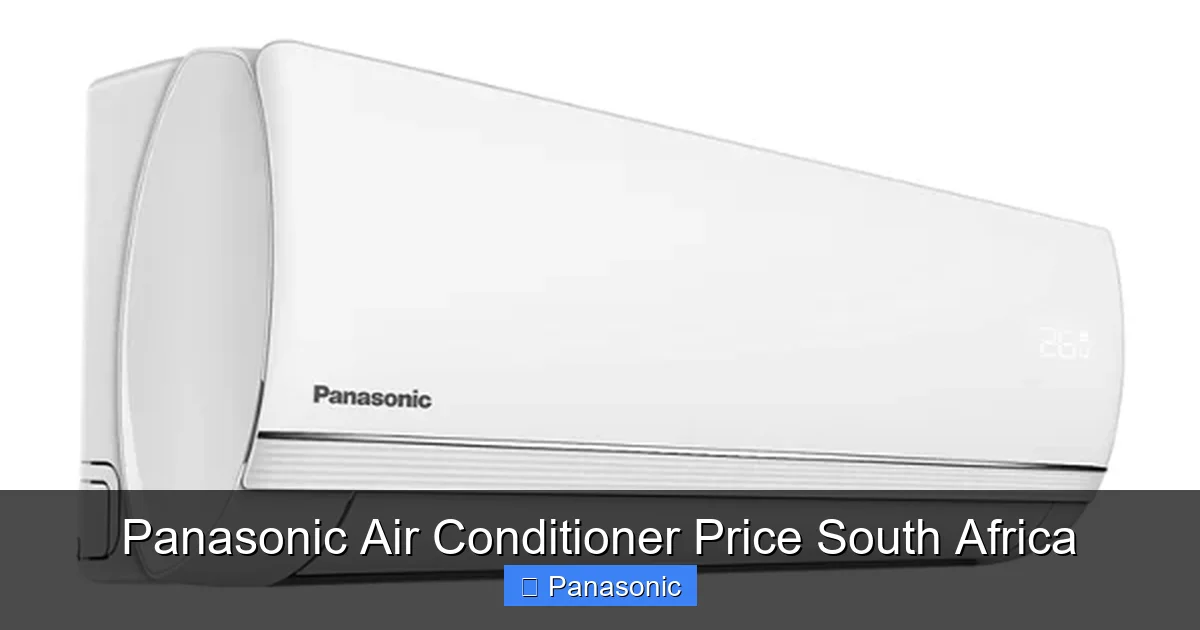
Panasonic split-system indoor unit mounted on a white wall
Panasonic split-system indoor unit showing sleek wall-mounted design
The Panasonic air conditioner price in South Africa varies widely based on type, size, technology, and additional features. Here’s a quick breakdown:
Window Air Conditioners
These are ideal for single rooms or small spaces. They’re compact, easy to install (though still best done by pros), and generally more affordable. Expect to pay between R3,500 and R7,000 for a Panasonic window unit, depending on BTU rating and features like remote control or sleep mode.
Split-System Air Conditioners
Popular in bedrooms and living areas, split systems consist of an indoor unit and outdoor compressor. They’re quieter and more aesthetically pleasing than windows units. Prices start around R6,500 for a 1-ton model and go up to R12,000+ for a 2-ton inverter split with Wi-Fi connectivity and advanced filtration.
Portable Air Conditioners
While Panasonic doesn’t produce as many portable units as some competitors, they do offer a few models designed for flexibility. These usually cost between R5,000 and R8,500 , depending on cooling capacity and mobility features like wheels and hose kits.
Smart & Premium Models
If you want the full experience—think voice control via Alexa or Google Assistant, air purification filters, and ultra-quiet operation—you’re looking at premium models priced between R10,000 and R15,000 . These are perfect for tech-savvy homeowners who prioritize convenience and style.
Keep in mind that prices can fluctuate during peak seasons like winter sales or Black Friday promotions. Always compare offers from multiple retailers to snag the best deal.
Factors That Influence Panasonic Air Conditioner Prices
Several key factors determine how much you’ll pay for a Panasonic air conditioner in South Africa. Understanding these helps you avoid overspending and ensures you get value for money.
Cooling Capacity (BTU/Ton Rating)
The size of your room directly affects the required BTU (British Thermal Unit). Too small = wasted energy; too large = poor dehumidification and higher bills. For example:
9,000–12,000 BTU: Suitable for rooms up to 30 m² (e.g., bedroom)
18,000 BTU: Ideal for open-plan lounge areas (~40 m²)
24,000 BTU: Best for large living rooms or small offices (~50 m²)
Panasonic typically labels their units in “tons” (1 ton ≈ 12,000 BTU), making it easier to compare. A 1.5-ton split will always cost more than a 1-ton unit due to increased components and performance.
Energy Efficiency Ratings
Look for the Energy Star label or EER (Energy Efficiency Ratio). Higher EER means lower electricity consumption. For instance, an AC with EER 3.5 uses less power than one with EER 2.8—even if they cool the same space. While efficient models may cost more upfront, they pay off within 1–2 years through savings.
Panasonic often highlights their “Econavi” or “Inverter+” technology, which maintains consistent temperatures without cycling on/off constantly. This reduces wear and tear and keeps your bill low. Pairing a high-EER unit with optimal temperature settings can shave another 10–15% off seasonal bills.
Additional Features
Smart features add cost but also convenience:
Wi-Fi/App Control: Adjust settings remotely via smartphone.
Auto-Clean Function: Reduces mold buildup inside the unit.
Air Purifiers: Remove allergens, dust, and odors.
Voice Compatibility: Works with Amazon Alexa or Google Home.
While not essential, these extras can enhance comfort and usability—especially if you travel frequently or have family members with allergies.
Brand Reputation vs. Local Support
Even the best international brands rely on local distributors for warranty service and parts. Panasonic South Africa has a strong network of authorized dealers and technicians, which adds peace of mind. Cheaper Chinese brands might sell for half the price, but lack reliable after-sales care—something worth paying extra for.
Top Panasonic Air Conditioner Models in South Africa (2026)
Here are three standout models currently available, along with approximate prices and why they stand out:
1. Panasonic CS/CU-NU12WKZV (1.5 Ton Inverter Split)
Price : ~R9,500 – R11,500
Features : Quiet operation (down to 26 dB), Econavi smart sensing, auto-clean, Wi-Fi ready, HEPA filter
Best For : Medium-sized bedrooms or home offices
This model is a favorite among buyers due to its balance of performance, efficiency, and smart features. The inverter compressor ensures stable cooling even during voltage fluctuations—common during load shedding.
2. Panasonic CU-WU18TKYV (2 Ton Inverter Window Unit)
Price : ~R8,000 – R9,800
Features : Dual temperature sensors, rapid cooling, low noise, easy maintenance
Best For : Large bedrooms or small shops
Unlike traditional window units, this model includes Panasonic’s proprietary inverter tech, reducing energy use by up to 40%. Its sleek design minimizes visual clutter, and the washable filter makes cleaning simple.
3. Panasonic CU-XU35TKYV (3 Ton High-Capacity Split)
Price : ~R13,000 – R15,000
Features : Triple-layer filtration, Wi-Fi app control, sleep mode, auto restart after power cuts
Best For : Whole-home cooling or commercial use
Perfect for larger homes or small businesses, this unit handles heavy cooling loads efficiently. The auto-restart feature is especially useful during frequent power interruptions.
Each model comes with a standard 2-year warranty (extendable to 5 years with registration). Be sure to ask your dealer about current promotions or bundle deals that include free installation or extended service plans.
Quick comparison at a glance:
Model Type Capacity Approx. Price Range Key Feature
CS/CU-NU12WKZV Inverter Split 1.5 Ton R9,500 – R11,500 26 dB quiet, HEPA filter
CU-WU18TKYV Inverter Window 2 Ton R8,000 – R9,800 Dual sensors, rapid cool
CU-XU35TKYV High-Capacity Split 3 Ton R13,000 – R15,000 Triple filtration, auto-restart
Where to Buy Panasonic Air Conditioners in South Africa
Finding a reputable seller is just as important as choosing the right model. Here are the best places to shop:
Major Retailers
HiFi Corp : Offers competitive pricing, delivery, and installation services nationwide. Often runs seasonal promotions.
Builders Warehouse : Great for DIY installers—you can buy online and pick up in-store. Installation kits sold separately.
Takealot : Convenient for online shopping with fast delivery. Check seller ratings and return policies carefully.
Makro : Bulk buyers or those needing multiple units may find group discounts here.
Authorized Dealers
For warranty protection and genuine parts, always purchase from an authorized Panasonic dealer . You can find them through Panasonic South Africa’s official website under “Find a Dealer.” These dealers also provide certified installation, which is crucial for split systems.
Tips Before Buying
Compare prices across at least 3 retailers.
Ask about installation fees—some charge R800–R1,500 per unit.
Verify warranty terms (labor vs. parts coverage).
Read recent customer reviews on sites like Takealot or Hello Peter.
Many retailers also offer financing plans (e.g., 12–24 months interest-free) which can spread the cost without inflating the total—ask at checkout.
Remember: the cheapest option isn’t always the best. A poorly installed unit can leak, vibrate excessively, or stop working within months—costing far more in repairs.
Installation, Maintenance, and Long-Term Costs
Proper installation isn’t optional—it’s essential. Improper setup leads to reduced efficiency, water leaks, and even safety hazards. Always hire a licensed technician, especially for split systems.
What Does Installation Include?
Mounting brackets (indoor/outdoor)
Drain hose connection
Electrical wiring (ensure your circuit can handle the load)
Refrigerant line sealing
Testing and calibration
Costs typically range from R800 to R1,800 , depending on complexity and location (e.g., multi-story buildings may require lifts). For a step-by-step overview of what a professional does, refer to our split system setup steps.
Maintenance Tips
To keep your Panasonic AC running smoothly:
Clean or replace filters every 2 weeks during hot months.
Schedule annual professional servicing (includes refrigerant checks and coil cleaning).
Keep outdoor units clear of debris and plants.
Use the “auto-clean” function monthly if available.
Neglecting maintenance can cut efficiency by 30% and shorten lifespan by half. A handy seasonal upkeep routine keeps the unit performing like new year after year.
Running Costs in South Africa
On average, a 1.5-ton inverter AC consumes about 1.2 kWh per hour when set to 22°C. At Eskom’s current residential tariff (check latest rates on their website), that’s roughly R162 per day or R4,900 per month if used 12 hours daily. However, inverter models reduce this significantly by avoiding constant on/off cycles.
Using timer functions, smart scheduling, and keeping doors/windows closed can further slash costs. During cooler nights, switch to fan-only mode instead of full cooling. For the latest tariff structures, check Eskom’s official site.
Seasonal Buying Tips for South Africa
Timing your purchase can save thousands. The best months to buy are January–March (post-summer clearance) and July–August (winter promotions before the spring rush). Retailers often bundle free installation or extended warranties during these windows. Black Friday (late November) also sees deep discounts, but stock of popular inverter models sells fast—reserve early if you spot a deal.
If you’re replacing an old unit, ask the retailer about trade-in offers; some authorized dealers accept working or non-working ACs for a credit toward a new Panasonic model.
Load Shedding Resilience and Backup Power
Frequent power cuts are a reality in South Africa. Panasonic’s auto-restart feature handles brief outages gracefully, but prolonged load shedding requires planning. A common mistake is assuming a small UPS can run an AC—instead, pair the unit with a correctly sized inverter-battery system or a generator rated for the compressor’s startup surge (typically 3–5× running watts). For safety, have an electrician install a changeover switch and ensure the AC’s circuit is on the backed-up portion of your DB board. The South African Department of Energy publishes guidelines on safe backup-power installations.
Comparing Panasonic with Other Leading Brands in South Africa
When evaluating Panasonic against competitors like LG, Samsung, Daikin, and Midea in the South African market, several differentiators stand out. Panasonic’s inverter compressors consistently rank among the quietest in independent lab tests, and their proprietary Econavi sensors adjust cooling based on real-time occupancy and sunlight intensity—a feature not universally matched at similar price points. LG and Samsung offer comparable smart-home ecosystems, but Panasonic’s local parts network and authorized service centers are more extensive outside major metros. Daikin often leads on ultra-high SEER ratings, yet their premium models can cost 15–20% more for equivalent capacity. Midea and other budget brands undercut on upfront price, but warranty support and refrigerant availability (R32 vs older R410A) can be inconsistent. For a broader view of how these brands stack up in residential HVAC, see our analysis of top residential HVAC systems.
Quick Brand Comparison (2026 Snapshot)
| Brand | Inverter Standard? | Typical 1.5T Split Price | Local Service Network | Refrigerant | Smart Home Integration |
|---|---|---|---|---|---|
| Panasonic | Yes (most models) | R9,500–R11,500 | Extensive (authorised dealers nationwide) | R32 | Alexa, Google Home, Panasonic Comfort Cloud |
| LG | Yes | R10,000–R12,500 | Strong in metros, limited rural | R32 | ThinQ, Alexa, Google |
| Samsung | Yes | R9,800–R12,000 | Good urban coverage | R32 | SmartThings, Alexa, Google |
| Daikin | Yes (premium) | R12,000–R15,000 | Authorised dealers, fewer in rural | R32 | Daikin Residential Controller, Alexa |
| Midea | Select models | R7,000–R9,000 | Growing, but patchy | R32/R410A mix | MSmartHome, Alexa |
Prices are indicative and vary by retailer and promotion.
Next step: Use our choosing the right AC size guide to match capacity to your space before comparing brands.
Energy Efficiency Incentives and Rebates in South Africa
South Africa has several programmes that can reduce the effective cost of a high-efficiency air conditioner. Eskom’s Integrated Demand Management (IDM) scheme occasionally offers rebates for approved inverter ACs installed by accredited contractors—check the Eskom IDM portal for current eligibility. The South African National Energy Development Institute (SANEDI) administers the Energy Efficiency Tax Incentive (Section 12L of the Income Tax Act), which allows businesses to claim deductions for verified energy-saving equipment, including qualifying air conditioners. For residential buyers, some municipalities (e.g., City of Cape Town, eThekwini) run appliance-replacement vouchers during winter campaigns; monitor local government websites for announcements. Always retain the original tax invoice, COC (Certificate of Compliance), and the unit’s energy label (SANS 941) to substantiate any claim.
Smart Home Integration and Voice Control Details
Panasonic’s Comfort Cloud app (iOS/Android) lets you control temperature, mode, fan speed, and schedules from anywhere. It also reports real-time power consumption—useful for tracking load-shedding impact. Voice commands via Alexa or Google Assistant work for basic on/off, setpoint changes, and mode switching. For advanced automations (e.g., “turn on AC when indoor temp exceeds 24°C AND solar generation > 2 kW”), you’ll need a home-automation hub like Home Assistant or a compatible smart thermostat bridge. The indoor unit’s built-in Wi-Fi module supports 2.4 GHz only; ensure your router broadcasts a dedicated 2.4 GHz SSID for reliable pairing. Firmware updates are pushed through the app—enable auto-update to get the latest demand-response features that can throttle compressor during grid stress events. Explore latest smart AC features for more on emerging integrations.
Common Installation Mistakes to Avoid
Even with a quality unit, poor installation undermines performance and warranty. Frequent errors include:
- Undersized refrigerant piping – causes high head pressure, reducing efficiency and compressor life.
- Insufficient clearance around the outdoor unit (less than 300 mm rear/side, 1 m front) – leads to recirculation of hot air.
- No trap in the condensate drain – allows air ingress, causing water blow-back into the indoor unit.
- Incorrect electrical cable gauge – voltage drop at startup trips breakers or damages the inverter board.
- Skipping nitrogen purge during brazing – introduces oxidation, risking future leaks.
- Mounting indoor unit too close to ceiling (less than 150 mm) – restricts airflow and increases noise.
Always insist on a Commissioning Checklist signed by the technician, recording refrigerant pressures, superheat/subcool, airflow temperatures, and electrical readings. For detailed indoor-unit mounting guidance, refer to our indoor unit mounting tips.
Panasonic Air Conditioner Buying Checklist
Print or screenshot this list before visiting a showroom or retailer:
- Measure room dimensions (L × W × H) and note window/door orientation.
- Calculate required capacity: area (m²) × 100 = watts; divide by 3,500 for approximate tons.
- Confirm inverter technology and R32 refrigerant on the spec sheet.
- Verify EER ≥ 3.5 (or 5-star SANS 941 label) for best running-cost savings.
- Check for must-have features: Wi-Fi, auto-clean, HEPA/triple filtration, low-noise rating (≤ 28 dB).
- Ask for total installed price (unit + installation + piping + electrical + brackets).
- Confirm warranty: 2 years standard, 5 years with registration + professional install.
- Get authorised dealer certificate and COC from installer.
- Compare at least three quotes; negotiate bundle (free install, extended warranty, or filter pack).
- Schedule installation before peak summer (ideally March–May or August–October).
Pair this checklist with our sizing guide for home cooling to avoid costly mismatches.
Final Thoughts: Is a Panasonic Air Conditioner Worth It?
After weighing performance, efficiency, local support, and long-term savings, it’s clear that Panasonic offers excellent value for money in South Africa. Yes, their prices are higher than some budget brands—but you’re paying for reliability, innovation, and peace of mind. With proper care and smart usage, a Panasonic AC can last 10+ years while keeping your home cool and comfortable.
Whether you’re upgrading an old unit or installing your first AC, take time to assess your needs, compare models, and choose a trusted installer. And remember: the right investment today prevents headaches tomorrow.
With seasonal sales, financing options, and growing demand for energy-efficient appliances, now is a great time to explore your choices. Start by checking current Panasonic air conditioner price in South Africa online or visiting a showroom near you. Ready to compare? Use our guide on choosing the right unit to narrow down the perfect fit.
Frequently Asked Questions
What is the best Panasonic air conditioner for a 30m² room?
A 1.5-ton inverter split AC, such as the Panasonic CS/CU-NU12WKZV, is ideal for rooms up to 30m² due to its balanced cooling capacity and energy efficiency.
Do Panasonic air conditioners work during load shedding?
Yes, most models support auto-restart after power restoration, allowing them to resume operation without manual intervention—ideal during frequent blackouts.
Is inverter technology worth the extra cost?
Absolutely. Inverter ACs consume significantly less electricity, run more quietly, and maintain consistent temperatures, paying for themselves over time.
Where can I get spare parts for my Panasonic AC?
Only authorized Panasonic dealers in South Africa supply genuine spare parts, ensuring compatibility and warranty compliance.
How do I calculate the correct AC size for my room?
Multiply your room area (in m²) by 100. For example, a 25m² room needs approximately 2,500 watts (or 12,000 BTU). Consider factors like ceiling height and insulation for accuracy.
Are Panasonic air conditioners noisy?
Modern Panasonic models operate as quietly as 26 dB—quieter than a whisper—making them suitable for bedrooms and study rooms.
Can I use a Panasonic AC with a home inverter/battery system?
Yes, provided the inverter’s continuous and surge ratings exceed the AC’s power draw. Check the unit’s nameplate for LRA (locked rotor amps) and consult an electrician for proper sizing.
How do I register my Panasonic warranty for the 5-year extension?
Register within 30 days of purchase on the Panasonic South Africa website or via the dealer; you’ll need the invoice, model/serial numbers, and proof of professional installation.
What refrigerant do current Panasonic models use?
All new Panasonic split systems sold in South Africa use R32 refrigerant, which has a lower global warming potential (GWP 675) than the older R410A and is now the industry standard under SANS 941.
How often should I clean the outdoor unit coils?
At least once per year, preferably before the summer season. Use a soft brush and low-pressure water; avoid bending fins. A clogged coil can raise compressor discharge pressure by 15–20%, cutting efficiency.
Does Panasonic offer a mobile app for all Wi-Fi models?
Yes, the Panasonic Comfort Cloud app supports every current Wi-Fi-enabled model. It provides remote control, scheduling, energy-use graphs, and firmware updates—no separate hub required.