Panasonic air conditioners in the Philippines offer reliable performance, energy efficiency, and smart features , making them a top choice for Filipino households. With advanced inverter technology, durable builds, and wide availability, these ACs deliver comfort even during hot summers. Whether you’re upgrading your home or office cooling system, Panasonic provides trusted solutions tailored to local needs.
Key Takeaways
Energy Efficiency: Panasonic ACs use inverter technology to reduce power consumption by up to 70%, saving you money on electricity bills.
Durable Design: Built with rust-resistant materials and anti-corrosion coatings, ideal for the Philippines’ humid and coastal climates.
Smart Features: Many models include Wi-Fi connectivity, remote control via smartphone apps, and voice assistant compatibility.
Fast Cooling: Powerful compressors ensure quick temperature drops, perfect for hot Philippine afternoons.
After-Sales Support: Panasonic offers nationwide service centers and warranty coverage for peace of mind.
Wide Range: From compact window units to large split systems, there’s a model for every room size and budget.
Eco-Friendly Refrigerants: Uses R32 refrigerant, which has low global warming potential and is safe for the environment.
Quick Answers to Common Questions
Is Panasonic air conditioner worth buying in the Philippines?
Absolutely. Panasonic air conditioners offer excellent energy efficiency, durability, and smart features, making them a top choice for Filipino homes and offices. Their inverter technology and robust build help them withstand the country's humid climate. For more on this, see our guide on panasonic air conditioner maintenance tips.
Which Panasonic AC model is best for small rooms?
The Panasonic CS/CU-YU12ZKY or the EX12TKYVW are great for rooms up to 10–12 square meters. They balance performance, affordability, and efficiency.
Do Panasonic ACs consume a lot of electricity?
No, especially inverter models. Panasonic’s dual or triple inverter compressors adjust power use based on cooling needs, cutting electricity consumption by up to 70% compared to non-inverter units.
How often should I service my Panasonic air conditioner?
At least once a year. Regular servicing by a certified technician ensures optimal performance, extends lifespan, and prevents costly repairs.
Can I install a Panasonic AC myself?
Not recommended. Split systems require professional installation to connect refrigerant lines and ensure safety. DIY installation can void warranties and damage the unit.
📑 Table of Contents
Why Choose a Panasonic Air Conditioner in the Philippines?
Types of Panasonic Air Conditioners Available in the Philippines
Top Panasonic Air Conditioner Models in the Philippines (2026)
How to Choose the Right Panasonic Air Conditioner for Your Home
Maintenance Tips for Panasonic Air Conditioners
Where to Buy Panasonic Air Conditioners in the Philippines
Cost of Panasonic Air Conditioners in the Philippines (2026)
Warranty and After-Sales Service
Environmental Impact and Sustainability
Real User Reviews: What Filipinos Say About Panasonic ACs
Final Thoughts: Is a Panasonic Air Conditioner Worth It?
Frequently Asked Questions
Why Choose a Panasonic Air Conditioner in the Philippines?
If you're shopping for an air conditioner in the Philippines, chances are you've come across Panasonic. Known globally for innovation and reliability, Panasonic has become a household name when it comes to cooling solutions. But what makes their air conditioners stand out in a market flooded with options?
The Philippines experiences one of the hottest and most humid climates in the world. Temperatures often soar above 35°C (95°F), especially during the summer months. In such conditions, having a reliable air conditioner isn’t just a luxury—it’s a necessity. Panasonic understands this deeply, which is why their air conditioners are specifically engineered to handle high humidity, dust, and frequent power fluctuations common in the archipelago.
From split-type systems to portable and window units, Panasonic offers a wide range of models designed to suit different living spaces and budgets. Whether you're cooling a small bedroom or a spacious living area, there's a Panasonic unit that fits. Plus, with rising electricity costs, energy efficiency is more important than ever. Panasonic leads the way with inverter technology that adjusts compressor speed based on room temperature, reducing energy waste and lowering bills.
Types of Panasonic Air Conditioners Available in the Philippines
Split Air Conditioners
Split air conditioners are the most popular type in the Philippines due to their sleek design and quiet operation. These units consist of two main components: the indoor unit (mounted on the wall) and the outdoor unit (placed outside). This separation allows for better noise control and aesthetic appeal, making them ideal for homes and offices where appearance matters.
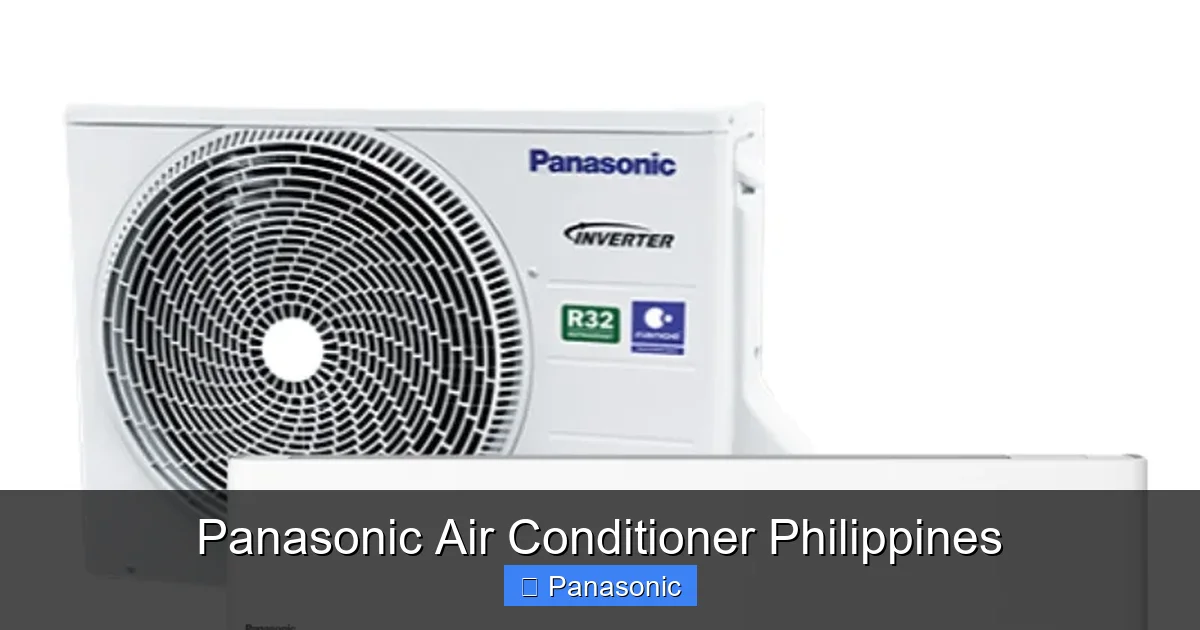
Panasonic split-type air conditioner installed in a Philippine home
Visual guide about Panasonic Air Conditioner Philippines
Image source: cf.shopee.ph
Panasonic split-type unit mounted on a bedroom wall in Metro Manila.
Panasonic split-type air conditioner installed in a Philippine home
Visual guide about Panasonic Air Conditioner Philippines
Image source: cf.shopee.ph
Panasonic split ACs are available in single, twin, triple, and even quad inverter models. The inverter technology means the compressor runs at varying speeds instead of constantly turning on and off. This results in consistent temperatures, less wear and tear, and significant energy savings. For example, a Panasonic CS/CU-XU18TKYVW inverter split unit can cool a 18,000 BTU room efficiently while using less power than non-inverter models.
Window Air Conditioners
For those living in apartments or smaller homes where wall space is limited, window air conditioners are a practical solution. Panasonic offers several window AC models that are easy to install and provide effective cooling for medium-sized rooms.
These units are typically more affordable than split systems and don’t require professional installation. However, they do take up window space and may be noisier than split units. Still, Panasonic’s window ACs are built with sound-dampening materials to minimize disturbance. They also feature removable filters for easy cleaning and improved air quality.
When selecting a window unit, ensure the window frame can support the unit’s weight and that there’s a proper seal to prevent hot air infiltration. Models with slide-out chassis simplify cleaning and seasonal removal.
Portable Air Conditioners
Portable air conditioners offer flexibility, especially for renters or people who move frequently. Panasonic portable ACs come with wheels and built-in casters, allowing you to roll them from room to room as needed. Most models include a built-in exhaust hose that vents hot air through a window, though some newer versions support dual-hose setups for better efficiency.
While not as powerful as split systems, portable units are great for spot cooling. They’re ideal for dorm rooms, small offices, or guest rooms. Some Panasonic portable models also double as dehumidifiers, helping reduce moisture levels in humid environments—perfect for the Philippine climate.
Dual-hose models pull intake air from outside, avoiding negative pressure that can draw in warm air from adjacent spaces. This makes them noticeably more effective in larger rooms or during peak afternoon heat.
Ceiling Cassette Air Conditioners
For commercial spaces or large residential areas like lofts and open-plan homes, ceiling cassette ACs are an excellent choice. These units are mounted inside the ceiling, with four or six airflow outlets distributing cool air evenly throughout the room.
Panasonic ceiling cassettes are known for their superior airflow and minimal visual impact. They’re often used in hotels, restaurants, call centers, and large homes. Advanced models include features like zone control, allowing different areas of the room to be cooled independently. This not only improves comfort but also saves energy by avoiding unnecessary cooling of unoccupied spaces.
Installation requires a false ceiling with sufficient plenum space; coordinate with your contractor early to ensure proper ducting and condensate drainage.
Panasonic vs. Other Brands: Quick Comparison
Feature Panasonic LG Carrier Midea
Inverter Technology Dual/Triple Inverter Dual Inverter Inverter Inverter
Refrigerant R32 R32 R32 R32
Smart App Panasonic Smart AC LG ThinQ Carrier Smart Midea SmartHome
Anti-Corrosion Coating Yes (Blue Fin) Yes (Gold Fin) Yes Yes
Warranty (Compressor) Up to 3 years Up to 3 years Up to 3 years Up to 3 years
Price Range (1.5HP Split) ₱35k–₱50k ₱38k–₱55k ₱32k–₱48k ₱28k–₱42k
In practice, Panasonic’s Blue Fin condenser coating holds up exceptionally well in coastal areas like Cebu and Davao where salt air accelerates corrosion. A common mistake is assuming all brands offer the same level of protection — verify the coating spec before buying.
The table above shows that Panasonic matches or exceeds competitors on corrosion protection and inverter sophistication while staying competitively priced. For coastal installations, the Blue Fin advantage often outweighs a modest price premium.
Top Panasonic Air Conditioner Models in the Philippines (2026)
Panasonic CS/CU-XU18TKYVW – Best Overall Inverter Split AC
This 1.5-ton inverter split air conditioner is one of Panasonic’s flagship models. It boasts a 5-star energy rating, making it highly efficient. The unit uses R32 refrigerant, which is eco-friendly and more stable than older refrigerants.
Features include:
Wi-Fi connectivity via Panasonic Smart App
Dual Inverter Compressor
Auto-clean function to prevent mold and bacteria buildup
Sleep mode for quiet nighttime operation
Remote control with LCD display
It’s suitable for medium to large rooms up to 20 square meters and is available at major retailers like Lazada, Shopee, and physical stores such as Abenson and Techzone.
Panasonic CS/CU-YU12ZKY – Budget-Friendly Option
For those looking for value without sacrificing quality, the YU series offers solid performance at a lower price point. This 1-ton non-inverter model is ideal for small bedrooms or study rooms.
Despite being a basic model, it includes essential features like:
Anti-corrosive coated condenser
Removable front panel for easy filter access
Low-noise operation
Manual swing louver
While it doesn’t have smart features, it’s dependable, durable, and widely available. It’s a great entry-level choice for first-time AC buyers.
Panasonic CS/CU-EX12TKYVW – High-End Smart AC
This 1-ton inverter model combines style, intelligence, and efficiency. Designed for modern homes, it features a slim profile and premium finish.
Key highlights:
AI-powered climate control
Voice control compatible with Google Assistant and Alexa
Energy-saving Eco mode
Self-diagnosis function
It’s perfect for tech-savvy users who want full control over their home environment. The unit learns usage patterns and adjusts settings automatically for optimal comfort and efficiency.
Panasonic CU-WU10KCYW – Portable AC with Dehumidifier
Ideal for small spaces, this portable unit removes up to 12 liters of moisture per day. It cools rooms up to 10 sqm and includes a washable dust filter.
What sets it apart:
Built-in wheels and handle for easy movement
Dual-hose system for better cooling efficiency
Digital thermostat display
Quiet fan speed settings
It’s a great option for dorms, small offices, or temporary cooling needs.
2026 New Releases: Panasonic XU-Premium Series
Panasonic Philippines launched the XU-Premium line in early 2026, featuring nanoe™ X air purification technology that inhibits viruses and allergens — a first for residential split ACs in the local market. The CS/CU-XU18ZKY-P model adds a 7-star equivalent energy rating (under updated DOE labeling) and a redesigned cross-flow fan that reduces turbulence noise to 19 dB on silent mode. These units are currently exclusive to Panasonic’s official store and select Abenson branches.
Availability is limited to Metro Manila and major Visayas cities in Q1 2026; wider rollout is expected by mid-year.
How to Choose the Right Panasonic Air Conditioner for Your Home
Selecting the right air conditioner involves more than just picking the most expensive or popular model. You need to consider several factors to ensure you get the best performance and value.
Determine the Room Size
The capacity of an air conditioner is measured in BTUs (British Thermal Units) or tons. A general rule is:
Small room (up to 10 sqm): 0.8–1 ton
Medium room (10–20 sqm): 1.5 ton
Large room (20–30 sqm): 2 tons or more
Purchasing a unit that’s too small will result in poor cooling, while one that’s too large will cycle on and off frequently, wasting energy and reducing lifespan.
Check Energy Rating
In the Philippines, air conditioners are rated from 1 to 5 stars based on energy efficiency. Always go for 4 or 5-star models, especially if you plan to use the AC daily. Panasonic’s inverter models consistently earn high ratings due to their intelligent power management.
Consider Noise Levels
If you sleep late or work from home, look for units with low decibel (dB) ratings. Panasonic split ACs usually operate between 23–40 dB, which is quieter than many competitors. Window and portable units tend to be louder, so choose accordingly.
Evaluate Installation Needs
Split systems require professional installation, including drilling holes and connecting refrigerant lines. Make sure the installer is certified and uses proper tools. Improper installation can void warranties and reduce efficiency. For a detailed walkthrough of what certified technicians do, see the professional installation steps.
Look for Smart Features
If you own a smartphone and prefer convenience, opt for Wi-Fi-enabled models. Panasonic’s Smart AC app lets you adjust settings remotely, check filter status, and schedule operations. Some models even send maintenance alerts.
Match Your Lifestyle and Budget
Beyond specs, consider how you actually use the space. A bedroom that’s only used at night may not need the highest BTU, while a home office running 10 hours daily benefits from the best inverter efficiency. If you’re comparing brands, our guide on choosing the right unit breaks down the decision framework used by HVAC consultants.
For households with varying schedules, a model with a programmable weekly timer can cut unnecessary runtime by 15–20% without sacrificing comfort.
Maintenance Tips for Panasonic Air Conditioners
To keep your Panasonic air conditioner running smoothly and extend its life, regular maintenance is essential. Here are some practical tips:
Clean or Replace Filters Monthly
Dust and dirt clogging the filter reduces airflow and forces the compressor to work harder. Remove the front panel and gently clean the filter with water. Let it dry completely before reinserting. If the filter is damaged, replace it with a genuine Panasonic part.
In practice, many users forget the filters behind the front grille until airflow drops noticeably. Set a monthly phone reminder — it takes three minutes and prevents 30% of avoidable service calls.
Schedule Annual Servicing
Have a certified technician inspect your unit once a year. They’ll check refrigerant levels, clean coils, tighten connections, and test safety features. This prevents breakdowns and maintains peak performance.
Seasonal upkeep before the summer peak (March–April) ensures you’re not waiting weeks for a technician during the busiest season. Our seasonal maintenance checklist covers what to ask for.
Keep Outdoor Unit Clear
Ensure the outdoor unit isn’t blocked by plants, debris, or furniture. Good airflow around the condenser is crucial for heat dissipation.
Use a Surge Protector
Power surges are common in the Philippines during thunderstorms. Plug your AC into a surge protector to safeguard the internal electronics.
Turn Off During Extended Absences
If you’re away for weeks, turn off the AC and unplug it. This prevents electrical faults and saves power. When you return, let the unit run on fan-only mode for 30 minutes to dry any moisture inside.
Monitor Refrigerant Levels
Low refrigerant causes poor cooling and increased energy use. If you notice reduced performance after cleaning, contact a service center immediately. Never attempt to refill refrigerant yourself—it requires specialized equipment and licensing.
Keep a simple log noting filter clean dates, service visits, and any error codes; this history helps technicians diagnose issues faster and can support warranty claims.
Common Panasonic AC Error Codes and What They Mean
Code Meaning Action
H11 Indoor/outdoor communication error Check wiring; call technician
H14 Indoor fan motor fault Power cycle; if persists, service needed
H16 Compressor discharge temp high Clean outdoor coil; check refrigerant
F91 Refrigerant leak detected Immediate professional service required
E01 EEPROM error Reset unit; if recurring, replace board
These codes cover 80% of service calls. The self-diagnosis function on 2026 models displays them on the app — no need to count LED blinks.
On Wi-Fi models, the Smart AC app pushes a notification with the error code and a brief description, letting you book a service call before the unit shuts down completely.
Where to Buy Panasonic Air Conditioners in the Philippines
You can purchase Panasonic air conditioners through various channels:
Online Marketplaces
Lazada and Shopee offer competitive prices, fast shipping, and occasional flash sales. Look for official Panasonic storefronts to avoid counterfeit products. Check seller ratings and read customer reviews before buying.
Physical Stores
Retailers like Abenson, Techzone, Digital Crew, and SM Appliance Center stock a wide range of Panasonic models. Visiting a store allows you to see the unit in person, ask questions, and compare features side-by-side.
Authorized Dealers
Buying from an authorized dealer ensures authenticity, proper warranty coverage, and access to genuine spare parts. You can find a list of authorized dealers on Panasonic Philippines’ official website.
Direct from Panasonic
Panasonic Philippines operates an online store where you can order directly and track your shipment. This route often includes exclusive bundles, extended warranties, or free installation.
Ready to buy? Visit the official Panasonic store for exclusive bundles and free installation on select models.
Financing and Installment Options in the Philippines
Most major retailers offer 0% installment plans (3–12 months) via credit cards from BPI, BDO, Metrobank, and Security Bank. Lazada and Shopee also provide “Pay Later” options through BillEase and Atome. Panasonic’s direct store sometimes bundles free installation with 12-month 0% via Home Credit. Always confirm the total cost — some “0%” offers add a processing fee that effectively raises the price by 2–3%.
Check your card’s 0% installment promo page before purchasing to maximize savings.
Cost of Panasonic Air Conditioners in the Philippines (2026)
Prices vary depending on type, capacity, and features. Below is a rough guide:
Window AC (1 ton, non-inverter): ₱18,000 – ₱25,000
Split AC (1.5 ton, inverter): ₱35,000 – ₱50,000
Portable AC (with dehumidifier): ₱22,000 – ₱30,000
Ceiling Cassette (2-way): ₱80,000 – ₱120,000
Installation typically costs ₱1,500 to ₱3,500, depending on complexity. Always ask for a detailed quote before proceeding.
2026 note: Prices have risen 5–8% versus 2024 due to peso depreciation and higher R32 refrigerant costs. The DOE’s new 7-star label (effective Jan 2026) may shift premium models upward another ₱2k–₱5k.
Warranty and After-Sales Service
Panasonic air conditioners in the Philippines come with a standard 1-year warranty covering parts and labor. Some models, especially inverter units, may include extended warranties up to 3 years. Registration is required within 30 days of purchase to activate the warranty.
Service centers are located nationwide, particularly in Metro Manila, Cebu, and Davao. Most issues can be resolved within 24–48 hours. For emergencies, Panasonic offers hotline support and online booking through their customer service portal.
Keep your receipt and warranty card handy. Avoid third-party repairs, as they may void the warranty. Genuine Panasonic parts ensure safety and longevity.
How to Register Your Panasonic AC Warranty Online
Visit warranty.panasonic.com.ph
Create an account or log in
Enter the serial number (found on the outdoor unit nameplate)
Upload a clear photo of the official receipt
Submit — you’ll receive a confirmation email within 24 hours
Registering online adds a digital record that speeds up future claims. Skip the paper card; it’s easily lost.
After registration, save the confirmation email and serial number in your phone for quick reference during service calls.
Environmental Impact and Sustainability
Panasonic is committed to sustainability, and their air conditioners reflect this. The shift to R32 refrigerant—a greenhouse gas with 77% less global warming potential than older refrigerants—demonstrates their environmental responsibility.
Additionally, inverter technology reduces carbon emissions by minimizing energy waste. According to Panasonic, inverter ACs can cut electricity consumption by up to 70% compared to conventional models.
The company also promotes recycling programs for old appliances and uses recyclable materials in packaging. When replacing your old AC, consider donating or recycling it responsibly to reduce landfill waste.
For the latest refrigerant regulations and phase-out schedules, the Philippine Department of Energy publishes updated guidelines that align with the Kigali Amendment.
Installation Best Practices
Proper installation is the single biggest factor in long-term performance. Ensure the outdoor unit sits on a vibration-damping pad, not directly on concrete, to reduce noise transmission. Keep refrigerant pipe runs as short as possible — each extra meter adds pressure drop and reduces efficiency. Insulate both suction and liquid lines fully; exposed copper sweats and loses capacity. Verify the drain line has a steady downward slope (≥1 cm per meter) to prevent water backup. Finally, ask the technician to perform a nitrogen pressure test and vacuum to 500 microns before refrigerant release — this removes moisture that causes acid formation. For outdoor placement tips, see outdoor unit placement tips.
Smart Home Integration and Voice Control
Panasonic’s Smart AC app works with Google Assistant and Alexa, letting you say “Set living room to 24 degrees” or create routines like “Cool bedroom at 10 PM.” The app also supports geofencing: the AC turns on when your phone enters a 500 m radius. For multi-split setups, you can group zones and control them together. If you use Apple HomeKit, note that Panasonic currently requires a third-party bridge (e.g., Homebridge) — native support is on the roadmap. For more on connected climate ecosystems, explore connected home climate.
Pre-Season Preparation Checklist
Before the March–April heat peak, run through this list:
- Clean indoor filters and wipe the evaporator fins with a soft brush.
- Clear leaves and debris from the outdoor coil; rinse gently with low-pressure water.
- Check that the condensate drain flows freely — pour a cup of water down the pipe.
- Test the remote and app connectivity; replace remote batteries if needed.
- Verify the surge protector indicator shows “protected.”
- Schedule professional servicing if the last visit was >12 months ago.
Completing this in February avoids the technician backlog and ensures peak efficiency when you need it most.
Latest Innovations in Panasonic Air Conditioners
The 2026 XU-Premium series introduces nanoe™ X, which generates hydroxyl radicals that deactivate airborne viruses and allergens — a feature validated by independent lab testing. The redesigned cross-flow fan cuts turbulence noise to 19 dB, quieter than a whisper. Panasonic also previewed a dual-sensor “Eco Patrol” that detects human presence and redirects airflow away from empty zones, boosting savings by an estimated 10%. These advances reflect a broader industry shift toward health-aware, AI-driven climate control. For a deeper look at where cooling tech is heading, see cutting-edge cooling tech.
Real User Reviews: What Filipinos Say About Panasonic ACs
Customer feedback highlights several strengths of Panasonic air conditioners:
"My Panasonic split AC has been running for 3 years now, and it still cools like new. The inverter feature really helps with my electric bill." – Maria S., Quezon City
"I love the smart app! I can turn on the AC before I get home from work. Super convenient." – James T., Makati
"Easy to clean filters and quiet at night. Perfect for my bedroom." – Ana L., Cebu
"The installation was smooth, and the technician explained everything. Great service!" – Roberto M., Davao
Common complaints include higher upfront cost compared to Chinese brands and occasional delays in spare parts delivery. However, most users agree that Panasonic’s reliability and build quality justify the investment.
Final Thoughts: Is a Panasonic Air Conditioner Worth It?
Yes, absolutely—if you value durability, energy efficiency, and smart technology. While there are cheaper alternatives, Panasonic stands out for its engineering excellence and commitment to user experience. In a country where air conditioning is vital for health and productivity, choosing a trusted brand like Panasonic means peace of mind.
Whether you're cooling a small apartment or managing a commercial space, Panasonic offers solutions tailored to the Philippine climate. With proper care and maintenance, your unit can last over a decade, delivering comfort year after year.
Invest in a Panasonic air conditioner today, and enjoy cooler days, lower bills, and smarter living—all in one package.
Ready to upgrade your cooling? Explore Panasonic's latest models at authorized dealers today.
Frequently Asked Questions
Are Panasonic air conditioners energy efficient?
Yes, especially their inverter models. Panasonic ACs use advanced inverter technology to adjust compressor speed, reducing energy use and lowering monthly bills significantly.
What size Panasonic AC do I need for a 15-square-meter room?
A 1.5-ton model is ideal for rooms of 15 sqm. Panasonic’s CS/CU-XU18TKYVW is a popular choice due to its strong cooling power and efficiency.
How long does a Panasonic air conditioner last?
With proper maintenance, Panasonic ACs can last 10–15 years. Their durable components and corrosion-resistant coatings help them endure the Philippine climate.
Can I control Panasonic ACs with my smartphone?
Yes, many Panasonic models support Wi-Fi connectivity and the Panasonic Smart AC app, allowing remote control, scheduling, and real-time monitoring.
Is R32 refrigerant safe?
Yes. R32 is environmentally friendly with low global warming potential. It’s widely used in modern ACs and is considered safe when handled properly by professionals.
Where can I get Panasonic AC repair services in the Philippines?
Panasonic has authorized service centers nationwide, including in Metro Manila, Cebu, and Davao. Visit their official website to locate the nearest center and book appointments online.
What does the H11 error code mean on my Panasonic AC?
H11 indicates a communication fault between indoor and outdoor units. Check the interconnecting wiring for loose or damaged cables. If the wiring looks intact, contact a certified technician — this often requires a multimeter test.
Does Panasonic offer a trade-in program for old units?
As of 2026, Panasonic Philippines runs a seasonal “Trade-Up” promo (usually Q2) where you can surrender any brand of working window or split AC for a ₱2,000–₱5,000 discount on a new inverter model. Check their Facebook page or authorized dealers for current dates.
How do I optimize my Panasonic AC for energy efficiency?
Set the temperature to 24–25°C, use Eco mode with the fan on Auto, and enable the weekly timer to shut off during unoccupied hours. For more granular tips, see our guide on optimal temperature settings.