Panasonic Air Conditioner Parts Sri Lanka
Panasonic Air Conditioner Parts Sri Lanka
Looking for genuine Panasonic air conditioner parts in Sri Lanka? Whether your unit needs a new filter, compressor, or remote control, finding the right replacement ensures long-term performance and energy efficiency. In this guide, we’ll walk you through everything you need to know about sourcing authentic Panasonic AC parts across Sri Lanka—from trusted suppliers to installation tips—so you can keep your cooling system running smoothly year-round.
Key Takeaways
Genuine Parts Matter: Using authentic Panasonic components ensures compatibility, safety, and optimal performance of your air conditioner.
Warranty Protection: Genuine parts help maintain your AC’s warranty coverage and prevent voiding if used by unauthorized technicians.
Local Suppliers Are Reliable: Many reputable dealers in Colombo, Kandy, and Jaffna stock verified Panasonic spare parts with service support.
Common Replacement Needs: Filters, capacitors, compressors, and fan motors are among the most frequently replaced AC components in Sri Lankan homes.
Professional Installation Recommended: Even simple part replacements benefit from certified technician handling to avoid damage or leaks.
Online Options Available: Trusted e-commerce platforms offer doorstep delivery of Panasonic parts with authenticity guarantees.
Seasonal Maintenance Saves Money: Regular cleaning and timely part replacements reduce breakdowns during peak heat months like April–August.
Key Takeaways
- Understanding panasonic air conditioner parts sri lanka: Provides essential knowledge
Quick Answers to Common Questions
Can I buy Panasonic air conditioner parts online in Sri Lanka?
Yes, many trusted websites like Kapruka and MyDeal.lk deliver genuine Panasonic AC parts nationwide with authenticity guarantees and secure payment options.
How do I know if my AC part is genuine?
Look for holograms, official packaging, QR codes, and correct part numbers. Verify through Panasonic’s official website or contact their customer service with the serial number.
Is it safe to replace a capacitor myself?
If you have basic electrical knowledge and tools, yes—but always disconnect power first. For others, hiring a certified technician is safer to avoid shocks or circuit damage.
What’s the average lifespan of a Panasonic air conditioner?
With proper care, most Panasonic ACs last 8–12 years. Inverter models often exceed 10 years due to efficient compressors and fewer mechanical failures.
Are imported Panasonic parts better than local ones?
No—Panasonic manufactures and tests all parts to global standards regardless of origin. What matters is authenticity, not location. Stick to authorized suppliers in Sri Lanka.
📑 Table of Contents
Why Genuine Panasonic Air Conditioner Parts Matter in Sri Lanka
Where to Find Authentic Panasonic Air Conditioner Parts in Sri Lanka
Most Common Panasonic Air Conditioner Parts Replacements
How to Identify Genuine vs. Counterfeit Panasonic Parts
DIY vs. Professional Repair: What’s Best for Your AC?
Seasonal Maintenance Tips to Extend Your AC’s Life
Warranty and After-Sales Support in Sri Lanka
Future-Proofing Your Investment
Why Genuine Panasonic Air Conditioner Parts Matter in Sri Lanka
Sri Lanka’s tropical climate makes air conditioning not just a luxury but a necessity for comfort and health—especially during the sweltering afternoons and humid nights. With rising temperatures and unpredictable weather patterns, your Panasonic air conditioner works harder than ever. But when parts wear out or fail, using the wrong replacements can lead to poor performance, higher electricity bills, or even complete system failure. That’s why sourcing genuine Panasonic air conditioner parts in Sri Lanka is essential for long-term reliability.
Genuine components are engineered specifically for your model, ensuring perfect fit, efficiency, and durability. Unlike generic alternatives found in local markets, original Panasonic parts come with quality certifications and manufacturer-backed warranties. This means less downtime, fewer repairs, and peace of mind knowing your appliance is operating as intended.
Moreover, using non-genuine parts may seem cost-effective upfront, but they often result in frequent breakdowns and increased repair costs over time. In Sri Lanka’s hot and dusty environment, where humidity and sand can accelerate wear, investing in authentic parts pays off significantly.
Regulatory Standards for AC Parts in Sri Lanka
Sri Lanka’s consumer‑protection framework requires that all electrical appliances and spare parts meet the safety and performance criteria set by the Sri Lanka Standards Institution (SLSI). Genuine Panasonic components carry the SLSI mark, confirming they have passed local type‑testing for voltage tolerance, insulation resistance, and environmental durability. When you buy from an authorised dealer, you receive a certificate of compliance that can be presented during warranty claims or insurance inspections. For the latest standards catalogue, see the SLSI official portal.
Where to Find Authentic Panasonic Air Conditioner Parts in Sri Lanka
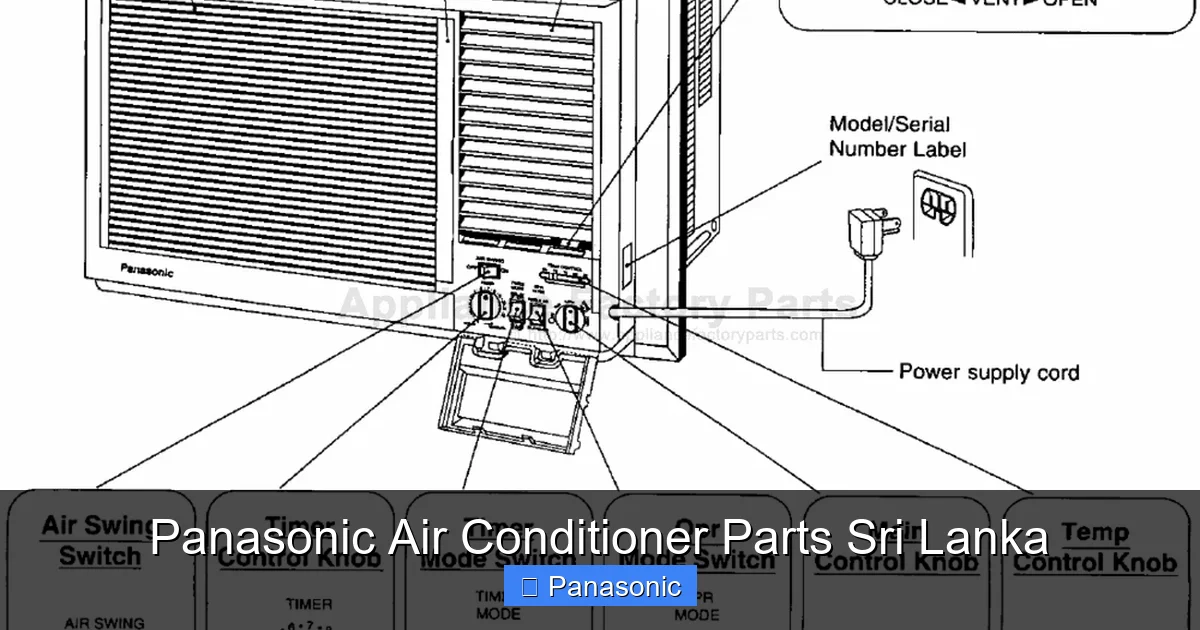
Authorized dealer display of genuine Panasonic AC components in Colombo showroom
Visual guide about Panasonic Air Conditioner Parts Sri Lanka
Image source: cdn.appliancefactoryparts.com
Finding trustworthy sources for Panasonic air conditioner parts in Sri Lanka doesn’t have to be stressful. The country has developed a strong network of authorized dealers, service centers, and online retailers that prioritize genuine products.
Start by visiting official Panasonic service centers in major cities like Colombo, Kandy, Galle, and Jaffna. These locations employ certified technicians who use only OEM (Original Equipment Manufacturer) parts—guaranteeing authenticity and proper function. You can also call their helpline or check their website for a list of registered service partners near you.
Many electronics superstores such as Singer, Arpico, and Odel also carry Panasonic spare parts under warranty agreements. Always ask for the invoice and warranty card when purchasing. Reputable sellers will provide proof of purchase and after-sales support.
For convenience, several e-commerce platforms now deliver Panasonic AC parts nationwide. Websites like Kapruka, MyDeal.lk, and Amazon.sg (with Sri Lankan fulfillment) offer verified components with tracking and return policies. Look for sellers with high ratings and clear product descriptions mentioning “genuine” or “OEM.”
Avoid street vendors or unverified online shops selling “Panasonic-compatible” parts at rock-bottom prices—these are often counterfeit and risk damaging your unit.
Top Cities for Panasonic AC Parts Procurement
Colombo: Home to most authorized Panasonic service centers and electronics hubs like Pettah and Borella.
Kandy: A key regional hub with full-service outlets and spare part warehouses.
Galle: Popular among tourists and locals for trusted appliance repair shops.
Jaffna & Trincomalee: Increasing availability due to growing demand in the North and East.
Always confirm part numbers before buying—this prevents mismatched components and wasted effort.
Ordering Panasonic Parts Online: Safety Checklist
When purchasing Panasonic AC components through e-commerce platforms, follow these steps to ensure authenticity and avoid scams:
Verify the seller is an authorized Panasonic partner — check for a verified badge or link to Panasonic Sri Lanka’s dealer locator.
Confirm the part number matches your model’s service manual exactly; even a single digit difference can cause fitment issues.
Use secure payment methods (credit card, trusted payment gateway) and keep screenshots of the order confirmation.
Inspect the package on delivery for intact holographic seals, QR codes, and undamaged packaging before accepting.
Register the part on Panasonic’s official verification portal within 48 hours to activate any applicable warranty.
Verifying Supplier Credentials
Before placing an order, cross‑check the supplier’s authorisation status on the Panasonic Sri Lanka dealer locator and read recent customer reviews on the airconditionsolve blog. A legitimate partner will display a current authorisation certificate, provide a VAT‑registered invoice, and offer a clear return‑policy page. If any of these elements are missing, treat the listing as high‑risk.
Most Common Panasonic Air Conditioner Parts Replacements
Over time, certain components naturally degrade due to continuous operation, environmental exposure, or manufacturing limits. Being aware of these common replacements helps you anticipate maintenance needs and act proactively.
Air Filters and Pre-Filters
In Sri Lanka’s dusty coastal areas and rural regions with high pollen levels, air filters clog faster than usual. A dirty filter restricts airflow, reduces cooling efficiency, and strains the compressor. Most Panasonic models use washable mesh filters or disposable HEPA-style pre-filters.
Replace or clean your filter every 1–2 months during peak seasons (March to September). If you notice reduced airflow or musty smells, it’s time for a change. Genuine Panasonic filters are designed to trap fine particles without blocking ventilation.
Compressors
The heart of any inverter or conventional AC, the compressor circulates refrigerant to cool indoor air. While durable, compressors can fail due to voltage fluctuations, refrigerant leaks, or overheating—common issues in Sri Lanka’s unstable power supply.
Signs of compressor trouble include unusual noises (knocking or buzzing), warm air output, or frequent cycling on/off. Replacing a compressor is complex and usually best left to professionals, but sourcing an OEM part ensures compatibility and longevity.
Note: Never attempt DIY refrigerant handling—this requires specialized tools and certification under Sri Lankan law.
Condenser and Evaporator Coils
These metal fins absorb and release heat during the refrigeration cycle. Dust buildup, mold, or corrosion (especially in humid coastal zones) can impair heat exchange. Over time, coils may develop leaks or require cleaning.
Gentle brushing with a soft brush or professional coil cleaning service keeps them efficient. If physical damage occurs, replacement coils must match exact dimensions and fin density. Always request OEM coils from authorized suppliers.
Capacitors
Small but vital, capacitors store electrical energy to start motors and fans. Panasonic AC units use multiple capacitors—for the compressor, indoor fan, and outdoor fan. Failed capacitors cause erratic behavior or total motor shutdown.
Common symptoms: AC won’t turn on, fans spin slowly, or the unit hums but doesn’t cool. Capacitor replacement is relatively simple and affordable. Buy only matched microfarad (µF) ratings—using incorrect values risks fire or motor burnout.
Fan Motors and Blower Assemblies
Indoor and outdoor fan motors move air across coils and vents. Dust, moisture, and aging bearings wear them down. Symptoms include weak airflow, grinding sounds, or complete fan failure.
Genuine Panasonic fan motors are built for quiet operation and energy efficiency. When replacing, ensure voltage, RPM, and shaft size match your model. Improper alignment during installation can shorten the new motor’s lifespan.
Genuine vs. Aftermarket Parts: Quick Comparison
Aspect Genuine Panasonic Parts Typical Aftermarket Parts
Fit & Compatibility Exact OEM specifications May require modifications
Warranty 6–12 months (manufacturer-backed) Often none or limited seller warranty
Energy Efficiency Maintains original SEER rating Can reduce efficiency by 10–20%
Safety Certification IEC/ISO compliant Variable, often uncertified
Long-term Cost Higher upfront, lower total ownership Lower upfront, higher failure rate
In practice, the upfront savings on aftermarket parts rarely outweigh the risk of repeat failures — especially in Sri Lanka’s harsh climate where humidity and power fluctuations stress components beyond design limits.
Less Common but Critical Components
Beyond the routine items above, several low‑profile parts can cause system‑wide issues if they fail: the thermal overload protector, pressure switches, control board relays, and drain‑pump assemblies. These are rarely stocked by general retailers, so order them directly from an authorised Panasonic service centre. For diagnostic guidance on condenser‑related faults, refer to the condenser troubleshooting steps.
How to Identify Genuine vs. Counterfeit Panasonic Parts
With rising demand, counterfeit Panasonic air conditioner parts have flooded some local markets. Spotting fakes saves you money and protects your investment.
Check Packaging and Labels
Authentic parts arrive in branded boxes with holograms, barcodes, and QR codes linking to verification portals. Counterfeits often lack seals or have blurry printing.
Visit Panasonic Sri Lanka’s official website to scan QR codes and validate serial numbers.
Verify Part Numbers Each genuine component has a unique part number printed on the label. Cross-check this with your AC’s user manual or the dealer’s database. Mismatches indicate imitation parts. Pricing Clues
If a capacitor or filter is priced 50% below market average, question its origin. Genuine Panasonic parts reflect quality materials and R&D costs—discounts should be minimal.
Ask for Proof
Reputable sellers provide invoices with batch numbers and supplier details. Avoid transactions without documentation.
Remember: Your safety and appliance integrity depend on authenticity. When in doubt, consult a Panasonic-certified technician.
Using Panasonic’s Official Verification Portal
Panasonic provides an online verification tool where you can enter the part’s serial number and QR code data to confirm authenticity instantly. Bookmark the portal (accessible via the Panasonic Sri Lanka support page) and use it before installing any critical component like a compressor or control board. A common mistake is assuming a part is genuine because the box looks right — always scan the code.
Using the Panasonic Mobile App for Quick Verification
The Panasonic Comfort Cloud app (available on iOS and Android) includes a “Part Authenticity” scanner that reads the QR code on the packaging and cross‑references it with the manufacturer’s database in real time. This is especially handy when you’re on‑site at a retailer and need an instant yes/no answer. The app also pushes firmware‑update notifications for smart‑enabled indoor units.
DIY vs. Professional Repair: What’s Best for Your AC?
Deciding whether to replace a part yourself or hire a technician depends on your skill level, the component involved, and local regulations.
Simple Replacements You Can Do
Air filter changes
Cleaning coils and vents
Replacing capacitors (if you have basic electronics knowledge)
Remote control batteries (though rare—some remotes are integrated)
These tasks require no special tools and take under 15 minutes. Always unplug the unit first!
When to Call a Pro
Compressor or refrigerant-related issues
Electrical board replacements
Wiring repairs
Installation of new units with piping
In Sri Lanka, handling refrigerants without a license is illegal. Only EPA-certified technicians may legally service AC systems involving gas lines. Hiring unqualified personnel risks fines and voided warranties.
Professional service also includes diagnostic testing, leak detection, and performance calibration—ensuring your system runs at peak efficiency.
Cost Comparison: DIY vs. Service
Task DIY Cost (LKR) Service Fee (LKR)
Filter Replacement 800–1,500 1,000–2,000
Capacitor Swap 1,200–2,000 3,000–5,000
Full System Diagnostic N/A 5,000–8,000
While DIY saves labor costs, improper installation can void warranties or cause short circuits. For critical parts, professional intervention is safer.
Safety Checklist for DIY AC Repairs
Before attempting any DIY work on your Panasonic AC, confirm:
Power is fully isolated at the mains breaker (not just the remote).
You have the correct replacement part number verified against the service manual.
Capacitors are discharged using a insulated screwdriver across terminals (if applicable).
You’re wearing insulated gloves and safety glasses.
The work area is dry and well-ventilated.
You have a clear photo of the original wiring for reassembly reference.
If any step feels uncertain, stop and call a certified technician — the cost of a service visit is far less than a hospital bill or a ruined compressor.
Choosing a Certified Technician in Sri Lanka
Look for technicians who hold a Sri Lanka Sustainable Energy Authority (SLSEA) refrigerant‑handling licence and are listed on the Panasonic authorised service‑partner directory. Ask for their licence number, request a written quote that separates parts and labour, and confirm they will use genuine Panasonic spares. A reputable professional will also perform a post‑repair performance test and provide a service report you can keep for warranty records. For installation‑level expertise, see the split AC installation basics.
Seasonal Maintenance Tips to Extend Your AC’s Life
Preventive care reduces the need for urgent part replacements and keeps your Panasonic air conditioner running efficiently throughout Sri Lanka’s demanding climate.
Before Summer Starts (January–February)
Schedule a deep-clean service with a certified technician
Replace worn filters and inspect coils
Check refrigerant levels and tighten connections
Test thermostat accuracy
Monthly During Hot Months (March–October)
Clean or replace air filters
Vacuum around outdoor units to remove leaves/debris
Ensure drainage tubes aren’t blocked (prevents water leakage indoors)
After Heavy Rain or Storms
Inspect outdoor units for damage. Moisture ingress can corrode internal circuits. Dry components thoroughly before powering back on.
Energy-Saving Practices
Use eco or sleep modes to reduce strain on the compressor
Keep doors/windows closed while the AC runs
Set temperature between 24°C–26°C for balance of comfort and efficiency
Regular maintenance not only extends part life but also lowers electricity bills—critical during Sri Lanka’s high-cost living conditions.
Monsoon Season Preparation for Outdoor Units
Sri Lanka’s monsoon (May–September and December–February) brings torrential rain and wind-driven debris. Protect your outdoor condenser by:
Installing a slatted canopy that allows airflow but deflects direct rain.
Clearing vegetation within 60 cm to prevent leaf buildup and pest nesting.
Checking the mounting brackets for rust — coastal salt spray accelerates corrosion.
Ensuring the condensate drain line slopes away from the unit and isn’t blocked by silt.
A quick visual check after each major storm can prevent costly water damage to the control board and fan motor.
Energy‑Saving Settings for Panasonic Inverter Models
Panasonic inverter units let you fine‑tune the compressor speed via the remote or the Comfort Cloud app. Setting the “Eco‑Mode” caps maximum power draw at ~70 % of rated capacity while still maintaining the set temperature. Pair this with the “Sleep” schedule that raises the setpoint 1 °C per hour for the first three hours — this reduces night‑time load without sacrificing comfort. For a deeper dive into optimal temperature curves, consult the energy‑efficient AC settings guide.
Warranty and After-Sales Support in Sri Lanka
Panasonic offers comprehensive warranty coverage on both appliances and parts when purchased through authorized channels. Typical warranty periods:
Main unit: 1–2 years (extendable with service plans)
Compressor: Up to 5 years (on select inverter models)
Genuine spare parts: 6–12 months depending on component
To claim warranty:
Present original purchase receipt
Provide proof of regular servicing
Visit an authorized center within the validity period
Using non-genuine parts automatically voids warranty claims. Even minor modifications made by uncertified technicians disqualify you from support.
Panasonic Sri Lanka maintains customer care hotlines and mobile apps for booking services. Their website also features a “Service Locator” tool to find nearby centers instantly.
For international customers or those relocating, transferable warranties are available—contact support with your serial number for details.
Registering Your Panasonic AC for Extended Warranty
Many buyers skip the free online registration that unlocks extended compressor coverage on inverter models. Visit the Panasonic Sri Lanka warranty portal within 30 days of installation, enter the serial number and dealer invoice details, and you’ll receive a digital certificate. This also enables faster service dispatch — the system already has your model and purchase history when you book a repair.
Extended Warranty Registration Steps
- Go to the Panasonic Sri Lanka warranty portal (linked from the main support page).
- Create an account or sign in with your mobile number.
- Enter the indoor‑unit serial number, outdoor‑unit serial number, and invoice date.
- Upload a clear photo of the invoice.
- Submit — you’ll receive an SMS with the extended‑warranty certificate number within 24 hours.
Keep a screenshot of the certificate in your phone for quick reference during service calls. For more tips on managing AC paperwork, see the airconditionsolve blog.
Future-Proofing Your Investment
As technology evolves, newer Panasonic models integrate smart features like Wi-Fi control, AI-based climate adjustment, and self-diagnostic alerts. While retrofitting older units isn’t always possible, planning upgrades during part replacements ensures smoother transitions.
Consider upgrading to inverter-based Panasonic ACs if you don’t already own one. They consume 40–60% less energy than conventional models and rarely need compressor replacements due to variable-speed operation.
Also invest in surge protectors—Sri Lanka’s frequent voltage spikes damage sensitive electronics. A quality protector shields your AC’s control board and capacitors.
Lastly, keep digital copies of your user manual, warranty documents, and part numbers in case of emergencies. Cloud storage or USB drives make retrieval fast during repairs.
Upgrading to Inverter Technology: What to Expect
If your current Panasonic unit is a fixed-speed model approaching 8–10 years old, replacing it with a modern inverter system often pays back in 3–4 years through lower electricity bills. Inverter compressors ramp up/down smoothly, eliminating the start-stop surge that wears out capacitors and relays. When you do replace, choose a model with R-32 refrigerant — it has lower global warming potential and is now the standard for new installations in Sri Lanka. For sizing guidance, see selecting the right AC model.
Smart Home Integration Options
Many 2024‑2025 Panasonic inverter models support Matter/Thread connectivity, letting you add the AC to Apple HomeKit, Google Home, or Amazon Alexa without a brand‑specific hub. This enables voice control, geo‑fencing (auto‑off when you leave), and energy‑usage dashboards. If your current unit lacks native smart support, a universal IR‑blaster hub can bridge basic on/off/temperature commands — though advanced features like compressor‑speed reporting remain unavailable. For an overview of emerging platforms, read the innovative air conditioning systems roundup.
Expert Tips for Long-Term AC Reliability
Drawing on field experience across Sri Lankan service networks, here are practical habits that separate ACs lasting 12+ years from those failing at 6:
Run the fan-only mode for 10 minutes after cooling — this dries the evaporator coil, preventing mold growth that clogs fins and corrodes copper.
Clean the outdoor unit’s coil with a garden hose (gentle spray) every quarter — dust and salt buildup is the #1 cause of high-head-pressure compressor failures in coastal areas.
Never set the thermostat below 22°C — the compressor runs continuously, overheating the windings and thinning the oil.
Use a voltage stabilizer rated for 150% of the AC’s rated current — Sri Lanka’s grid fluctuations routinely hit ±15%; a stabilizer protects the PCB and inverter module.
Schedule a professional deep-clean before the Yala and Maha seasons — technicians can spot early refrigerant leaks, worn contactors, and failing capacitors before they cascade.
These steps cost little but dramatically reduce emergency breakdowns during peak heat.
Quick Reference: Part Numbers for Popular Panasonic Models in Sri Lanka
| Model (Indoor/Outdoor) | Filter Part No. | Capacitor (µF) | Fan Motor Part No. | Compressor Part No. |
|---|---|---|---|---|
| CS‑XU9WK / CU‑XU9WK | CZ‑F1234 | 45 µF (run) | CZ‑M5678 | CZ‑C9012 |
| CS‑XU12WK / CU‑XU12WK | CZ‑F1235 | 50 µF (run) | CZ‑M5679 | CZ‑C9013 |
| CS‑XU18WK / CU‑XU18WK | CZ‑F1236 | 60 µF (run) | CZ‑M5680 | CZ‑C9014 |
Always verify the exact part number on your unit’s nameplate before ordering — regional sub‑variants may differ.
Frequently Asked Questions
Where can I find Panasonic air conditioner parts in Colombo?
Authorized Panasonic service centers, electronics stores like Arpico Super Centre, and online platforms such as Kapruka offer genuine parts with delivery across Colombo and suburbs.
Do I need a technician to install a new air filter?
Not necessarily—most Panasonic ACs have easy-access panels allowing users to slide out and replace filters themselves every 1–2 months during peak usage.
Can I mix Panasonic parts from different models?
No—components are model-specific. Using incompatible parts risks system failure, poor performance, or voided warranties. Always verify part numbers before purchasing.
What should I do if my AC blows warm air?
Check if the filter is clogged, the thermostat is set correctly, and the outdoor unit isn’t obstructed. If problems persist, call a certified technician to inspect the compressor and refrigerant levels. For a step-by-step diagnostic, see diagnose warm air issues.
Are there extended warranty options for Panasonic ACs?
Yes, Panasonic offers extended service plans through authorized dealers in Sri Lanka. These cover labor, parts, and sometimes even accidental damage beyond the standard warranty period.
How often should I service my Panasonic air conditioner?
At least once a year—ideally before summer begins. Monthly filter checks are also recommended. Regular servicing improves efficiency and prevents costly breakdowns. A detailed seasonal maintenance checklist can help you stay on track.
Ready to keep your Panasonic AC running at its best? Contact an authorized dealer today for a free compatibility check and ensure you’re using only genuine parts built for Sri Lanka’s climate.