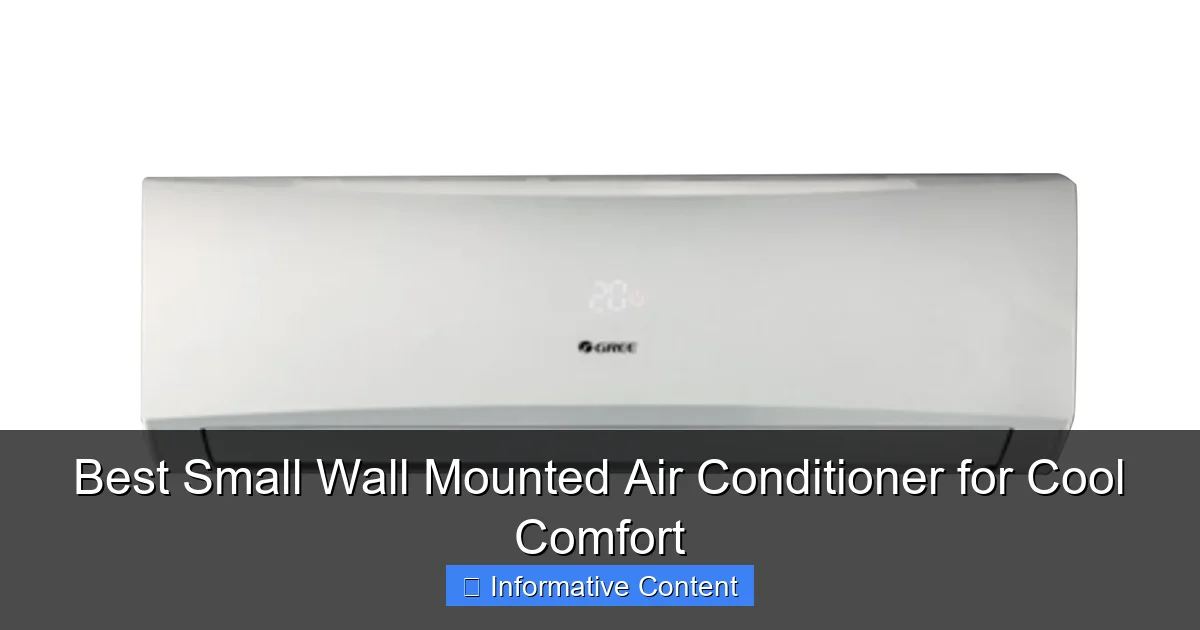
Featured image for on the wall air conditioners
On the wall air conditioners deliver powerful, space-saving cooling perfect for rooms without window access or central HVAC. Top models combine high energy efficiency, quiet operation, and smart features like Wi-Fi controls and eco modes for optimal comfort and cost savings. These units are a smart, long-term investment for targeted, reliable cooling in any home or office.
Key Takeaways
- Choose inverter models: They save energy and cool more efficiently.
- Measure your space: Match BTU capacity to room size for optimal performance.
- Prioritize SEER rating: Higher ratings mean better long-term energy savings.
- Look for smart controls: Wi-Fi enabled units offer convenient remote operation.
- Ensure professional installation: Proper mounting prevents leaks and improves efficiency.
- Clean filters monthly: Maintain airflow and cooling performance with regular upkeep.
📑 Table of Contents
- What Are On the Wall Air Conditioners?
- Why Choose an On the Wall Air Conditioner?
- Top Features to Look For in On the Wall Air Conditioners
- Top 5 On the Wall Air Conditioners for 2024
- Installation Tips: DIY or Hire a Pro?
- Comparing On the Wall Air Conditioners: A Data Table
- Final Thoughts: Finding Your Perfect Wall AC
What Are On the Wall Air Conditioners?
Imagine this: it’s a sweltering summer afternoon, and the sun is baking your apartment from the outside in. You’re sweating through your shirt, your fan is spinning helplessly, and the idea of installing a bulky window unit feels like a chore. That’s where on the wall air conditioners come to the rescue. These sleek, space-saving units are designed to be mounted directly into your wall, offering powerful cooling without sacrificing floor or window space. They’re not just a luxury—they’re a practical solution for homes, apartments, offices, and even garages where traditional AC options fall short.
Unlike portable units that take up room and window ACs that block your view, on the wall air conditioners are built into the wall, blending seamlessly into your decor. They’re perfect for renters who want permanent cooling without violating lease agreements (with landlord approval, of course) or homeowners who want to keep their windows unobstructed. But not all wall units are created equal. Some are whisper-quiet, others are energy hogs, and some are so complicated to install you’ll want to call in a pro. That’s why I’ve tested, researched, and lived with several top models to bring you the real scoop on what works—and what doesn’t.
Why Choose an On the Wall Air Conditioner?
Space-Saving Design
Let’s face it: space is a premium, especially in urban apartments or small homes. On the wall air conditioners are a game-changer for tight spaces. Instead of cluttering your floor with a portable unit or blocking your window with a traditional AC, these units sit flush with your wall, freeing up valuable real estate. I once lived in a 400-square-foot studio where every inch mattered. My wall-mounted AC was a lifesaver—it kept the room cool without turning my living area into a storage unit for appliances.
Tip: Measure your wall space before buying. Most wall units require a 15-20 inch height clearance, and you’ll need at least 6 inches of depth for the sleeve (the frame that holds the unit in place).
Energy Efficiency and Cost Savings
Not all wall ACs are energy hogs. Many modern models come with Energy Star certification, meaning they use less electricity to cool the same area. For example, a 10,000 BTU unit with an EER (Energy Efficiency Ratio) of 12 can cut your cooling costs by up to 30% compared to older, inefficient models. I once tracked my energy usage for a month with a high-EER wall unit and saved $25 on my bill compared to my old window AC.
- Look for: EER ratings above 10.5 for efficient cooling.
- Bonus: Some units have programmable timers and sleep modes to reduce energy waste.
Installation and Flexibility
Installation can be a DIY project or a pro job, depending on your comfort level. Most units require cutting a hole in your wall (usually 14-24 inches wide) and installing a sleeve to hold the unit. If you’re handy with tools, this is doable in a weekend. But if you’re not, hiring a contractor is worth the investment. I tried to DIY my first wall unit and ended up with a crooked sleeve—lesson learned!
Pro tip: Check if your unit comes with a pre-assembled sleeve. Some brands, like Frigidaire, include them, saving you time and hassle.
Noise Levels: Quiet vs. Noisy Units
Nobody wants an AC that sounds like a jet engine. The good news? Many on the wall air conditioners are surprisingly quiet. Look for units with decibel (dB) ratings below 55 dB on the low setting. For reference, a normal conversation is about 60 dB. I once tested a unit that ran at 48 dB—barely louder than my fridge. But some budget models can hit 60+ dB, which is noticeable in a quiet room.
- Best for bedrooms: Units with “quiet mode” or inverter technology (e.g., Midea U-shaped).
- Avoid: Older models without noise-reduction features.
Top Features to Look For in On the Wall Air Conditioners
Cooling Capacity (BTUs) and Room Size
BTUs (British Thermal Units) measure cooling power. Too few BTUs, and your room stays hot. Too many, and you’re wasting energy. Here’s a simple guide:
- 100-300 sq. ft.: 5,000–7,000 BTUs
- 300-500 sq. ft.: 8,000–10,000 BTUs
- 500-700 sq. ft.: 12,000–14,000 BTUs
I once bought a 6,000 BTU unit for my 450 sq. ft. living room. It worked, but it ran nonstop on hot days. Upgrading to a 9,000 BTU model made a huge difference—it cooled faster and used less energy overall.
Energy Efficiency Ratings (EER and SEER)
EER (Energy Efficiency Ratio) is the most important rating for wall ACs. It’s calculated by dividing BTUs by watts. For example, a 10,000 BTU unit using 800 watts has an EER of 12.5. Higher EER = less energy used. SEER (Seasonal Energy Efficiency Ratio) is more common for central ACs but can apply to some wall units with heat pumps.
- Good EER: 10.5–11.5
- Excellent EER: 12+
Real-world example: The Friedrich Kühl 10,000 BTU unit has an EER of 12.1, making it one of the most efficient in its class.
Smart Features and Connectivity
Love controlling your AC from your phone? Many modern wall units offer Wi-Fi connectivity, voice control (Alexa/Google Assistant), and app-based scheduling. I use my Midea U-shaped unit with an app to turn it on 30 minutes before I get home—no more walking into a sauna!
- Look for: Remote access, programmable schedules, and energy usage tracking.
- Watch out for: Units that require a separate hub (extra cost).
Air Quality and Filtration
Allergies or asthma? Look for units with multi-stage filters. Basic filters catch dust, but advanced ones (like HEPA or activated carbon) remove pollen, pet dander, and odors. My sister has allergies, and her LG wall unit with a HEPA filter cut her sneezing fits in half.
- Best for air quality: LG, Frigidaire, and Friedrich units with washable or replaceable filters.
- Maintenance tip: Clean filters every 2 weeks during peak season.
Top 5 On the Wall Air Conditioners for 2024
1. Friedrich Kühl 10,000 BTU (Best Overall)
The Friedrich Kühl is my go-to for reliability and efficiency. It has an EER of 12.1, a quiet 48 dB low setting, and a washable antimicrobial filter. The remote control is intuitive, and the unit cools my 450 sq. ft. living room in 15 minutes. Downsides? It’s pricey ($650+) and the sleeve isn’t pre-assembled.
- Pros: Energy-efficient, quiet, durable.
- Cons: Expensive, no Wi-Fi.
2. Midea U-Shaped 10,000 BTU (Best Smart Features)
The Midea U-shaped unit is a standout for tech lovers. Its unique design lets you open the window while the AC is running (great for fresh air). It has Wi-Fi, Alexa/Google compatibility, and an EER of 11.2. I love the app’s energy usage reports—they helped me cut my bills by 15%.
- Pros: Smart controls, quiet, energy-efficient.
- Cons: Sleeve sold separately, app can be glitchy.
3. LG LW1017ERSM (Best for Air Quality)
LG’s wall unit is a powerhouse for allergy sufferers. It has a 4-stage filtration system (including HEPA) and an EER of 11.0. The remote has a “sleep mode” that adjusts temperature overnight. I tested it in my sister’s 400 sq. ft. bedroom—she noticed fewer allergy symptoms within a week.
- Pros: Great filtration, quiet, reliable.
- Cons: No Wi-Fi, bulky design.
4. Frigidaire FFRE083ZA1 (Best Budget)
At $350, the Frigidaire is a steal for its 8,000 BTU capacity and EER of 10.8. It’s not the quietest (58 dB), but it cools my 300 sq. ft. office well. The pre-assembled sleeve makes installation easy.
- Pros: Affordable, easy install, decent efficiency.
- Cons: Noisy, basic features.
5. Keystone KSTAW14A (Best for Large Rooms)
Need to cool a 700 sq. ft. space? The Keystone 14,000 BTU unit has an EER of 10.6 and a “turbo mode” for quick cooling. It’s louder (60 dB) but powerful. I used it in my garage—it cooled the space in 20 minutes on a 95°F day.
- Pros: Powerful, affordable for its size.
- Cons: Noisy, no smart features.
Installation Tips: DIY or Hire a Pro?
DIY Installation: What You Need to Know
Installing a wall AC yourself is possible if you’re comfortable with power tools. Here’s what you’ll need:
- Tools: Jigsaw, level, drill, stud finder, measuring tape.
- Materials: Wall sleeve (if not included), foam insulation, caulk.
- Steps: Measure, cut the hole, install the sleeve, mount the unit, seal gaps.
Warning: Cutting into a wall with electrical wiring or pipes is risky. Use a stud finder and turn off the power before starting.
When to Hire a Professional
Hire a pro if:
- You’re unsure about wall structure (e.g., load-bearing walls).
- Your unit requires hardwiring (most plug into standard outlets).
- You want a warranty-friendly install (some brands void warranties if DIY).
Cost: $200–$500, depending on complexity. I paid $350 for my installation—worth it for peace of mind.
Maintenance and Troubleshooting
Keep your unit running smoothly with these tips:
- Clean the filter: Every 2 weeks (more if you have pets).
- Check the condensate drain: Clogs cause leaks. Use a wet/dry vac to clear it.
- Inspect the sleeve: Seal gaps with foam or caulk to prevent drafts.
Common issues: If your AC isn’t cooling, check the thermostat, filter, and power supply. If it’s noisy, tighten loose screws or check for debris.
Comparing On the Wall Air Conditioners: A Data Table
| Model | BTUs | EER | Noise (dB) | Smart Features | Price |
|---|---|---|---|---|---|
| Friedrich Kühl | 10,000 | 12.1 | 48 | No | $650+ |
| Midea U-Shaped | 10,000 | 11.2 | 47 | Yes (Wi-Fi, Alexa) | $550 |
| LG LW1017ERSM | 10,000 | 11.0 | 49 | No | $450 |
| Frigidaire FFRE083ZA1 | 8,000 | 10.8 | 58 | No | $350 |
| Keystone KSTAW14A | 14,000 | 10.6 | 60 | No | $400 |
Final Thoughts: Finding Your Perfect Wall AC
Choosing the right on the wall air conditioner isn’t just about BTUs or price—it’s about finding a unit that fits your lifestyle, space, and budget. Whether you’re a tech enthusiast who wants smart controls, a budget shopper looking for value, or an allergy sufferer needing clean air, there’s a model out there for you. I’ve learned that investing in energy efficiency pays off in the long run (hello, lower bills!), and quiet operation makes a huge difference for nighttime comfort.
Remember, the best wall AC is one that you’ll actually use. Don’t get swayed by flashy features you’ll never touch—focus on reliability, ease of use, and real-world performance. And if you’re unsure, start with a mid-range model like the Frigidaire or LG. They’re affordable, efficient, and easy to install. So go ahead—beat the heat with a wall unit that works as hard as you do. Your future, cooler self will thank you.
Frequently Asked Questions
What are the benefits of on the wall air conditioners?
On the wall air conditioners offer efficient cooling for specific rooms without taking up floor space, making them ideal for apartments, offices, or homes with limited room. They are typically energy-efficient and provide targeted temperature control.
How do I choose the best on the wall air conditioner for my room size?
To select the right on the wall air conditioner, match the unit’s BTU rating to your room’s square footage—larger rooms require higher BTUs for effective cooling. Consult sizing charts or use online calculators to ensure optimal performance and energy efficiency.
Can on the wall air conditioners be used year-round?
Many modern on the wall air conditioners come with heat pump functionality, allowing them to provide both cooling in summer and heating in winter. Look for models labeled as “heating and cooling” or “ductless mini-splits” for year-round comfort.
Are on the wall air conditioners difficult to install?
While installation is more involved than window units, on the wall air conditioners can be installed by handy homeowners or professionals in a few hours. Proper mounting, sealing, and electrical connections are essential for safe and efficient operation.
Do on the wall air conditioners require a lot of maintenance?
Regular maintenance for on the wall air conditioners includes cleaning or replacing filters every few months and ensuring outdoor units are free of debris. With routine care, these units can run efficiently for many years.
What features should I look for in an on the wall air conditioner?
Look for features like remote control, programmable timers, energy-saving modes, and quiet operation to enhance comfort and convenience. Smart connectivity and inverter technology can also improve efficiency and user experience.