Mitsubishi Ducted Mini Split: Maximize Your Comfort!
Mitsubishi Ducted Mini Split: A Comprehensive Guide
The Mitsubishi Ducted Mini Split is an important tool for heating and cooling. Many people use it in their homes and offices. It is popular for its quiet operation and energy efficiency. This guide will help you learn about its features, benefits, and installation process.
 Mitsubishi ducted mini split system showing outdoor and indoor units
What is a Ducted Mini Split?
A ducted mini split is a type of air conditioning system. It has two main parts: an indoor unit and an outdoor unit. The indoor unit is hidden in the ceiling or walls. The outdoor unit sits outside the building. They connect with refrigerant lines. This system cools or heats your space effectively. For more on this, see our guide on horizontal ducted mini split installation.
How Does It Work?
The mini split works by moving air. The outdoor unit absorbs heat from outside. Then, it sends this heat to the indoor unit. The indoor unit then distributes warm or cool air in your space. You can control the temperature using a remote or wall control.
In practice, most modern Mitsubishi ducted mini splits use R-32 refrigerant, which has a lower global warming potential than older R-410A models. The latest units also comply with SEER2 and HSPF2 testing standards that took effect in 2023, so efficiency ratings you see today reflect more realistic operating conditions.
Benefits of Mitsubishi Ducted Mini Split
There are many benefits of using a Mitsubishi ducted mini split. Here are some key points:
Energy Efficiency: It uses less energy compared to traditional systems.
Quiet Operation: It runs very quietly. You can hardly hear it.
Space Saving: The indoor unit is hidden. This saves space in your room.
Flexible Installation: It can be installed in many places.
Temperature Control: You can set different temperatures in each room.
Beyond the basics, these systems excel at zoning — each duct run can serve a separate zone with its own thermostat, and many models integrate with Mitsubishi’s Kumo Cloud® Wi-Fi interface for smartphone control and scheduling. This level of granular comfort management is a common reason homeowners choose ducted over ductless.
Energy Efficiency
Energy efficiency is one of the best features. The Mitsubishi ducted mini split helps save money on bills. It uses advanced technology to cool and heat rooms. This means it doesn’t waste energy. Many people choose it for this reason. For more on this, see our guide on mitsubishi mini split buzzing noise.
Seer And Hspf Ratings
SEER stands for Seasonal Energy Efficiency Ratio. Higher SEER ratings mean better efficiency. HSPF stands for Heating Seasonal Performance Factor. Both ratings show how well the system works. Look for models with high ratings.
As of 2026, the industry has transitioned to SEER2 and HSPF2 metrics, which use updated test procedures (including higher static pressure) to better match real-world ducted installations. When comparing models, check for the “2” suffix — a SEER2 of 16 is roughly equivalent to the old SEER 18. You can also explore the best air conditioning settings for energy efficiency to maximize savings. For official efficiency criteria, the Energy Star program maintains current certified product lists.
Quiet Operation
The Mitsubishi ducted mini split is known for being quiet. Traditional systems can be loud. But this system runs at a low noise level. You can enjoy a calm environment. It is great for bedrooms and living areas.
Typical indoor sound levels range from 22–30 dB(A) on low fan, which is comparable to a whisper. Outdoor units usually sit around 45–55 dB(A). Proper mounting on vibration-isolating pads and locating the outdoor unit away from bedroom windows further reduces perceived noise.
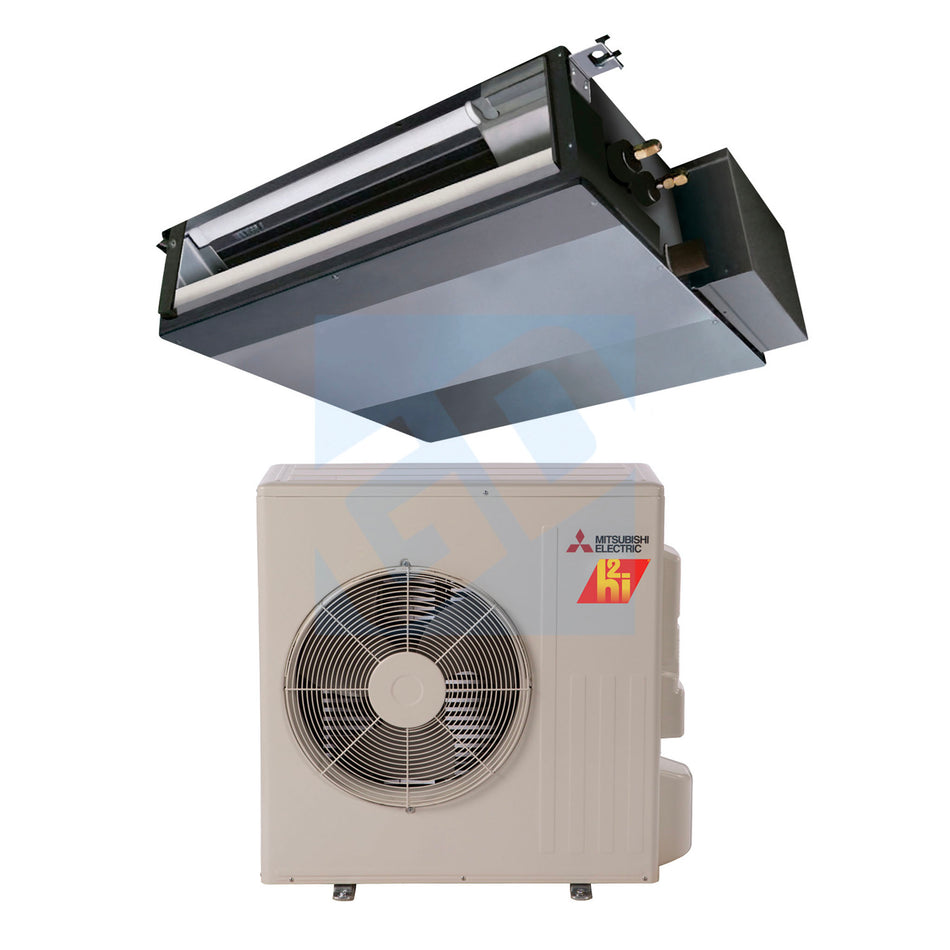 Concealed indoor unit of a Mitsubishi ducted mini split
Space Saving Design
Another great feature is its space-saving design. The indoor unit is often hidden. This gives you more wall space. You can decorate your room without any big units in the way. This is especially useful in small homes or apartments.
Keep in mind that the indoor unit requires a ceiling cavity or soffit of at least 10–12 inches in height, plus access for filter changes. In tight retrofit situations, a low-profile “slim duct” model (as shallow as 7‑7/8″) can fit where standard units cannot.
https://www.youtube.com/watch?v=VOBzGL5xVRY
Flexible Installation
Installation is flexible with this system. It can fit in many types of buildings. You can install it in new homes or older ones. The installation process is less invasive than traditional systems. It requires fewer modifications to your home.
Retrofit projects often run refrigerant lines through existing chases or closet spaces, minimizing drywall repair. For detailed steps, refer to the Mitsubishi split AC installation guide. New construction allows optimal duct layout — keep supply runs short and balanced to maintain rated airflow and efficiency.
Temperature Control
Temperature control is an important feature. You can set different temperatures in different rooms. This is good for families with different preferences. Everyone can be comfortable in their own space. Remote controls make it easy to adjust settings.
Most current models support wired wall controllers with weekly scheduling, and the optional Kumo Cloud® adapter adds Wi-Fi control via smartphone app, voice assistants (Alexa/Google), and geofencing. Our guide on selecting the right air conditioner for your home covers sizing and features that affect zoning performance.
Choosing the Right Model
When selecting a Mitsubishi ducted mini split, consider a few things. First, think about the size of your space. Larger areas need more powerful units. Second, check the SEER and HSPF ratings. Higher ratings mean better efficiency. Third, consider your budget. There are many models at different prices.
A proper Manual J load calculation is essential — oversizing leads to short‑cycling and poor dehumidification, while undersizing leaves rooms uncomfortable. Also compare warranty terms: Mitsubishi’s standard 10‑year compressor / 10‑year parts limited warranty (with registration) is among the best in the class. Factor in potential federal tax credits (up to $2,000 for qualifying heat pumps under the 25C provision) and local utility rebates when evaluating total cost.
Installation Process
Installing a ducted mini split requires professional help. This ensures proper setup. Here are the basic steps:
Choose the right location for the indoor and outdoor units.
Install the indoor unit in the ceiling or wall.
Mount the outdoor unit on a stable surface.
Connect the refrigerant lines and electrical wires.
Test the system to make sure it works well.
Additional critical steps include: nitrogen pressure testing and deep vacuum (500 microns) before refrigerant release; proper condensate drain line with trap and slope; commissioning airflow with a balancing hood to match design CFM; and registering the warranty within 60 days. For a broader look at how ducted mini splits compare to other systems, see our breakdown of air conditioner vs HVAC. The split AC installation guide also covers general best practices that apply to ducted configurations.
Maintenance Tips
To keep your Mitsubishi ducted mini split running well, follow these maintenance tips:
Check and clean the filters regularly.
Keep the outdoor unit free from debris.
Schedule professional maintenance once a year.
Monitor the system for unusual noises or smells.
Seasonal maintenance tips can help you keep the system running smoothly year-round. During annual service, a technician should: clean the indoor coil and blower wheel, inspect the drain pan and clear the drain line, verify refrigerant charge with superheat/subcooling measurements, check electrical connections and amp draw, and update firmware on the control board if available.
Common Issues
Sometimes, problems can occur. Here are some common issues:
Insufficient Cooling or Heating: Check the settings and filters.
Noisy Operation: Inspect the indoor and outdoor units.
Leaking Refrigerant: Call a professional if you notice leaks.
Other frequent calls include: condensate drain blockages causing water damage, thermistor or thermostat wiring faults throwing error codes (e.g., U0, U1, U2), and outdoor fan motor failures after extended high‑ambient operation. Keeping a log of error codes and when they appear helps the service technician diagnose faster.
Ducted Mini Split vs. Ductless vs. Central HVAC
| Feature | Ducted Mini Split | Ductless Mini Split | Central HVAC (Ducted) |
|---|---|---|---|
| Air Distribution | Hidden ducts to multiple rooms | Wall/ceiling cassettes per zone | Large central ductwork |
| Zoning | Excellent (per‑duct dampers or multiple indoor units) | Excellent (per head) | Requires zone dampers & controls |
| Aesthetics | Only grilles visible | Indoor heads visible on walls | Only grilles visible |
| Installation Impact | Moderate (needs ceiling space) | Low (small line‑set penetrations) | High (major ductwork) |
| Efficiency | High (no duct loss if in conditioned space) | Highest (no ducts) | Lower (duct losses up to 30%) |
| Cost (installed) | $$$ | $$ | $$$$ |
| Best For | Whole‑home retrofit with ceiling access, new construction | Add‑ons, historic homes, room‑by‑room | Large homes with existing ductwork |
This comparison reflects typical 2026 market conditions; actual performance varies by design and installation quality.
Cost Considerations and Incentives (2026)
Installed costs for a Mitsubishi ducted mini split system typically range from $8,000–$18,000 for a single‑zone 2–3 ton system, and $15,000–$35,000+ for multi‑zone whole‑home setups. Variables include: number of zones, ductwork complexity, electrical upgrades, and regional labor rates.
Federal tax credit: Qualifying heat pumps (including ducted mini splits meeting SEER2 ≥ 16 / HSPF2 ≥ 9) are eligible for a 30% tax credit up to $2,000 under IRS Section 25C (through 2032). Many states and utilities offer additional rebates — check the Database of State Incentives for Renewables & Efficiency (DSIRE) for local programs.
Operating cost example: A 2.5‑ton SEER2 17 / HSPF2 9.5 unit in Climate Zone 4 might use ~2,200 kWh/year for cooling and ~3,500 kWh/year for heating, costing roughly $600–$900 annually at current average electricity rates.
Smart Features and Home Automation Integration
Mitsubishi’s Kumo Cloud® platform (requires optional MHK2 or PAC‑USWHS002 adapter) enables:
- Remote temperature control and scheduling via iOS/Android app.
- Voice control through Amazon Alexa and Google Assistant.
- Geofencing to adjust setpoints when you leave/arrive.
- Energy usage monitoring (on compatible models).
- Integration with Home Assistant, Hubitat, and other local hubs via the Kumo Cloud API (community‑supported).
For whole‑home automation, consider pairing with a smart thermostat that supports external temperature sensors — this allows the mini split to respond to occupancy and room‑level conditions without cloud latency.
Environmental Impact and Refrigerants
All current Mitsubishi ducted mini splits shipped in the U.S. use R‑32 refrigerant (GWP 675), a significant improvement over R‑410A (GWP 2,088). The EPA’s AIM Act phasedown schedule targets an 85% reduction in HFC production/consumption by 2036, so R‑32 equipment aligns with long‑term regulatory trends. For more on refrigerant regulations, see the EPA Section 608 program.
Proper end‑of‑life recovery is mandatory — only EPA‑certified technicians may handle refrigerant. When replacing an older R‑410A system, ensure the contractor reclaims the charge rather than venting.
Conclusion
The Mitsubishi ducted mini split is a great choice for many homes. It offers energy efficiency, quiet operation, and flexible installation. With proper care, it can last for many years. Consider it for your heating and cooling needs. Enjoy comfort in every room of your home.
Ready to take the next step? Find a Mitsubishi Diamond Contractor® in your area for a free in‑home load calculation and quote.
Frequently Asked Questions (FAQs)
1. How Long Does Installation Take?
Installation usually takes a few hours to a day.
2. Can I Install It Myself?
It is best to hire a professional for installation.
3. How Often Should I Clean The Filters?
Clean the filters every 1 to 3 months.
4. Is It Suitable For Small Spaces?
Yes, it is perfect for small spaces.
5. What Is The Lifespan Of The Unit?
With proper care, it can last 15 to 20 years.