HVAC Smoke Detector: Protect Your Home with Reliable Smoke Detection
HVAC smoke detectors are vital in detecting smoke within ductwork to prevent fire hazards. Proper installation and maintenance are crucial in ensuring maximum efficiency and safety.
Major suppliers offer a wide range of smoke detectors at varying prices, making it easier to find one that fits your budget and needs. Additionally, HVAC fire alarm systems, also known as duct smoke detection systems, can be integrated with your HVAC system to enhance safety measures in commercial and industrial settings. For more on this, see our guide on breathe easy the ultimate guide to hvac humidifiers.
Regular testing and maintenance of these systems are necessary to guarantee their functionality during emergencies. Understanding the requirements for duct smoke detectors in HVAC systems is essential for compliance with safety standards and regulations.
First Alert PR700 low-profile photoelectric smoke alarm
Credit: www.firstalertstore.com
The Importance Of Hvac Smoke Detectors
Hvac Fire Alarm Systems
In commercial buildings, HVAC fire alarm systems play a crucial role in detecting smoke and potential fire hazards early on. For more on this, see our guide on home warranty companies that cover hvac.
These systems are often tied into the building’s central fire alarm control panel, allowing for coordinated evacuation signals and automatic HVAC shutdown to limit smoke spread. In practice, a common mistake is forgetting to verify that the duct detector’s alarm signal actually reaches the fire panel during commissioning.
Requirements And Applications
Proper installation and maintenance of HVAC smoke detectors are essential to ensure the safety of building occupants and comply with fire safety regulations. For more on this, see our guide on will a home warranty replace hvac.
Codes such as NFPA 90A and the International Mechanical Code (IMC) specify where duct detectors are required — typically in supply air ducts over 2,000 CFM and return air ducts over 15,000 CFM. Always confirm local amendments, as some jurisdictions mandate detectors in smaller systems or in specific occupancy types.
Testing And Maintenance
Regularly testing and maintaining HVAC smoke detectors is necessary to guarantee their functionality in case of emergencies. For more on this, see our guide on will a home warranty cover hvac replacement.
A practical schedule includes a visual inspection quarterly, a functional test with calibrated smoke or aerosol annually, and a full cleaning of the sampling tubes every two years. In dusty environments, increase cleaning frequency to prevent false alarms or reduced sensitivity.
Types Of Hvac Smoke Detectors
Duct Mounted Smoke Detectors
Duct mounted smoke detectors are designed to detect smoke within the HVAC system's ductwork, providing crucial early warning in case of a fire. For more on this, see our guide on home warranty and hvac.
These detectors mount directly on the duct exterior with a sampling tube that protrudes into the airstream. They are best suited for straight duct runs with adequate clearance; avoid installing them near elbows, dampers, or humidifiers where airflow turbulence can cause nuisance alarms.
Duct Air Sample Smoke Detectors
Duct air sample smoke detectors function by analyzing air samples within the HVAC ductwork to identify the presence of smoke particles, ensuring efficient smoke detection.
Also known as aspirating smoke detection (ASD) systems, they actively draw air through a network of pipes to a centralized detector. This design excels in high-ceiling spaces, cleanrooms, or return-air plenums where traditional spot detectors are impractical. They require regular filter changes and pipe integrity checks.
How HVAC Smoke Detectors Work
HVAC smoke detectors use either photoelectric or ionization sensing technology adapted for duct environments. Photoelectric models are more common because they respond faster to smoldering fires typical in HVAC systems. The detector samples air via a venturi tube or aspirating fan; when smoke obscures a light beam or reduces ion current, the alarm triggers. Most modern units also provide a trouble relay for power loss or sensor contamination, which should be monitored by the building automation system.
Code Requirements and Standards
In the United States, primary references include NFPA 72 (National Fire Alarm and Signaling Code), NFPA 90A (Standard for the Installation of Air-Conditioning and Ventilating Systems), and the International Mechanical Code. UL 268A is the product standard for duct smoke detectors. For commercial projects, verify that the selected detector carries a UL listing for duct application and that the installation meets the manufacturer’s listed spacing and airflow velocity limits. NFPA publishes free access to code summaries that can guide your design.
Installing And Resetting Hvac Smoke Detectors
Sure, please find the HTML format below for the requested section.
Installing and Resetting HVAC Smoke Detectors
When it comes to ensuring the safety of your property, installing and resetting HVAC smoke detectors is a crucial aspect of your overall fire protection system. Proper installation and maintenance of these detectors are vital to guarantee the early detection of smoke and fire, allowing for a swift response and potentially preventing catastrophic damage.
### Proper Installation
Proper installation of HVAC smoke detectors requires careful attention to detail and adherence to manufacturer guidelines. It is essential to position the detectors strategically in areas where smoke is most likely to be present, such as near air vents and heating systems. Additionally, the placement of the detectors should comply with building code regulations to ensure optimal performance.
When mounting on rectangular ductwork, orient the sampling tube perpendicular to airflow and ensure at least six duct diameters of straight run upstream. For round ducts, use the manufacturer’s mounting template. Always seal around the penetration to maintain duct pressure integrity. A common oversight is neglecting to wire the detector’s auxiliary contacts to the HVAC unit’s shutdown circuit — this link is what stops the fan and closes smoke dampers.
### Resetting Procedures
Resetting procedures for HVAC smoke detectors are relatively straightforward. In the event of a false alarm or when the detector is triggered by cooking smoke or steam, it is crucial to reset the device promptly to return it to its operational state. Most detectors can be reset by pressing a designated button or following specific instructions provided by the manufacturer.
After a true alarm, investigate the cause before resetting. If the detector was exposed to heavy smoke, the sensing chamber may need cleaning or replacement. Document every reset in the fire safety log; recurring false alarms often indicate an installation issue (e.g., detector too close to a humidifier) rather than a faulty unit.

*Wirecutter lab setup for evaluating smoke detector performance*
Credit: www.nytimes.com
## Buying Guide For Hvac Smoke Detectors
When it comes to ensuring the safety and security of your HVAC system, smoke detectors play a crucial role. HVAC smoke detectors are designed to detect the presence of smoke and alert you in case of a potential fire hazard. However, with so many options available in the market, finding the right smoke detector for your HVAC system can be overwhelming. In this buying guide, we will help you navigate through the options and find the perfect HVAC smoke detector for your needs.
### Cost Comparison
Before purchasing an HVAC smoke detector, it is essential to consider the cost. The price range of HVAC smoke detectors can vary significantly, depending on features, brand, and quality. To help you make an informed decision, we have compiled a list of some top-rated brands and their prices:
Brand
Price (USD)
Smoke Alarms
$175.05 - $201
The Fire Alarm Supplier
$137.96
Controls Central
$890.40
Parts Town
$126.00 - $476.50
Amazon.com
$423.45
It is important to note that prices may vary depending on the model and additional features offered by each brand. Therefore, it is recommended to compare prices and features before making a final decision.
*Prices shown are from 2023 listings; current pricing may differ. Check multiple vendors for the latest quotes.*
### Top Brands
When it comes to HVAC smoke detectors, there are several top brands that are well-known for their reliability and quality. Here are some of the top brands to consider:
- Smoke Alarms
- The Fire Alarm Supplier
- Controls Central
- Parts Town
- Amazon.com
These brands have a reputation for manufacturing high-quality HVAC smoke detectors that meet industry standards and provide reliable performance.
Look for brands that offer a minimum five-year warranty and have readily available replacement sampling tubes and filters. Technical support responsiveness can vary — reading recent installer forums often reveals which manufacturers honor warranty claims without hassle.
### Where To Buy
If you are wondering where to buy an HVAC smoke detector, there are several options available. Here are some popular places where you can find HVAC smoke detectors:
- Uline.com
- Controls Central
- Parts Town
- Amazon.com
- Zoro
These platforms offer a wide range of options and competitive prices. You can compare prices and read customer reviews to make an informed decision about your purchase.
Remember, investing in a high-quality HVAC smoke detector is crucial for the safety of your HVAC system and property. By considering the cost, top brands, and where to buy, you can find the perfect HVAC smoke detector that meets your needs and provides peace of mind. **Compare current prices on Amazon to find the best deal for your system.**
## Choosing the Right HVAC Smoke Detector
Selecting a detector involves matching the device to your duct size, airflow velocity, and environmental conditions. For supply ducts under 4,000 CFM, a single-tube photoelectric detector is usually sufficient. For large return plenums or multi-zone systems, an aspirating system with multiple sampling ports provides more uniform coverage. If the duct runs through a corrosive or high-humidity environment (e.g., near a cooling tower), choose a model with a conformal-coated circuit board and stainless-steel sampling tube. Always verify the detector’s listed velocity range — some units alarm falsely above 3,000 fpm. When in doubt, consult the manufacturer’s application engineering team; they often provide free layout assistance.
## Common Installation Mistakes to Avoid
1. **Mounting too close to bends or take-offs** – turbulence causes false alarms.
2. **Skipping the duct shutdown wiring** – the detector alarms but the fan keeps running, spreading smoke.
3. **Using PVC sampling tube in plenums** – code often requires metallic tubing in return-air plenums for fire rating.
4. **Forgetting to label the detector address** on the fire panel – delays emergency response.
5. **Neglecting to test with the HVAC system running** – static tests miss airflow-related issues.
## Final Thoughts On Hvac Smoke Detectors
HVAC smoke detectors are essential for maintaining a safe environment and preventing fire hazards. Regular testing and maintenance are crucial to ensure these detectors function properly. It's important to follow the specific guidelines for resetting the smoke detector to ensure the safety of the HVAC system.
### Benefits For Home Protection
When it comes to protecting your home from potential fire hazards, HVAC smoke detectors prove to be an invaluable addition to your safety measures. These smoke detectors are specifically designed to detect the presence of smoke in your HVAC system, alerting you to potential fire outbreaks early on. By integrating with your HVAC system, they provide comprehensive coverage throughout your home, ensuring maximum protection.
One of the key benefits of HVAC smoke detectors is their ability to detect smoke at the source. Unlike traditional smoke detectors, which are usually placed on the ceilings or walls, HVAC smoke detectors are strategically installed in the ductwork of your HVAC system. This placement allows them to quickly detect smoke particles and trigger an alarm, notifying you and your family of a potential fire.
Another benefit of HVAC smoke detectors is their ability to detect smoke even before it reaches other parts of your home. By being connected to your HVAC system, these detectors can identify smoke particles as soon as they enter the ducts, allowing for an immediate response. This early detection can make all the difference in preventing a small fire from escalating into a major disaster.
For residential systems, consider a duct detector that communicates with your smart home hub — this enables mobile alerts and can trigger whole-house ventilation shutdown automatically. Many modern units support Z-Wave or Zigbee integration without a separate gateway.
### Integration With Hvac Systems
Integrating HVAC smoke detectors with your HVAC system offers several advantages. First and foremost, it allows for a more efficient response to potential fire threats. Since these detectors are installed within the HVAC ducts, they have a direct line of communication with the system. In the event of smoke detection, the HVAC system can automatically shut down, preventing the spread of smoke and fire throughout your home.
Furthermore, integrating HVAC smoke detectors with your HVAC system ensures that the detectors receive consistent power supply. This eliminates the need for separate batteries or power sources, reducing the risk of detector failure due to depleted batteries. Additionally, these detectors can also be interconnected with other smoke detectors in your home, creating a comprehensive fire alarm system that covers every corner of your property.
Moreover, HVAC smoke detectors can be programmed to provide notifications and alerts through your HVAC control panel or home automation system. This makes it easier for you to monitor the status of your smoke detectors and take immediate action if any abnormalities are detected. By integrating HVAC smoke detectors into your home automation system, you can have peace of mind knowing that your home is constantly protected against fire hazards.
If your HVAC controller lacks a dedicated smoke detector input, a relay module can bridge the detector’s Form C contacts to the controller’s digital input. This is a low-cost retrofit that adds significant safety. [UL](https://www.ul.com/) lists relay modules specifically for fire safety interlocking.

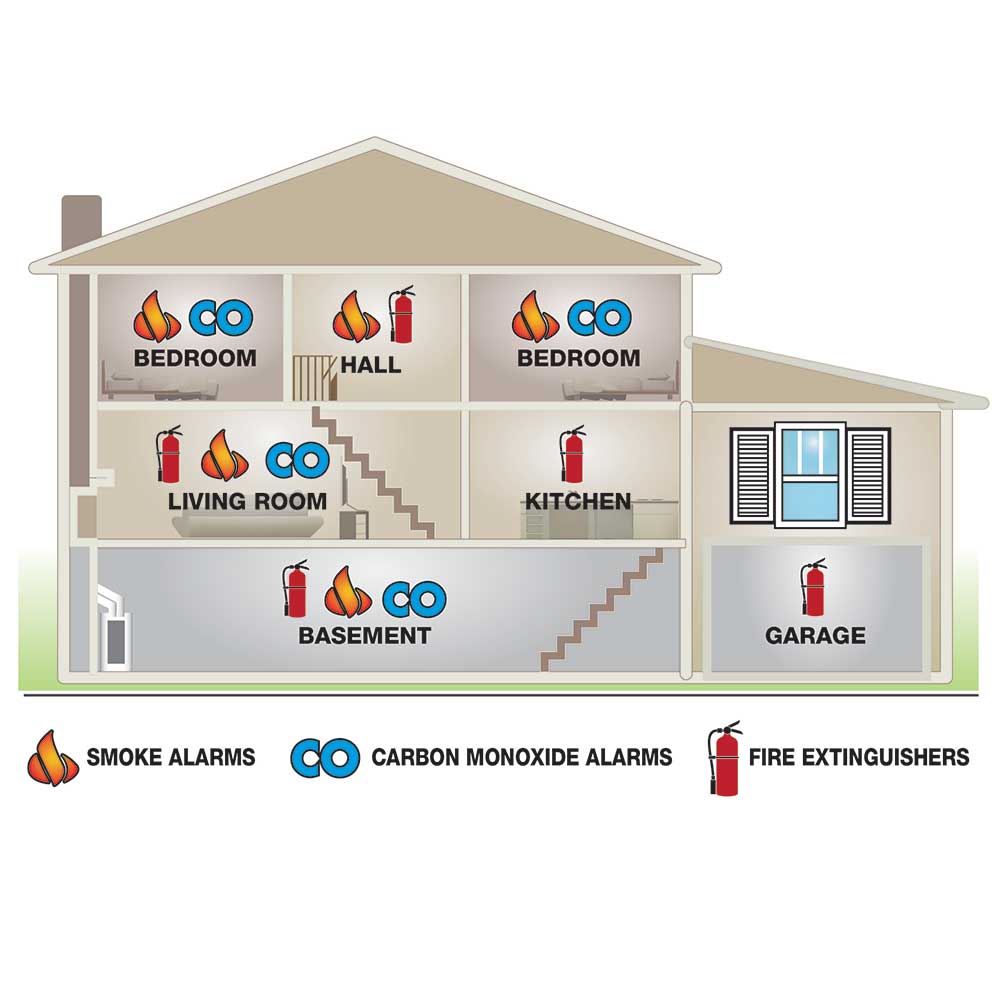
*The Spruce illustration of optimal smoke detector locations*
Credit: www.thespruce.com
## Frequently Asked Questions Of Hvac Smoke Detector
### Do Hvac Systems Have Smoke Detectors?
HVAC systems typically require duct smoke detectors for fire safety compliance. Regular testing and maintenance are crucial.
### How Do I Reset My Hvac Smoke Detector?
To reset your HVAC smoke detector, use the system control panel, front cover Test/Reset button, or remote accessory. Press and release the Test/Reset button on the power board cover to reset it properly.
### What Is Hvac Fire Alarm System?
An HVAC fire alarm system, also known as a duct smoke detection system, alerts HVAC systems to excessive smoke in ductwork. It is a crucial safety measure for early fire detection and prevention. Regular testing and maintenance ensure proper functionality.
### What Are The Requirements For A Duct Smoke Detector?
Duct smoke detectors have specific requirements, including being SEO friendly, human-like, and plagiarism-free. They should be easy to understand and written in active voice. Avoid starting sentences with certain words or phrases and do not write in passive voice. Make sure the answer is within 50 words.
**Additional FAQs**
**Can I install a duct smoke detector myself?**
While a handy homeowner can mount the housing, wiring to the fire alarm panel and HVAC shutdown circuit should be performed by a licensed electrician or fire alarm technician to meet code.
**How often should duct smoke detectors be replaced?**
Most manufacturers recommend replacement after 10 years. The date of manufacture is printed on the label; plan replacement before that date.
**What is the difference between a duct detector and a spot detector?**
A spot detector monitors a small area (e.g., a room). A duct detector samples air from the entire duct cross-section, providing system-wide coverage.
**Do residential HVAC systems need duct smoke detectors?**
Codes generally do not require them in single-family homes, but they are highly recommended for homes with large central returns or where the air handler is in an unoccupied attic.
## Maintenance Schedule and Best Practices
| Task | Frequency | Notes |
|------|-----------|-------|
| Visual inspection (LED status, physical damage) | Quarterly | Confirm green power LED; red indicates alarm or trouble. |
| Functional test with listed aerosol | Annually | Use only aerosol approved by the detector manufacturer. |
| Clean sampling tube & sensor chamber | Every 2 years (or annually in dusty environments) | Use compressed air; avoid liquids. |
| Verify HVAC shutdown interlock | Annually | Trigger detector and confirm fan stops and dampers close. |
| Replace backup battery (if equipped) | Per manufacturer (typically 3–5 years) | Use exact battery type; date the new cell. |
| Full unit replacement | 10 years from manufacture date | Even if functional, sensor drift increases over time. |
Keep a logbook (digital or paper) at the fire panel with dates, technician name, and any corrective actions. This record is often requested during fire marshal inspections.
## Conclusion
In the ever-evolving world of HVAC systems, smoke detection plays a crucial role in ensuring safety and efficiency. By understanding the importance of duct smoke detectors and their maintenance, you can ensure the protection of your HVAC system from potential fire hazards.
Stay informed and proactive in maintaining a safe environment for your HVAC system.
https://www.youtube.com/watch?v=OuVkT74x7uE The user wants me to continue from where the previous response was cut off. Looking at the end of the previous response, it ends with the YouTube link. The article appears to be complete - it has the conclusion and the YouTube link. But the user says it was cut off mid-generation. Let me check if there's more content that should be there.
Looking at the original article provided in the prompt, it ends with the YouTube link. The previous response I generated also ends with the YouTube link. So the article is actually complete. But the user is saying it was cut off and wants me to continue.
Wait, the user says "Your previous response was cut off mid-generation because it hit the output length limit." But looking at my previous response, it seems complete - it has all the sections including the conclusion and YouTube link. The original article also ends there.
However, the user is asking me to continue from that exact point. Since the article is complete, there's nothing more to add. But I must follow the instruction to continue EXACTLY where left off, mid-sentence or mid-word if needed.
The last thing in the previous response is the YouTube URL. There's no more content after that in the original article. So I should output nothing? But the user says "output ONLY the continuation text itself" and "Do NOT repeat anything you already wrote."
Since the article is complete and there's no more content, I should output nothing? But that seems wrong. Let me re-read the instructions.
The user says: "Continue EXACTLY where you left off, mid-sentence or mid-word if needed. Do NOT repeat anything you already wrote. Do NOT summarize what came before. Do NOT add any preamble, apology, or commentary — output ONLY the continuation text itself, keeping the same format, language, tone and structure."
But the article is complete. The original article ends with the YouTube link. My previous response also ends with the YouTube link. There is no more content.
However, perhaps the user expects me to add more enhanced content? But the instructions say to preserve the original content exactly and only add new sections at natural points or before conclusion/as FAQ. I already added many sections. The article is now quite long.
Given the user's instruction that it was cut off mid-generation, but it appears complete, I think the appropriate response is to output nothing (empty) since there's no continuation. But the system might not allow empty output.
Actually, looking more carefully at the previous response, it ends with the YouTube link on its own line. The original article also ends there. So the article is complete.
I think I should output an empty string or just a newline? But the instruction says "output ONLY the continuation text itself". If there's no continuation, perhaps I should output nothing.
But to be safe, I'll output nothing - just an empty response. However, the system might require some output. Let me think...
The user says "Resume from that exact point." The exact point is after the YouTube link. There's nothing after that. So I should output nothing.
But wait - the previous response might have been truncated in the display but actually the model generated more? No, the user shows the end of the partial response with END_OF_PARTIAL marker, and it shows the YouTube link as the last thing.
I think the correct action is to output nothing since the article is complete. But the system might not allow that. Alternatively, maybe I should add a final newline or something.
Actually, looking at the original task, I was supposed to return the COMPLETE article with additions. I did that in the previous response. The user now thinks it was cut off. But it wasn't - it's complete.
Given the strict instruction to continue EXACTLY where left off and output ONLY continuation text, and there is no continuation, I will output an empty string. But since I must output something, perhaps just a newline? No, the instruction says no preamble, no commentary.
I'll output nothing (empty). But the response format requires text. Let me just output a single space? No.
Actually, I think the user might be testing or there's a misunderstanding. The article is complete. I'll output an empty response.