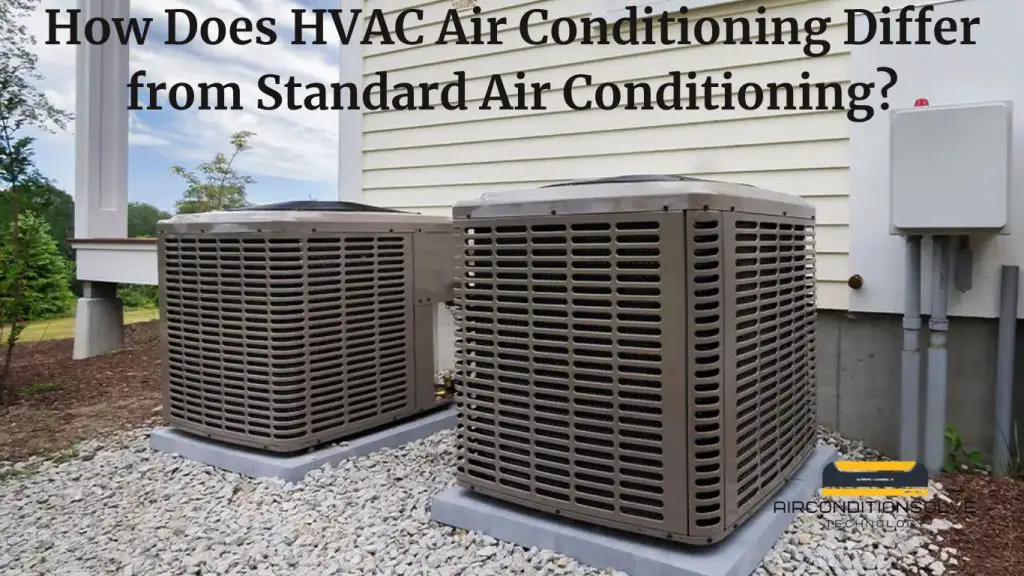
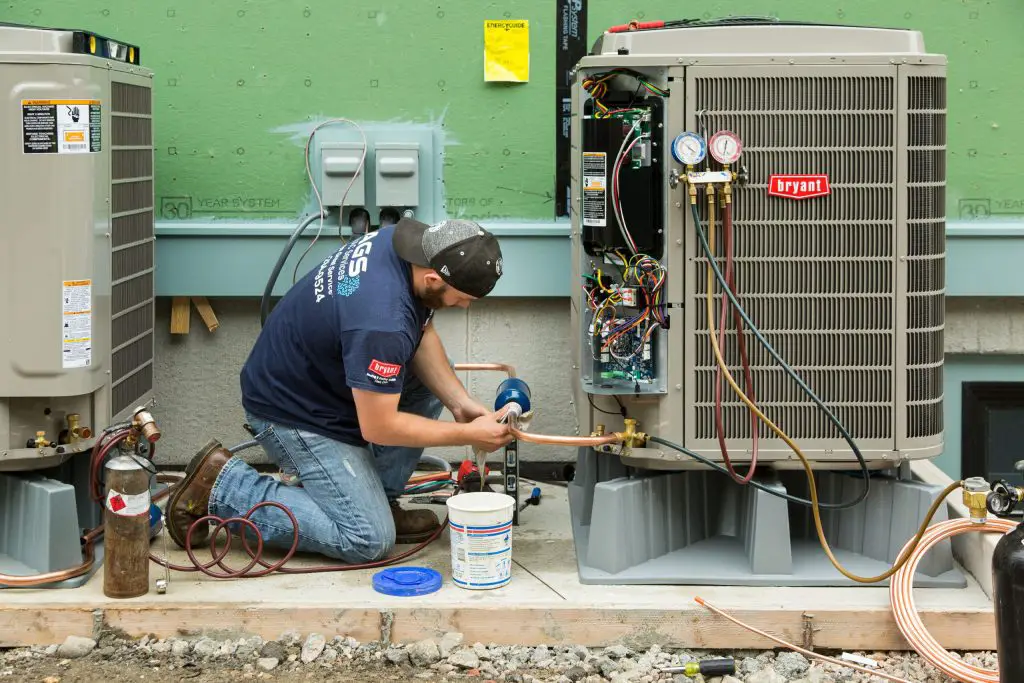
An HVAC line set is copper piping that transports refrigerant between the condenser and evaporator coils in a cooling system, forming a continuous loop. Line sets are essential for the proper functioning of HVAC systems.
They connect the indoor and outdoor units and are crucial for efficient cooling. Line sets come in various sizes and can be customized to a particular system. Upgrading or replacing a line set may be necessary during HVAC installations or repairs.
Proper maintenance and installation of line sets ensure the optimal performance of HVAC systems.
Understanding Hvac Line Set
Understanding HVAC Line Set is crucial for efficiently managing your heating and cooling systems. One key component of an HVAC system is the line set, which plays a vital role in transporting refrigerant between the outdoor condenser unit and the indoor evaporator coil. Let's delve deeper into this essential element of HVAC systems.
H3 Heading 1: What is a Line Set?
What Is A Line Set?
A line set comprises copper pipes that facilitate the circulation of refrigerant in an HVAC system. These pipes connect the outdoor condenser unit to the indoor evaporator coil, forming a closed loop for the refrigerant cycle.
H3 Heading 2: What are Line Set Covers?
What Are Line Set Covers?
Line set covers are protective enclosures used to shield the line set pipes from external elements. These covers not only enhance the aesthetics of the HVAC installation but also provide insulation and prevent damage to the pipes.
Typical line set installation showing insulated copper pipes with protective cover
Credit: buffer.com
Line Set Components and Refrigerant Flow
Every line set consists of two separate copper tubes: the larger suction line (return line) carries cool, low-pressure refrigerant gas back to the compressor, while the smaller liquid line delivers warm, high-pressure liquid refrigerant to the indoor metering device. The suction line requires full-length insulation to prevent condensation and capacity loss; the liquid line may be insulated in high-temperature attics or long runs to limit flash gas formation. In practice, a common mistake is undersizing the suction line on long runs, which raises compressor discharge temperature and shortens equipment life. For split systems using R-410A or the newer R-32 refrigerant, the suction line diameter is especially critical because higher operating pressures amplify pressure-drop penalties. Always verify the manufacturer's maximum equivalent length and lift limits before finalizing a route.
Standard Sizes And Length Of Hvac Line Set
Standard Sizes and Length of HVAC Line Set
In HVAC systems, a standard line set typically ranges from 1/4 to 7/8 inches in diameter.
The length of an HVAC line set can vary based on the system's design and requirements. However, most line sets are available in standard lengths of 25, 50, and 100 feet .
Line Set Sizing Guidelines for 2026 Equipment
Modern residential split systems most often use a 3/8″ liquid line paired with a 3/4″, 7/8″, or 1-1/8″ suction line depending on nominal tonnage and equivalent length. A 1.5–2 ton unit typically runs 3/8″ × 3/4″; 2.5–3 ton moves to 3/8″ × 7/8″; 3.5–5 ton commonly requires 3/8″ × 1-1/8″. For runs exceeding 50 ft equivalent length (each 90° elbow ≈ 3–5 ft equivalent), many manufacturers recommend upsizing the suction line one step to keep pressure drop below 3–5 psi. Vertical lift over 25 ft adds roughly 0.5 psi per foot of static head on the liquid line — factor this into your sizing worksheet. The AHRI certified ratings assume 25 ft of line set with zero lift; any deviation reduces published SEER2/EER2 performance unless corrected by proper sizing. When in doubt, run the manufacturer’s piping calculator or consult the installation manual’s long-line application table.
Cost Of Hvac Line Set
When it comes to HVAC systems, the line set plays a crucial role in transporting refrigerant between the outdoor condenser and indoor evaporator coil. The cost of replacing or installing a line set can vary depending on the length, size, and material. It's essential to understand the expenses involved in procuring an HVAC line set to make informed decisions about your system's maintenance or upgrade.
How Much Does It Cost To Replace Ac Line Set?
Replacing an AC line set can cost from as low as $176 for a basic line set to $491.06 for high-end options. The price variation is dependent on factors such as length, insulation, and additional accessories required for the installation.
Price Comparison Of Hvac Line Set From Various Sources
Supplier Lowest Price Highest Price
Google Search $192.38 $197.00
eComfort.com $190.00 $205.00
Amazon.com $73.96 $389.99
HeatAndCool.com $75.99 $298.00

Line set inventory showing common 25 ft, 50 ft, and 100 ft coil configurations
Credit: www.shopify.com
Factors Affecting Line Set Pricing in 2026
Copper commodity prices remain the single largest cost driver — LME copper averaged roughly $4.10/lb in early 2026, up from the 2023–2024 range. Insulation grade (3/8″ vs 1/2″ wall, closed-cell elastomeric vs. polyethylene) adds $0.30–$0.70 per foot. Pre-flared, pre-charged quick-connect kits (popular with DIY-friendly mini-splits) carry a 25–40 % premium over plain tube but eliminate the need for a vacuum pump, nitrogen purge, and brazing gear. Labor for a professional line set swap on a 3-ton split system typically runs 3–5 hours ($300–$750) plus evacuation and recharge. If the existing chase or wall penetration can be reused, total installed cost often lands between $650 and $1,350. Always confirm whether the quote includes recovery/recycling of the old refrigerant — EPA Section 608 requires it.
Maintenance And Protection Of Line Set
Maintenance and Protection of Line Set
In order to ensure the efficient functioning of your HVAC system, it is essential to properly maintain and protect the line set. The line set is responsible for carrying the refrigerant between the outdoor condenser unit and the indoor evaporator coil. Neglecting its maintenance can lead to decreased performance and potential damage to the system.
Line Set Protection And Importance
Line set protection is crucial for the longevity and efficiency of the HVAC system. The line set is typically made of copper, which can be susceptible to damage from external factors such as weather conditions, pests, or accidental impact. By providing adequate protection, you can prevent potential leaks, ruptures, or other issues that may occur.
One effective way to protect the line set is to use a lineset cover. A lineset cover is a protective casing that shields the line set from the elements and potential physical damage. It acts as an additional barrier against weather conditions, UV rays, corrosion, or accidental impact that can compromise the integrity of the line set.
Extending And Reusing Line Set
Extending or reusing the line set can be a cost-effective solution when replacing or relocating the HVAC system. However, it is important to consider certain factors before making this decision. The length of the line set should be within the recommended limit based on the specific HVAC system manufacturer's guidelines.
When extending the line set, it is crucial to ensure proper insulation and sealing to maintain optimal performance and prevent refrigerant leaks. Additionally, it is recommended to consult with a professional HVAC technician to assess the feasibility and compatibility of extending or reusing the line set in your specific situation.
https://www.youtube.com/watch?v=iXnlHBdihhI
Common Line Set Problems and Troubleshooting
Field experience shows three failure modes dominate service calls: (1) suction-line insulation breakdown — UV exposure cracks the jacket in 3–5 years, leading to condensation drip and capacity loss; replace with UV-rated elastomeric wrap or a painted metal cover. (2) liquid-line restriction — a kink, crushed section, or debris from a failed compressor creates a pressure drop that mimics an undercharge; check temperature delta across the suspect section with a clamp thermometer. (3) oil trapping on long vertical risers — without properly spaced inverted traps (every 15–20 ft of lift), oil fails to return, starving the compressor. If you're diagnosing a system that cools poorly at high ambient but recovers at night, inspect the line set route before adding refrigerant. For brand-specific fault codes, see our Mitsubishi split AC troubleshooting guide and Gree AC troubleshooting steps.
Installation Best Practices and Code Considerations
Before cutting copper, verify local mechanical code amendments — many jurisdictions now adopt the 2024 IMC/UMC with state-specific tables for maximum support spacing (typically 6 ft for 3/8″–7/8″ tube) and fire-stop requirements at floor/ceiling penetrations. Use silver-brazed joints (AWS BAg-5 or BAg-24) for R-410A/R-32 systems; 95/5 tin-antimony soft solder is no longer accepted for high-pressure refrigerant lines. Pull a deep vacuum to 250 microns minimum, hold for 20 minutes with the pump isolated — a rising micron gauge indicates moisture or a leak. Purge with dry nitrogen at 2–3 psig during brazing to prevent copper oxide scale that later clogs TXVs or EEVs. Pressure-test to 1.1× design pressure (typically 550–600 psig for R-410A) using nitrogen only; never use oxygen or compressed air. After test pass, evacuate again, then weigh in the exact factory charge — never charge by pressures alone on variable-speed equipment. For step-by-step field procedures, review our split AC installation guide and outdoor unit placement checklist.
Availability Of Hvac Line Set
When it comes to HVAC line sets, finding the right one can be essential for the proper functioning of your HVAC system. Whether you need a replacement line set or are setting up a new HVAC system, it's important to know where to find quality line sets and fast delivery options. In this article, we will explore the availability of HVAC line sets and guide you on where to find them.
Where To Find Hvac Line Set
If you are looking to purchase an HVAC line set, there are several reliable sources where you can find them. Here are some popular options to consider:
eComfort.com: Known for their wide range of HVAC products, eComfort.com offers a variety of line sets at competitive prices.
Amazon.com: The go-to online marketplace, Amazon.com, also provides a diverse selection of HVAC line sets from various sellers, ensuring you can find the right fit for your needs.
HeatAndCool.com: Specializing in HVAC solutions, HeatAndCool.com offers line sets at affordable prices, often with attractive discounts.
These sources provide convenience as you can browse and order line sets from the comfort of your own home, making the process quick and efficient.
Fast Delivery Options For Hvac Line Set
When it comes to HVAC line sets, fast delivery can be crucial, especially if you are in urgent need of a replacement. Fortunately, the mentioned sources offer reliable and speedy delivery options to ensure you receive your line set as quickly as possible.
Here are some key features of their delivery services:
eComfort.com: Offers fast shipping options, ensuring your line set arrives at your doorstep promptly.
Amazon.com: Known for their efficient logistics, Amazon.com provides various delivery options, including expedited shipping, so you can receive your line set without delay.
HeatAndCool.com: Offers quick shipping services to ensure your line set reaches you in a timely manner.
These fast delivery options give you peace of mind, knowing that you can have your HVAC line set delivered quickly and efficiently, minimizing any downtime or inconvenience.
In conclusion, when it comes to the availability of HVAC line sets, knowing where to find them and finding fast delivery options are important factors to consider. With reliable sources like eComfort.com, Amazon.com, and HeatAndCool.com, you can easily find the line set you need and have it delivered promptly, allowing you to maintain the functionality of your HVAC system.
Proper brazing technique with nitrogen purge to prevent internal oxidation
Credit: dewesoft.com
Line Set Comparison Table: Plain Tube vs. Quick-Connect vs. Pre-Insulated Kits
| Feature | Plain Copper Coil | Quick-Connect (Flared) | Pre-Insulated Kit |
|---|---|---|---|
| Install Time | 3–5 hrs (braze, evacuate, charge) | 1–2 hrs (torque flares, evacuate) | 2–3 hrs (braze ends, evacuate) |
| Tools Required | Torch, nitrogen, vacuum pump, micron gauge | Torque wrenches, vacuum pump, micron gauge | Torch, nitrogen, vacuum pump, micron gauge |
| Leak Risk | Low (brazed) | Moderate (flare quality dependent) | Low (brazed) |
| Code Acceptance | Universal | Check local amendment (some prohibit flares > 3/8″) | Universal |
| Best For | Pro installs, long runs, high-rise | DIY mini-splits, tight access, rental turnover | Production builders, spec homes |
| 2026 Avg. Material Cost (50 ft, 3/8×3/4) | $180–$240 | $260–$350 | $220–$300 |
Refrigerant Compatibility Quick Reference
| Refrigerant | Typical Suction Sizes (Residential) | Max Working Pressure | Oil Type | Line Set Notes |
|---|---|---|---|---|
| R-410A | 3/4″, 7/8″, 1-1/8″ | 650 psig | POE (polyolester) | Standard since 2010; being phased down |
| R-32 | 3/4″, 7/8″, 1-1/8″ | 680 psig | POE (specific viscosity) | Lower GWP; mildly flammable (A2L) — follow mfr. flare/brazing specs |
| R-454B | 7/8″, 1-1/8″ | 620 psig | POE (specific viscosity) | A2L; emerging in 2025+ equipment — verify OEM piping tables |
Pro tip: Never reuse a line set from an R-22 system for R-410A/R-32 without thorough flushing and oil analysis — residual mineral oil and acid contaminants cause premature compressor failure.
Frequently Asked Questions For Hvac Line Set
What Is A Line Set In Hvac?
A line set in HVAC is the copper piping that carries refrigerant between the condenser outside and the evaporator coil inside. It's essential for the system's cooling cycle.
What Size Is A Standard Hvac Line Set?
A standard HVAC line set typically comes in sizes of 1/4 inch for the liquid line and 3/8 inch for the suction line.
How Long Can An Hvac Line Set Be?
An HVAC line set can typically extend up to 50 feet, but it's best to check manufacturer guidelines for specific systems.
How Much Does It Cost To Replace Ac Line Set?
The cost to replace AC line set can range from $190 to $300, depending on the type and length of the line set.
Conclusion
A properly installed and maintained HVAC line set is crucial for efficient heating and cooling. Whether it's selecting the right size, protecting it, or considering costs, understanding the importance of line sets is essential for optimal system performance. Take the time to research and invest in the right line set for your HVAC system.
Next step: Use the sizing table above to match your equipment tonnage and equivalent length, then compare top-rated residential HVAC systems to ensure your line set and condenser are optimized together. For seasonal upkeep that protects your line set investment, see our maintenance checklist.