The E4 error on an LG air conditioner typically indicates a refrigerant leak or low refrigerant levels. This guide walks you through diagnosing, resetting, and fixing the issue safely, helping you restore cooling without costly service calls.
Key Takeaways
- E4 means low refrigerant: The error usually signals a refrigerant leak or insufficient charge in your LG AC unit.
- Reset the unit first: Try turning the AC off and on to see if the error clears temporarily.
- Check for ice buildup: Frost on coils can trigger E4; turn off the unit and let it thaw completely.
- Inspect for leaks: Look for oil stains, hissing sounds, or oily residue around refrigerant lines and connections.
- Call a licensed technician: Recharging refrigerant requires EPA certification and specialized tools—DIY refills are unsafe and illegal.
- Prevent future errors: Schedule annual maintenance to catch leaks early and keep your system efficient.
- Use genuine LG parts: If replacing components, always opt for manufacturer-approved parts to ensure compatibility and warranty coverage.
How to Fix E4 Error on LG Air Conditioner
If your LG air conditioner suddenly displays an “E4” error code, don’t panic—you’re not alone. This common issue affects many LG window and split-type AC units and usually points to a refrigerant-related problem. While it might seem serious, understanding what E4 means and how to respond can save you time, money, and discomfort during hot weather.
In this comprehensive guide, you’ll learn exactly what the E4 error signifies, how to troubleshoot it step by step, and when it’s time to call in a professional. We’ll cover everything from simple resets to identifying physical signs of refrigerant leaks. By the end, you’ll know how to safely address the issue and prevent it from happening again.
Let’s get your LG air conditioner back to cooling your home efficiently—without unnecessary stress or expense.
What Does the E4 Error Code Mean on an LG Air Conditioner?
The E4 error code on LG air conditioners is a diagnostic alert that typically indicates **low refrigerant levels** or a **refrigerant leak** in the system. Refrigerant is the lifeblood of your AC—it absorbs heat from indoor air and releases it outside, enabling cooling. When levels drop below the manufacturer’s threshold, the AC’s internal sensors detect the anomaly and trigger the E4 code to protect the compressor and other components from damage.
It’s important to note that E4 doesn’t always mean a major leak. Sometimes, it can result from gradual refrigerant loss over time due to tiny, slow leaks in seals, joints, or coils. In rare cases, improper installation or manufacturing defects may also cause low refrigerant levels right out of the box.
Unlike some error codes that appear randomly, E4 is almost always tied to refrigerant issues. However, it can occasionally be triggered by sensor malfunctions or electrical glitches—but these are less common. The key takeaway? **Don’t ignore E4.** Continuing to run your AC with low refrigerant can lead to compressor failure, which is expensive to repair or replace.
Common Causes of the E4 Error
Before jumping into fixes, it helps to understand why your LG air conditioner might be showing the E4 code. Here are the most frequent culprits:
1. Refrigerant Leak
This is the #1 cause of E4 errors. Refrigerant doesn’t “run out” under normal conditions—it’s a closed system. If levels are low, there’s almost certainly a leak somewhere. Common leak points include:
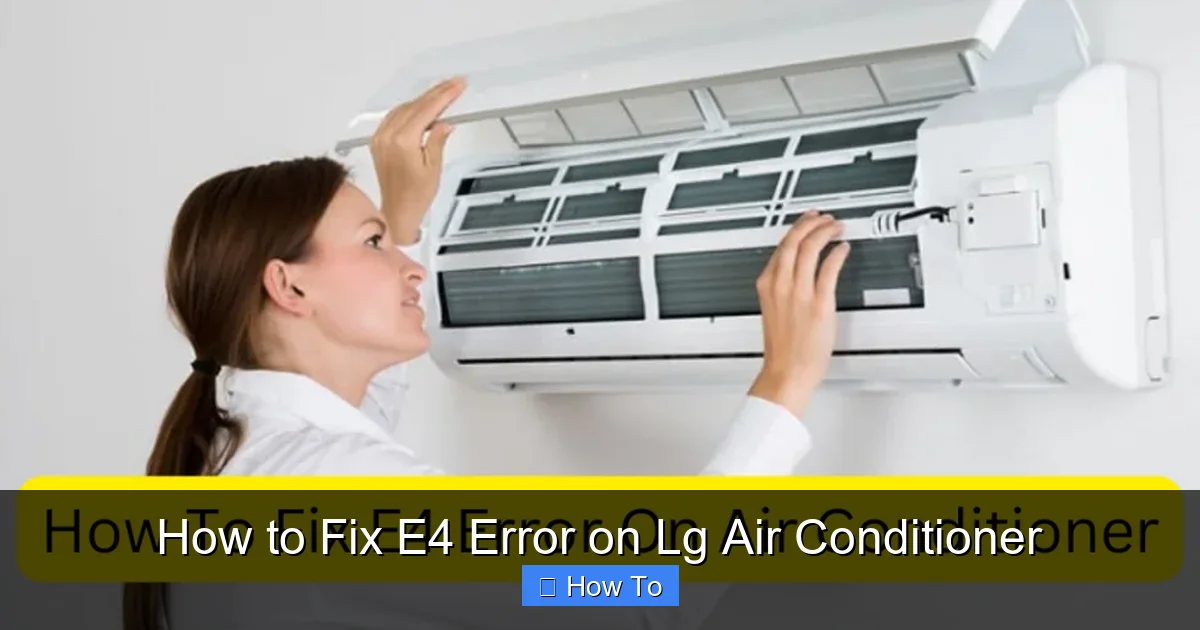
Visual guide about How to Fix E4 Error on Lg Air Conditioner
Image source: superaccept.com
- Evaporator or condenser coil fins (often due to corrosion or physical damage)
- Refrigerant line connections (loose flare nuts or worn seals)
- Schrader valves (the small valve stems used for charging)
- Solder joints in the copper tubing
Signs of a leak include oily residue around joints, hissing sounds when the unit runs, or visible frost buildup that doesn’t melt.
2. Low Refrigerant Charge from Installation
Sometimes, the AC was undercharged during initial setup. This is more common with DIY installations or inexperienced technicians. If your unit is new and suddenly shows E4, this could be the reason.
3. Frozen Evaporator Coil
When airflow is restricted (due to dirty filters or blocked vents), the evaporator coil can freeze. As ice builds up, it insulates the coil, reducing heat transfer and causing refrigerant pressure to drop—triggering E4. This is often a secondary issue, not the root cause, but it can mimic a refrigerant problem.
4. Faulty Pressure Sensor or Control Board
In rare cases, a malfunctioning sensor or control board may incorrectly report low refrigerant levels. This is harder to diagnose and usually requires professional testing.
5. Blocked or Restricted Refrigerant Lines
Kinks, debris, or moisture in the refrigerant lines can impede flow, leading to pressure imbalances that trigger the E4 code.
Understanding these causes helps you approach troubleshooting methodically—starting with the simplest fixes before moving to more complex diagnostics.
Step-by-Step Guide to Fixing the E4 Error
Now that you know what E4 means and why it happens, let’s walk through a practical, step-by-step process to resolve it. Follow these steps in order for the best results.
Step 1: Turn Off the Air Conditioner
The first thing you should do when you see the E4 error is to turn off your LG air conditioner immediately. Use the remote control or the power button on the unit itself. Then, unplug it from the wall outlet for safety.
Why? Running the AC with low refrigerant can overheat the compressor, leading to permanent damage. Giving the system a complete shutdown allows pressures to equalize and prevents further harm.
Leave it off for at least 10–15 minutes before proceeding to the next step.
Step 2: Check for Ice or Frost Buildup
Open the front panel of your LG AC (refer to your user manual if needed) and inspect the evaporator coil. Look for thick layers of ice or frost covering the coil or refrigerant lines.
If you see ice:
- Do NOT chip it off—this can damage the coil.
- Leave the unit off and let it thaw naturally. This may take 1–2 hours.
- Place a towel underneath to catch dripping water.
While waiting, check your air filter. A clogged filter restricts airflow, which is a leading cause of coil freezing. Replace it if it’s dirty.
Once the ice has melted, plug the unit back in and turn it on. If the E4 error is gone and cooling resumes, the issue was likely airflow-related, not a refrigerant leak. However, monitor the unit closely—if E4 returns, a leak is more probable.
Step 3: Reset the Air Conditioner
Sometimes, the E4 error is a temporary glitch caused by a power surge or sensor hiccup. A full reset can clear it.
Here’s how to reset your LG air conditioner:
- Unplug the unit from the power source.
- Wait 5–10 minutes (this allows capacitors to discharge and the control board to reset).
- Plug it back in.
- Turn it on using the remote or control panel.
- Set it to cooling mode and wait 10–15 minutes to see if the E4 code reappears.
If the error clears and the AC runs normally, great! But if E4 comes back within a few hours or days, it’s likely a real refrigerant issue that needs professional attention.
Step 4: Inspect for Visible Signs of a Refrigerant Leak
Now it’s time to play detective. Look for physical evidence of a refrigerant leak:
- Oily residue: Refrigerant leaks often leave behind a greasy, oily stain around joints, valves, or coils. Check the copper refrigerant lines (usually insulated with foam) and connection points.
- Hissing or bubbling sounds: Listen carefully when the unit is running. A faint hiss near the coils or lines could indicate escaping refrigerant.
- Bubbles in the sight glass (if equipped): Some LG units have a small glass window on the refrigerant line. Bubbles moving through it suggest low charge.
- Corrosion or rust: Check the outdoor unit (for split systems) or the back of window units for rust, especially around the coil fins.
Take photos of any suspicious areas—you’ll want to show them to a technician later.
⚠️ Important: Do NOT attempt to touch or repair refrigerant lines yourself. Refrigerants are hazardous chemicals, and handling them without EPA certification is illegal in many regions.
Step 5: Check Air Filters and Vents
Even if you’ve already replaced the filter, double-check that all vents and registers in your home are open and unobstructed. Furniture, curtains, or rugs blocking airflow can reduce system efficiency and contribute to coil freezing—which may trigger E4.
Also, ensure the outdoor unit (for split systems) has at least 2 feet of clearance on all sides. Grass, leaves, or debris can block airflow and cause overheating.
Step 6: Test the Unit After Basic Fixes
After completing steps 1–5, turn your LG air conditioner back on and monitor it for at least 30 minutes. Set the temperature low (e.g., 68°F) and listen for unusual noises. Watch the display for the E4 code.
If the error stays away and cooling is strong, you may have resolved a temporary issue like ice buildup or a sensor glitch.
But if E4 returns—or if you found signs of a leak—it’s time to call a professional.
When to Call a Professional Technician
While basic troubleshooting can resolve some E4 errors, **refrigerant-related issues require a licensed HVAC technician**. Here’s why:
- Recharging refrigerant is not a DIY job: Only EPA-certified technicians can legally handle, recover, and recharge refrigerants like R-410A (used in most modern LG units).
- Leak detection requires special tools: Technicians use electronic leak detectors, UV dye, or nitrogen pressure testing to find hidden leaks.
- Improper repairs can void your warranty: LG may deny warranty claims if unauthorized repairs are made.
- Safety risks: Refrigerants can cause frostbite, respiratory issues, or environmental harm if mishandled.
When you call a technician, provide them with:
- The exact model number of your LG AC (found on the rating plate)
- Photos of any oil stains or damage
- A description of when the E4 error first appeared
- Whether the unit was recently moved or serviced
A good technician will:
- Perform a thorough leak inspection
- Repair the leak (e.g., solder a joint, replace a valve)
- Evacuate and recharge the system to the correct level
- Test for proper operation and efficiency
Expect to pay between $150–$400 for diagnosis and repair, depending on the leak location and labor rates in your area.
Preventing Future E4 Errors
Once your LG air conditioner is fixed, take these steps to avoid another E4 error:
Schedule Annual Maintenance
Have a certified technician inspect your AC once a year—preferably before summer. They’ll check refrigerant levels, clean coils, tighten connections, and test sensors. Preventive care catches small leaks before they become big problems.
Replace Air Filters Monthly
Dirty filters restrict airflow, leading to coil freezing and pressure issues. Use high-quality filters and change them every 30–60 days during peak usage.
Keep the Area Around the Unit Clean
Clear leaves, dirt, and debris from the outdoor unit. Trim vegetation and ensure indoor vents aren’t blocked.
Avoid DIY Repairs on Refrigerant Lines
Even if you’re handy, never attempt to patch or recharge refrigerant yourself. It’s unsafe, illegal, and often ineffective.
Monitor Performance
Pay attention to changes in cooling performance, unusual noises, or higher energy bills—these can be early signs of a refrigerant issue.
Troubleshooting Tips and Common Mistakes
Even experienced homeowners can make mistakes when dealing with the E4 error. Here are some tips to avoid pitfalls:
- Don’t ignore the error: Continuing to use the AC with E4 can cause compressor failure, which costs $800+ to replace.
- Don’t try to “top off” refrigerant: Adding refrigerant without fixing the leak is a temporary fix that wastes money and harms the environment.
- Don’t assume it’s just a filter issue: While dirty filters can contribute, E4 is almost always refrigerant-related.
- Don’t use sealants: Stop-leak additives can clog the system and damage components. They’re not recommended by LG.
- Don’t delay calling a pro: The longer a leak persists, the more refrigerant is lost—and the higher the repair cost.
Conclusion
The E4 error on your LG air conditioner is a clear warning that refrigerant levels are low—usually due to a leak. While you can perform basic troubleshooting like resetting the unit, checking for ice, and inspecting for oil stains, **only a licensed technician should handle refrigerant repairs**.
By following the steps in this guide, you’ll be able to respond quickly, protect your investment, and restore cool, comfortable air to your home. Remember: prevention is key. Regular maintenance and prompt attention to warning signs can keep your LG AC running smoothly for years to come.
Don’t let an E4 error leave you sweating—take action today and enjoy reliable cooling all season long.