Connecting your LG air conditioner to WiFi via the ThinQ app lets you control cooling remotely, save energy, and receive smart alerts. This guide walks you through setup, troubleshooting, and tips for a seamless experience.
Key Takeaways
- Check compatibility first: Not all LG AC units support WiFi. Look for the ThinQ logo or check your model number on LG’s website.
- Download the LG ThinQ app: Available on iOS and Android, this free app is your control center for smart AC functions.
- Ensure a stable 2.4 GHz WiFi network: Most LG ACs only work with 2.4 GHz, not 5 GHz. Dual-band routers may need manual selection.
- Use the correct setup mode: Most models require “AP Mode” (Access Point) during pairing—this creates a temporary network for the app to connect.
- Keep devices close during setup: Place your phone within 3–5 feet of the AC unit to ensure strong signal during initial connection.
- Restart if needed: If pairing fails, power cycle the AC and router, then retry the process.
- Update firmware regularly: Use the ThinQ app to keep your AC’s software current for optimal performance and new features.
Introduction: Why Connect Your LG Air Conditioner to WiFi?
Imagine walking into your home on a hot summer day and being greeted by cool, refreshing air—before you even unlock the door. That’s the power of connecting your LG air conditioner to WiFi using the LG ThinQ app. This smart integration lets you control temperature, set schedules, monitor energy usage, and receive maintenance alerts—all from your smartphone.
Whether you have a window unit, portable AC, or ductless mini-split, many modern LG models support WiFi connectivity. Once connected, you can turn your AC on or off remotely, adjust fan speed, switch modes (cool, heat, fan, dry), and even integrate with voice assistants like Google Assistant or Amazon Alexa.
In this comprehensive guide, we’ll walk you through every step of connecting your LG air conditioner to WiFi via the ThinQ app. We’ll cover compatibility checks, app setup, network requirements, detailed pairing instructions, troubleshooting tips, and best practices to keep your smart AC running smoothly. By the end, you’ll be enjoying convenient, energy-efficient cooling at your fingertips.
Step 1: Check If Your LG Air Conditioner Supports WiFi
Before diving into setup, confirm that your LG air conditioner is WiFi-enabled. Not all models support smart features, so it’s essential to verify compatibility first.
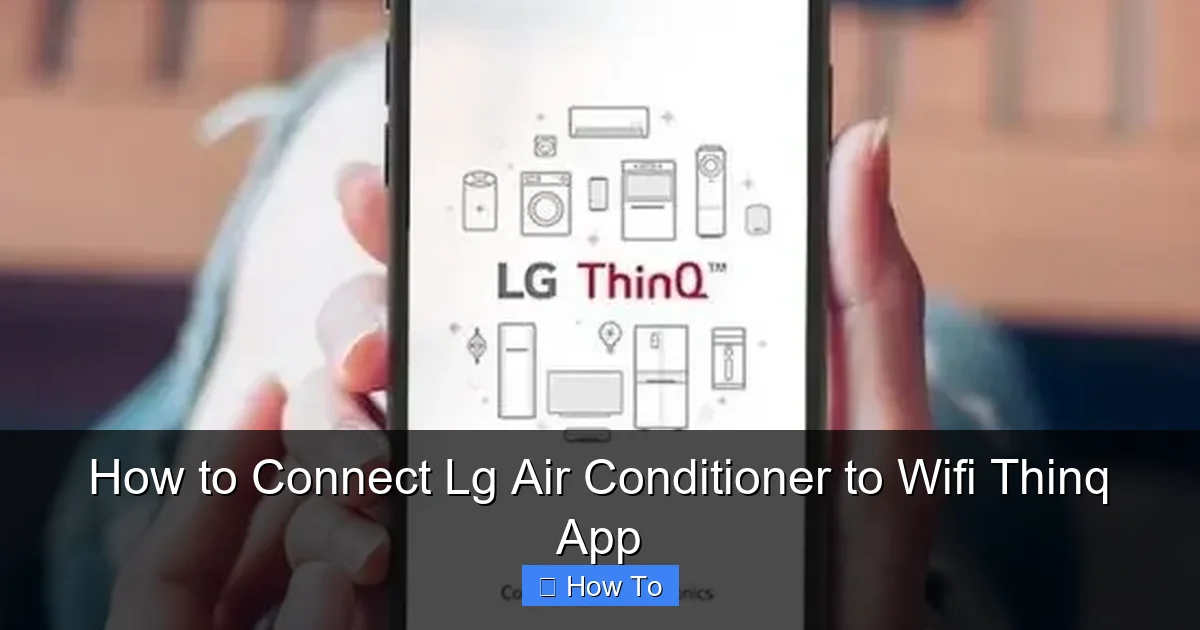
Visual guide about How to Connect Lg Air Conditioner to Wifi Thinq App
Image source: butterflygroupbd.com
Look for the ThinQ Logo
The easiest way to check is by looking for the “LG ThinQ” logo on the unit itself—usually on the front panel, remote control, or packaging. This logo indicates that the model supports smart connectivity.
Check Your Model Number
If you don’t see the logo, locate your model number. It’s typically found on a label inside the front grille, on the side of the unit, or in the user manual. Common LG AC series with WiFi support include:
- LG Dual Inverter Window AC (e.g., LW1216HR, LW1517IVSM)
- LG Portable AC with ThinQ (e.g., LP1419IVSM, LP1222HSR)
- LG DUALCOOL Mini-Split (e.g., LSU120HSV5, LSU180HSV5)
- LG Art Cool Mirror Series
Visit LG’s official website and enter your model number in the support section. Look for “WiFi” or “ThinQ” under features. If it’s listed, you’re good to go.
Check the Remote Control
Some LG smart ACs come with a remote that has a dedicated “WiFi” or “ThinQ” button. If yours does, that’s another strong indicator of compatibility.
Pro Tip: Even if your model isn’t officially listed, some older units may still support WiFi with a compatible LG WiFi module (sold separately). Check LG’s accessory page for your model.
Step 2: Download and Set Up the LG ThinQ App
The LG ThinQ app is your gateway to smart control. It’s free, user-friendly, and available on both major mobile platforms.
Download the App
Open the App Store (iOS) or Google Play Store (Android) on your smartphone. Search for “LG ThinQ” and download the official app by LG Electronics. Avoid third-party apps—stick to the verified version.
Create an LG Account
Launch the app and tap “Sign Up” if you don’t already have an LG account. You’ll need to provide:
- Email address
- Password (8+ characters, mix of letters and numbers)
- Country/region
- Agree to terms and privacy policy
If you already have an account (used for other LG appliances), simply log in.
Grant Permissions
The app may request access to your location, Bluetooth, and notifications. Allow these for optimal functionality:
- Location: Helps detect nearby LG devices during setup.
- Bluetooth: Used in some pairing processes (though WiFi is primary).
- Notifications: Lets you receive alerts like filter reminders or power outages.
Note: The ThinQ app also supports family sharing. You can invite household members to control the AC, which is great for shared spaces.
Step 3: Prepare Your WiFi Network
A stable and correctly configured WiFi network is crucial for a successful connection. Most LG air conditioners only support 2.4 GHz networks—not 5 GHz.
Confirm Your Router Supports 2.4 GHz
Check your router settings or manual. If you have a dual-band router (broadcasting both 2.4 GHz and 5 GHz), ensure the 2.4 GHz band is enabled. Some newer routers combine both bands under one name (e.g., “HomeWiFi”), which can cause confusion.
Separate 2.4 GHz and 5 GHz Networks (Recommended)
To avoid issues, log into your router’s admin panel (usually via a web browser) and give each band a unique name (SSID). For example:
- 2.4 GHz: “HomeWiFi_2.4”
- 5 GHz: “HomeWiFi_5”
This makes it easy to select the correct network during setup.
Check Signal Strength
Your AC unit should be within range of your router. If it’s in a basement, garage, or far corner of the house, consider using a WiFi extender. Weak signals can cause pairing failures or disconnections.
Disable MAC Filtering or Firewalls Temporarily
Some advanced security settings can block new devices. If you’ve enabled MAC address filtering or strict firewall rules, temporarily disable them during setup, then re-enable afterward.
Pro Tip: Avoid public or enterprise networks (like office or hotel WiFi). These often block device-to-device communication required for smart appliances.
Step 4: Put Your LG Air Conditioner in WiFi Pairing Mode
Now it’s time to prepare your AC unit to connect to the app. This step varies slightly by model, but most follow a similar process.
Power On the Unit
Make sure your LG air conditioner is plugged in and turned on. Use the remote or control panel to ensure it’s in a ready state (not in sleep or timer mode).
Enter AP Mode (Access Point Mode)
This is the most common method for initial pairing. AP Mode creates a temporary WiFi network that your phone connects to, allowing the app to send your home WiFi credentials to the AC.
To activate AP Mode:
- Press and hold the “WiFi” or “ThinQ” button on the remote for 3–5 seconds.
- Alternatively, on some models, press and hold the “Function” or “Mode” button until the WiFi indicator blinks.
- Look for a blinking light (usually blue or green) on the unit or remote—this indicates AP Mode is active.
Alternative: WPS Method (If Supported)
Some LG models support WPS (WiFi Protected Setup). If your router has a WPS button:
- Press the WPS button on your router.
- Within 2 minutes, press and hold the WiFi button on your AC remote.
- The units should pair automatically.
Note: WPS is less common and not all models support it. AP Mode is more reliable.
Wait for Confirmation
Once in AP Mode, the WiFi light should blink steadily. This means the AC is broadcasting its own network and waiting for your phone to connect.
Pro Tip: If the light stops blinking or turns solid, the unit may have exited pairing mode. Repeat the steps to re-enter AP Mode.
Step 5: Connect via the LG ThinQ App
With your AC in pairing mode, it’s time to use the app to complete the connection.
Open the ThinQ App
Launch the app and ensure you’re logged in. Tap the “+” or “Add Product” button (usually in the top-right corner).
Select “Air Conditioner”
The app will prompt you to choose a product category. Tap “Air Conditioner” or “Cooling” from the list.
Choose “WiFi” as Connection Type
Select “WiFi” when asked how you want to connect. The app will scan for nearby LG devices.
Connect to the AC’s Temporary Network
The app will detect your AC’s AP Mode network (e.g., “LG_AC_XXXX”). Tap it to connect. You may be prompted to allow the app to join the network—confirm.
Enter Your Home WiFi Credentials
The app will ask for your home WiFi network name (SSID) and password. Select your 2.4 GHz network from the list and enter the password carefully. Double-check for typos—incorrect passwords are a common cause of failure.
Wait for Pairing to Complete
The app will send the WiFi details to your AC. This may take 30–60 seconds. During this time, the AC’s WiFi light may blink rapidly, then turn solid when successful.
Name Your AC and Assign a Room
Once connected, the app will prompt you to name your AC (e.g., “Living Room AC”) and assign it to a room. This helps organize multiple devices.
Test Remote Control
Try turning the AC on/off, changing temperature, or switching modes using the app. If it responds, the connection is successful!
Pro Tip: If the app says “Connection Failed,” don’t panic. Go to your phone’s WiFi settings, manually disconnect from the AC’s network, and restart the process.
Step 6: Optimize and Use Your Smart AC
Now that your LG air conditioner is connected, explore its smart features to maximize comfort and efficiency.
Set Schedules and Timers
Use the app to create custom schedules. For example:
- Cool the bedroom to 72°F at 10 PM
- Turn off at 6 AM to save energy
- Pre-cool the living room 30 minutes before you get home
This reduces manual adjustments and lowers electricity bills.
Enable Energy Monitoring
Some models show real-time and historical energy usage. Track how much power your AC consumes and adjust settings to save money.
Use Voice Control
Link your LG ThinQ account to Google Assistant or Amazon Alexa. Say commands like:
- “Hey Google, set the living room AC to 70 degrees.”
- “Alexa, turn off the bedroom air conditioner.”
Receive Maintenance Alerts
The app can notify you when it’s time to clean the filter, check for errors, or schedule service. This extends the life of your unit.
Update Firmware
Periodically check for firmware updates in the app. These improve performance, fix bugs, and add new features.
Pro Tip: Enable “Away Mode” when traveling. It maintains a safe temperature to prevent freezing or overheating while saving energy.
Troubleshooting Common Connection Issues
Even with careful setup, problems can occur. Here’s how to fix the most common issues.
AC Not Detected by the App
Solution: Ensure the AC is in AP Mode (blinking light). Move your phone closer (within 3–5 feet). Restart the app and try again. If still not found, power cycle the AC (unplug for 30 seconds).
“Incorrect Password” Error
Solution: Double-check your WiFi password. Avoid special characters if possible. Re-enter it slowly. If unsure, reset your router password temporarily.
Connection Drops Frequently
Solution: Weak signal is likely the cause. Move the router closer or use a WiFi extender. Avoid placing the AC near microwaves, cordless phones, or thick walls.
App Shows “Offline”
Solution: Check if your home WiFi is working. Restart the router. If the AC still shows offline, reconnect it via the app using the “Reconnect” option in device settings.
5 GHz Network Selected by Mistake
Solution: Go back to your router settings and ensure you’re connecting to the 2.4 GHz network. Delete the 5 GHz network from your phone’s saved networks to avoid confusion.
Factory Reset the AC
If all else fails, perform a factory reset:
- Unplug the AC for 1 minute.
- Press and hold the “Power” and “Mode” buttons simultaneously for 5 seconds while plugging it back in.
- The unit will reset to default settings.
- Repeat the pairing process.
Pro Tip: Keep your phone’s operating system and the ThinQ app updated. Outdated software can cause compatibility issues.
Conclusion: Enjoy Smart Cooling with LG ThinQ
Connecting your LG air conditioner to WiFi using the ThinQ app opens up a world of convenience, energy savings, and smart home integration. From remote control to voice commands and automated schedules, your AC becomes more than just a cooling device—it becomes a responsive part of your daily life.
By following this guide, you’ve learned how to verify compatibility, set up the app, prepare your network, enter pairing mode, and troubleshoot common issues. With your AC now connected, take advantage of features like energy monitoring, maintenance alerts, and seamless control from anywhere.
Remember to keep your firmware updated and your network stable for the best experience. If you run into problems, don’t hesitate to consult LG’s support page or contact customer service. With a little patience and the right steps, your smart AC will keep you cool—effortlessly and intelligently—all season long.