Carrier air conditioners are known for their reliability and energy efficiency, but understanding their true cost involves more than just the initial price. From basic units to advanced systems, prices vary widely based on size, features, and installation needs. This guide breaks down everything you need to know about carrier air conditioner system costs, so you can make a smart investment.
Key Takeaways
- System Type Matters: Central ACs cost more than ductless mini-splits, but offer whole-home cooling.
- Installation Fees Vary: Labor, ductwork, and permits add $500–$3,000+ to total costs.
- Energy Efficiency Saves Money: High SEER ratings reduce long-term electricity bills.
- Financing Options Exist: Many HVAC providers offer payment plans or rebate programs.
- Location Impacts Price: Climate, housing type, and local labor rates affect final cost.
- Maintenance Costs Add Up: Annual servicing keeps efficiency high and prevents breakdowns.
- Rebates Can Offset Cost: Federal and utility incentives may cover 10–60% of purchase price.
Quick Answers to Common Questions
How much does a Carrier air conditioner unit cost without installation?
A Carrier air conditioner unit typically ranges from $2,000 to $7,500 depending on the model and capacity. Entry-level units like the Performance series start around $2,800, while high-efficiency Infinity models can exceed $7,000. Prices vary based on SEER rating, features, and availability.
Is it cheaper to install a Carrier AC yourself?
DIY installation is not recommended for central air systems. Improper setup can void warranties, cause leaks, or create safety hazards. Licensed professionals ensure correct sizing, refrigerant handling, and code compliance. Attempting self-installation risks costly mistakes and often ends up being more expensive than paying for expert help.
Can I finance my Carrier air conditioner purchase?
Yes, many Carrier dealers offer financing options including 0% APR for qualified buyers, low monthly payments, and flexible terms. Some plans require a credit check and down payment. Always review the terms carefully and compare offers from different providers.
Do Carrier air conditioners qualify for federal tax credits?
As of 2024, high-efficiency Carrier heat pumps and certain central air conditioners may qualify for a 30% federal tax credit under the Inflation Reduction Act—up to a $2,000 maximum. Eligible systems must meet specific SEER2 standards. Consult a tax professional or visit energy.gov/heatpump for details.
How often should I service my Carrier air conditioner?
Professional maintenance once a year is ideal—typically in early spring before peak cooling season. This includes cleaning coils, checking refrigerant levels, inspecting electrical connections, and testing thermostat operation. Regular service improves efficiency, extends lifespan, and prevents breakdowns.
📑 Table of Contents
- Understanding the Cost of Carrier Air Conditioner Systems
- Types of Carrier Air Conditioner Systems and Their Prices
- Breaking Down Installation Costs
- Energy Efficiency and Long-Term Savings
- Financing and Rebate Options to Lower Your Cost
- Factors That Influence Your Total Cost
- Tips to Save on Your Carrier Air Conditioner Purchase
- Conclusion: Is the Investment Worth It?
Understanding the Cost of Carrier Air Conditioner Systems
If you’re thinking about upgrading or installing a new air conditioning system, chances are you’ve heard the name Carrier. For over a century, Carrier has been a trusted name in climate control—offering everything from residential window units to powerful commercial HVAC systems. But when it comes time to buy, one question dominates: How much does a Carrier air conditioner system really cost?
The answer isn’t simple. Unlike buying a toaster where the price tag tells the full story, an air conditioner involves multiple components, installation complexity, and long-term value. A Carrier system might be pricier upfront than other brands, but that doesn’t always mean it’s not worth it. In fact, many homeowners find that investing in a quality system like Carrier pays off in comfort, durability, and energy savings over time.
In this complete guide, we’ll walk through every aspect of carrier air conditioner system cost—from basic unit prices to hidden fees and financing options. Whether you’re replacing an old unit or building a new home, this article will help you budget wisely and choose the best system for your needs.
Types of Carrier Air Conditioner Systems and Their Prices
Before diving into numbers, it’s important to understand the different types of Carrier air conditioning systems available. Each comes with its own price range and ideal use case.
Visual guide about Cost of Carrier Air Conditioner System
Image source: i.ytimg.com
Central Air Conditioning Systems
These are the most common type of residential ACs. They cool your entire home through a network of ducts connected to a central unit outside. Carrier offers several lines within this category, including the Performance™, Preferred™, and Infinity® series.
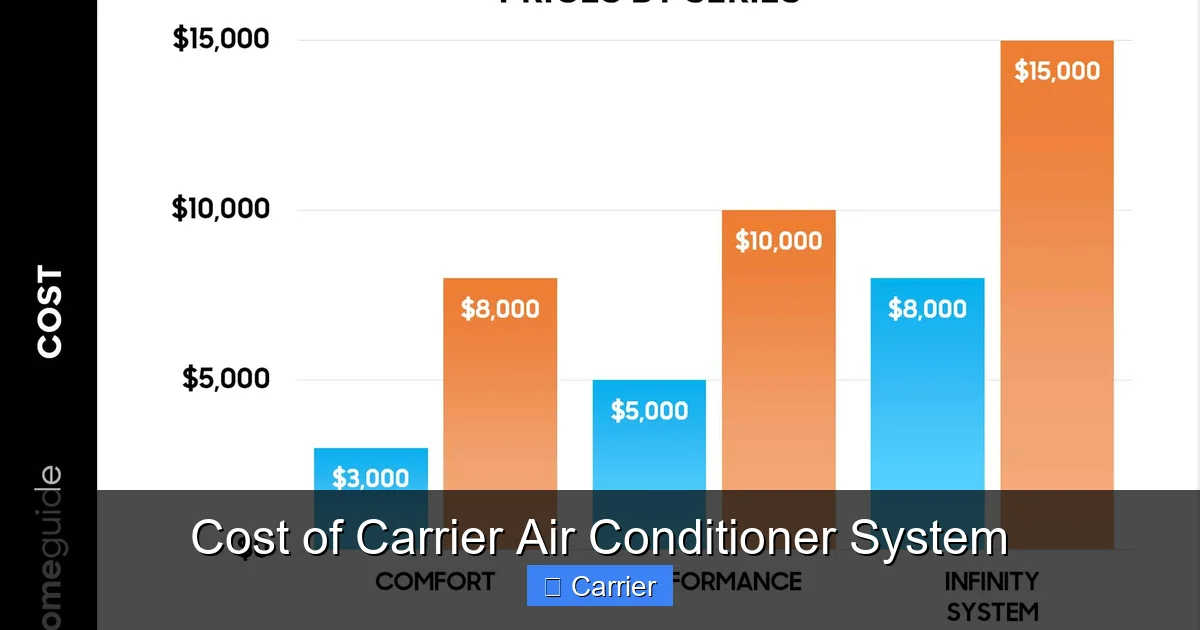
- Performance Series: Entry-level models start around $3,000–$4,500 installed (unit + labor).
- Preferred Series: Mid-tier systems with better efficiency; expect to pay $4,500–$7,000.
- Infinity Series: Top-of-the-line models with advanced controls and Wi-Fi; range from $6,500–$9,500+.
For example, a 3-ton Carrier Performance unit might cost $2,800 retail, but installation could bring the total to $4,200 if ductwork is intact. If ducts need repair or replacement, add another $1,000–$3,000 depending on home size.
Ductless Mini-Split Systems
Perfect for homes without existing ductwork, these systems use individual indoor units linked to one outdoor compressor. Carrier’s ductless line includes the 24VNAK and 24VRB models.
- Single-Zone Mini-Split: $2,500–$4,000 installed (one room).
- Multi-Zone System: $5,000–$8,000 (up to four rooms).
While slightly more expensive per ton than central ACs, mini-splits offer zoned cooling—meaning you only cool rooms in use. That can lead to significant energy savings, especially in larger homes.
Packaged Air Conditioners
This all-in-one unit sits on your roof or near your foundation and combines heating and cooling. Ideal for smaller homes or condos. Carrier’s PACKAGE RTU models typically run between $4,000–$6,500 installed.
Window and Portable Units
Though less common today due to efficiency concerns, some small Carrier window units are still sold. Expect to pay $300–$800 for these. However, they’re rarely recommended for whole-home use due to noise and limited capacity.
Breaking Down Installation Costs
The unit price is just part of the equation. Installation can dramatically affect your total cost—and sometimes even influence which system you choose.
Visual guide about Cost of Carrier Air Conditioner System
Image source: static.homeguide.com
Labor Charges
HVAC technicians charge by the hour, usually between $80–$150/hour. A typical installation takes 4–8 hours, so labor alone ranges from $320–$1,200. Complex jobs—like running new electrical wiring or adding refrigerant lines—can extend this timeframe.
Ductwork Considerations
If your current ductwork is old, leaky, or insufficient, you’ll likely need repairs or upgrades. This is one of the biggest hidden costs. Minor duct sealing runs $500–$1,000; major replacements can exceed $4,000 for a 2,000 sq ft home.
Pro tip: Ask for a duct leakage test before installation. It’s a quick way to see if your ducts need attention and helps avoid surprise expenses later.
Permits and Inspections
Most cities require permits for HVAC installations. These usually cost $100–$300, though some areas include them in contractor fees. Always check local regulations—non-compliance can void warranties or cause safety issues.
Additional Accessories
You may also need to budget for:
- Thermostats (smart ones add $200–$600)
- Refrigerant charges (included in most quotes but verify)
- Electrical upgrades (rare but possible in older homes)
Energy Efficiency and Long-Term Savings
A higher upfront cost doesn’t always equal higher lifetime expenses. Carrier systems—especially those with high SEER (Seasonal Energy Efficiency Ratio) ratings—deliver real savings over time.
What Is SEER?
SEER measures how efficiently an AC cools compared to the energy it uses. The U.S. minimum is 13, but Carrier offers models up to 26 SEER in its Infinity line. Higher SEER means lower electric bills, especially during hot summers.
Example: A 16 SEER system uses about 15% less energy than a 14 SEER model. Over 10 years, that could save you $300–$600 in utility costs—offsetting part of the initial price difference.
Smart Features and Controls
Modern Carrier units often come with Wi-Fi enabled thermostats, remote scheduling, and geofencing (auto-adjusts temps when you leave). While these add $100–$500 to the system, they improve convenience and further reduce waste.
Warranty Protection
Carrier backs its systems with strong warranties:
- Standard: 5–10 years parts/labor
- Extended: Up to 12 years on compressors (with registration)
- Infinity series: Lifetime compressor warranty (with proper maintenance)
A longer warranty reduces future repair costs—another factor in overall value.
Financing and Rebate Options to Lower Your Cost
Don’t let the sticker price scare you off. Several strategies can make a Carrier system more affordable.
Manufacturer Rebates
Carrier frequently runs promotions offering cash back or extended warranties. Recent deals have included up to $1,000 off qualifying purchases. Check their official website or ask your installer about current offers.
Utility Company Incentives
Many power companies offer rebates for energy-efficient appliances. You might get $200–$800 back for upgrading to a high-SEER Carrier unit. Visit your utility provider’s site or contact their energy efficiency program.
Federal Tax Credits
The Inflation Reduction Act (IRA) provides tax credits for heat pumps and efficient HVAC systems. As of 2024, you may claim up to 30% of the system cost (capped at $2,000) if installed by December 2024. Eligible systems must meet strict SEER standards.
Financing Plans
Many Carrier dealers partner with lenders to offer:
- 0% APR for 12–24 months
- Low monthly payments ($75–$200/month)
- No credit check options (higher interest)
Always read the fine print. Some plans require a 10–20% down payment, and missed payments can damage your credit score.
Factors That Influence Your Total Cost
Even two identical homes side-by-side won’t necessarily have the same Carrier AC cost. Here’s why:
Home Size and Layout
Larger homes need bigger units and more refrigerant. A 1,500 sq ft house might use a 2.5-ton system, while a 3,000 sq ft home needs 4 tons. Odd-shaped layouts or multi-story buildings increase installation difficulty and cost.
Climate Zone
If you live in a scorching desert like Phoenix or humid Florida, your AC works harder year-round. That may justify a larger or dual-stage system, increasing initial cost but improving comfort and longevity.
Existing Infrastructure
Homes built after 1990 usually have adequate ductwork. Older houses might need full replacements. Also, check if your electrical panel can handle a new AC—upgrades cost $500–$1,500.
Local Labor Rates
HVAC wages vary by region. In cities like New York or San Francisco, installers charge 20–30% more than in rural areas. Always get quotes from 2–3 licensed contractors.
Brand vs. Generic
While Carrier is premium-priced, generic “no-name” brands may seem cheaper but lack warranties, efficiency, and customer support. Cheaper isn’t always better when it comes to central cooling.
Tips to Save on Your Carrier Air Conditioner Purchase
Ready to move forward? Try these money-saving strategies:
- Schedule installation in spring or fall: Off-season demand means lower labor rates and faster service.
- Bundle with furnace repair: Many contractors offer discounts for combined HVAC projects.
- Compare quotes thoroughly: Get detailed written estimates covering materials, labor, and extras.
- Ask about maintenance packages: Some dealers sell annual service plans that include tune-ups and priority scheduling.
- Consider used or refurbished units: Certified pre-owned Carrier systems can cut costs by 20–30%, often with remaining warranty.
Conclusion: Is the Investment Worth It?
So, what’s the bottom line on carrier air conditioner system cost? Expect to spend anywhere from $3,500 to $10,000+ for a full installation, depending on your home and chosen model. While that sounds steep, remember that this is a long-term investment in comfort, health, and home value.
Carrier systems are engineered for durability and performance. With proper care, they can last 15–20 years—longer than budget models from lesser-known brands. Plus, energy savings and rebates help offset the price over time.
If you’re ready to upgrade, start by getting quotes from certified Carrier dealers. Look for NATE-certified technicians who understand the brand’s technology and can recommend the best fit. And don’t forget to explore financing and incentive programs—they can turn a big expense into manageable payments.
Your home deserves reliable cooling. With thoughtful planning, a Carrier air conditioner system can deliver comfort, efficiency, and peace of mind for years to come.
Frequently Asked Questions
What is the average lifespan of a Carrier air conditioner?
With proper maintenance, a Carrier central air conditioner typically lasts 15 to 20 years. Ductless mini-splits may last slightly longer due to simpler mechanics. Factors like usage frequency, climate severity, and annual servicing impact longevity.
Are Carrier air conditioners noisy?
Modern Carrier systems are designed for quiet operation. Even high-capacity models produce less than 60 decibels—about as loud as a normal conversation. The Infinity series uses variable-speed fans and sound-dampening materials to minimize noise further.
Can I install a Carrier AC in a rental property?
Yes, but consider whether the tenant or landlord covers costs. Ductless mini-splits are often preferred in rentals because they don’t require duct modifications. Always disclose installation details in the lease agreement and follow local tenant laws.
Does Carrier offer emergency repair services?
Most authorized Carrier dealers provide 24/7 emergency repair services, especially during extreme weather. Response times vary by location, but many guarantee same-day service. Keep your installer’s contact info handy for urgent situations.
How do I know what size Carrier AC I need?
An HVAC contractor performs a load calculation (Manual J) based on your home’s square footage, insulation, windows, orientation, and climate zone. Oversized units short-cycle and waste energy; undersized ones can’t cool properly. Never guess—professional assessment ensures optimal sizing.