Car AC Compressor Vs Condenser
When it comes to your car's air conditioning (AC) system, the compressor and condenser play crucial roles in keeping your vehicle cool during those scorching Texas summers. However, many drivers often confuse the functions of these components. This article will shed light on the differences between the car AC compressor and condenser to help you understand the inner workings of your vehicle's cooling system.
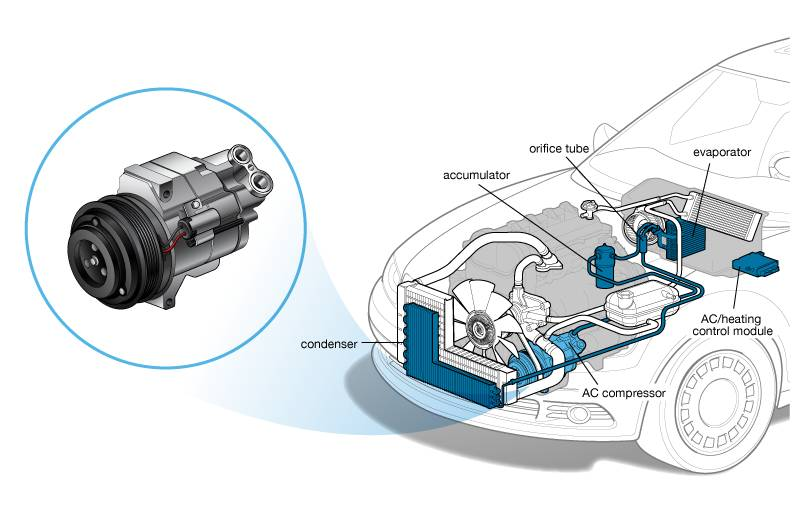 Diagram illustrating the compressor and condenser in a typical automotive AC system.
Credit: www.cars.com
What Are They and What Do They Do?
The car AC compressor is responsible for compressing the refrigerant gas and pumping it into the condenser coils. This process cools down the gas and exchanges heat through the condenser. In contrast, the condenser's primary function is to release the heat that the refrigerant, now in a fluid state, has removed from the air inside your vehicle.
In practice, the compressor acts as the heart of the system, pressurizing low‑pressure refrigerant vapor into a high‑pressure, high‑temperature gas. Most modern cars use a scroll or variable‑displacement compressor for smoother operation. The condenser, usually mounted in front of the radiator, then transforms that hot gas into a liquid by dissipating heat to the outside air. A common mistake is assuming both components do the same job; the compressor moves refrigerant, while the condenser rejects heat.
How the AC System Works: A Quick Overview
Your car’s AC is a closed loop that also includes an expansion valve (or orifice tube) and an evaporator. After the condenser, liquid refrigerant passes through the expansion device, dropping pressure and temperature before entering the evaporator inside the dashboard. There it absorbs cabin heat, turning back into a low‑pressure gas that returns to the compressor. Understanding this cycle helps you see why a failure in either the compressor or condenser stops cooling altogether.
Cost Considerations
Now, let's address a common concern among car owners: the cost of replacing these components. Typically, the compressor tends to be more expensive to replace than the condenser. When it comes to maintenance and repairs, it's essential to understand these cost differences and the impact they can have on your budget.
Parts alone for a compressor can range from $300 to $900 depending on the vehicle, while a condenser usually runs $150 to $400. Labor adds another $200–$500 because both jobs require refrigerant recovery, system evacuation, and recharge. Factors like accessibility, whether the vehicle uses R‑134a or the newer R‑1234yf refrigerant, and shop labor rates all shift the final bill. For a detailed breakdown of what drives these prices, see our guide on diagnose warm air issues.
Factors That Influence Replacement Costs
Beyond the base part price, several variables affect the total invoice. Luxury and European models often have compressors integrated with the engine’s accessory drive, increasing labor time. Hybrid and electric vehicles may use an electrically driven compressor that costs significantly more. Additionally, if metal debris from a failed compressor contaminates the condenser, a full system flush and receiver‑drier replacement become necessary, pushing the job toward the higher end of the $500–$1,500 range mentioned in the FAQ.
 Close‑up view of a condenser’s finned tubing where heat is exchanged with outside air.
Credit: in.pinterest.com
Signs of Troubles
How do you know if your car's AC compressor or condenser is malfunctioning? A telltale sign of a compressor issue is poor AC system performance. If you notice that your cabin feels warmer than usual, or your AC is blowing warm air, it's a clear indication that your system is experiencing some difficulties. On the other hand, the condenser's failure often leads to inadequate cooling performance, which can be detected through reduced cool air circulation inside the vehicle.
Compressor-specific symptoms include a loud clunk or grinding noise when the clutch engages, intermittent cooling that worsens at idle, and a seized pulley that may throw the serpentine belt. Condenser problems often show as cooling that works at highway speeds but fades in stop‑and‑go traffic, visible fin damage or corrosion, and oily residue indicating a refrigerant leak. For step‑by‑step diagnostic help, refer to our condenser troubleshooting steps.
Diagnosing Compressor vs Condenser Issues
A simple pressure‑gauge test can point you in the right direction. With the engine running and AC on max, compare low‑side and high‑side readings to the manufacturer’s specifications. Low‑side pressure that’s too high and high‑side pressure that’s too low usually signal a weak compressor. Conversely, excessively high high‑side pressure with normal low‑side pressure suggests a restricted or damaged condenser. Always wear eye protection and follow EPA guidelines for refrigerant handling — see the EPA’s refrigerant phase‑out page for current regulations.
Replacement Considerations
Car manufacturers and industry experts often recommend replacing both the compressor and condenser simultaneously, mainly due to the possibility of leftover debris in the condenser. While this approach may incur higher upfront costs, it can potentially save you from future issues and expenses involved in separate replacements.
When a compressor fails, it often sends metal particles throughout the system. Even a thorough flush may not remove all debris from the condenser’s narrow parallel‑flow passages, especially in vehicles built after 2010. Installing a new compressor on a contaminated condenser risks repeat failure and voids many parts warranties. If budget forces a single‑component repair, at minimum replace the receiver‑drier/accumulator and perform a certified flush. For more on proper replacement procedures, review troubleshooting a faulty condenser.
Refrigerant Types and Environmental Regulations
Most 1994‑2016 models use R‑134a, while newer vehicles have switched to R‑1234yf, which has a much lower global‑warming potential. The two refrigerants require different service equipment and cannot be mixed. If your car uses R‑1234yf, expect higher refrigerant costs (often $120–$180 per pound) and ensure the shop has dedicated recovery machines. The SAE International standards govern fitting sizes and service procedures for both refrigerants.
Maintenance Tips to Prolong Compressor and Condenser Life
Run the AC for at least 10 minutes every month, even in winter, to keep seals lubricated and prevent compressor clutch seizure. Keep the condenser fins clean — gently spray them with low‑pressure water during car washes to remove bugs and debris that block airflow. Replace the cabin air filter annually; a clogged filter forces the evaporator to work harder, indirectly stressing the compressor. Finally, follow a seasonal maintenance checklist that includes a professional pressure check before summer.
Final Thoughts
Understanding the roles and differences between the car AC compressor and condenser is crucial for maintaining your vehicle's cooling system. Regular inspections and proper maintenance can help identify potential issues early, ultimately saving you from inconvenient breakdowns and costly repairs. Remember to consult with a certified technician for any concerns related to your car's AC components to ensure safe and efficient operation.
Schedule a professional AC inspection today to avoid costly repairs and stay cool all season.
Frequently Asked Questions For Car Ac Compressor Vs Condenser: Know The Difference
How Do I Know If My Car Ac Compressor Or Condenser Is Bad?
To determine if your car AC compressor or condenser is bad, watch for poor air conditioning performance. If the cabin feels warmer or the air blows warm, it indicates trouble with your system.
Do I Need To Replace Car Ac Condenser With Compressor?
No, it is not necessary to replace the car AC condenser with the compressor. However, for warranty purposes and to ensure optimal performance, it is recommended to replace both components together due to the possibility of debris remaining in the condenser.
How Much Does It Cost To Replace A Car Ac Compressor And Condenser?
The cost of replacing a car AC compressor and condenser can vary depending on the make and model of the vehicle, as well as the labor costs in your area. On average, the cost can range from $500 to $1500.
It is recommended to replace both the compressor and condenser together for warranty purposes and to prevent any debris from affecting the new components.
Which Is More Expensive Compressor Or Condenser?
Compressors are generally more expensive than condensers in air conditioning systems.
Can I Drive With A Bad AC Compressor Or Condenser?
You can drive with a failed AC compressor or condenser, but the cabin will not cool. A seized compressor clutch can eventually damage the serpentine belt, leading to loss of power steering or alternator function. Address the issue promptly to avoid secondary repairs.
How Often Should I Service My Car’s AC System?
Most manufacturers recommend an AC performance check every 12–24 months. This includes verifying refrigerant charge, inspecting belts and hoses, and cleaning the condenser. Regular service catches small leaks before they become major component failures.
What New Technologies Are Improving Car AC Efficiency?
Variable‑displacement compressors, electric compressors in hybrids/EVs, and micro‑channel condensers are among the latest AC technology trends that boost efficiency and reduce engine load.
This article aims to provide comprehensive information about the differences between car AC compressors and condensers, addressing common concerns and providing valuable insights for car owners in Austin, Texas, United States. The content is intended to appeal to a wide audience while incorporating keywords and relevant search phrases to enhance SEO optimization.