Title: Can You Lubricate an Ac Compressor Clutch: Expert Tips for Care
When it comes to the maintenance of your car's air conditioning (AC) system, there are often various questions that car owners are curious about. One of the common queries is whether it is advisable to lubricate an AC compressor clutch. In this article, we will delve into this topic and provide the necessary insights to guide you in maintaining your AC compressor clutch effectively.
Proactive seasonal upkeep can prevent many clutch-related issues before they start. For a detailed checklist, see our guide on seasonal AC upkeep. For more on this, see our guide on can you rebuild an ac compressor.
https://www.youtube.com/watch?v=IlKLVJbs-iQ
Understanding the AC Compressor Clutch
The AC compressor clutch plays a crucial role in the operation of the AC system in your vehicle. It is responsible for engaging and disengaging the compressor, allowing it to maintain the desired temperature inside the car. However, just like other components of the AC system, the compressor clutch requires maintenance to ensure its optimal performance.
Understanding the Impact of Cold Weather on Your A/C Clutch
When temperatures drop, the operation of your vehicle's A/C clutch can behave differently due to several reasons. Here's how cold weather can influence its performance:
Refrigerant Pressure Changes : The refrigerant inside your A/C system has a direct relationship between temperature and pressure. In cold conditions, the pressure of the refrigerant decreases, which can cause the A/C clutch to cycle on and off more frequently. This happens because the system attempts to maintain optimal pressure and function.
Defrost Setting Activation : In many vehicles, the A/C system is automatically activated when the defrost setting is used. This helps to remove moisture from the air, aiding in clearing windshield fog. However, in colder weather, the frequent activation can contribute to the clutch engaging and disengaging more often.
Potential Low Charge Issues : If the A/C system is undercharged, the lower refrigerant level might exacerbate the frequency of clutch cycling in cold weather. Ensuring that your refrigerant levels are correct can help mitigate these issues.
Overall, while there might be more noticeable clutch cycling in colder temperatures, maintaining a well-charged system and understanding the role of the defrost setting can help manage these changes effectively.
Key Components of the AC Compressor Clutch
The clutch assembly consists of an electromagnetic coil, a pulley with a sealed bearing, a friction plate (hub), and a set of shims that set the air gap. The coil creates a magnetic field that pulls the friction plate against the pulley, locking the compressor shaft to the engine drive. Proper air‑gap clearance and a clean friction surface are essential for reliable engagement without slippage.
Can You Lubricate the AC Compressor Clutch?
One of the questions that frequently arise is whether you can lubricate the AC compressor clutch. It’s important to note that lubricating the clutch itself is not recommended. The clutch requires friction to operate the compressor, and applying lubrication to the clutch can lead to slippage, causing excessive heat that may damage the bearing and other components of the clutch.
To further clarify, the clutch assembly includes sealed bearings. These bearings are designed to function without additional lubrication, so attempting to lubricate them can impair their performance or even cause damage.
If you're concerned about noise, it's often the sound of the clutch being energized and engaging, which is normal. However, if the clicking noise is constant, this might indicate a low refrigerant charge in your system. In such a case, addressing the charge issue may resolve the noise problem without needing any adjustments to the clutch itself.
In summary, while the noise might be concerning, lubrication is not the solution and could potentially lead to further issues. Instead, consider checking the refrigerant levels to ensure your system is operating efficiently.
It's essential to understand that if the clutch is dragging when disengaged, the issue may not be related to lubrication. Instead, it could indicate the need for an adjustment of the air gap, potential pulley bearing problems, or other mechanical faults. Therefore, it's crucial to diagnose the root cause of the issue and address it accordingly.
In practice, the compressor itself requires a specific type and amount of PAG or POE oil that circulates with the refrigerant. Adding oil to the compressor (not the clutch) must follow the vehicle manufacturer’s specifications; overfilling can be just as harmful as underfilling. For authoritative guidance on refrigerant and oil handling, refer to the EPA Section 608 regulations.
Why Lubricating the Clutch Is Harmful
Adding any lubricant to the clutch faces reduces the coefficient of friction that the design relies on. Slippage generates heat far above normal operating temperatures, which can anneal the friction material, warp the pulley, and cause premature bearing failure. The only lubrication the system needs is the refrigerant‑carried oil that lubricates the compressor’s internal moving parts.
Common Issues and Solutions
Several factors can lead to problems with the AC compressor clutch, such as electrical issues, clutch failures, refrigerant leaks, or failed fans. Identifying the underlying cause of the malfunction is critical in determining the appropriate solution. While lubricating the clutch may not be the solution, understanding the potential issues can help in addressing the problem effectively.
Diagnosing Clutch Problems: Step-by-Step
- Verify refrigerant charge with a manifold gauge set — low pressure on both sides often points to a leak.
- Measure clutch coil resistance with a multimeter; compare to the service manual specification.
- Check the air gap with a feeler gauge; adjust shims if out of spec.
- Spin the pulley by hand (engine off) to feel for bearing roughness or play.
- Observe clutch engagement while the engine runs and the A/C is commanded on; note any delayed or incomplete lock‑up.
What Could Constant Clicking of the A/C Clutch Indicate?
If you notice a persistent clicking sound from your vehicle's A/C clutch, it can be concerning. Here's what it might indicate and what you should consider:
Normal Operation : The clicking sound often results from the A/C clutch engaging and disengaging. This is typically normal, especially when the A/C system is turning on.
Low Refrigerant Charge : If the clicking is frequent, it could suggest that the refrigerant level is low. Low refrigerant can cause the clutch to cycle on and off constantly as it struggles to maintain sufficient pressure. Refrigerant pressure and temperature are directly related; colder weather can exacerbate this issue, making the system click more often.
Sealed Bearings : It's important to remember that there are sealed bearings within the clutch mechanism. Therefore, be cautious about adding lubricants, as they could interfere with performance.
Cold Weather Impact : In colder climates, the vehicle may activate the A/C when the defrost setting is on. This is a normal response to prevent fogging, but it can also lead to more frequent clutch engagement due to fluctuating refrigerant pressure.
Electrical Issues : In some cases, an electrical problem could cause the clutch to engage incorrectly. Checking the vehicle's electrical system might reveal an underlying issue.
If you’re concerned about the behavior of your A/C system, consulting a professional mechanic for a thorough inspection is always a wise step. This will ensure that any potential issues are identified and resolved before they lead to more significant problems.
How can you identify the source of noise in the engine compartment?
Identifying the source of noise in an engine compartment can be a bit tricky due to the way sounds travel and bounce around. However, a methodical approach can help. Here's a step-by-step guide:
Gather Your Tools
Mechanic's Stethoscope: Alternatively, you can create a homemade version using a metal rod or a long screwdriver to pinpoint the noise more accurately.
Safety Gear: Wear protective eyewear and gloves.
Steps to Identify the Noise
Initial Inspection: Open the hood and listen closely to the engine while it's running. Try to identify the general area where the noise seems to be coming from.
Use the Stethoscope: Gently place the metal rod or screwdriver against various engine components, such as the tensioner pulley, compressor clutch, alternator, and other pulleys.
Hold the other end to your ear to magnify the sound. This helps in pinpointing the exact location of the noise.
Check Moving Parts: Focus on components with moving parts, as these are frequent culprits for noises like chirping or squealing.
Examine Belts and Pulleys: Look for signs of wear and tear on belts and pulleys, as they can often transmit or create noise.
Evaluate Sound Transmission: Understand that noises can echo and seem to originate in different locations. Be patient and methodical to ensure you've located the true source.
Consult a Professional: If you can't determine the source, consider having a professional mechanic do a more thorough diagnosis.
By carefully scanning and listening with these tools, you can better identify and address the cause of noise in your engine compartment, improving both your vehicle’s performance and peace of mind.
Expert Insights On Lubricating The Ac Compressor Clutch
Automotive experts emphasize the importance of using the correct type and amount of oil in the AC compressor. The lubricant used in the compressor is essential for its proper function. It helps ensure smooth operation and prolongs the life of the compressor, making it crucial to adhere to the manufacturer's specifications when it comes to lubrication and maintenance.
Does the A/C Clutch Need to Be Energized to Lubricate the Seals?
When it comes to maintaining your vehicle's A/C system, one question that often arises is whether the A/C clutch needs to be powered on regularly to ensure proper lubrication of the seals. Here’s a detailed explanation:
Regular Activation and Lubrication
Seal Maintenance : Certain components in the A/C system, particularly the compressor seals, benefit from periodic activation.
When the A/C system is engaged, refrigerant and oil circulate, which can help keep the seals moist and prevent them from drying out.
Intermittent Use Benefits : For vehicles not regularly using the air conditioning, occasional activation can be advantageous.
It's a good practice to run the A/C every few weeks, especially during cooler months, to ensure the system remains in good working order.
Preventive Measures : If you're concerned about seal longevity and system health, consider connecting the clutch to power periodically.
A brief operation every now and then can contribute to maintaining system integrity.
While it's not strictly necessary to keep the A/C clutch energized constantly, doing so intermittently can be beneficial for lubricating seals and ensuring system longevity. This simple maintenance step could prolong the life of your vehicle's air conditioning components. If in doubt, consult your vehicle’s manual or a certified mechanic for more tailored advice.
Understanding Tensioner Pulley Noise vs. A/C Clutch Noise
It can indeed be puzzling when noises under the hood seem to originate from everywhere at once, making it difficult to pinpoint the exact source. A common confusion arises between tensioner pulley noise and air conditioning (A/C) clutch noise.
Why the Confusion?
Acoustic Reflection: The engine compartment can reflect and amplify sounds, causing them to appear as though they're coming from various directions.
Similar Sound Characteristics: Both the tensioner pulley and A/C clutch can produce similar sounds, such as squealing or grinding, which further complicates diagnosis.
Spotting the Difference
To accurately diagnose the noise, consider these steps:
Visual Inspection : Look for signs of wear or damage on the tensioner pulley and the A/C compressor clutch.
Use of a Stethoscope : A mechanic’s stethoscope can help isolate the noise to a specific component, offering clarity on whether the tensioner pulley or A/C clutch is the culprit.
Belt Removal Test : Removing the serpentine belt and running the engine briefly can help determine if the noise persists, which can indicate if the sound is related to belt-driven components.
Check for Movement : Excessive wobbling or play in the tensioner pulley can suggest it's the source of the noise.
By employing these methods, you can better discern whether it's the tensioner pulley causing the noise, rather than mistakenly attributing it to the A/C clutch.
Should You Unplug the A/C Clutch in Cold Weather?
While it may seem tempting to address the constant clicking of your A/C clutch in cold weather by unplugging it, there are several factors to consider before doing so.
Understanding the Clicking Noise
The clicking sound often results from the A/C clutch engaging. In lower temperatures, the air conditioning system may activate even when set to defrost, as the refrigerant's pressure decreases in the cold. This pressure-thermal relationship causes the system to click more than usual.
Evaluating the Need to Unplug
Pros:
- Reduced Wear and Tear : Unplugging can stop the clutch from frequently engaging and disengaging, which might reduce unnecessary mechanical stress.
Cons:
- Potential Seal Lubrication Issues : The clutch remains active to help circulate lubricant within the system, ensuring seals stay appropriately lubricated. Unplugging it might disrupt this function.
Suggested Approach
Temporary Unplugging : You can choose to unplug it temporarily but remember to plug it back in periodically. This balance can help maintain necessary seal lubrication without the constant noise.
Recharging the System : If the clicking is incessant, it might be a sign of low refrigerant charge, warranting a check and potential recharge.
In summary, unplugging the A/C clutch is an option but should be done cautiously. Ensure regular brief engagements if unplugged to maintain system health.
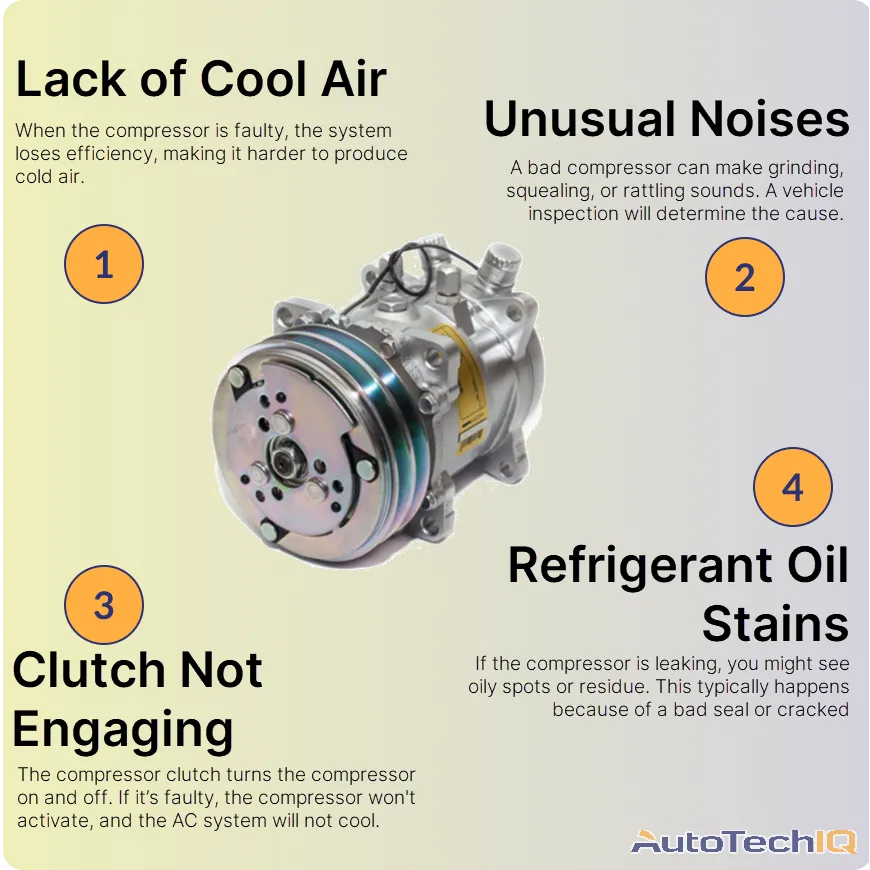
Diagram highlighting common clutch failure points.
Credit: www.autotechiq.com – Diagram highlighting common failure points on the clutch assembly.

Illustration of the correct oil injection port on a typical compressor.
Understanding the Clicking Sound from Your A/C Compressor Clutch
If you're hearing a clicking sound from your A/C compressor clutch even when the control is off, it might be due to a few common reasons. Understanding these can help you pinpoint the issue and decide on the necessary actions.
1. Sealed Bearings
Within the compressor clutch, there are sealed bearings. It's crucial not to apply lubrication to these parts, as they are not meant for lubrication, and doing so can cause issues.
2. The Click of Engagement
The clicking noise is often the sound of the clutch engaging or disengaging. Normally, this is a sign that the clutch is being energized and functioning as intended. However, frequent clicking might be a sign of a different problem.
3. Low Refrigerant Charge
One of the most common causes of constant clicking, even with the controls off, is a low refrigerant charge. Refrigerant levels are directly related to temperature and pressure. In colder weather, low refrigerant can cause the compressor to cycle rapidly, resulting in the continuous clicking sound.
4. Defrost Mode Activation
Sometimes, the vehicle’s system is designed to activate the A/C while on the defrost setting, even when the A/C control is off. This can happen more frequently in colder conditions, leading to the clutch engaging and disengaging.
Steps to Take:
Check Refrigerant Levels: Ensure that your refrigerant is at the recommended level, especially during colder months.
Inspect Electrical Connections: Make sure all electrical connections to the compressor are secure and functioning properly.
Professional Diagnosis: If the problem persists, consider taking the vehicle to a professional to investigate further causes like electrical issues or compressor faults.
By understanding these potential causes, you can better diagnose the situation and take appropriate measures to resolve the clicking noise.
Is It Necessary for the A/C Clutch to Be Energized for Seal Lubrication?
When it comes to maintaining your vehicle's air conditioning system, particularly the seals, there's a bit of debate regarding the need to keep the A/C clutch energized. Let's break down the facts to give you a clearer understanding.
Seal Lubrication
The seals in an A/C system rely on the refrigerant circulating through the system for lubrication. This process is essential to maintain their flexibility and effectiveness.
Regular use of the A/C system ensures that the refrigerant, along with its oil, gets distributed adequately, keeping the seals lubricated.
Is Energizing Necessary?
Continuous Operation Not Required : While frequent use of the A/C is beneficial for the seals, it's not mandatory to keep the clutch energized at all times. Periodic activation is sufficient to maintain lubrication.
Periodic Activation : If your A/C is not in regular use, consider running it for short periods intermittently to keep the seals in good condition.
In summary, while it's not necessary to constantly keep the A/C clutch energized, periodic use helps ensure that the seals remain lubricated. This simple step can go a long way in extending the life of your air conditioning system.
Possible Causes of Chirping Noises in the Engine Compartment
When you hear a chirping noise coming from your engine compartment, it's easy to assume that the A/C compressor clutch might be at fault. However, this isn't always the case. Sounds can travel in unexpected ways under the hood, often making it difficult to pinpoint their source. Here are a few potential culprits for that annoying chirp:
Tensioner Pulley : A common source of noise, the tensioner pulley can produce a chirping sound if its bearings are worn out or if the pulley is misaligned. It's worth checking if this component is functioning smoothly.
Drive Belt Issues : Over time, belts can develop cracks or glazing, leading to unwanted noise. Ensure that the belt tension is correct and consider replacing it if it appears worn.
Idler Pulley : Like the tensioner pulley, the idler pulley can also experience bearing failure, leading to similar noise. Inspecting the pulley for any play or rotational roughness can help identify if it's contributing to the sound.
Alternator or Water Pump : Both of these components have bearings that could wear out, potentially leading to chirping noises. Test these systems individually to rule out any bearing issues.
By systematically checking these parts, you can often identify and resolve the source of the noise without jumping to costly fixes. Always remember, sounds can be deceptive, and what seems to originate from one part may actually be the echo from another.
Preventive Maintenance Schedule for AC Compressor Clutch
A consistent inspection routine catches early wear before it becomes a breakdown. Follow this practical timeline:
Every 12 months / 12,000 miles : Visually inspect the clutch face for glazing, scoring, or excessive rust. Check the air gap with a feeler gauge against manufacturer specs.
Every 24 months / 24,000 miles : Verify refrigerant charge and system pressures; low charge is the leading cause of rapid cycling. Listen for bearing rumble with a mechanic’s stethoscope while the clutch is engaged and disengaged.
Every 60,000 miles or major service : Have a certified technician evacuate, recover, and recharge the system to ensure correct oil balance and refrigerant purity. This is also the ideal time to replace the receiver/drier or accumulator.
A common mistake is skipping the pressure check during routine oil changes — ask your shop to include it. For more on energy-efficient operation, review our tips on energy-efficient AC settings.
DIY Inspection Checklist for Home Mechanics
- Verify the serpentine belt tension and condition.
- Measure clutch coil resistance with a multimeter (typically 2–5 Ω).
- Check air gap with a feeler gauge; adjust shims if needed.
- Spin the pulley by hand to detect bearing roughness.
- Listen for abnormal noises with a mechanic’s stethoscope while the A/C cycles.
- Confirm refrigerant pressures match the manufacturer’s chart for the current ambient temperature.
When to Replace the AC Compressor Clutch
Not every clutch fault warrants a full compressor replacement. Consider replacement when:
The clutch coil reads open or shorted on a multimeter (typically < 2 Ω or > 5 Ω depending on spec).
The pulley bearing exhibits audible growl or detectable play even with the belt removed.
The friction surface is cracked, deeply grooved, or has transferred material to the pulley.
The air gap cannot be shimmed into specification because the plate or hub is worn.
If the compressor itself is quiet and pressures are normal, a clutch-only kit (coil, pulley, hub) is often 40–60 % cheaper than a full compressor assembly. Always flush the system and replace the receiver/drier when opening the circuit. For condenser-specific diagnostics, see our guide on condenser problem diagnosis.
Cost Comparison: Clutch Kit vs. Full Compressor Replacement
A clutch‑only kit typically costs 40–60 % less than a complete compressor assembly, but labor is similar because the compressor must be removed. If the compressor shows no internal wear (quiet operation, normal oil condition), the kit is the economical choice. When the compressor is noisy, has metal debris in the oil, or has exceeded 100 k miles, a full replacement avoids repeat labor. For help selecting a replacement unit, see our guide on choosing the right unit.
Environmental Considerations and 2026 Refrigerant Updates
As of 2026, most new vehicles use R‑1234yf (GWP < 1) rather than R‑134a. Key points for clutch longevity:
R‑1234yf systems require ND‑12 or equivalent POE oil — never mix with PAG oils designed for R‑134a.
Recovery/recycle equipment must be SAE J2843 certified for R‑1234yf; using legacy machines contaminates the circuit and can cause clutch coil corrosion.
The EPA’s updated Section 608 rules now mandate electronic leak detection for all service events; undetected micro‑leaks are a frequent root cause of low‑charge cycling that mimics clutch failure.
For the latest standards, consult SAE International.
Regulatory Compliance for DIY Service
Anyone servicing an R‑1234yf system must use certified recovery equipment and follow EPA Section 608 record‑keeping requirements. Venting refrigerant is illegal and can result in fines. If you lack the proper tools, have a certified shop perform the evacuation and recharge. The EPA Section 608 page outlines the current certification process.
Seeking Professional Assistance
When dealing with AC compressor clutch issues, it's advisable to seek assistance from qualified professionals. They have the expertise and experience to diagnose the problem accurately and perform the necessary repairs or replacements. Attempting to address complex AC system issues without the required knowledge and tools could lead to further damage and costly repairs.
Schedule a professional AC inspection today to keep your system running efficiently.
Choosing a Qualified AC Technician
Look for a shop with ASE‑certified technicians, proper refrigerant recovery machines, and a written warranty on parts and labor. Ask whether they use electronic leak detectors and follow SAE J2843 procedures for R‑1234yf. A reputable shop will also provide a detailed estimate before starting work. For more on evaluating service providers, see our article on troubleshooting warm air.
Book a certified AC service now to avoid costly breakdowns.
Frequently Asked Questions Of Can You Lubricate An Ac Compressor Clutch: Expert Tips For Care
Can You Spray Wd40 On Ac Clutch?
Spraying WD40 on AC clutch is not recommended. It needs friction to function properly. Lubricating it can cause overheating issues.
Can You Lubricate Your Ac Clutch?
No, you should not lubricate your AC clutch. Lubricating the clutch will cause it to slip and generate heat, which can damage the bearing. If the clutch is dragging when disengaged, the air gap may need to be adjusted or there could be another mechanical issue.
Can Ac Compressor Be Lubricated?
No, you should not lubricate an AC compressor clutch. The clutch needs friction to operate the compressor effectively, and lubricating it can cause slipping and overheating of the bearing. If the clutch is dragging when disengaged, it may require adjustment or there could be a mechanical issue.
Avoid lubricating the clutch to prevent any damage.
What Causes Ac Compressor Clutch To Seize?
The AC compressor clutch can seize due to an electrical issue, clutch failure, refrigerant leak, or fan failure.
Is it Advisable to Unplug the A/C Clutch in Cold Weather, and Why?
When the temperature drops, car owners often wonder whether it's wise to unplug the A/C clutch. Here's a comprehensive look at why it can be an option, along with the potential implications.
Why the A/C Clutch Clicks
During cold weather, your vehicle's air conditioning system may engage intermittently, even when it's not actively cooling the air. This clicking sound is the clutch engaging and disengaging. It happens more frequently because the refrigerant pressure is lower in colder temperatures, altering the system's behavior.
Potential Benefits of Unplugging
Reduced Wear and Tear : By unplugging the clutch, you might reduce unnecessary cycling and wear on the system. Continuous engagement and disengagement can lead to gradual degradation over time.
Decreased Energy Consumption : With the A/C system running less often, your vehicle could experience a slight increase in fuel efficiency, saving money on gas.
Points of Caution
Seal Lubrication Concerns : Some suggest that continual clutch engagement helps keep seals lubricated. Although this isn't universally agreed upon, it’s advisable to occasionally plug the clutch back in to ensure sufficient lubrication if you're worried about seal longevity.
Weather-Related Challenges : In cold weather, especially when using the defrost setting, the A/C may automatically activate. Unplugging it can be a simple solution to avoid this constant switching, but remember to monitor your vehicle's performance regularly.
In conclusion, unplugging the A/C clutch during cold weather can be a reasonable step to minimize wear and conserve fuel. However, it's essential to re-engage the clutch periodically, ensuring the system remains properly lubricated and functioning. Regular checks can help maintain a balanced approach between extending the lifespan of your vehicle's components and optimizing performance.
How Often Should I Run the A/C in Winter to Protect the Seals?
Run the A/C (or defrost) for at least 10 minutes every two weeks during cold months. This circulates refrigerant and oil, keeping shaft seals pliable without excessive clutch cycling.
Can a Bad Clutch Cause the Compressor to Overheat?
Yes. A slipping clutch generates heat that transfers directly into the compressor body, breaking down oil and potentially seizing internal pistons. If you smell hot rubber or hear a screech under load, shut the system off immediately and inspect the clutch air gap.
What Tools Do I Need to Check the Clutch Air Gap?
A basic feeler gauge set (0.010–0.030 in / 0.25–0.75 mm) and a service manual for the exact spec. Most passenger vehicles spec 0.015–0.025 in (0.38–0.64 mm). Adjust by adding/removing shims on the hub.
Can I Replace Just the Clutch Coil Without Removing the Compressor?
On many vehicles the coil can be swapped with the compressor in place, but access is often limited. Consult the service manual; if the coil is bolted externally, removal is straightforward. Otherwise, pulling the compressor may be faster.
Does Refrigerant Type Affect Clutch Life?
Yes. R‑1234yf systems run at higher pressures, which can increase clutch cycling frequency. Using the correct POE oil and maintaining proper charge reduces unnecessary engagement cycles.
Conclusion
The AC compressor clutch is a critical component of the vehicle's AC system, and its proper maintenance is essential for optimal performance. While lubricating the clutch itself is not recommended, ensuring the correct use of lubricants in the AC compressor is crucial. Additionally, addressing any issues with the clutch promptly can help prevent further damage and maintain the efficiency of the AC system.