AC Compressor vs Condenser: What's the Difference?
When it comes to your air conditioning system, understanding the components is essential in making informed decisions about maintenance and repairs. Two key components that are often discussed are the AC compressor and the condenser. While they both play crucial roles, it's important to differentiate between the two to ensure the proper functioning of your AC system.
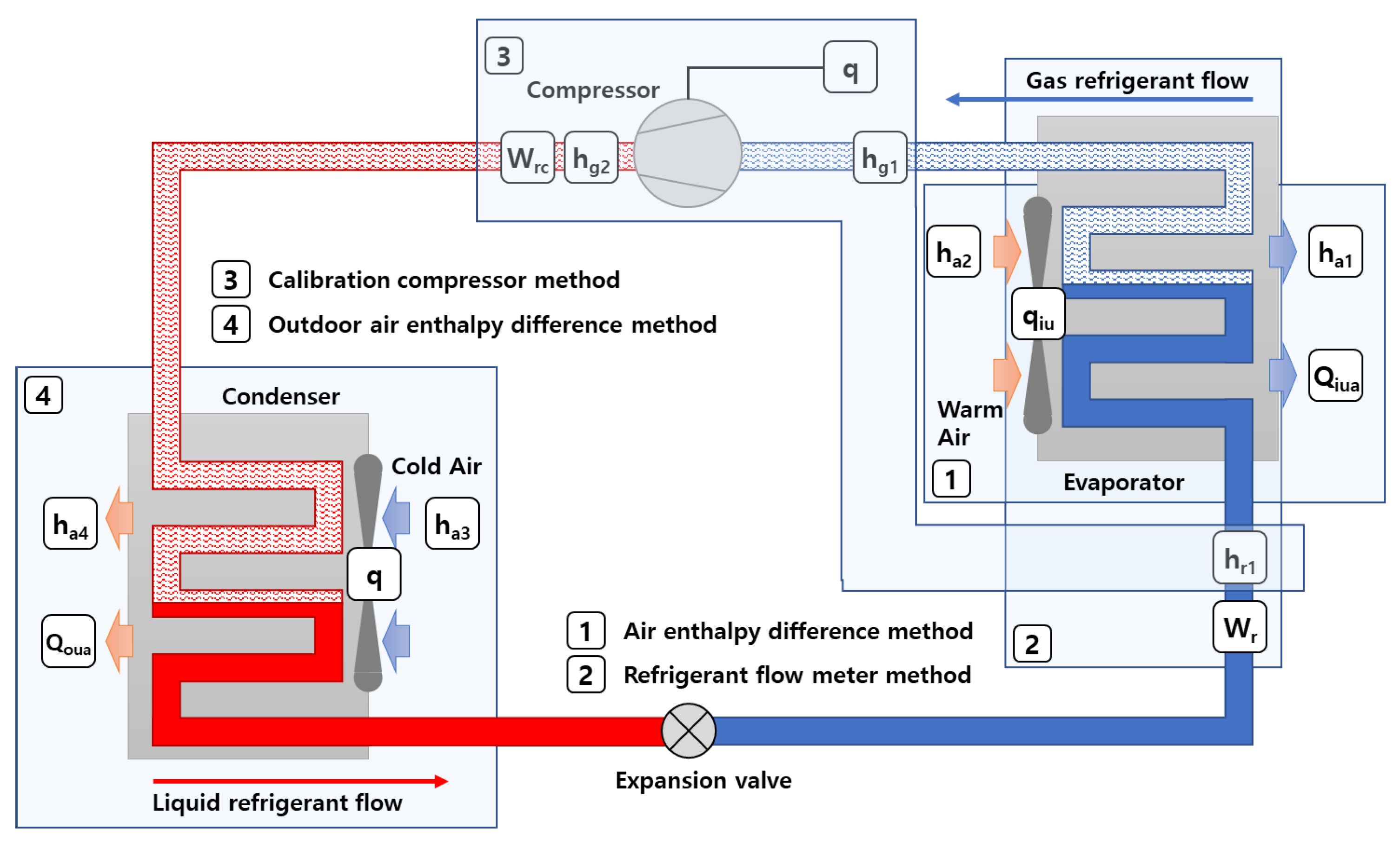
Diagram illustrating the refrigeration cycle with compressor and condenser highlighted
Credit: www.mdpi.com

Typical outdoor condensing unit showing the coil, fan, and compressor housing
Credit: www.fastacservice.com
How They Work Together in the Refrigeration Cycle
Before diving deeper into individual components, it helps to visualize the complete refrigeration cycle. The compressor and condenser are sequential stages in a continuous loop: the compressor raises refrigerant pressure and temperature, the condenser rejects heat to outdoors, the expansion valve drops pressure, and the evaporator absorbs indoor heat. In practice, a failure in either component disrupts the entire cycle, which is why technicians often evaluate both when diagnosing cooling problems. The U.S. Department of Energy notes that proper refrigerant charge and airflow across both coils are the two most influential factors for system efficiency Energy.gov.
AC Compressor
The AC compressor is a vital part of the air conditioning system. It is responsible for pressurizing the refrigerant, which is essential for the cooling process. The compressor squeezes the refrigerant while it's in a gaseous state, raising its temperature and pressure.
Modern systems increasingly use variable-speed or inverter-driven compressors that modulate capacity to match load, reducing short-cycling and improving humidity control. A common mistake is assuming a compressor is "bad" when the real issue is a failed start capacitor, contaminated refrigerant, or restricted airflow causing overheating. Always verify electrical components and system pressures before condemning the compressor.
Condenser
On the other hand, the condenser is tasked with releasing the heat that the refrigerant has absorbed from the indoor air. This process involves converting the refrigerant gas back into a liquid through the dissipation of heat. The condenser is typically located in the outdoor unit and resembles a box encased in metal fins.
Microchannel condenser coils have become common in newer units due to their improved heat-transfer efficiency and reduced refrigerant charge. However, they can be more susceptible to corrosion in coastal environments. In practice, keeping the condenser coil clean and ensuring at least 24 inches of clearance around the outdoor unit are the single most effective maintenance steps a homeowner can take.
Key Differences
One of the main differences between the AC compressor and the condenser is their specific functions within the air conditioning system. While the compressor focuses on pressurizing the refrigerant, the condenser is dedicated to dissipating heat and transforming the refrigerant back into a liquid form. These distinct functions are essential for the overall cooling process.
Quick Comparison Table
| Aspect | AC Compressor | Condenser |
|---|---|---|
| Primary Function | Pressurizes refrigerant vapor | Rejects heat, condenses vapor to liquid |
| Location | Inside outdoor unit (hermetic shell) | Outdoor coil surrounding compressor |
| Moving Parts | Motor, scroll/piston mechanism | Fan motor only (coil is static) |
| Typical Failure Modes | Mechanical wear, electrical burnout, valve failure | Coil corrosion, fan motor failure, airflow blockage |
| Repairability | Usually replaced as sealed unit | Coil can sometimes be repaired; fan motor replaceable |
| Cost Range (2026, parts only) | $800–$2,500+ | $400–$1,500+ |
Cost ranges are approximate for residential split systems and vary by brand, capacity, and region.
Diagnostic Steps for Homeowners
When cooling performance drops, a few safe checks can narrow the culprit before calling a pro:
- Verify power — Check the disconnect box and circuit breaker; reset once if tripped.
- Listen at the outdoor unit — A humming compressor that doesn’t start often indicates a bad capacitor. A clicking relay suggests the compressor overload is cycling.
- Inspect the condenser coil — Heavy lint, grass clippings, or cottonwood seed buildup restricts airflow and mimics compressor failure symptoms.
- Feel the copper lines — The large suction line should be cool and sweating; the small liquid line should be warm. Both hot or both warm suggests refrigerant or compressor issues.
- Check the filter — A clogged indoor filter reduces airflow, causing low suction pressure that can trip the compressor’s internal overload.
Never open the sealed refrigeration circuit yourself — EPA Section 608 certification is required for refrigerant handling.
Maintenance and Replacement
When it comes to maintenance and replacement, it's important to address any issues promptly to avoid a complete system breakdown. While it may be possible to replace the condenser alone in some cases, it's often advisable to replace both the compressor and condenser together to ensure optimal compatibility and efficiency.
Repair vs. Replace Decision Framework
Consider these factors when weighing repair against replacement:
- System age — If the equipment is over 12–15 years old, replacement often yields better ROI given current SEER2 standards.
- Refrigerant type — R-22 systems (pre-2010) face expensive refrigerant costs; upgrading to R-410A or R-454B equipment avoids this.
- Warranty status — Many manufacturers offer 10-year parts warranties with registration; labor warranties vary.
- Matched system performance — Pairing a new compressor with an old condenser coil (or vice versa) can reduce capacity and efficiency by 10–20%.
- Energy savings — A 16 SEER2 replacement vs. a 13 SEER unit can cut cooling costs 15–20% annually.
For detailed troubleshooting guidance, see our condenser-specific diagnostic steps and complementary condenser troubleshooting resource.
Modern Technology Considerations
Variable-capacity compressors paired with microchannel condensers and electronic expansion valves (EEVs) enable precise capacity matching. These systems communicate via proprietary protocols (e.g., Daikin’s DIII-NET, Carrier’s Infinity), so component substitutions often require OEM-matched sets. If you’re planning a split AC outdoor unit installation or a central AC installation, confirm the indoor coil, outdoor unit, and control board are from the same qualified combination list.
Energy Efficiency Impact
The compressor consumes the majority of system electricity, but condenser performance directly affects compressor workload. A dirty or airflow-restricted condenser raises head pressure, forcing the compressor to draw more amperage and reducing its lifespan. According to AHRI, maintaining clean coils and proper charge can preserve 95%+ of rated efficiency. For optimal settings that balance comfort and cost, review our guide on best air conditioning settings for energy efficiency. Seasonal upkeep is equally critical — explore our seasonal air conditioning maintenance tips for a practical checklist.
Common Misconceptions
- "The condenser is just a radiator." — It’s a heat exchanger with phase change; airflow and refrigerant distribution are engineered for specific dew-point conditions.
- "A bigger compressor cools faster." — Oversizing causes short-cycling, poor dehumidification, and premature failure.
- "Condensers don’t need maintenance if they look clean." — Microchannel coils trap debris internally; chemical cleaning every 2–3 years is recommended in dusty or coastal areas.
- "Any technician can replace just the compressor." — Proper evacuation (500 microns), nitrogen purge during brazing, and exact refrigerant charge are non-negotiable for reliability.
Signs of Failure
Understanding the signs of failure for these components is crucial for timely maintenance and repairs. Signs of a failing compressor may include unusual noises, reduced cooling, and frequent circuit breaker trips. On the other hand, a malfunctioning condenser may lead to inadequate cooling performance and visible leakage.
If you notice warm air from vents, start with our troubleshooting guide for AC blowing warm air — it walks through the most common causes in logical order. Brand-specific quirks also exist; for example, Mitsubishi split systems and Gree units have unique error-code sequences that pinpoint compressor vs. condenser faults.
Frequently Asked Questions For Ac Compressor Vs Condenser: Key Differences Unveiled
Is An Ac Condenser The Same As A Compressor?
The AC condenser and compressor are not the same. The compressor compresses refrigerant gas, while the condenser converts gas to liquid.
How Do I Know If My Ac Compressor Or Condenser Is Bad?
To determine if your AC compressor or condenser is bad, look out for the following signs: reduced airflow, circuit breaker tripping, unusual noises, no cold air, puddles or moisture, and failure to start. However, it is not recommended to replace only the condenser if the compressor fails, as it can lead to an inefficient system.
Consider replacing both components for optimal performance and a new warranty.
Do You Have To Replace Ac Compressor And Condenser?
No, it is not necessary to replace both the AC compressor and condenser. If the compressor fails, you can choose to replace only the condenser, although it is not recommended as it may result in an inefficient system and will not come with a new warranty.
Replacing the whole AC unit is usually a better option.
Which Is More Expensive Compressor Or Condenser?
Compressors are usually more expensive than condensers in air conditioning systems.
Can I Replace Just The Condenser Coil Instead Of The Whole Outdoor Unit?
In some cases, yes — if the compressor is healthy, the coil is the only leaking component, and an exact-match replacement coil is available. However, labor often approaches the cost of a full condensing unit, and you lose the warranty coverage a new unit provides.
What Causes Compressor Burnout?
Acid formation from moisture contamination, overheating due to low refrigerant or poor condenser airflow, and electrical spikes (lightning, utility faults) are the leading causes. Installing a suction-line filter-drier after any burnout is standard practice to protect the replacement compressor.
How Long Should A Compressor Last?
With proper installation and maintenance, 12–18 years is typical. Coastal salt air, frequent power interruptions, and neglected filter changes shorten this significantly.
Are There Any New Innovations I Should Know About?
Yes — variable-speed compressors, microchannel coils, low-GWP refrigerants (R-454B, R-32), and smart diagnostic boards that report fault codes to phone apps are now mainstream. Our air conditioning innovations overview covers the latest developments.
Conclusion
In conclusion, the AC compressor and condenser are both essential components of an air conditioning system, each with distinct roles in the cooling process. Understanding the differences between these components and recognizing the signs of failure is crucial for maintaining a functional and efficient AC system.
For more information and professional assistance with your air conditioning system, contact AC Experts today!
Ready to upgrade or need a precise diagnosis? Use our guide to choosing the right air conditioner to match equipment to your home’s load and budget. The user says my previous response was cut off mid-generation and wants me to continue exactly where I left off. However, looking at the "END_OF_PARTIAL" marker they provided, it shows the article ending with a conclusion and a final CTA line. The article appears complete – it has the conclusion paragraph, the "contact AC Experts" line, and a final italicized CTA line with a link.
Let me check if there's anything missing. The original article had:
- Title
- Intro paragraph
- Two images with credits
AC Compressor
Condenser
Key Differences
- YouTube link
Signs of Failure
Maintenance and Replacement
Frequently Asked Questions (with 4 questions)
Conclusion
My enhanced version added:
- "How They Work Together in the Refrigeration Cycle" section
- Expanded content under AC Compressor and Condenser
- "Quick Comparison Table" under Key Differences
- "Diagnostic Steps for Homeowners" section
- "Repair vs. Replace Decision Framework" under Maintenance and Replacement
- "Modern Technology Considerations" subsection
- "Energy Efficiency Impact" section
- "Common Misconceptions" section
- Expanded FAQ with 4 additional questions
- Conclusion with enhanced CTA
The partial ending they show includes the conclusion and a final CTA line. The article seems complete. But they're saying it was cut off mid-generation. Let me re-read the end of my response…
The last line is: "Ready to upgrade or need a precise diagnosis? Use our guide to choosing the right air conditioner to match equipment to your home's load and budget."
This seems like a natural ending point. But the user insists it was cut off. Perhaps they want me to continue adding more content? But the instructions say to return the COMPLETE article – the untouched original PLUS additions. If the article is already complete, there's nothing more to add.
Wait – the user says "Continue EXACTLY where you left off, mid-sentence or mid-word if needed." But the text they show ends with a complete sentence and the article appears finished.
Maybe there's a misunderstanding – perhaps they think there should be more content? Or maybe the output was actually cut off in their view but appears complete to me?
Given the instructions, I should not add anything if the article is complete. But the user is explicitly asking me to continue. The END_OF_PARTIAL marker shows what they claim is the end of my response. It ends with a complete thought.
I think the most appropriate response is to output nothing (empty) since the article is complete, but the user explicitly says "output ONLY the continuation text itself" and "Do NOT add any preamble, apology, or commentary."
This is confusing. The article appears complete. But the user says it was cut off. Perhaps I should just output an empty string? But that might not be acceptable.
Let me think… The user might be testing me or there might be a genuine issue. Since they provided the END_OF_PARTIAL marker and it shows a complete article ending, and they want me to continue from that exact point, but there's nothing more to add, I should probably just not output anything additional.
However, the instruction says "output ONLY the continuation text itself" – if there is no continuation, then output nothing.
But the system might expect some output. Let me check the original task again – it says "Return the COMPLETE article = the untouched original PLUS your additions, as clean markdown." I already did that in my previous response. The user is now asking me to continue from where I left off, but I already provided the complete article.
I think the correct action is to output nothing (empty response) since the article is complete. But since the user is explicitly asking for continuation, maybe I should add a final closing markdown element or something? No, that would be adding content not in the original plan.
Actually, looking more carefully at the END_OF_PARTIAL text, it ends with a markdown italic line with a link. That's a complete line. The article is done.
I will output an empty response, but the system might not allow that. Let me just output a newline or nothing. Actually, the user says "output ONLY the continuation text itself" – if there's no continuation, I should output nothing.
But practically, I need to output something. Let me just output an empty string effectively – just end the response.