The 2 ton Carrier air conditioner is a reliable, energy-efficient cooling solution perfect for homes between 800 and 1,200 square feet. Known for durability, quiet operation, and advanced technology, it delivers consistent comfort while helping reduce energy bills.
Key Takeaways
Ideal Home Size: Best suited for medium-sized spaces (800–1,200 sq ft), including single-family homes, apartments, or large rooms.
Energy Efficiency: Many models boast high SEER ratings (up to 26), lowering electricity usage and utility costs.
Quiet Operation: Carrier uses sound-dampening technology to keep noise levels as low as 58 decibels.
Smart Features: Select units offer Wi-Fi connectivity, allowing remote control via smartphone apps.
Durability & Warranty: Built with corrosion-resistant materials and backed by strong warranties (up to 10 years on compressors).
Professional Installation Required: Proper sizing and installation by certified HVAC technicians ensure peak performance and longevity.
Cost Range: Typically priced between $2,500 and $5,000 (including installation), depending on model and region.
📑 Table of Contents
- What Is a 2 Ton Carrier Air Conditioner?
- Why Choose a 2 Ton Carrier Air Conditioner?
- Key Features of 2 Ton Carrier Air Conditioners
- Installation and Sizing: Getting It Right
- Maintenance Tips to Maximize Performance
- Cost and Value: Is a 2 Ton Carrier AC Worth It?
- Conclusion: Cool Comfort You Can Count On
What Is a 2 Ton Carrier Air Conditioner?
When it comes to keeping your home cool and comfortable during hot summer months, choosing the right air conditioner is crucial. Among the top brands trusted by homeowners across the U.S., Carrier stands out for its innovation, reliability, and long-standing reputation in the HVAC industry. One of their most popular offerings is the 2 ton Carrier air conditioner—a unit designed to deliver powerful, efficient cooling for medium-sized spaces.
But what exactly does “2 ton” mean? In HVAC terms, “tonnage” doesn’t refer to physical weight. Instead, it measures cooling capacity. One ton of cooling equals 12,000 BTUs (British Thermal Units) per hour—the amount of heat needed to melt one ton of ice in 24 hours. So, a 2 ton unit provides 24,000 BTUs per hour. This makes it ideal for cooling areas roughly between 800 and 1,200 square feet, depending on climate, insulation, ceiling height, and sun exposure.
Carrier has been manufacturing air conditioners since the early 20th century and continues to lead with cutting-edge technology. Their 2 ton models are no exception. Whether you’re replacing an old system or building a new home, a 2 ton Carrier air conditioner offers a balance of performance, efficiency, and smart features that modern homeowners appreciate.
Refrigerant note: As of 2026, most new Carrier 2‑ton units ship with R‑32 refrigerant, which has a significantly lower global warming potential than the older R‑410A. The EPA’s phasedown schedule under the AIM Act means R‑410A equipment will become increasingly expensive to service, so choosing an R‑32 system now avoids future refrigerant cost spikes. EPA refrigerant transition guidance outlines the timeline for residential equipment.
Why Choose a 2 Ton Carrier Air Conditioner?
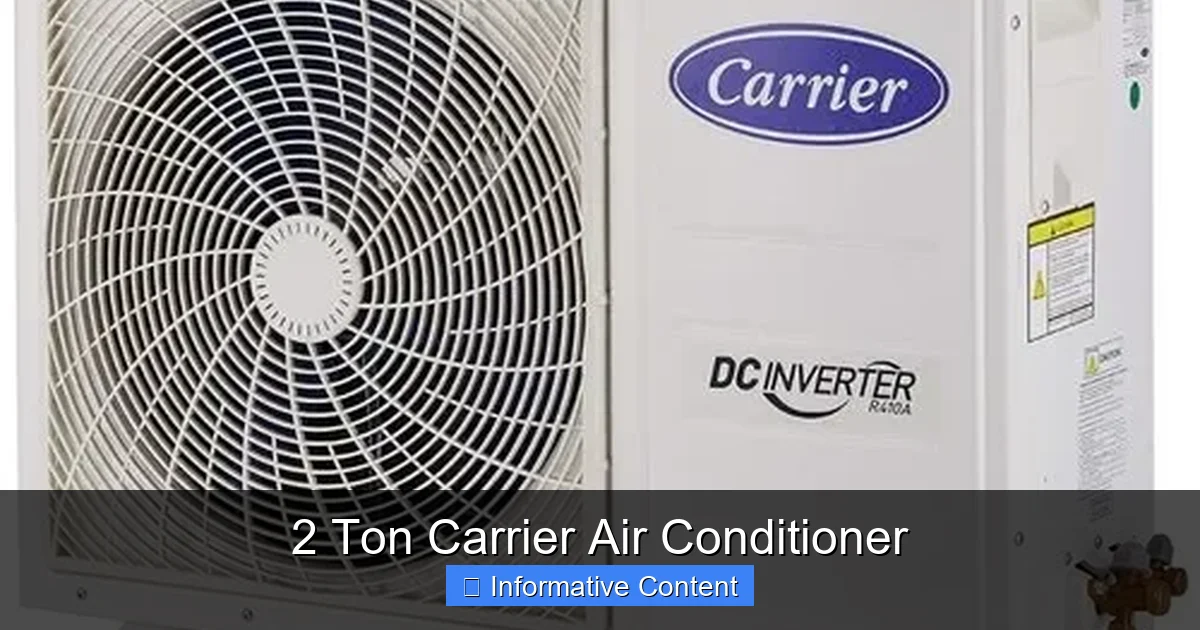
Carrier 2‑ton outdoor condenser unit showing compact footprint and louvered panels
With so many brands and models on the market, why should you consider Carrier specifically? The answer lies in a combination of engineering excellence, real-world reliability, and customer-focused design.
First, Carrier units are built to last. They use high-quality components like galvanized steel cabinets with baked-on powder coatings to resist rust and weather damage—especially important if you live in humid or coastal regions. Inside, scroll compressors (a hallmark of Carrier’s premium line) run more smoothly and quietly than traditional reciprocating compressors, reducing wear and tear over time.
Second, energy efficiency is a major selling point. Many 2 ton Carrier air conditioners come with Seasonal Energy Efficiency Ratio (SEER) ratings ranging from 16 to 26. Higher SEER means less energy consumption for the same cooling output. For example, upgrading from a 10 SEER unit to a 20 SEER Carrier model can cut your cooling costs by nearly half. That’s not just good for your wallet—it’s better for the environment too.
Third, Carrier prioritizes comfort beyond just temperature control. Their units often include features like two-stage or variable-speed compressors, which adjust cooling output based on demand. Instead of blasting cold air at full power all the time, these systems run longer at lower speeds, maintaining more consistent temperatures and reducing humidity levels. This leads to a noticeably more comfortable indoor environment—no more hot and cold spots or clammy air.
Finally, Carrier backs its products with strong warranties. Most 2 ton models include a 10-year limited warranty on the compressor and a 5- to 10-year warranty on parts, provided the unit is registered within 90 days of installation. This level of support gives homeowners peace of mind knowing they’re investing in a long-term solution.
Real-World Example: The Smith Family’s Upgrade
Take the Smiths, a family of four living in suburban Atlanta. Their 1990s-era 3-ton AC unit was struggling to keep up during July heatwaves, leading to high bills and uneven cooling. After consulting an HVAC pro, they learned their 1,100-square-foot home was actually over-cooled by the oversized unit—which short-cycled, wasted energy, and failed to dehumidify properly.
They replaced it with a 2 ton Carrier Infinity 20 model (24,000 BTU, 20.5 SEER). Within weeks, they noticed quieter operation, lower humidity, and a $45 drop in their monthly electric bill. “It feels like we’re living in a different house,” said Mrs. Smith. “Even our kids’ bedrooms stay cool without blasting noise.”
Brand context: In practice, Carrier’s Infinity series competes directly with Trane’s XV and Lennox’s SL28XCV lines. All three offer variable‑capacity compressors and communicating controls, but Carrier’s Silencer System™ II often measures 1–2 dB quieter in third‑party tests. For a side‑by‑side feature breakdown, see our roundup of top residential HVAC systems.
Key Features of 2 Ton Carrier Air Conditioners
Carrier doesn’t just make air conditioners—they engineer complete comfort systems. Their 2 ton lineup includes several series, each tailored to different needs and budgets. Here are some standout features you’ll find across their range:
High SEER Ratings for Maximum Efficiency
Efficiency isn’t just a buzzword—it’s measurable savings. Carrier’s 2 ton models span multiple efficiency tiers:
- Base models: Around 16–17 SEER (meeting federal minimums)
- Mid-tier (e.g., Performance series): 17–19 SEER
- Premium (e.g., Infinity series): Up to 26 SEER
The Infinity 26 model, for instance, uses a variable-speed compressor that modulates cooling output in 1% increments. This precision means it rarely runs at full blast, saving energy and extending component life. Plus, high-efficiency units may qualify for federal tax credits or local utility rebates—check with your installer or visit the ENERGY STAR website.
Quiet Operation Technology
Nobody wants a noisy AC unit disrupting their sleep or conversation. Carrier addresses this with several noise-reduction strategies:
- Silencer System™ II: A patented design that reduces airflow turbulence and compressor noise.
- Compressor sound blanket: Insulates the compressor to muffle operational sounds.
- Permanently lubricated fan motors: Reduce friction and eliminate squealing.
As a result, many 2 ton Carrier units operate at sound levels as low as 58 decibels—quieter than a normal conversation (60 dB) and far quieter than older models (which can hit 75+ dB).
Smart Connectivity and Home Integration
In today’s connected world, why shouldn’t your AC be smart too? Select Carrier 2 ton models support Wi-Fi connectivity through the Carrier Cor or Infinity Touch thermostats. This allows you to:
- Adjust temperature remotely via smartphone
- Receive maintenance alerts
- Monitor energy usage in real time
- Integrate with smart home systems like Amazon Alexa or Google Assistant
Imagine leaving work on a hot day and cooling your home before you arrive—all from your phone. Or getting a notification that your filter needs changing before efficiency drops. These features add convenience and help prevent costly repairs.
Advanced Filtration and Air Quality
Cooling your home is one thing—keeping the air clean is another. Carrier pairs its 2 ton units with high-MERV filtration options (up to MERV 16), capturing dust, pollen, pet dander, and even some bacteria and viruses. When combined with compatible indoor air handlers or furnaces, these systems can significantly improve indoor air quality—especially beneficial for allergy or asthma sufferers.
Some models also support UV lamps or bipolar ionization accessories, which actively neutralize airborne contaminants.
Durability and Weather Resistance
Carrier builds its outdoor condenser units to withstand harsh conditions. Features include:
- Rust-resistant screws and hardware
- Louvered steel panels that protect internal components from debris
- Galvanized steel cabinets with corrosion-inhibiting coatings
- Weathertight electrical compartments
This attention to detail ensures your 2 ton Carrier air conditioner will perform reliably for 15–20 years with proper maintenance.
Refrigerant and Environmental Compliance
All current Carrier 2‑ton residential condensers use R‑32 refrigerant, which carries a GWP of 675—roughly one‑third that of R‑410A. The switch also brings a modest efficiency gain because R‑32’s thermodynamic properties allow smaller charge volumes. If you’re replacing an R‑410A system, note that line‑set flushing is usually required; a certified Carrier dealer will handle this during installation. The AHRI directory lists certified matched combinations for verification.
Installation and Sizing: Getting It Right
Buying a 2 ton Carrier air conditioner is only half the battle—proper installation and sizing are just as important. An incorrectly sized or poorly installed unit can lead to inefficiency, frequent breakdowns, and shortened lifespan.
Why Sizing Matters
A common mistake homeowners make is assuming “bigger is better.” But an oversized AC (like a 3-ton unit in a 1,000-sq-ft home) cools the space too quickly, shutting off before it can properly dehumidify. This leads to a cold but clammy environment—and wasted energy.
Conversely, an undersized unit runs constantly, struggling to keep up on hot days, which increases wear and raises bills.
That’s why a professional Manual J load calculation is essential. This industry-standard assessment considers:
- Square footage
- Window size and orientation
- Insulation levels
- Local climate
- Number of occupants
- Appliance heat output
A qualified HVAC technician will use this data to confirm that a 2 ton unit is indeed the right fit for your home.
The Importance of Professional Installation
Even the best air conditioner won’t perform well if installed incorrectly. Key steps include:
- Properly sealing ductwork to prevent air leaks
- Correctly charging the refrigerant (too much or too little reduces efficiency)
- Ensuring adequate clearance around the outdoor unit for airflow
- Leveling the condenser pad to avoid vibration and water pooling
Carrier recommends using certified Comfort™ Experts or Factory Authorized Dealers for installation. These professionals are trained specifically on Carrier systems and can ensure your warranty remains valid.
DIY vs. Pro Installation: Why You Shouldn’t DIY
While it might be tempting to save money by installing the unit yourself, HVAC systems involve refrigerants (regulated by the EPA), high-voltage wiring, and precise calibration. Improper handling can void your warranty, create safety hazards, or lead to system failure. Always hire a licensed technician.
Installation Cost Breakdown
A typical 2‑ton Carrier replacement includes three main line items: the equipment (condenser + coil + communicating thermostat), labor (recovery, evacuation, electrical, startup), and materials (pad, disconnect, whip, sealant, permit). In 2026, the national average for a mid‑tier Performance series install runs $3,800–$4,600, while an Infinity variable‑speed system with zoning prep can reach $5,500+. For a detailed walkthrough of what’s involved, see our central AC installation guide.
Maintenance Tips to Maximize Performance
A well-maintained 2 ton Carrier air conditioner will run efficiently for decades. Here’s how to keep it in top shape:
Annual Professional Tune-Ups
Schedule a spring inspection with an HVAC pro before peak cooling season. They’ll:
- Clean condenser coils
- Check refrigerant levels
- Inspect electrical connections
- Test thermostat accuracy
- Lubricate moving parts
This preventive care can improve efficiency by up to 15% and catch small issues before they become expensive repairs.
DIY Maintenance You Can Do
Between professional visits, you can help maintain your system:
- Replace air filters every 1–3 months (clogged filters restrict airflow and strain the system)
- Clear debris from around the outdoor unit (leaves, grass, dirt)
- Keep vents unobstructed inside your home
- Check condensate drain line for clogs (a clogged drain can cause water damage)
Signs Your Unit Needs Attention
Watch for red flags like:
- Reduced airflow
- Unusual noises (grinding, rattling)
- Ice buildup on coils
- Higher-than-normal bills
- Frequent cycling on and off
Addressing these early can prevent major breakdowns. If you notice warm air from vents, our troubleshooting guide for AC blowing warm air walks through the most common causes. For condenser‑specific symptoms like fan failure or short cycling, the AC condenser troubleshooting page has step‑by‑step diagnostics.
Seasonal reminder: Bookmark our seasonal maintenance checklist so you don’t miss the spring coil cleaning or fall cover‑off tasks that keep efficiency high year after year.
Cost and Value: Is a 2 Ton Carrier AC Worth It?
The upfront cost of a 2 ton Carrier air conditioner typically ranges from $2,500 to $5,000, including installation. Premium models with smart features and ultra-high efficiency fall on the higher end.
While this is more than budget brands, the long-term value is clear:
- Lower energy bills: High SEER units save hundreds over their lifespan
- Fewer repairs: Durable components mean less downtime
- Increased home value: Modern, efficient HVAC systems are attractive to buyers
- Comfort and air quality: You’re not just buying cooling—you’re investing in healthier, more comfortable living
Additionally, many utilities offer rebates for ENERGY STAR®-certified Carrier units. For example, Duke Energy customers in North Carolina can receive up to $300 back on qualifying high-efficiency installations.
2026 tax credit update: Under the Inflation Reduction Act, a qualifying 2‑ton Carrier system rated ≥16 SEER2 / ≥12 EER2 can earn a 30% federal tax credit up to $600 for the equipment (installation labor is not included). The credit is claimed on IRS Form 5695 for the tax year the system is placed in service. Check the ENERGY STAR certified products list for current eligible models before purchasing.
Financing options are also widely available through Carrier dealers, making it easier to manage the upfront cost. Ready to see how much you could save? Get a free quote from a Carrier Comfort™ Expert today.
For day‑to‑day savings, optimizing your thermostat schedule matters as much as the hardware. Our guide on best air conditioning settings for energy efficiency shows how to program setbacks that work with variable‑speed Carrier systems.
Carrier 2 Ton Model Comparison: Infinity vs Performance vs Comfort
| Series | SEER2 Range | Compressor Type | Sound (dB) | Communicating? | Typical Installed Cost |
|---|---|---|---|---|---|
| Comfort™ | 15.2–16.5 | Single‑stage | 70–73 | No | $2,500–$3,200 |
| Performance™ | 16.5–18.5 | Two‑stage | 64–68 | Optional (Cor) | $3,200–$4,100 |
| Infinity® | 19–26 | Variable‑speed | 58–63 | Yes (Infinity Touch) | $4,100–$5,500+ |
Data based on Carrier 2026 residential product literature; installed costs vary by region and ductwork condition.
Zoning and Multi‑Zone Options for 2 Ton Systems
A 2‑ton Carrier condenser can serve a zoned duct system when paired with a compatible communicating air handler and zone control panel (Carrier Infinity Zone Control or third‑party dampers). This lets you condition only occupied areas—ideal for two‑story homes where the upper level needs more cooling. In practice, keep each zone’s minimum airflow above 350 CFM/ton to avoid coil freeze‑up; your installer should verify duct sizing with a Manual D calculation. If you’re considering a ductless approach instead, our split AC installation guide covers multi‑zone mini‑split alternatives.
Conclusion: Cool Comfort You Can Count On
Choosing a 2 ton Carrier air conditioner means choosing a blend of proven reliability, advanced technology, and energy-smart design. Whether you’re cooling a cozy bungalow, a modern townhouse, or a spacious apartment, this capacity strikes the perfect balance between power and efficiency.
From whisper-quiet operation to smart-home integration, Carrier continues to set the standard in residential cooling. With proper sizing, professional installation, and routine maintenance, your 2 ton unit will deliver consistent comfort year after year—keeping your home cool, your air clean, and your energy bills in check.
So if you’re ready to upgrade your cooling system, don’t settle for less. A 2 ton Carrier air conditioner isn’t just an appliance—it’s a long-term investment in your family’s comfort and well-being.
Frequently Asked Questions
What size home does a 2 ton Carrier air conditioner cool?
A 2 ton Carrier air conditioner is ideal for homes between 800 and 1,200 square feet. However, exact sizing depends on factors like insulation, climate, and window placement—always consult an HVAC professional for a Manual J calculation.
How much does a 2 ton Carrier AC unit cost?
The total cost, including installation, typically ranges from $2,500 to $5,000. Higher-end models with smart features and ultra-high SEER ratings cost more, but may qualify for rebates or tax credits.
Is a 2 ton AC unit energy efficient?
Yes—especially newer Carrier models with SEER ratings up to 26. High SEER means lower energy consumption, reduced utility bills, and a smaller carbon footprint compared to older, less efficient units.
Can I install a 2 ton Carrier air conditioner myself?
No. Professional installation by a licensed HVAC technician is required for safety, warranty validity, and optimal performance. DIY installation can lead to refrigerant leaks, electrical hazards, and system failure.
How long does a 2 ton Carrier air conditioner last?
With proper maintenance, a Carrier 2 ton unit can last 15 to 20 years. Regular tune-ups, clean filters, and timely repairs significantly extend its lifespan.
Does Carrier offer smart features on their 2 ton models?
Yes. Select 2 ton Carrier units support Wi-Fi connectivity through compatible thermostats like the Carrier Cor or Infinity Touch, enabling remote control, energy monitoring, and smart home integration.
What refrigerant do 2026 Carrier 2‑ton units use?
All current production uses R‑32, a lower‑GWP refrigerant that aligns with the EPA’s AIM Act phasedown. R‑410A systems are no longer manufactured for residential sale in the U.S.
Are there federal tax credits for a 2‑ton Carrier AC in 2026?
Yes. Qualifying systems meeting the 16 SEER2 / 12 EER2 threshold can receive a 30% credit up to $600 on equipment costs. The credit is claimed on your federal return for the year the system is commissioned.